Etosha National Park in 3 days
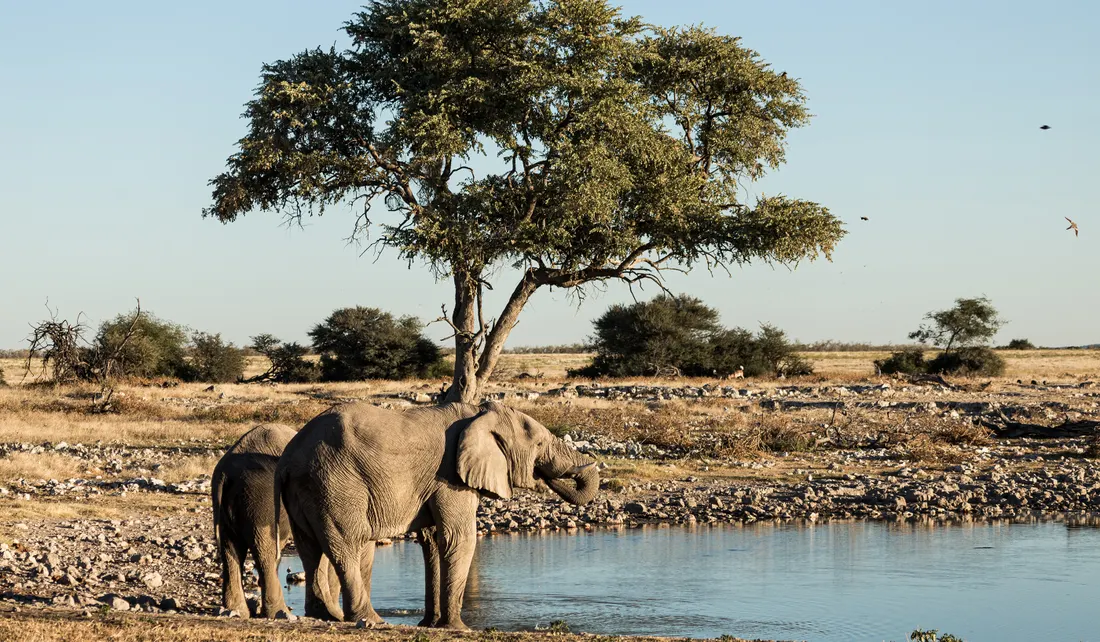
Around 22,000 square kilometres of savannah surrounding a 4,760-square-kilometre salt pan visible from space. In the dry season the animals depend on the waterholes, and at Okaukuejo you can sit and watch elephants, lions and black rhinos file past.
The plan, day by day
Day 1
- Morning
Salvadora and Charitsaub waterholesabout 1 hTwo springs on the southern edge of the pan, on a bare plain without a bush, so herds can be seen coming from kilometres away.
- Afternoon
The Etosha Panabout 30 minA clay and salt pan around 120 kilometres long, the remains of an ancient lake, dry most of the year and shimmering with mirages.
Day 2
- Morning
Moringa waterhole at Halaliabout 1 hWatched from stone tiers at Halali camp, below a dolomite hill; quieter than Okaukuejo, with black rhino, elephants and the occasional leopard.
- Afternoon
Chudop waterholeabout 45 minA natural spring near Namutoni ringed by open ground with a wide view, and one of the park's best spots for lions and cheetahs.
Day 3
- Morning
Fort Namutoniabout 30 minA white German fort; in January 1904 seven soldiers held off several hundred Ondonga fighters here before slipping away at night.
Further afield (over 130 km from the base hotel), best as a separate stop: Okaukuejo waterhole, Olifantsrus hide, Dolomite Camp, western Etosha.
Where to sleep in Etosha National Park
- Etosha Safari Camp · €70 a night
- Toshari Lodge · €85 a night
- Eldorado Lodge · €80 a night
- Mushara Bush Camp · €180 a night
- Okutala Lodge · €150 a night
- Etosha Safari Lodge · €160 a night
- Onguma The Fort · €400 a night
- Mushara Outpost · €350 a night
- Epacha Game Lodge · €320 a night
Plan this trip
Hotel prices per room per night, checked when written. Some links are affiliate links: we may earn a commission, at no extra cost to you.