Masai Mara
The Masai Mara covers 1,510 km² of savannah in south-west Kenya, running straight on from Tanzania's Serengeti. Between July and October, the Great Migration brings more than a million wildebeest across the Mara River, watched by the lions of Musiara Marsh and the crocodiles waiting at the crossings.
 By PierrickLocal Guide ★8 · 14M+ views on Google MapsBy PierrickLocal Guide ★8 · 14M+ Maps views
 🇰🇪 🦁
Masai Mara · Photo Lloyd Alozie / Pexels
Things to do in Masai Mara in 6 days

Day 1
Learn moreMore
Herds from the Serengeti mass on the banks, sometimes for hours, then plunge into the current within seconds once one animal jumps.
💡 Crossing points are chosen in the morning over the guides' radio network, then you wait without moving, sometimes for four hours. Bring something to drink. Price: included in the reserve entry fee.


Day 2
Learn moreMore
The reserve's western third, run since 2001 by the Mara Conservancy, with better-kept tracks, far fewer vehicles and stricter anti-poaching patrols.
💡 The Triangle entry fee is paid separately at the gate and by card only; no cash is accepted. Allow an hour's drive from Talek. Price: included in the reserve ticket.
 Wladimir Kühne / Pexels

Day 3
Learn moreMore
An hour aloft from before dawn, low over the acacias then higher, showing the shape of the herds and the trails through the grass.
💡 Book at least two weeks ahead in high season and expect a 4:30 wake-up. Flights are cancelled at the slightest strong wind, with a refund. Price: $450 to $550 per person.
Daniel Case / CC BY-SA 4.0 (Wikimedia Commons)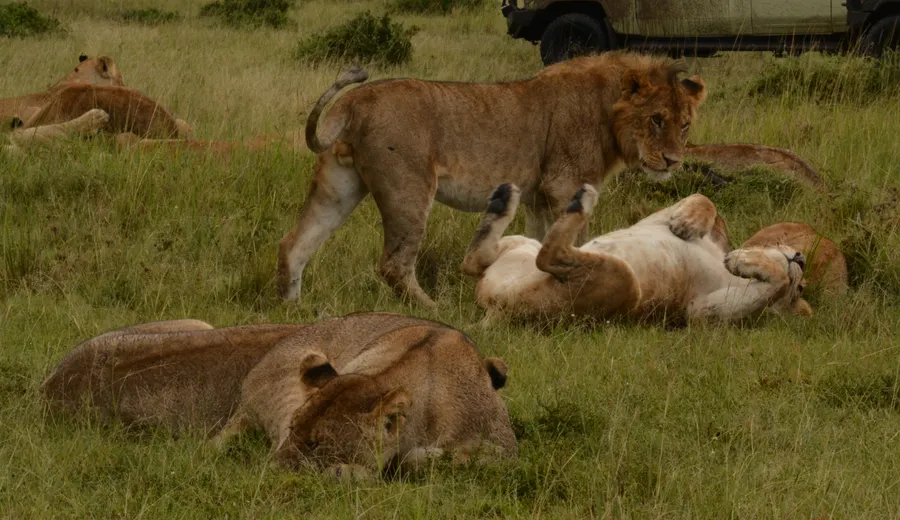
Day 4
Learn moreMore
A spring-fed wetland in the north that never dries out, drawing elephants, buffalo and a lion pride filmed by camera crews since the 1990s.
💡 Visit the marsh early: the lions retreat into the shade of the bushes from 9:30 and don't move again until 5pm. The track is muddy and sometimes impassable in April. Price: included in the entry fee.
 John Mburu / Pexels
Learn moreMore
The wall along the western side of the Mara Triangle, close to 300 metres above the plain, with leopards and hyenas in the valleys below.
💡 Head up to the ridge in late afternoon: the low light brings out the relief and wet-season storms can be seen coming from far away. Price: included in the reserve entry fee.
 Image Noise / Pexels

Day 5
Learn moreMore
Fig and yellow-barked acacia woodland along this Mara tributary is the reserve's best leopard habitat, where females raise cubs and cache prey in branches.
💡 Leopards are spotted at the very start and very end of the day, often thanks to the alarm calls of monkeys and impalas. Stay still and switch off the engine. Price: included in the entry fee.
Daniel Case / CC BY-SA 4.0 (Wikimedia Commons)Learn moreMore
A small town at the reserve's eastern gate living from cattle, tourism and trade, with thorn enclosures, low mud houses and a livestock market.
💡 The fee for a village visit is negotiable and runs at about $20 to $30 per person: agree it before going in and ask your camp for advice. Price: $20 to $30.

Day 6
Learn moreMore
A private reserve of about 200 km² created in 2010 on land leased from some five hundred Maasai owners, with capped tent numbers.
💡 Access is only possible if you stay at one of the conservancy's camps; day visitors are turned away at the gate. Price: included in the camp rate, about $100 a day.
Zammerman / CC BY-SA 4.0 (Wikimedia Commons)"Book" (hotels) and "via GetYourGuide" (activities) are affiliate links (Booking, GetYourGuide). Prices, times and distances are approximate.
Take this plan everywhere
Download your itinerary (Masai Mara) as a PDF: day by day, activities, times and where to stay. Matches the length you chose.
Don't feel like organising everything? A local partner travel agent can set it all up for you (flights, hotels, activities). We pass on your preferences and they call you back. Free and with no obligation.
Have you thought of…?
The little details that make all the difference once you're there.
Similar itineraries


📄 See the full guide: Masai Mara, detailed month-by-month weather, budget, what to avoid and FAQ.