Tbilisi
Founded in the 5th century around the hot springs that gave it its name (tbili means warm in Georgian), the capital stretches along a gorge of the Kura river beneath the Narikala fortress. The brick-domed sulphur baths still draw water at around 40°C with no heating at all.
 By PierrickLocal Guide ★8 · 14M+ views on Google MapsBy PierrickLocal Guide ★8 · 14M+ Maps views
 🇬🇪 ♨️
Tbilisi · Photo Nesrin art / Pexels
Things to do in Tbilisi in 4 days
Day 1
Learn moreMore
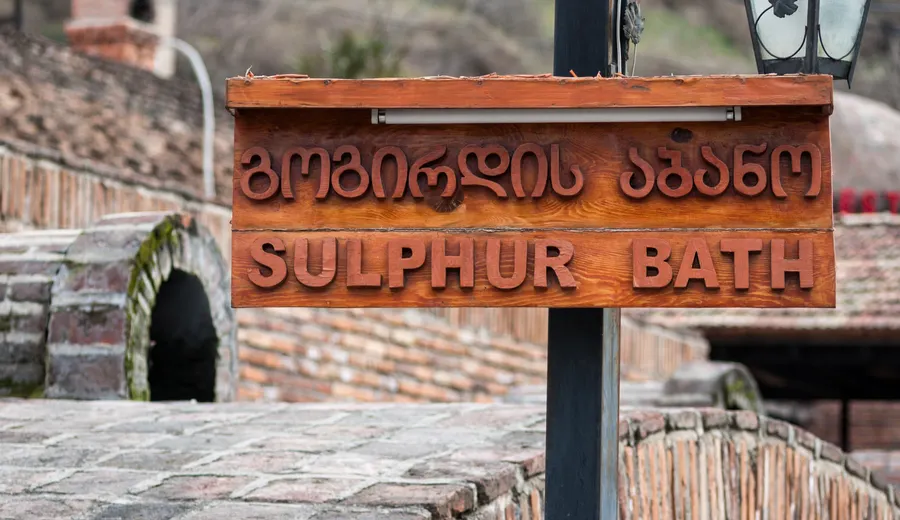
Around ten bathhouses sunk below low brick domes in the district where the city began, fed by sulphur water that emerges at 38 to 40°C.
💡 Rent a private cabin by the hour rather than the shared hall: swimsuit optional, towel provided. The horsehair-mitt scrub, the kisa, costs extra. Price: about €25 per hour for the cabin.
 Genadi Yakovlev / Pexels
Learn moreMore
A narrow gorge behind the sulphur baths, cleared and given a walkway in 2012, leading to a twenty-metre waterfall in the city centre.
💡 The entrance is just past the baths, on the right. Allow fifteen minutes there and back. The walkway is slippery after rain and the waterfall's flow drops in August. Price: free.
 Александр Сигачёв / CC0 (Wikimedia Commons)
Day 2
Learn moreMore
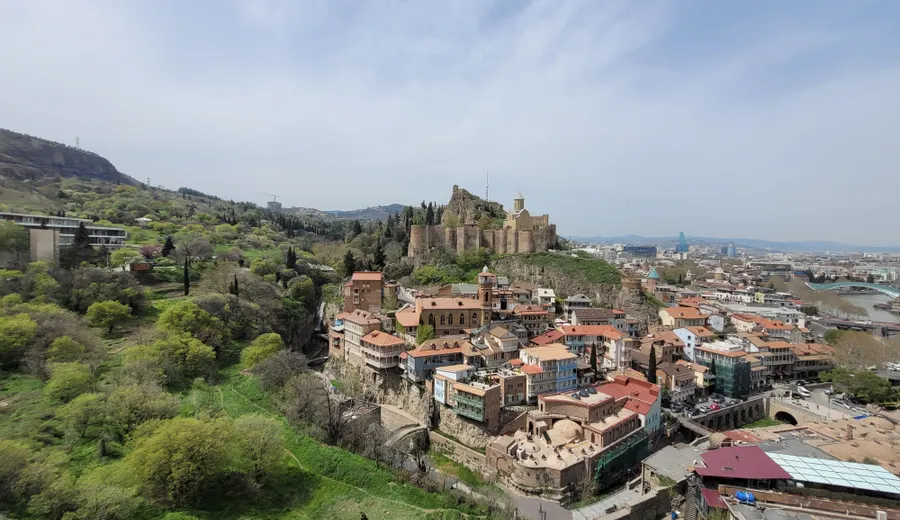
A citadel above the old town begun in the 4th century; a powder explosion in 1827 destroyed part of the walls and St Nicholas church.
💡 The cable car leaves from Rike Park and climbs in three minutes for under a euro, payable with the transport card. The walk down through the botanical garden takes twenty minutes. Price: free.
 Nino Geg / Pexels
Learn moreMore
Steep lanes beneath Narikala lined with carved wooden balconies, often leaning, in a quarter rebuilt many times, including after the Persian sack of 1795.
💡 Café prices on Chardin Street are double those on the parallel streets. Head down to Ierusalimi or Betlemi Street to eat just as well for less. Price: free.
 Vyacheslav Argenberg / CC BY 4.0 (Wikimedia Commons)

Day 3
Learn moreMore
A flea market born in the 1990s after the Soviet collapse, selling silverware, Soviet watches and cameras, medals, porcelain, records, samovars and old maps.
💡 The market runs every day but is at its biggest at weekends, from 10am to 5pm. Check that antiques aren't covered by an export ban. Price: free.
Alexkom000 / CC BY 4.0 (Wikimedia Commons)Learn moreMore
A 150-metre footbridge over the Kura by Michele De Lucchi, opened in 2010, whose LED canopy spells out messages in Morse code at night.
💡 The light show starts at nightfall and runs for ninety minutes. The best viewpoint is from the left bank, near Rike Park. Price: free.
 ROMAN ODINTSOV / Pexels
Day 4
Learn moreMore
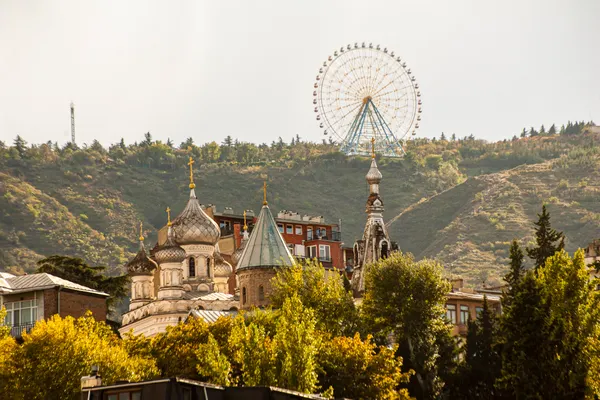
A funicular of 1905, restored in 2012, climbs the holy mountain; halfway up, the Pantheon holds the graves of Griboyedov and his wife Nino Chavchavadze.
💡 The lower station is on Chonkadze Street. Get the funicular card at the entrance: it's compulsory and also works for the attractions. Plan the ride up for late in the day. Price: about €7 return, card included.
Learn moreMore
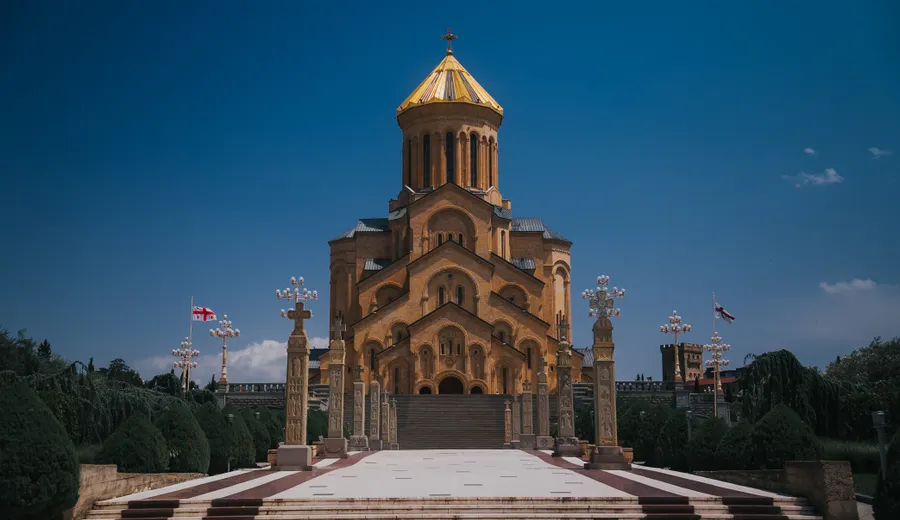
Built from 1995 to 2004 on Elia Hill for 1,500 years of Georgian Church autocephaly, one of the world's tallest Orthodox cathedrals.
💡 Shoulders and knees covered, headscarf for women, available at the entrance. Come around 6pm on a weekday for the sung service, a three-part polyphony unique to Georgia. Price: free.
 Onur Kaya / Pexels
"Book" (hotels) and "via GetYourGuide" (activities) are affiliate links (Booking, GetYourGuide). Prices, times and distances are approximate.
Take this plan everywhere
Download your itinerary (Tbilisi) as a PDF: day by day, activities, times and where to stay. Matches the length you chose.
Don't feel like organising everything? A local partner travel agent can set it all up for you (flights, hotels, activities). We pass on your preferences and they call you back. Free and with no obligation.
Have you thought of…?
The little details that make all the difference once you're there.
Similar itineraries



📄 See the full guide: Tbilisi, detailed month-by-month weather, budget, what to avoid and FAQ.