
Best time to travel in Cinque Terre?
→ The detailed month-by-month page, with 2015-2024 averages
Best time: April to June and September to October
Best avoided if possible: December to February (less pleasant weather or big crowds).
Temperatures and rainfall modelled for Monterosso al Mare · averages over recent years, Open-Meteo data (ERA5 reanalysis).
A mild Mediterranean climate, with spring and autumn ideal for hiking and a hot, very busy summer. The best time to visit the Cinque Terre is April, May, June, September and October, with temperatures reaching 27-30°C (summer). By contrast, January, February, March, July, August, November and December are generally less favourable (less pleasant weather or big crowds, depending on the destination), although a trip is still possible with some planning. In high season, book early: prices and visitor numbers climb fast.
Go against the flow. To avoid the crowds without sacrificing too much on the weather, aim for March and November: the crowds thin out, prices drop too, and the climate stays pleasant.
Do these months appeal to you? See what's best elsewhere too: where to go in April · where to go in May · where to go in June · where to go in September · where to go in October.
At a glance
Why go to Cinque Terre?
Few places on earth are quite this breathtaking. Five villages with pink, yellow and orange façades, quite literally suspended between cliffs and the Mediterranean, linked by clifftop paths and a little train that threads its way from tunnel to tunnel. A UNESCO World Heritage Site, the Cinque Terre distil everything we love about Italy into twelve kilometres of wild coastline.
This is hiking, Italian style: two hours on the Sentiero Azzurro between Monterosso and Vernazza, through terraced vineyards and olive groves, then a reward of fried calamari in a paper cone and a glass of vermentino facing the harbour. The vine terraces, held up by 6,700 km of hand-built dry-stone walls, are a monument in their own right.
Above all, the magic works in the evening, when the day-trippers have gone and the villages find their soul again as fishing hamlets. Spend the night, watch the sunset set Manarola ablaze from Punta Bonfiglio, hear the waves beneath your window in Vernazza: that is when the Cinque Terre are truly earned and savoured.
Tourist map of Cinque Terre: what's where?
The map below pinpoints the 6 places covered in this guide: a handy way to picture the distances between each stop and plan your route in Cinque Terre.
- Monterosso al Mare
- Vernazza
- Corniglia
- Manarola
- Riomaggiore
- Portovenere
How much does a trip to Cinque Terre cost in 2026? Budget calculator
Estimate your budget for Cinque Terre based on your travel style: accommodation, meals, activities and local transport included (flights excluded). Adjust the length and the number of travellers, and the totals update.
Totals for all travellers over the chosen length; the daily amount is per person. Flights extra, indicative amounts to adjust depending on the season.
Cards are accepted almost everywhere, but keep some cash for fried seafood cones, gelato and some B&Bs.
Safety in Cinque Terre: should you be worried?
The Cinque Terre are perfectly safe, the only real risk being on the trails: closed shoes are compulsory (flip-flops can earn you a fine on the paths, up to €2,500), carry plenty of water and take care in wet weather, as trails may close after heavy rain. In summer, watch out for heatstroke on exposed stretches and for the crowds on station platforms, where you keep an eye on your bag as anywhere else. Swimming is lovely, but check the flags at Monterosso, the only beach with lifeguards.
Things to see and do in Cinque Terre
Our first-hand favourites, and the great classics:
- Monterosso al Mare
- Vernazza
- Corniglia
- Manarola
- Riomaggiore
- Sentiero Azzurro
- Via dell'Amore
- Portovenere
What to book before you go to Cinque Terre →
🧭 Discover the Cinque Terre itinerary, day by dayMap, timings, budget and where to stay: free to access, to fit your dates. Create my tailor-made itinerary →Monterosso al Mare
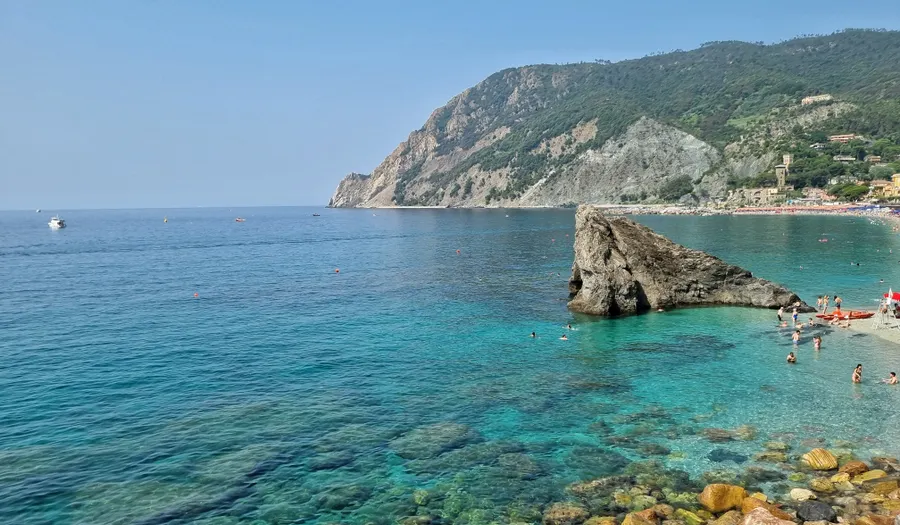
The largest of the five villages and the only one with a proper sandy beach, lined with iconic orange and green parasols. The old town, separated from the beach district of Fegina by a headland, hides carrugi (lanes) full of shops selling anchovies, the local speciality. It is the most family-friendly village and the starting point for the finest stretch of the Sentiero Azzurro. The concrete giant carved into the Fegina cliff, a Belle Époque relic, keeps watch over the bathers.
Vernazza

Often called the most beautiful of the five, Vernazza curls around a tiny harbour where colourful boats bob in front of the church of Santa Margherita, its feet in the water. The tower of Castello Doria, a remnant of the defences against Saracen pirates, gives a plunging view over the rooftops. The little harbour piazza, framed by ochre façades, is the finest aperitivo setting on the coast. Arrive on the path from Monterosso: the view from above as you approach the village is the photo of your trip.
Corniglia

The only village without direct access to the sea, perched 100 metres up on a vine-covered headland. You climb up via the Lardarina, a staircase of 382 steps from the station (or by shuttle bus), and that difficulty of access keeps the crowds away. Its narrow lanes lead to the Santa Maria terrace, a spectacular lookout over the whole coast. This is the village for lovers of peace and quiet, with the best local honey gelato at Alberto's.
Manarola

The most photographed village, whose multicoloured tower houses tumble down to a rocky cove where young locals dive from the rocks. The viewpoint at Punta Bonfiglio, by the cemetery, offers THE Cinque Terre postcard, magical at sunset. Manarola is also the capital of sciacchetrà, a passito wine made on the surrounding terraces. In December, the hillside lights up with the world's largest illuminated nativity scene.
Riomaggiore

The first village coming from La Spezia, and the most vertical: its main street plunges between two walls of tall houses down to a pocket-sized marina wedged between the cliffs. In the evening, photographers settle on the jetty to capture the façades glowing in the sunset. It is the liveliest village after dark, with wine bars and cones of fried seafood to enjoy on the rocks. The 13th-century castle has a fine view over the slate roofs.
Portovenere
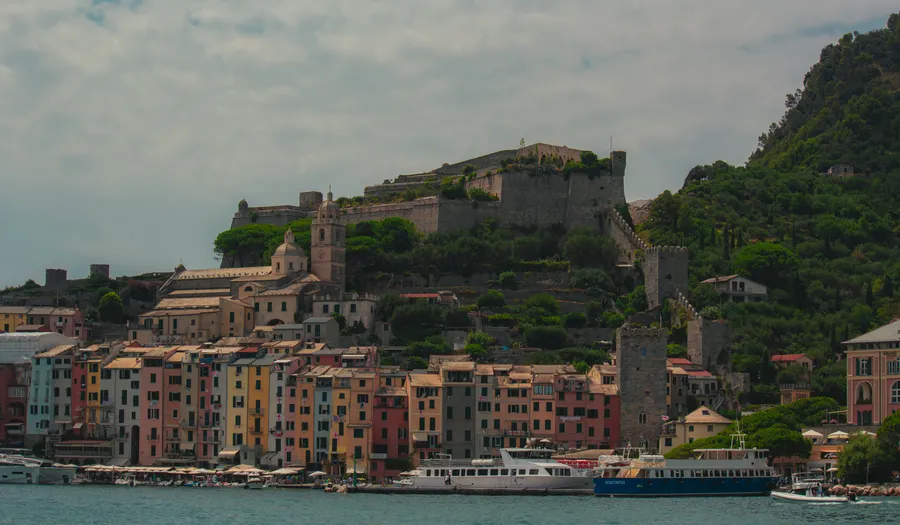
Just south of the national park, this medieval gem is well worth the boat trip from the villages. The church of San Pietro, set on its wave-battered rocky spur, Byron's Grotto where the poet came to swim, and Castello Doria form a spectacular ensemble listed by UNESCO. The main street, beneath the Genoese tower houses, is packed with trattorias where you can try stuffed mussels, the speciality of the Gulf of Poets. Less crowded than the Cinque Terre, and often more moving.
How many days, and which itinerary in Cinque Terre?
Allow 2 to 3 days to hike without rushing, ideally sleeping in one of the villages.
🗺️ Day-by-day Cinque Terre itinerary · 📓 Printable Cinque Terre travel guide (PDF) · 🌍 Discover all of Italy
The essentials (2 days)
Day 1: arrive in Monterosso, hike the Sentiero Azzurro to Vernazza, afternoon swim and a visit to the Castello Doria tower. Day 2: train to Corniglia, climb to the Santa Maria terrace, then Manarola for sunset and an evening in Riomaggiore.
The full loop (3 days)
Two days for the five villages, alternating trails and train, with a swim at Monterosso and the Via dell'Amore between Manarola and Riomaggiore. On the third day, a boat to Portovenere, Byron's Grotto and a return along the coast at sunset.
Gourmet Liguria (5 days)
Three days in the villages and Portovenere, then a day in the terraced vineyards with a sciacchetrà tasting in Manarola, and a final one in Genoa or Portofino on the way home. Pesto, focaccia and vermentino at every stop.
How to get to Cinque Terre and get around?
Regional train between the villages: 5 minutes per hop, every 15-20 minutes in season, ticket ~€5 or included in the Cinque Terre Card
Cinque Terre Card Treno (~€19.50/day in high season): unlimited trains + paid trails + shuttle buses, worth it from 3 journeys
Boats from April to October: services to Monterosso, Vernazza, Manarola, Riomaggiore and Portovenere, the most beautiful way to see the coast
Forget the car: the villages are almost inaccessible and parking is scarce and expensive, so leave it in La Spezia or Levanto
Where to stay in Cinque Terre?
Vernazza and Manarola: rooms and small flats with a view, €120-200 a night, book months ahead
Monterosso: the widest choice of hotels, including beach hotels, from €130 to €250
Riomaggiore: plenty of flats in the tower houses, €100-160, village atmosphere in the evening
Levanto or La Spezia: the smart option 5-10 minutes away by train, decent hotels from €80 to €120
Our picks stop by stop, in three price ranges →
What to eat in Cinque Terre?
Pesto genovese: born in Liguria, sublime on trofie or trenette, try it in any village trattoria
Acciughe di Monterosso: the local anchovies, fried, marinated or salted, a PDO product enjoyed facing the harbour
Fried seafood in a cone: calamari and prawns to take away (€8-10), the Tutti Fritti institution in Riomaggiore
Sciacchetrà: sweet passito wine from the Cinque Terre terraces, rare and precious, perfect with almond cake
Which kind of traveller is it for?
The Cinque Terre are ideal for romance, nature and relaxation. Whether you travel as a couple, with friends or even solo, everyone can find their own pace. Accommodation is mostly boutique hotels, holiday rentals and standard hotels.
Entry requirements & practical info
Schengen area: an ID card or passport for EU citizens, 90 days visa-free for UK, US, Canadian and Australian passports.
Rules change: before you leave, check your country's official travel advice.
Frequently asked questions about Cinque Terre
When is the best time to visit the Cinque Terre?
April-June and September-October: trails open, the sea already (or still) warm enough to swim and the villages bearable. July-August is very hot and crowded, while in winter many businesses close and trails may be shut after rain.
What daily budget should I plan for the Cinque Terre?
Allow €70 to €100 a day staying in La Spezia or Levanto and eating on the go, €130 to €190 for a room with a view in a village and trattoria dinners. The Cinque Terre Card, at around €19.50 a day, covers trains and trails.
How do you get between the villages?
The regional train links the five villages in 5 minutes per hop, running every 15 to 20 minutes in season; the trails and the boats (April to October) are the most beautiful alternatives. Avoid driving, as the villages are almost inaccessible: leave the car in La Spezia or Levanto.
How many days should I allow?
Two days let you see all five villages, three let you hike at a relaxed pace and add Portovenere by boat. Spending at least one night changes everything: the villages regain their calm once the day-trippers have left.
Is the Sentiero Azzurro difficult?
The Monterosso-Vernazza stretch (2 hrs, steady climbing) is the most demanding but the most beautiful; Vernazza-Corniglia is gentler, and the Via dell'Amore, reopened in 2024, is an easy stroll. Closed shoes are compulsory (flip-flops can earn you a fine) and access is paid or included in the Cinque Terre Card.
Similar destinations
 City
🇬🇷 Corfu
 Region
🇬🇧 Cornwall
 City
🇭🇷 Hvar
 Region
🇭🇷 Istria
 Region
🇫🇷 The Côte Vermeille and Collioure
 Region
🇫🇷 The Bay of Somme
 Region
🇫🇷 Charente-Maritime and the Île de Ré
 Region
🇫🇷 The Médoc
 Region
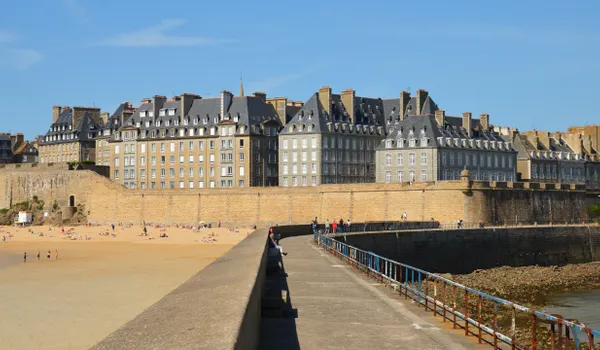
🇫🇷 Saint-Malo and the Emerald Coast
 Countries