When to go to Dordogne and the Périgord?
→ The detailed month-by-month page, with real weather records
Best time: May to October
At a glance
Why go to Dordogne and the Périgord?
The Dordogne valley is arguably the densest concentration of heritage in rural France. Within a few dozen kilometres you pass Sarlat and its 66 listed monuments, the rival fortresses of Beynac and Castelnaud eyeing each other across the river, and villages such as La Roque-Gageac and Domme that regularly feature among the most beautiful in the country. Every bend in the road opens onto a postcard.
It is also the world's cradle of prehistory. The Vézère valley holds 15 UNESCO-listed sites, including the Lascaux cave, recreated with astonishing precision at Lascaux IV, and Les Eyzies, capital of Cro-Magnon man. Seeing bulls painted 20,000 years ago, even in facsimile, remains a rare thrill that speaks to children as much as to adults.
Lastly, the Périgord is best enjoyed through the taste buds and along the water. Sarlat's Saturday markets, foie gras, black truffle, walnuts and ceps, Bergerac and Cahors wines: food here is a religion. And paddling down the Dordogne by canoe, between cliffs and castles, is one of the most joyful family experiences in France, suitable from the age of 5 or 6.
Map of Dordogne and the Périgord: what is where?
The map shows the 6 places covered in this guide, to picture the distances and plan your route.
- Sarlat-la-Canéda
- Lascaux IV
- La Roque-Gageac
- Rocamadour
- Gouffre de Padirac
- Château de Beynac
How much does a trip to Dordogne and the Périgord cost?
Still reasonable value for money, the Dordogne gets expensive for accommodation in high summer. Paid visits add up fast: prioritise.
| Style | Per day | What it covers |
|---|---|---|
| Backpacker | €60-85/day | Camping, markets and picnics, canoeing and free villages, one paid site a day |
| Comfort | €110-160/day | B&B or boutique hotel, Périgord restaurants, Lascaux IV, Padirac and a gabare trip |
| Premium | €220+/day | 4-star hotels with a pool, Michelin-starred tables in Sarlat or Trémolat, a hot-air balloon over the castles |
Cash is handy at markets and with some producers; cards are accepted everywhere else.
Is Dordogne and the Périgord safe?
The Périgord is a very safe family destination. The main thing to watch is the river: life jackets are compulsory in canoes, and take care with young children on the banks and during spring floods. In summer the valleys can get very hot, so bring water and a hat for visits to hilltop villages, and book the major sites (Lascaux IV, Padirac) to avoid long waits in full sun. The small tourist roads are busy with cyclists, so drive gently.
What to see and do in Dordogne and the Périgord
- Sarlat-la-Canéda
- Lascaux IV
- La Roque-Gageac
- Rocamadour
- Gouffre de Padirac
- Canoeing on the Dordogne
- Château de Beynac
- Marqueyssac Gardens
Sarlat-la-Canéda

Capital of the Périgord Noir, Sarlat has one of the best-preserved medieval and Renaissance centres in Europe, saved by the Malraux law in 1964. Cobbled lanes, golden mansions, the Place de la Liberté and Saint-Sacerdos cathedral make up a film set, and are often used as one. The Saturday morning market is a foodie institution, with foie gras, walnuts and Périgord strawberries. Ride the panoramic lift in the former church of Sainte-Marie for the view over the stone-slab roofs.
Lascaux IV
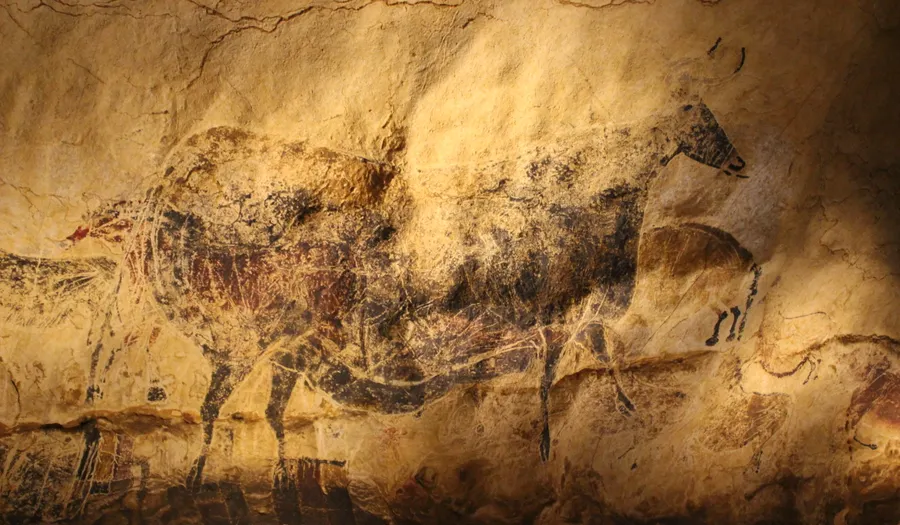
In Montignac, the International Centre for Cave Art recreates the entire Lascaux cave, closed to the public since 1963 to protect its 20,000-year-old paintings. Accurate to the millimetre, the replica captures the damp, dark atmosphere of the original cavern, its bulls, horses and deer seeming to move in the lamplight. The digital galleries that follow the guided tour shed light on the techniques of the prehistoric artists. A visit of around 2h30 that stays with you.
La Roque-Gageac
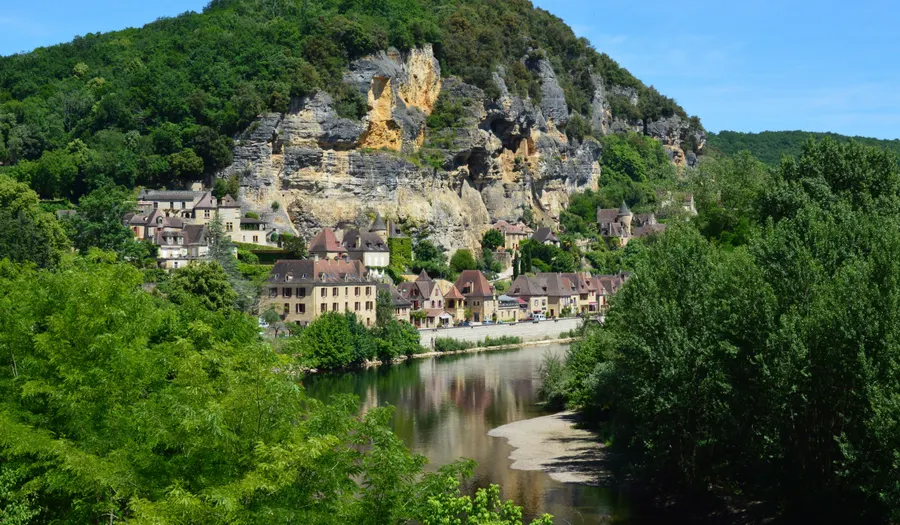
Wedged between a south-facing ochre cliff and the river, this village is one of the most photogenic in France. Its honey-coloured houses with stone-slab roofs climb in tiers up to the troglodyte fort, and its microclimate lets an exotic garden thrive around the church. It is the boarding point for gabares, the traditional boats that once carried timber downriver to Bordeaux. The view from the water, by gabare or canoe, is the finest of all.
Rocamadour
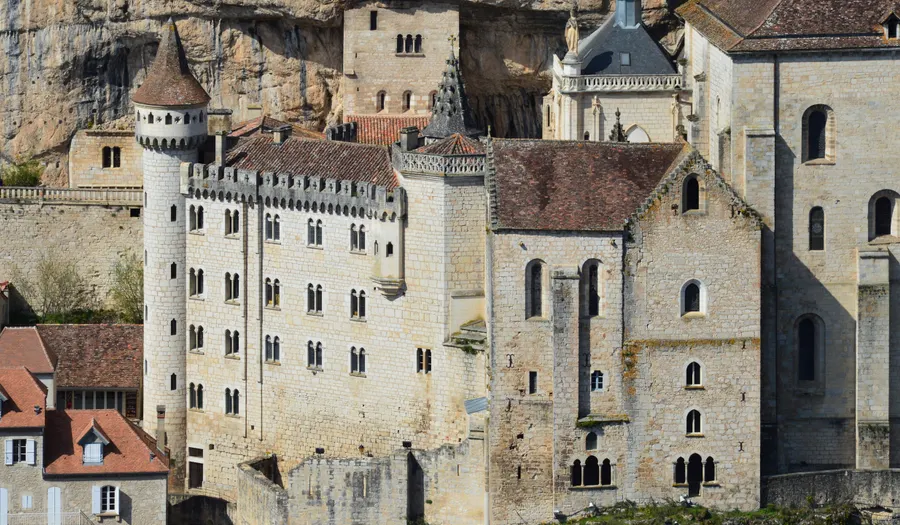
Clinging to its cliff in the neighbouring Lot, this Marian pilgrimage town seems to defy gravity: the village, the seven sanctuaries and the castle are stacked up 150 metres of rock face above the Alzou canyon. Pilgrims and visitors climb the 216 steps of the Grand Staircase to the chapel of the Black Madonna, venerated since the Middle Ages. The site is breathtaking at daybreak from the L'Hospitalet viewpoint. The second most visited site in France outside the Paris region, it rewards those who come early in the morning or in the evening.
Gouffre de Padirac
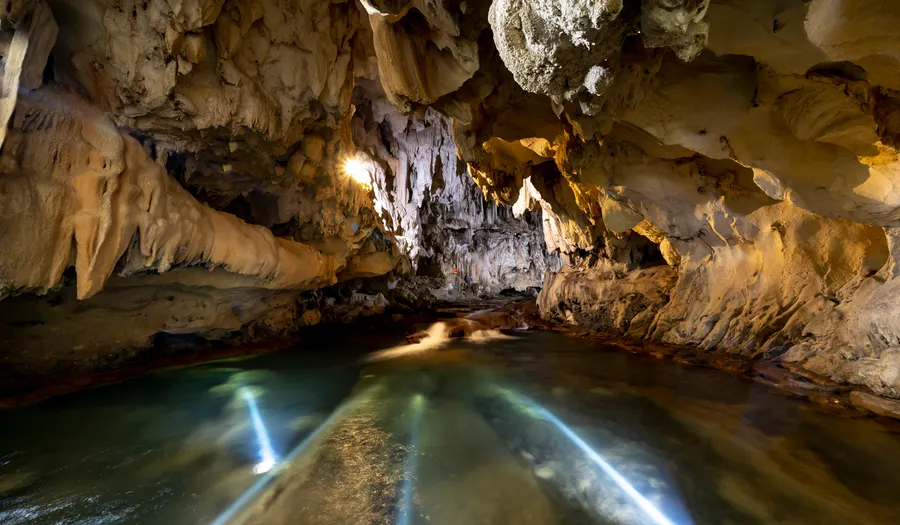
A gaping shaft 35 metres across opens onto an exceptional underground network, explored since 1889. The visit combines a descent to 103 metres below ground, a boat ride along a crystal-clear river and chambers adorned with giant formations, including the Grande Pendeloque, a 60-metre stalactite hanging above the Lac de la Pluie. The constant temperature of 13 degrees makes it a welcome refuge in a heatwave. It is the most visited cave in France.
Château de Castelnaud

Facing Beynac, its eternal rival from the Hundred Years' War, Castelnaud overlooks the confluence of the Dordogne and the Céou. The fortress houses a fascinating museum of medieval warfare, with life-size siege engines, trebuchets and demonstrations in summer. Children love it, and so do their parents. From the ramparts, the view takes in the whole valley of the five castles.
How many days, and which itinerary?
A week is ideal to combine the Dordogne and Vézère valleys, with a side trip to Rocamadour and Padirac.
🗺️ Day-by-day itinerary · 📓 Free printable Dordogne and the Périgord guide (PDF) · 🌍 All of France
Heart of the Périgord Noir (4 days)
Base yourself in or near Sarlat: a day in the town and its market, a loop through La Roque-Gageac, Beynac, Castelnaud and Marqueyssac, a canoe trip downriver, then Lascaux IV and the Vézère valley.
The full Dordogne and Lot (7 days)
Four days in the Périgord Noir, then head east to Rocamadour, the Gouffre de Padirac and the villages of Carennac and Autoire. Return via Domme and an evening gabare trip on the river.
Family version (5 days)
A child-friendly canoe trip between Vitrac and Beynac, Castelnaud castle and its war machines, Padirac, Lascaux IV and a pool day at the campsite. Short distances and wonder guaranteed.
Getting there and getting around
A car is essential: the sites are scattered along the valleys, and distances are short but winding.
Train to Souillac, Brive or Sarlat (via Bordeaux, 4h30 to 5h from Paris), then hire a car.
In summer, book canoes the day before: the hire companies in Vitrac, La Roque-Gageac and Cénac run return shuttles.
Cycling is pleasant on the Sarlat-Cazoulès greenway and the minor roads, but the terrain is hilly above the valleys.
Where to stay in Dordogne and the Périgord?
B&Bs in the stone hamlets around Sarlat: €75-110 for a double, breakfast with walnut jam included.
Boutique hotels in Sarlat, Beynac or La Roque-Gageac: €100-170 a night in season.
4-star campsites on the banks of the Dordogne (Vitrac, Domme): €30-45 per pitch, mobile homes €80-120.
Rural gîtes by the week, a great option for families: €500-900 depending on season and pool.
Our places to stay, stop by stop, at three budgets →
What to eat in Dordogne and the Périgord?
Sarlat market on Saturday (and Wednesday): foie gras, truffles in winter, strawberries, cabécou cheeses and AOP Périgord walnuts.
Périgord set menus in farm inns: duck confit, pommes sarladaises and gizzard salad, €20-30.
Cep omelette in season, and tourin blanchi, the garlic soup of Périgord grandmothers.
Bergerac, Pécharmant and sweet Monbazillac wines: tastings at the producers around Bergerac.
Entry requirements
Schengen area: an ID card or passport for EU citizens, 90 days visa-free for UK, US, Canadian and Australian passports.
Rules change: check your own government's travel advice before you go.
Frequently asked questions about Dordogne and the Périgord
When is the best time to visit the Dordogne?
May, June and September offer the best balance of mild weather, pleasant river conditions and manageable crowds. July and August are glorious but very busy, so book everything ahead.
What daily budget should I plan for?
Allow €80 to 130 per person per day as a couple with hotels and restaurants, or €60 to 85 camping and eating from markets. Site entry fees come to €15 to 40 a day.
How do I get around?
By car, without hesitation: no public transport properly links the villages and sites. Canoes and bikes are a lovely complement for exploring the valleys.
How many days should I spend in the Dordogne?
Four days for the Périgord Noir, a week to add Rocamadour, Padirac and the Vézère valley without rushing.
Do I need to book Lascaux IV and Padirac?
Yes, absolutely, online with a fixed time slot in July and August, several days ahead. Out of season, the day before is usually enough.
Similar destinations
 City
City🇫🇷 Bordeaux and Around
 City
City🇮🇪 West Cork
 City
City🇦🇹 The Wachau Valley
 City
City🇫🇷 Albi and the Tarn Valley
 City
City🇫🇷 Rochefort and the Charente Estuary
 Region
🇭🇷 Istria
 Region
🇫🇷 Aveyron
 Region
🇫🇷 The Opal Coast
 Region
🇫🇷 The Lot and Quercy
 Region