When to go to Bordeaux and Around?
→ The detailed month-by-month page, with real weather records
Best time: May to July and September to October
At a glance
Why go to Bordeaux and Around?
Bordeaux is the largest urban area on the UNESCO World Heritage list: 1,800 hectares of honey-coloured stone façades, redeveloped quays and 18th-century squares. The city has transformed itself in twenty years: the tram has replaced cars on the quays and the Water Mirror has become one of the most photographed places in France. You get around on foot or by bike, with a glass of dry white on a terrace as your reward.
It is also the world capital of wine, and you experience that first-hand. The Cité du Vin offers a unique sensory journey, and the châteaux of the Médoc, Saint-Émilion and the Graves open their cellars to visitors, often simply by booking. Tasting a grand cru in the courtyard of an 18th-century château, surrounded by vines, remains an experience few regions in the world can offer.
Finally, the ocean is less than an hour away. The Arcachon Bay combines the oyster villages of Cap Ferret, the Belle Époque villas of Arcachon and the climb up the Dune du Pilat, Europe's highest dune, facing the Banc d'Arguin. You can visit a wine château in the morning and eat oysters with your feet in the sand in the afternoon: that is the whole art of living of south-west France.
Map of Bordeaux and Around: what is where?
The map shows the 6 places covered in this guide, to picture the distances and plan your route.
- Cité du Vin
- Place de la Bourse
- Saint-Émilion
- Dune du Pilat
- Cap Ferret Lighthouse
- Jetée Thiers, Arcachon
How much does a trip to Bordeaux and Around cost?
Bordeaux remains more affordable than Paris for a comparable standard. Château tastings are often charged at €10 to 25, but the fee is frequently deducted if you buy.
| Style | Per day | What it covers |
|---|---|---|
| Backpacker | €70-100/day | hostel or simple hotel, Marché des Capucins, tram and bike, budget tastings |
| Comfort | €120-200/day | boutique hotel in the centre, bistronomy restaurants, a château day with tasting |
| Premium | €300+/day | 5-star hotel or winegrower's relais, Michelin-starred tables, private visits to grands crus classés |
Cards are accepted everywhere, but carry cash for the oyster huts and some small producers.
Is Bordeaux and Around safe?
Bordeaux is a peaceful city where you can stroll with ease, including in the evening on the lively quays. Just keep an eye on your belongings on Rue Sainte-Catherine and on the tram at rush hour, classic pickpocket territory. Around Saint-Jean station, a few streets are less inviting at night without being dangerous. On the bay, respect the tide times for walks, and swim at lifeguarded beaches on the ocean side, where the currents (baïnes) are powerful.
What to see and do in Bordeaux and Around
- Cité du Vin
- Place de la Bourse
- Saint-Émilion
- Dune du Pilat
- Cap Ferret
- Rue Sainte-Catherine
- Arcachon
- Marché des Capucins
Cité du Vin

This building with golden curves, evoking wine swirling in a glass, has become the emblem of the new quays. The permanent exhibition explores the civilisations of wine over 3,000 square metres, with sensory modules and aroma tables. The visit ends at the 8th-floor belvedere with a tasting facing a 360-degree panorama over the city. Allow two to three hours to enjoy it fully.
Place de la Bourse and the Water Mirror

A masterpiece of classical architecture designed by Gabriel, the square is reflected in the world's largest water mirror, 3,450 square metres of granite covered by 2 centimetres of water. The mist effect, every 15 minutes in summer, delights children and photographers alike. Come at sunset, when the pale stone turns golden. The nearby quays invite you to keep walking all the way to the Chartrons.
Saint-Émilion

This medieval village perched among the vines is UNESCO-listed along with its entire vineyard. Its monolithic church, carved into the limestone in the 12th century, is the largest in Europe and can be visited with a guide. The cobbled lanes, known as tertres, climb between wine shops and macaron makers, a local speciality since 1620. All around, dozens of châteaux offer cellar tours and tastings.
Dune du Pilat
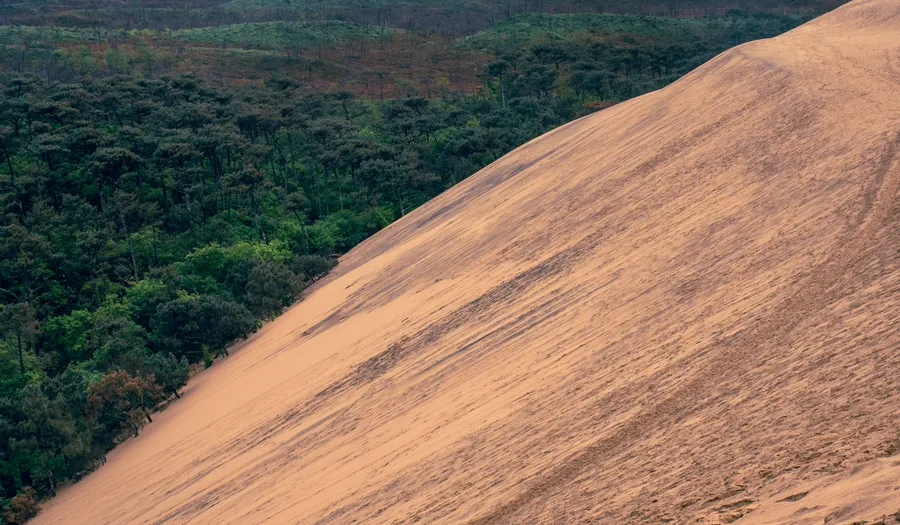
At 102 metres high, 2.9 kilometres long and 55 million cubic metres of sand, it is the highest dune in Europe. The climb, by the staircase or straight up the sand, takes some effort, but the panorama from the top is breathtaking: the Landes forest on one side, the Banc d'Arguin and the mouth of the bay on the other. At sunset, the show is unforgettable. Bring water and avoid the hottest hours in summer.
Cap Ferret

This chic, wild peninsula closes off the Arcachon Bay opposite the Dune du Pilat. The oyster villages of Le Canon and L'Herbe line up their colourful huts, where you eat oysters and prawns facing the oyster beds. After 258 steps, the red and white lighthouse offers a superb view of the point and the channels. Between bay and ocean, cycle paths run under the pines to the Atlantic beaches.
Marché des Capucins

Bordeaux's larder has fed the city since the 18th century. Under its market hall, stalls of oysters from the bay, canelés, cheeses and Basque produce draw chefs and locals alike. At weekends the atmosphere goes up a notch: you lunch on oysters and white wine at the counter for around twenty euros. It is the ideal place to take the city's pulse, away from the tourist circuits.
How many days, and which itinerary?
Allow 4 days: two for Bordeaux itself, one for Saint-Émilion and the vineyards, one for the Arcachon Bay.
🗺️ Day-by-day itinerary · 📓 Free printable Bordeaux and Around guide (PDF) · 🌍 All of France
Bordeaux express (2 days)
Day 1: the Golden Triangle, Place de la Bourse, the Water Mirror and the Saint-Pierre quarter, dinner in the Chartrons. Day 2: the Cité du Vin in the morning, lunch at the Marché des Capucins, then a stroll along Rue Sainte-Catherine and to the Porte Cailhau.
City and vineyards (4 days)
To the two city days, add a full day in Saint-Émilion visiting two châteaux and the monolithic church, then a day on the Arcachon Bay between the Dune du Pilat and the oyster villages of Cap Ferret.
The great south-west (7 days)
Round it off with the Médoc château route up to the Pointe de Grave, a day in Arcachon and its Winter Town, and an escape to the Landes or Bazas. An ideal pace with a hire car, and the grape harvest is magical in September.
Getting there and getting around
TGV from Paris Montparnasse: 2h04 direct to Saint-Jean station, €30 to 90 depending on how early you book.
Tram and V3 (bike share): the centre is flat and compact, and a day tram pass costs around €5.
A car is essential for the vineyards and Cap Ferret: hire at the station from €40 to 70/day.
TER train to Arcachon (50 min, around €10) and the Baïa bus to the Dune du Pilat in summer.
Where to stay in Bordeaux and Around?
Saint-Pierre quarter and the Golden Triangle: at the heart of UNESCO-listed Bordeaux, boutique hotels from €130 to 250 a night.
Chartrons: antique dealers and wine bars on the banks of the Garonne, doubles from €100 to 160.
B&Bs in the Saint-Émilion vineyards: surrounded by vines, from €110 to 200 including breakfast.
Cap Ferret and Arcachon: allow €150 to 300 in summer, and book several months ahead.
Our places to stay, stop by stop, at three budgets →
What to eat in Bordeaux and Around?
Oysters from the bay: tastings in the huts of Le Canon or L'Herbe, a dozen with a glass of white for around €15 to 20.
Canelés: Bordeaux's caramelised bite-sized cake, to try at Baillardran or La Toque Cuivrée for €1 to 2 each.
Entrecôte à la bordelaise: steak with a wine and bone-marrow sauce, in the bistros of the Chartrons, around €20 to 25 a plate.
Wine bars: the CIVB's Bar à Vin pours grands crus by the glass from €3 to 8, an institution.
Entry requirements
Schengen area: an ID card or passport for EU citizens, 90 days visa-free for UK, US, Canadian and Australian passports.
Rules change: check your own government's travel advice before you go.
Cities and regions to discover

Frequently asked questions about Bordeaux and Around
When is the best time to visit Bordeaux?
May to July, then September to October: the late season is especially beautiful, with the grape harvest, golden vines and still-mild temperatures on the bay.
What daily budget should I plan for in Bordeaux?
Allow €70 to 100 a day on a budget and €120 to 200 for a comfortable stay including a day in the vineyards with tastings.
How do I get around Bordeaux and the region?
The tram and a bike are more than enough in the city. For Saint-Émilion and Cap Ferret, a car is most practical, although TER trains serve Arcachon and Saint-Émilion from Saint-Jean station.
How many days do you need for Bordeaux and the region?
Four days strike the ideal balance: two for the city, one for Saint-Émilion, one for the Dune du Pilat and the Arcachon Bay.
Can you visit the wine châteaux without a car?
Yes, on half-day tours departing from the Bordeaux tourist office (from €45) or by TER to Saint-Émilion, then on foot or by bike between the estates close to the village.
Similar destinations
 City
City🇫🇷 Rochefort and the Charente Estuary
 Region
🇭🇷 Istria
 Region
🇫🇷 Normandy
 Country
🇵🇹 Portugal
 City
City🇮🇪 West Cork
 City
City🇮🇪 Galway and Connemara
 Region
🇮🇹 Puglia
 City
City🇫🇷 Albi and the Tarn Valley
 City
City🇬🇷 Corfu
 City
City