When to go to Portugal?
→ The detailed month-by-month page, with real weather records
Best time: April to June and September to October
At a glance
Why go to Portugal?
Portugal has the charm of countries that never try too hard. Lisbon stacks its yellow trams between azulejo-clad façades, Porto huddles on the banks of the Douro, and everywhere you stumble on a viewpoint to linger over at sunset. It is a gentle, stress-free trip where you slow down fast.
It is also one of the most affordable countries in Western Europe, which changes everything: eating well, sleeping in the city centre and getting around cost noticeably less than elsewhere. The Atlantic climate tempers the summers, stretches the fine days from April to October and makes the Algarve enjoyable for much of the year.
Between the ocean, the cities and the wine-growing hinterland of the Douro, the country comes in a compact format that is easy to explore. A short flight from much of Europe and the euro as currency: everything is in place for a hassle-free trip.
Map of Portugal: what is where?
The map shows the 6 places covered in this guide, to picture the distances and plan your route.
- Lisbon
- Porto
- Sintra
- Lagos
- Óbidos
- Vila Nova de Gaia
How much does a trip to Portugal cost?
Portugal remains one of the cheapest countries in Western Europe, at €60-100 a day, with real scope to spend less without going without.
| Style | Per day | What it covers |
|---|---|---|
| Backpacker | €45-60 | Guesthouses, markets and small eateries, trains and buses booked in advance |
| Comfort | €75-100 | Charming hotel in the city centre, restaurant dinners, a few excursions |
| Treat yourself | €130 and up | Historic pousadas, gourmet restaurants and a private cruise on the Douro |
The euro everywhere, cards accepted even in small establishments, a little cash handy for markets and village ginjinha.
Is Portugal safe?
Portugal ranks among the safest countries in Europe, the only real precaution being to watch out for pickpockets on tram 28 and in Lisbon's tourist areas. No vaccinations are required, tap water is safe to drink and the European Health Insurance Card covers routine care. In the Algarve, respect the swimming flags, as the Atlantic has strong currents.
What to see and do in Portugal
- Lisbon (Alfama, tram 28)
- Porto and the Douro Valley
- the beaches of the Algarve
- Sintra and its palaces
- a pastel de nata in Belém
Alfama and tram 28, Lisbon

Lisbon's oldest district coils in steep lanes beneath São Jorge Castle. The legendary tram 28 creaks its way through it, best caught early in the morning before it fills up. It is a joy to get lost here, between washing at the windows and echoes of fado. In the evening, a miradouro such as Santa Luzia lays out the city and the Tagus below.
Belém and its pastéis

West of Lisbon, Belém lines up the Jerónimos Monastery, a Manueline masterpiece, and the tower standing on the river. Right next door, Pastéis de Belém has been serving its still-warm custard tarts, dusted with cinnamon, for generations. Join the queue, it moves fast, and take a box away. The Monument to the Discoveries rounds off the waterside walk.
Porto and the Douro Valley
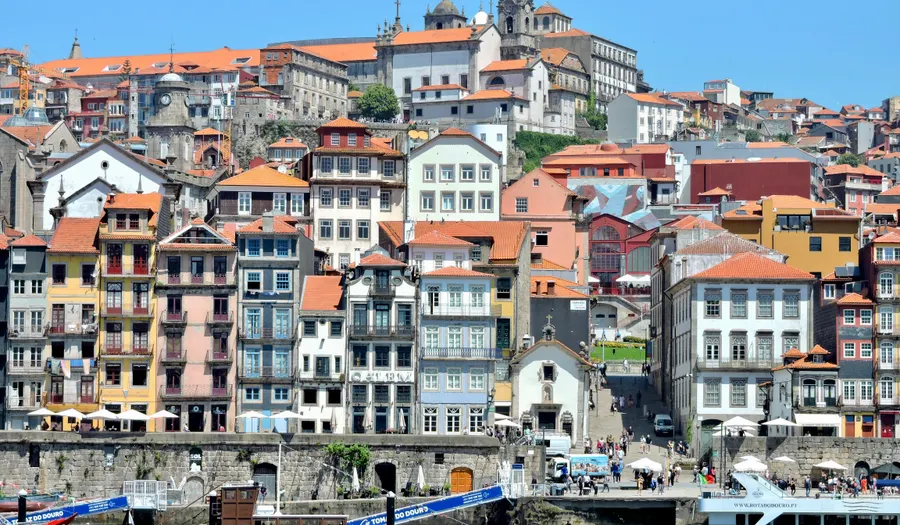
Porto tumbles down to the Douro through narrow lanes to the Ribeira district, listed and full of life. On the opposite bank, in Vila Nova de Gaia, the port wine cellars can be toured and tasted. The Dom Luís Bridge offers the finest view at sunset. Carry on with a cruise or a drive through the wine valley, its terraces rising above the river.
Sintra and its palaces

Half an hour from Lisbon, Sintra hides the brightly coloured Pena Palace and the initiation well of Quinta da Regaleira in its forest. The site fills up fast, so arrive at opening time and buy tickets in advance. Shuttles and tuk-tuks save you the climbs on foot between the scattered monuments. A full day is not too much to see it all.
The Algarve and its cliffs

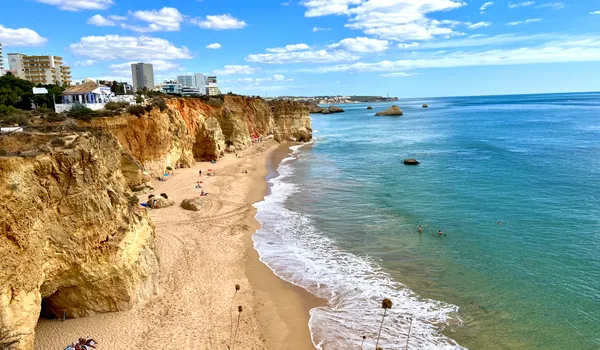
In the south, the coast breaks up into ochre cliffs and coves of turquoise water. The Benagil sea cave, reachable by boat or kayak, has become the emblem of the coastline. Lagos and its Ponta da Piedade have the finest rock formations. Outside July and August, you can enjoy the beaches without the crowds of the big resorts.
Óbidos and the inland villages
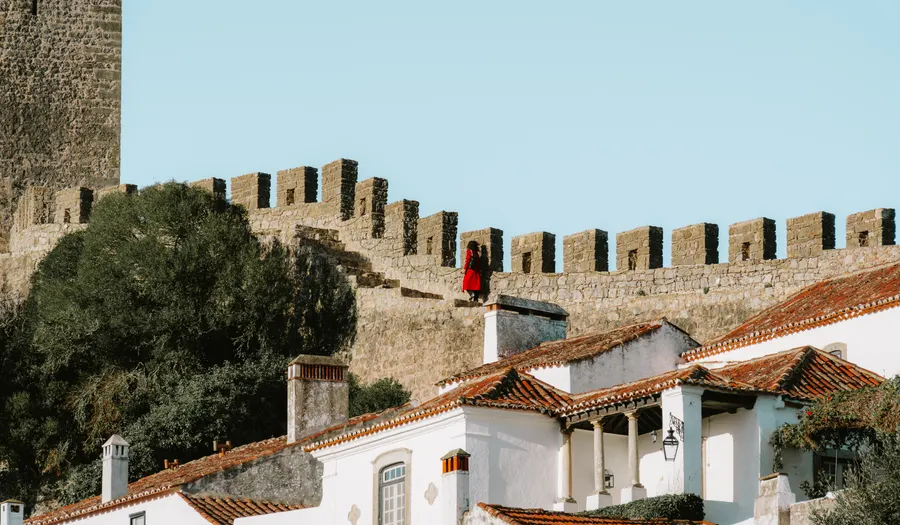
Away from the coast, Óbidos keeps its ramparts, white lanes and bougainvillea. Here you taste ginjinha, a sour cherry liqueur served in a little chocolate cup. The fortified villages of the interior, such as Marvão or Monsaraz, extend the change of scene far off the beaten track. This is tranquil Portugal, a land of old stones and markets.
How many days, and which itinerary?
Four to five days are enough for Lisbon and its surroundings. Allow a good week to add Porto and the Douro, and around ten days to head down to the Algarve without rushing.
🗺️ Day-by-day itinerary · 📓 Free printable Portugal guide (PDF)
Lisbon and around, five days
Three nights in Lisbon for Alfama, tram 28, Belém and the miradouros at sunset. A day in Sintra for Pena and Regaleira, another towards Cascais and the Atlantic coast. Finish with a fado evening in a small restaurant in Alfama or Bairro Alto.
Lisbon, Porto and the Douro, one week
Three nights in Lisbon, then the Alfa Pendular high-speed train to Porto for two nights: Ribeira, the port wine cellars and the Dom Luís Bridge. Devote a day to the Douro Valley, by cruise or by car among the terraced vineyards. Return via Coimbra and its historic university if time allows.
North to south, ten days
Start with Porto and the Douro, two to three nights. Head down to Lisbon for three nights, with Sintra as a day trip. Take the road to the Algarve for three nights in Lagos, between cliffs, the Benagil cave and coves. Drop the car off in Faro before the flight home.
Getting there and getting around
The Alfa Pendular train links Lisbon and Porto in under three hours, with low fares if you book ahead.
For the Algarve, the Douro Valley and the inland villages, a hire car opens up the coves and the wine roads.
In Lisbon, the metro, trams and funiculars spare you the hills, while Porto is mostly explored on foot.
Rede Expressos buses usefully complete the network for reaching towns and villages without a convenient station.
Where to stay in Portugal?
At €60-100 a day, Portugal offers some of the best value for money in Western Europe: you can stay right in the centre without blowing your budget.
Lisbon and Porto are full of guesthouses and charming small hotels set in renovated old buildings.
In the Algarve, prices rise in July and August, so aim for spring or autumn for lovely, quiet places to stay.
Pousadas, hotels set in historic monuments, are worth the splurge for a memorable night inland.
Our places to stay, stop by stop, at three budgets →
What to eat in Portugal?
Fish and seafood dominate: grilled sardines in summer, octopus, and the famous salt cod, bacalhau, said to come in a thousand ways.
In Lisbon as in Porto, try the bifana, a marinated pork sandwich, and in Porto the francesinha, a hearty toasted sandwich smothered in sauce.
Do not leave the country without a real, still-warm pastel de nata, ideally in Belém, and a glass of tawny port or lightly sparkling vinho verde.
Covered markets, such as Lisbon's Time Out Market, bring good affordable food stalls together under one roof.
Entry requirements
Schengen area: an ID card or passport is enough for EU citizens, 90 days visa-free for UK, US, Canadian and Australian passports.
Rules change: check your own government's travel advice before you go.
Cities and regions to discover
 City
City🇵🇹 Lisbon
 City
City🇵🇹 Porto
 Region
🇵🇹 The Algarve
 Region
🇵🇹 Madeira
 Region
🇵🇹 The Azores
Frequently asked questions about Portugal
When is the best time to go?
April to June and September to October bring mild weather and lovely light without the crowds. The Algarve stays pleasant for much of the year thanks to the Atlantic climate.
Lisbon or Porto?
The two complement each other: Lisbon for its scale, the miradouros and Sintra, Porto for its tight-knit atmosphere, the Douro and port wine. In a week you can do both by train.
Is Portugal really cheap?
Yes, it is one of the most affordable countries in Western Europe. A budget of €60-100 a day comfortably covers accommodation, meals and transport.
How many days should you plan?
Four to five days for Lisbon and its surroundings, a good week with Porto and the Douro, around ten days to head down to the Algarve.
Similar destinations
 City
City🇫🇷 Bordeaux and Around
 City
City🇫🇷 Carcassonne
 City
City🇫🇷 Rochefort and the Charente Estuary
 Region
🇭🇷 Istria
_Abbaye_Saint-Michel_de_Gaillac_exposition_sud_vue_des_berges_du_Tarn.jpg/1280px-(Gaillac)_Abbaye_Saint-Michel_de_Gaillac_exposition_sud_vue_des_berges_du_Tarn.jpg) Region
Region🇫🇷 Gaillac
 Region
🇫🇷 Tarn-et-Garonne
 Country
🇫🇷 France
 Region
🇫🇷 Normandy
 City
City🇮🇪 West Cork
 City
City