When to go to Porto?
→ The detailed month-by-month page, with real weather records
Best time: May to June and September to October
At a glance
Why go to Porto?
Porto is a city of character, more authentic and more intimate than the capital. Clinging to the steep banks of the Douro, it offers a spectacular backdrop of colourful houses tumbling down to the river. Its iron bridges, one of them designed by a pupil of Eiffel, span the valley with elegance. Visitors fall for its raw, working-class and proud atmosphere.
It is, of course, the world capital of port wine, its lodges lined up along the Gaia bank. A tasting facing the river at sunset ranks among the unmissable pleasures of any stay. The traditional rabelo boats that once carried the barrels still dot the scene. Here, wine culture is woven tightly into the city's identity.
Finally, Porto wins people over with its architectural riches and its friendly, affordable atmosphere. São Bento station lined with azulejos, the Livraria Lello and the baroque churches reveal treasures on every street corner. The city is compact, easy to explore on foot and packed with welcoming taverns. It is an ideal destination for a long weekend full of discoveries.
Map of Porto: what is where?
The map shows the 6 places covered in this guide, to picture the distances and plan your route.
- Livraria Lello
- Dom Luís I Bridge
- Ribeira
- Port cellars, Gaia
- São Bento Station
- Clérigos Tower
How much does a trip to Porto cost?
Porto is even more affordable than Lisbon, with an excellent quality of life on a small budget. Wine tastings and some upmarket restaurants push the bill up.
| Style | Per day | What it covers |
|---|---|---|
| Backpacker | €40-65/day | hostel, tascas, walking and free or cheap sights |
| Comfort | €90-150/day | hotel or guesthouse, restaurants, tastings and a Douro excursion |
| Premium | €260+/day | boutique hotel with river view, fine dining, a cruise and private tours |
Cards are accepted everywhere, but a little cash is still handy for small traditional tascas.
Is Porto safe?
Porto is a peaceful, welcoming city, considered very safe for travellers. You can stroll around calmly by day and by night, including in the lively centre. The few precautions concern pickpockets in the tourist areas of the Ribeira and on crowded transport. The cobbled slopes, often slippery in the rain, mainly call for good shoes. Overall, the atmosphere is relaxed and the feeling of safety constant.
What to see and do in Porto
- the Ribeira district
- the Dom Luís I Bridge
- the port cellars in Gaia
- the Livraria Lello
- the Douro Valley
Livraria Lello

Counted among the most beautiful bookshops in the world, Lello dazzles with its sinuous red staircase and neo-Gothic ceiling. Light filtering through the stained-glass window bathes the carved woodwork in a fairy-tale glow. It is said to have inspired the world of Harry Potter, which explains the crowds. Entry is paid but deductible from a book purchase, so you may as well leave with a souvenir.
Dom Luís I Bridge

This double-deck iron bridge, a nineteenth-century masterpiece, links Porto with Vila Nova de Gaia. Designed by a disciple of Gustave Eiffel, it spans the Douro with breathtaking daring. You can cross the upper deck on foot, shared with the metro, for a dizzying view over the city. At sunset, the panorama over the rooftops and the river is pure magic.
Ribeira
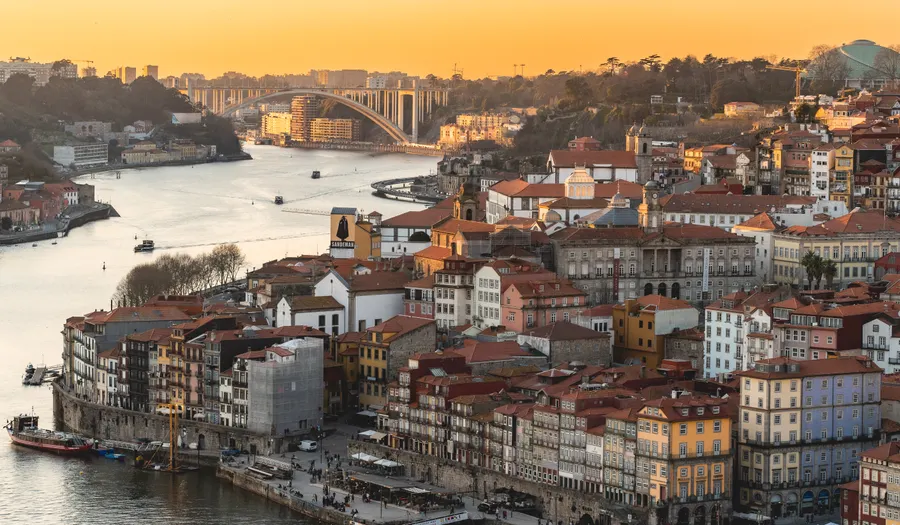
This UNESCO-listed historic district spreads its colourful houses along the Douro. Its narrow lanes, stairways and weathered façades form the picturesque heart of Porto. Waterfront terraces invite you to linger over a drink while the rabelo boats drift by. It is the ideal starting point for exploring the city and crossing to the Gaia lodges.
Port wine cellars (Gaia)

On the opposite bank, in Vila Nova de Gaia, stand the famous lodges where port wine is aged. Great houses such as Sandeman, Graham's and Taylor's offer tours and guided tastings. You learn the secrets of this unique fortified wine, from Douro grape to glass. Some lodges also have a terrace with a stunning view of the old town.
São Bento Station

This early twentieth-century railway station houses one of the most beautiful halls in Europe. Its walls are covered with twenty thousand azulejos, blue glazed tiles that tell the history of Portugal. Battles, rural scenes and royal processions unfold in monumental panels. Even if you are not catching a train, a free visit to this masterpiece is a must.
Clérigos Tower

This 76-metre baroque bell tower rises slender above the rooftops of Porto. Climb its 240 steps for a 360-degree panorama over the city, the river and the ocean in the distance. The adjoining church, all granite curves, is a jewel of Portuguese baroque. At night, the illuminated tower serves as a glowing landmark in the city sky.
How many days, and which itinerary?
Three to four days are enough for Porto, extended with a trip into the Douro Valley.
🗺️ Day-by-day itinerary · 📓 Free printable Porto guide (PDF) · 🌍 All of Portugal
Porto in a weekend (3 days)
Three days to explore the Ribeira, cross the Dom Luís I Bridge, visit the Gaia lodges and wander the historic centre between azulejos and the Livraria Lello.
Porto and the Douro (5 days)
Round off the city with a day's cruise or train ride into the Douro Valley, with its UNESCO-listed terraced vineyards and wine quintas.
Northern Portugal (7 days)
The extended version adds Guimarães, cradle of the nation, the baroque city of Braga and Peneda-Gerês National Park for an immersion in the country's green north.
Getting there and getting around
A modern metro links the airport with the city centre in around forty minutes for a few euros.
A very compact historic centre, ideal on foot, but with steep slopes down to the river.
The Guindais Funicular links the Ribeira with the upper level of the bridge without effort.
Trains from São Bento or Campanhã serve the Douro Valley and the north of the country.
Where to stay in Porto?
Stylish, sociable youth hostels: €20-40 a night in a dorm.
Guesthouses and three-star hotels in the centre: €65-110 a night depending on the season.
Boutique hotels with views of the Douro or the Ribeira: €130-200 a night.
Luxury hotels and wine quintas in the Douro: from €260 a night.
Our places to stay, stop by stop, at three budgets →
What to eat in Porto?
The francesinha, a gargantuan meat sandwich smothered in melted cheese and spicy sauce, the city's signature dish.
Bacalhau (salt cod) and tripas à moda do Porto, the historic tripe dish that earned locals their nickname.
A glass of port, tawny or ruby, as an aperitif or with dessert.
Pastéis de nata and cornbread (broa), with a short, strong coffee.
Entry requirements
Schengen area: an ID card or passport is enough for EU citizens, 90 days visa-free for UK, US, Canadian and Australian passports.
Rules change: check your own government's travel advice before you go.
Frequently asked questions about Porto
When is the best time to visit Porto?
Spring (April to June) and autumn (September-October) bring mild, bright weather, ideal for walking. Summer is pleasant and lively, but Porto remains a rainy city with a wetter winter.
How many days do you need in Porto?
Three to four days are enough to discover the city at your own pace. Allow five days to add a trip into the Douro Valley and its vineyards.
What daily budget should you plan for Porto?
Around €40-65 a day as a backpacker, €90-150 in comfort with a hotel and restaurants, and over €260 for a premium stay with a cruise and fine dining.
How do you get around Porto?
The metro links the airport with the centre, which is very compact and pleasant to explore on foot despite the slopes. Trains serve the Douro Valley and the north of the country from São Bento and Campanhã stations.
Which area should you stay in in Porto?
The Ribeira and the historic centre offer charm and easy access to the sights, Cedofeita appeals with its bohemian vibe and galleries, while Gaia lets you stay near the lodges with a view of the city.
Similar destinations
 Country
🇫🇷 France
 Region
🇫🇷 Normandy
 Country
🇮🇹 Italy
 Region
🇮🇹 The Amalfi Coast
 City
City🇵🇹 Lisbon
 City
City🇨🇿 Prague
 City
City🇵🇱 Kraków
 City
City🇩🇰 Copenhagen
 Region
🇮🇹 Puglia
 Region