When to go to the Amalfi Coast?
→ The detailed month-by-month page, with real weather records
Best time: May to June and September
At a glance
Why go to the Amalfi Coast?
The Amalfi Coast and the Bay of Naples pack one of the highest concentrations of scenery and heritage in Italy into a strip of coastline barely fifty kilometres long. Villages clinging to the cliffs, enormous lemons hanging over the lanes, ancient cities frozen beneath the ash of Vesuvius: within an hour's drive you go from a postcard setting to one of the most famous archaeological sites in the world. Everything here fits into a tiny area, and yet each village has its own character.
It is also a region of unapologetic contrasts. Naples is noisy, working-class and overflowing with life, the birthplace of pizza and of a theatrical Baroque; the Amalfi Coast, a stone's throw away, cultivates the elegance of the resort and the discreet luxury of Ravello's hanging gardens. In between, Sorrento makes the transition, Capri plays the glamour card, and Positano lines up its pastel houses like an amphitheatre facing the sea. You come for the beauty of the setting and stay for the food and the gentle climate.
Know what to expect: the Amalfi Coast is a victim of its own success. In July and August the coast road is jammed, the beaches packed and prices at their peak. The reward has a price, but you earn it by choosing the right season. In spring and early autumn the light is softer, the lemon trees are fragrant, and you find the spirit of a Mediterranean coastline that is still alive, far from the peak-month crowds.
Map of the Amalfi Coast: what is where?
The map shows the 7 places covered in this guide, to picture the distances and plan your route.
- Naples
- Pompeii
- Sorrento
- Positano
- Amalfi
- Ravello
- Capri
How much does a trip to the Amalfi Coast cost?
The Amalfi Coast is among the most expensive destinations in Italy, especially in July and August when prices hit their peak. Naples remains much more affordable. The ranges below are per person per day, including accommodation, meals and visits, excluding long-distance transport.
| Style | Per day | What it covers |
|---|---|---|
| Backpacker | €70-110 | Hostel room or small hotel in Naples or Sorrento, pizza and street food, bus and train, public beaches and sights on foot. Realistic mainly off season. |
| Comfort | €150-250 | Well-located three-star hotel, restaurants with a view, ferries and excursions, one island or paid site per day. The most common budget on the coast. |
| Luxury | €400 and up | Grand hotel or boutique hotel on the cliff in Positano or Ravello, gourmet restaurants, private boat transfers, private beaches. No real ceiling in high season. |
The euro is the currency, and bank cards are accepted almost everywhere, though a little cash remains useful for small shops, cafés and bus tickets. ATMs are plentiful in Naples and Sorrento, scarcer in the small villages of the coast. Tipping is not compulsory; a cover charge (coperto) is often added to the restaurant bill.
Is the Amalfi Coast safe?
The region is safe for travellers, and the vast majority of trips pass without the slightest incident. In Naples, in very busy areas, stations and public transport, take the usual precautions against pickpockets: bag closed and in front of you, no phone left on the table at a café terrace, documents kept safe. Neapolitan traffic, famously chaotic, calls for vigilance as a pedestrian. On the coast, the main risk comes from the summer heat and the gradients: water, sun protection and good shoes are a must, especially at Pompeii and on the Path of the Gods.
What to see and do in the Amalfi Coast
- Positano and its colourful houses
- Amalfi and its Duomo
- the island of Capri
- the ruins of Pompeii
- Neapolitan pizza
Positano and its colourful houses

Positano is the picture-perfect image of the Amalfi Coast: a vertical village whose ochre, pink and white houses tumble down the cliff to the sea. You inevitably head down, because everything here is done by staircase, between shops selling made-to-measure leather sandals and facades draped in bougainvillea. The Spiaggia Grande, a pebble beach lined with parasols, stretches out at the foot of the village beneath the colourful majolica dome of the church of Santa Maria Assunta. The way back up is hard on the calves, but every landing offers a new postcard. Best to arrive early in the morning or late in the day to avoid the crush and enjoy the golden light. It is expensive, it is packed in summer, but it is unforgettable.
Amalfi and its Duomo

Amalfi gave its name to the whole coast, and was once a powerful maritime republic rivalling Venice and Genoa. Its heart beats on the Piazza del Duomo, dominated by Sant'Andrea Cathedral and its grand staircase of sixty-two steps. The golden mosaic facade, the Cloister of Paradise with its interlaced Arab-inspired arches, and the bell tower bear witness to this prestigious past. The narrow lanes climbing behind the square teem with limoncello and ceramics shops. Try the delizia al limone, a small creamy lemon dome and a local speciality. Livelier and more accessible than Positano, Amalfi makes a convenient base for exploring the coast by bus or ferry.
The island of Capri

Capri, set at the entrance to the Bay of Naples, has been the region's society hotspot since Antiquity, when Emperor Tiberius had his villas here. You reach it by ferry from Naples or Sorrento, landing at Marina Grande. The famous Blue Grotto, where low-angled light turns the water an electric blue, is visited by rowing boat when the sea allows. Up high, the chairlift to Monte Solaro from Anacapri offers a dizzying panorama over the Faraglioni, the three rocks rising offshore. The Gardens of Augustus look down on the sea and the zigzagging Via Krupp. The Piazzetta, a tiny square lined with café terraces, is still the stage for the comings and goings of holidaymakers. See it early, before the day-trip crowds arrive.
The ruins of Pompeii

On 24 August in the year 79, the eruption of Vesuvius buried Pompeii under several metres of ash, freezing the Roman city in an instant. Today you walk its paved streets, its houses with intact frescoes, its baths, forum and amphitheatre as if life had stopped there yesterday. The casts of the victims, caught in their final gesture, are chilling and give the site its overwhelming power. Neighbouring Herculaneum, smaller but better preserved, is the ideal complement to the visit. Allow at least half a day, good shoes, water and a hat, as shade is scarce. A guide or audio guide helps these otherwise silent stones speak.
Naples and its historic centre

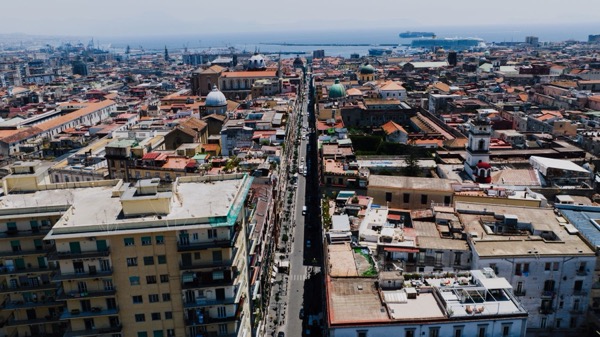
Naples is not so much visited as lived. Its historic centre, a UNESCO World Heritage Site, is organised around Spaccanapoli, the long straight street that splits the old town from end to end. Here you come across Baroque churches, street stalls, washing hanging from windows and an infectious energy. The Sansevero Chapel holds the striking Veiled Christ, a tour de force of translucent marble. Beneath the city, underground Naples unfolds its ancient galleries and Greek cisterns. And of course, this is where pizza was born: the margherita is enjoyed in the district's historic pizzerias, folded in four and eaten on the go. Working-class, intense and endearing, Naples takes some effort but is like no other city.
Ravello and its gardens

Perched high above the coast, away from the bustle of the shoreline, Ravello cultivates refinement and silence. The village has seduced musicians, writers and artists, from Wagner to Gore Vidal. Villa Rufolo and its terraced gardens offer one of the finest viewpoints in all of Italy, with the sea stretching out endlessly; every summer its stage hosts an open-air classical music festival. A little further on, Villa Cimbrone and its Terrace of Infinity, lined with marble busts, seems suspended between sky and sea. You reach the village by bus from Amalfi along a winding road. It is a refuge for lovers of calm and contemplative beauty, far from the seaside crowds.
The Path of the Gods and Sorrento

To discover the coast other than by bus, nothing beats the Path of the Gods, the legendary hike linking Agerola to Nocelle, above Positano. The trail winds along the cliffside, with plunging views over the sea, terraced vineyards and tiny villages below. Allow two to three hours' walking, with no major difficulty but good shoes needed. On the other side of the peninsula, Sorrento watches over the Bay of Naples from its tuff cliffs. A pleasant, well-connected town, it makes an ideal base camp: stations, ferries and buses all converge here. In the evening you stroll on Piazza Tasso, a glass of limoncello in hand, facing Vesuvius as it turns pink at sunset.
How many days, and which itinerary?
A week (7 days) lets you sample the essentials without rushing: two to three days for Naples and the ancient sites, three to four days for the Amalfi Coast and an island. A long weekend of 4 days is enough for a concentrated overview, but forces choices. To see everything without stress, Ravello's gardens, the Path of the Gods hike and a day on Capri included, ten days is a real luxury.
🗺️ Day-by-day itinerary · 📓 Free printable Amalfi Coast guide (PDF) · 🌍 All of Italy
4 days (the essentials)
Day 1: Naples, the historic centre, Spaccanapoli, the Sansevero Chapel and pizza in the evening. Day 2: Pompeii in the morning, then transfer to Sorrento for the night. Day 3: the Amalfi Coast by SITA bus, Positano and Amalfi. Day 4: Ravello and its gardens, before heading home. A brisk pace, but it gives a good overview.
7 days (the classic)
Two nights in Naples (historic centre, Pompeii and Herculaneum, possibly Vesuvius), then four nights on the coast, based in Sorrento or Amalfi. Spend one day on Positano and Amalfi, one on Capri by ferry, and one on Ravello and the Path of the Gods. The last day stays free for the beach or a boat trip. A balanced tempo, with time to wander.
10 days (in depth)
The 7-day classic, enriched with a night on Capri to enjoy the island once the day-trippers have left, a full day of hiking and an escape to Procida or Ischia, the bay's more authentic islands. Add more time in Naples too, for underground Naples and the archaeological museum, which holds the treasures of Pompeii.
Getting there and getting around
A car is more of a burden than an asset on the Amalfi Coast: the SS163 coast road is magnificent but narrow, winding and congested in season, and parking is scarce and extortionate. The simplest option is to combine the Circumvesuviana train (Naples, Pompeii, Sorrento), the SITA buses that serve every village on the coast, and the ferries linking Naples, Sorrento, Positano, Amalfi and Capri from spring to autumn. The sea often offers the finest viewpoint of all, and spares you the queasiness of the road's hairpin bends.
To reach the region, Naples airport has good connections across Europe and lies a few kilometres from the centre. From there, shuttles and trains run to Sorrento, gateway to the peninsula. In high season, it is best to book ferries and transfers ahead and leave plenty of slack in your timings: buses fill up fast and queues at the piers can be long. A daily transport pass can quickly pay for itself if you take lots of bus trips.
Where to stay in the Amalfi Coast?
Your choice of base shapes your budget. Sorrento, well served by train and ferry, offers the best value for money and a wide range of hotels; it is the most practical base for exploring. Amalfi and Maiori, right on the coast, keep journeys to a minimum. Positano and Ravello are the most expensive and sought-after addresses, to be booked well in advance. Naples, finally, works as a city stopover in its own right, with gentler prices than by the sea.
On the Amalfi Coast, accommodation ranges from small family hotels clinging to the cliff to historic grand hotels with sea-view terraces. Prices rise steeply from June to September, and the best places are fully booked months ahead. Off season, in April, May and October, you will find the same rooms at a fraction of the price, with weather that is still mild. Mind the gradients: in Positano especially, a room high up can mean dozens of steps every time you go out, which is no small matter with luggage.
Our places to stay, stop by stop, at three budgets →
What to eat in the Amalfi Coast?
Campania is one of Italy's great food regions. Naples is the birthplace of pizza, and the margherita, with its mozzarella di bufala, San Marzano tomatoes and basil, is enjoyed in historic pizzerias where you sometimes have to queue. Mozzarella di bufala campana is indeed a star product, to be tasted as fresh as possible. On the sweet side, rum-soaked babà and flaky sfogliatella are musts in Neapolitan pastry shops.
On the coast, everything revolves around the lemon: the famous sfusato d'Amalfi, huge and fragrant, are used to make limoncello, the bright yellow digestif readily offered at the end of a meal. You also find them in desserts such as the delizia al limone. Seafood dominates the menus: spaghetti alle vongole with clams, fritture of small fish, seafood salads. All of it goes with a local white wine, such as Fiano or Falanghina, on a terrace facing the water.
Entry requirements
Schengen area: an ID card or passport for EU citizens, 90 days visa-free for UK, US, Canadian and Australian passports.
Rules change: check your own government's travel advice before you go.
Cities and regions to discover
 City
City🇮🇹 Positano
 City
City🇮🇹 Amalfi and Ravello
 City
City🇮🇹 Capri
 City
City🇮🇹 Pompeii and Vesuvius
 City
City🇮🇹 Naples
 City
City🇮🇹 Sorrento and the Path of the Gods
Frequently asked questions about the Amalfi Coast
When is the best time to visit the Amalfi Coast?
Spring (May to June) and early autumn (September to October) are ideal: mild weather, sea still warm enough to swim, lemon trees in blossom and more reasonable crowds. July and August guarantee fine weather but mean heat, maximum crowds and peak prices. In winter, many hotels and ferries on the coast close.
Should you hire a car on the Amalfi Coast?
It is not advisable. The SS163 coast road is narrow, winding and jammed in season, and parking is scarce and expensive. It is far more relaxing to combine the Circumvesuviana train, SITA buses and ferries, which serve every village and often offer better views than the road.
How long do you need to visit the region?
A week is the right compromise to sample the essentials: Naples and the ancient sites, two or three villages on the coast and an island such as Capri. A long weekend of four days gives a concentrated overview at the cost of some choices, while ten days allow a relaxed pace with hiking and lesser-known islands.
Can you visit Pompeii and Capri on the same day?
Better not: these two sites, on opposite sides of the region, each deserve half a day to a full day. Doing both means rushed transport and a hurried visit. Ideally, spend one day on Pompeii (and Herculaneum) from Naples or Sorrento, and another on Capri by ferry.
Which town should you choose as a base for exploring the coast?
Sorrento is the most practical and cheapest base, with trains, buses and ferries converging on every point of interest. Amalfi suits those who want to stay at the heart of the coast, Positano and Ravello offer charm at a high price, and Naples works as a city stopover in its own right before or after the coast.
Similar destinations
 City
City🇬🇷 Corfu
 Country
🇫🇷 France
 Country
🇪🇸 Spain
 Region
🇮🇹 Puglia
 Region
🇮🇹 The Italian Lakes
 Region
🇪🇸 Andalusia
 City
City🇫🇷 Nice
 Region
🇭🇷 Istria
 City
City🇲🇹 Valletta
 Region