When to go to Kraków?
→ The detailed month-by-month page, with real weather records
Best time: April to June and September to October (Christmas markets: December)
At a glance
Why go to Kraków?
Capital of Poland for five centuries, Krakow came through the Second World War without major destruction: its medieval centre, the first site ever inscribed on the UNESCO World Heritage List, in 1978 together with Wieliczka, is authentic down to the last cobblestone. The Rynek, 200 metres along each side, is the largest medieval square in Europe, buzzing day and night around its Renaissance Cloth Hall. To the south, Wawel Hill stacks up the cathedral where kings were crowned, a Renaissance castle and the cave of the dragon from the city's founding legend.
It is also a city of memory, dense and deeply moving. Kazimierz, the Jewish quarter with seven synagogues, tells the story of 500 years of Polish Jewish life before coming alive in the evening in its bohemian cafes; across the Vistula, the Podgorze ghetto and Oskar Schindler's factory carry the story on. Some 70 km away, the Auschwitz-Birkenau memorial is a harrowing but essential visit, which many consider their main reason for coming to Poland.
Finally, Krakow is a joyful and incredibly affordable student city: the Jagiellonian University, where Copernicus studied, fills the city with 150,000 students, tiny vodka bars and milk-bar canteens where you can lunch on pierogi for €5. Prices, among the lowest in Central Europe, let you treat yourself to characterful hotels and good restaurants without counting the cost. It is the city break with the best richness-to-price ratio on the continent.
Map of Kraków: what is where?
The map shows the 6 places covered in this guide, to picture the distances and plan your route.
- Main Market Square
- Wawel Castle
- Kazimierz
- Schindler's Factory
- Wieliczka Salt Mine
- Auschwitz-Birkenau Memorial
How much does a trip to Kraków cost?
Krakow is probably the most affordable city break of this calibre of beauty in Europe: you can eat, sleep and go out for a fraction of Paris prices. Only the trips to Wieliczka and Auschwitz push the bill up a little.
| Style | Per day | What it covers |
|---|---|---|
| Backpacker | €35-55/day | Central hostel, bar mleczny and zapiekanka, trams, free sights and an Auschwitz trip by public bus |
| Comfort | €65-110/day | 3-4-star Old Town hotel, good Polish restaurants, Wawel and Wieliczka, a guided excursion |
| Premium | €150+/day | Historic 5-star hotel (Stary, Copernicus), gourmet restaurants, private guides and a Chopin concert |
Local currency: the Polish zloty (PLN, €1 is worth about PLN 4.30); cards are accepted everywhere, even for an obwarzanek, but if you change cash, choose a kantor in the centre with displayed rates and decline conversion into euros at ATMs.
Is Kraków safe?
Krakow is a very safe city, where the centre stays lively and well lit late into the evening. Crime is mostly limited to pickpockets on the Rynek and on crowded trams, and to some excesses around the bars on weekend nights: stag parties are numerous, so it is best to avoid places with touts drumming up custom. Change money at kantors that clearly display their rates, never in the street, and use Bolt or official taxis at night.
What to see and do in Kraków
- Main Market Square
- Wawel Castle
- St Mary's Basilica
- Kazimierz
- Wieliczka Salt Mine
- Auschwitz-Birkenau Memorial
- Schindler's Factory
- Kościuszko Mound
Main Market Square and the Cloth Hall

Laid out in 1257, Krakow's main square is a perfect square 200 metres along each side, lined with palaces and merchants' houses. At its centre, the Renaissance Cloth Hall (Sukiennice) houses an arcade of amber and craft stalls, with a fine museum of 19th-century Polish painting upstairs. Every hour, a trumpeter plays the hejnal from the tower of St Mary's Basilica, a melody broken off in memory of the watchman struck by a Tatar arrow in 1241. Beneath the square, the Rynek Underground museum reveals medieval remains 4 metres below ground.
Wawel Hill

Residence of the kings of Poland from the 11th to the 17th century, Wawel overlooks the Vistula with its cathedral, where almost all the country's sovereigns were crowned and buried. The Renaissance castle, built by Italian architects, displays Flemish tapestries, royal apartments and the crown treasury with the coronation sword Szczerbiec. At the foot of the hill, the Dragon's Den spits real flames every few minutes, courtesy of its bronze statue. Allow half a day and book each tour separately, as tickets are limited.
St Mary's Basilica
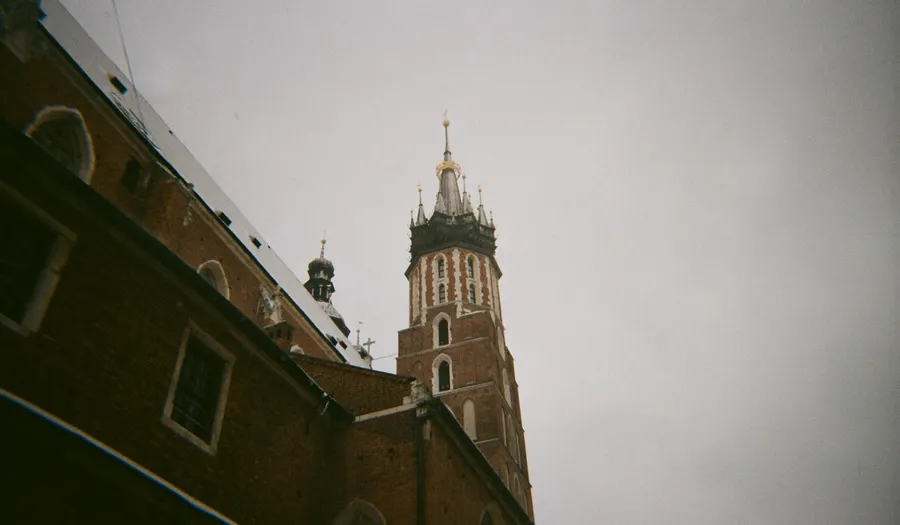
Its two unequal towers have dominated the Rynek since the 14th century, the taller serving as the watchtower from which the hejnal sounds. Inside, the monumental altarpiece by Veit Stoss, a 13-metre Gothic masterpiece carved between 1477 and 1489, is ceremonially opened every day at 11:50. Star-spangled midnight-blue vaults and polychrome decoration by Matejko make up one of the most striking church interiors in Europe. The tourist entrance is at the side, and climbing the tower gives the best view of the square.
Kazimierz, the Jewish quarter

An autonomous Jewish town for centuries, Kazimierz retains seven synagogues, including the Old Synagogue, now a museum, and the still-active Remuh Synagogue with its cemetery of 16th-century gravestones. The setting for the film Schindler's List, the district has reinvented itself as a bohemian epicentre: candlelit cafes on Szeroka Street, hidden bars on Nowy Square and hatches selling zapiekanka (the cult toasted open sandwich) fuel Krakow's nights. The Jewish Culture Festival, at the end of June, is one of the largest in the world.
Podgorze and Schindler's Factory

On the right bank of the Vistula, Podgorze was the ghetto where the Nazis confined Krakow's Jews from 1941 to 1943. Ghetto Heroes Square with its 70 empty bronze chairs, fragments of the wall and the Eagle Pharmacy tell this story with restraint. Oskar Schindler's former enamel factory now houses a remarkable museum on Krakow under Nazi occupation, going well beyond Schindler's story alone. Allow two hours and book online, as morning slots go fast.
Nowa Huta

Just 20 minutes by tram from the centre, the scenery changes radically: Nowa Huta is a Stalinist new town built from 1949 around a gigantic steelworks, conceived as the ideal workers' city. Monumental avenues, a central square ironically renamed after Ronald Reagan, socialist-realist blocks and nuclear shelters can now be visited as an open-air museum of communism. Trabant tours and period cafes such as the Stylowa add a retro touch. A fascinating counterpoint to royal Krakow.
How many days, and which itinerary?
Allow 3 days for the city itself and 4 to 5 days if you add Wieliczka and the Auschwitz-Birkenau memorial, as most visitors do.
🗺️ Day-by-day itinerary · 📓 Free printable Kraków guide (PDF) · 🌍 All of Poland
The essentials (2 days)
Day 1: the Rynek, St Mary's Basilica at 11:50 for the opening of the altarpiece, the Cloth Hall, then Wawel Hill in the afternoon. Day 2: Kazimierz in the morning (synagogues, Nowy Square), Schindler's Factory and Podgorze in the afternoon, an evening in the cellar bars of the centre.
City and memory (4 days)
Two days on the essentials, then a full day at the Auschwitz-Birkenau memorial, leaving from the bus station. On day four, the Wieliczka salt mines in the morning and some downtime in the Planty park or on the banks of the Vistula.
The great Polish south (6 days)
After four days in Krakow and its excursions, head for Zakopane and the Tatras (2 hours by bus): the Gubalowka funicular, wooden mountain architecture and smoked oscypek cheese, or opt for a traditional raft ride through the Dunajec gorge.
Getting there and getting around
From John Paul II Airport at Balice: a direct train to the main station in 20 minutes (around €4) or a taxi or Bolt for €20 to €30.
The historic centre is pedestrianised and compact: from the Rynek to Wawel is 10 minutes on foot, and 15 to Kazimierz.
Efficient trams and buses: a 20-minute ticket costs PLN 4 (€0.95), a 24-hour pass around €4. Buy from machines at the stops or on board, and always validate.
For Wieliczka: suburban train or bus 304 (30 minutes). For Auschwitz: direct buses from the bus station (1 hour 30 minutes) or an organised tour with transport included.
Where to stay in Kraków?
Old Town: sleep in a merchant's house a stone's throw from the Rynek, 3-4-star hotels from €70 to €130 a night.
Kazimierz: bohemian atmosphere and nightlife, boutique hotels and apartments from €55 to €100.
Podgorze and the Vistula banks: quieter and more modern, very good value from €45 to €80.
Tight budgets: excellent central hostels (Greg and Tom, Mosquito) with dorms from €12 to €22 and private rooms from €45.
Our places to stay, stop by stop, at three budgets →
What to eat in Kraków?
Polish essentials: pierogi (stuffed dumplings, €5 to €8 a dozen), zurek (sour rye soup, sometimes served in a bread bowl), bigos and breaded pork cutlet.
Try a bar mleczny, a milk-bar canteen inherited from communism: a full meal for €4 to €6, authentic atmosphere guaranteed (Milkbar Tomasza, Bar Gorno).
In the evening in Kazimierz: a giant zapiekanka from the Endzior hatch on Nowy Square, then a round of flavoured vodkas (cherry wisniowka, hazelnut) in the tiny bars.
Fine tables: Starka in Kazimierz for refined Polish cooking, Pod Aniolami in its Gothic cellars, and the bakeries selling obwarzanek, the ring of bread that symbolises the city.
Entry requirements
Schengen area: an ID card or passport for EU citizens, 90 days visa-free for UK, US, Canadian and Australian passports.
Rules change: check your own government's travel advice before you go.
Frequently asked questions about Kraków
When is the best time to visit Krakow?
May to June and September to October: mild weather, lively terraces on the Rynek and reasonable queues at the sights. December appeals too, with one of the finest Christmas markets in Poland, but bring a proper coat.
What daily budget should I plan for in Krakow?
Allow €35 to €55 a day as a backpacker and €65 to €110 in comfort, excursions included. Daily life is very affordable: a full meal in a bar mleczny for €5, a pint of beer for €3.
How do I get around?
On foot in the historic centre, which is entirely pedestrianised and compact. Cheap trams and buses (24-hour pass around €4) for Nowa Huta or the station, and train or bus for Wieliczka and Auschwitz.
How many days do you need to visit Krakow?
Three days for the city, four to five if you add the Wieliczka salt mines and the Auschwitz-Birkenau memorial, two excursions that most visitors include.
How do I organise a visit to Auschwitz-Birkenau?
Book your slot several weeks ahead on the memorial's official website, for a guided tour of around 3 hours 30 minutes. Allow a full day including the journey (1 hour 30 minutes each way by bus); the visit is not recommended for children under 14.
Similar destinations
 City
City🇨🇿 Prague
 City
City🇵🇹 Lisbon
 City
City🇵🇹 Porto
 City
City🇬🇷 Athens
 Country
🇨🇿 Czech Republic
 City
City🇭🇺 Budapest
 City
City🇫🇷 Lille
 City
City🇫🇷 Strasbourg
 City
City🇫🇷 Avignon
 City
City