When to go to Strasbourg?
→ The detailed month-by-month page, with real weather records
Best time: May to June and September (Christmas market: December)
At a glance
Why go to Strasbourg?
Strasbourg sits on an island. The Ill splits upstream of the city and rejoins downstream, tracing the Grande Île, an oval one kilometre by seven hundred metres that holds the entire medieval and classical city. The whole ensemble has been a UNESCO World Heritage Site since 1988, with the cathedral at its centre: begun in 1176, completed in 1439, built of pink Vosges sandstone, with a single 142-metre spire that made it the tallest building in the world until 1874. It is visible from across the plain, and it is still the best landmark for finding your way around the city.
The second city dates from the German annexation of 1871. Berlin decided to make Strasbourg an imperial showcase and built the Neustadt north of the Grande Île: avenues a hundred metres wide, the Palais du Rhin, the university, the national library, apartment blocks with bay windows and neo-Renaissance façades. The district was long disliked because it recalled the occupation; it has been UNESCO-listed since 2017. Walking from Place de la Cathédrale to Place de la République in twenty minutes means changing scale, material and century without any transition.
The third layer is political and recent. Seat of the European Parliament, the Council of Europe and the European Court of Human Rights, Strasbourg lives to the rhythm of the plenary sessions, twelve a year, which fill hotels and restaurants overnight. This international role, combined with 50,000 students and a cycle network that makes it the most bike-friendly city in France, creates an atmosphere very different from what you expect of a regional capital. The setting is half-timbered, but the city is not.
Map of Strasbourg: what is where?
The map shows the 6 places covered in this guide, to picture the distances and plan your route.
- Notre-Dame Cathedral
- La Petite France
- Ponts Couverts
- Place Kléber
- Place de la République, Neustadt
- European Parliament
How much does a trip to Strasbourg cost?
Strasbourg stays reasonable eleven months of the year, with museums at €7.50, cheap transport and decent meals at around €25. Two calendars are the exception and you need to know them: December, which puts the Grande Île under pressure and pushes up room rates, and the twelve plenary sessions of the European Parliament, which strip the city of rooms overnight.
| Style | Per day | What it covers |
|---|---|---|
| Backpacker | €55-90/day | Hostel or hotel near the station, free cathedral and Vauban Dam, bakeries and markets, day tram pass |
| Comfort | €140-220/day | Hotel in the Neustadt or on the Grande Île, one winstub a day, museum pass, Batorama cruise, bike hire |
| Premium | €350+/day | Characterful hotel on the Grande Île, Michelin-starred restaurant, private guide, a December stay booked well in advance |
Cards are accepted everywhere, including on trams and for very small amounts. Bring a little cash for the charity chalets at the Christmas market, and bear in mind that Alsace-Moselle local law closes most shops on Sundays, as well as on two extra public holidays, Good Friday and 26 December.
Is Strasbourg safe?
Strasbourg is safe by the standards of large French cities, and the whole tourist area can be explored without worry by day and in the evening. The real problems are those of a dense university city: pickpocketing around the station, Place Kléber and on packed trams at rush hour, and above all bike theft, a daily scourge here, to the point that a U-lock is the bare minimum and you never leave a valuable bike locked outside overnight. In December, the Grande Île is placed inside a security perimeter with filtered access and bag checks, introduced after the December 2018 Christmas market attack that killed five people: the set-up is visible, it lengthens journeys and you should factor it into your plans rather than be irritated by it. Two practical points follow: the density of the crowds on Saturday evenings in the narrow streets around the cathedral, where you shuffle along and children easily get lost, and very fast bike traffic on cycle lanes that visitors mistake for pavements, a cause of mundane but frequent accidents. Finally, the December cold is underestimated every year: it is 3 or 4 °C during the day and much colder in the evening, standing still in front of a chalet.
What to see and do in Strasbourg
- Notre-Dame Cathedral and its platform
- The astronomical clock
- La Petite France
- Ponts Couverts and the Vauban Dam
- Palais Rohan and its museums
- Batorama cruise on the Ill
- The European quarter and Parliament
- Strasbourg Christmas market
The cathedral and its quarter
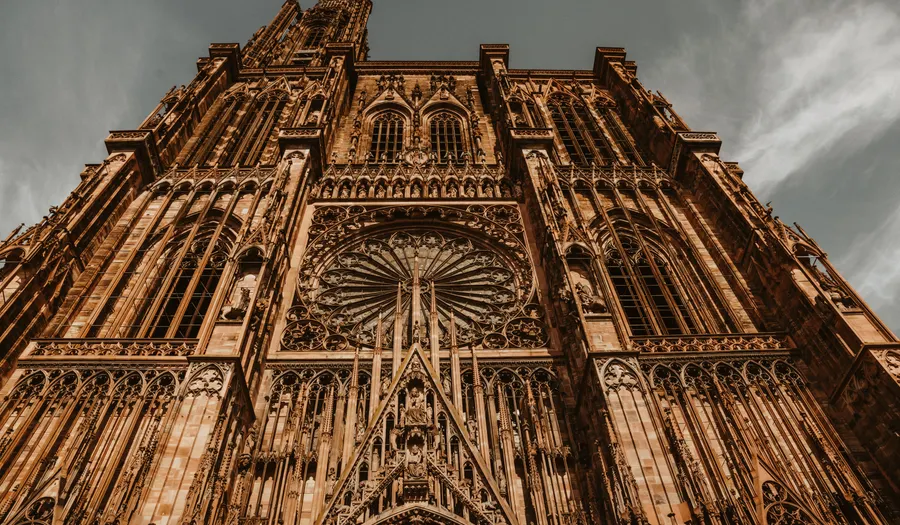
Pink Vosges sandstone, an Erwin von Steinbach façade bristling with statues, a 142-metre spire completed in 1439 that remained the tallest building in the world for more than two centuries: the cathedral dwarfs everything around it, including a square too small to contain it. Entry is free, but the opening hours catch everyone out: Monday to Saturday from 8:30 to 11:15 and then 12:45 to 17:45, and on Sunday from 14:00 to 17:15 only, with bag checks at the entrance. The platform, at 66 metres and 330 steps up, costs €10 and is reached by a separate entrance outside, to the right of the façade. Around it, the Maison Kammerzell of 1589 and the Musée de l'Œuvre Notre-Dame complete the picture. The quarter empties after 19:00 and becomes pleasant to walk again.
La Petite France and the covered bridges
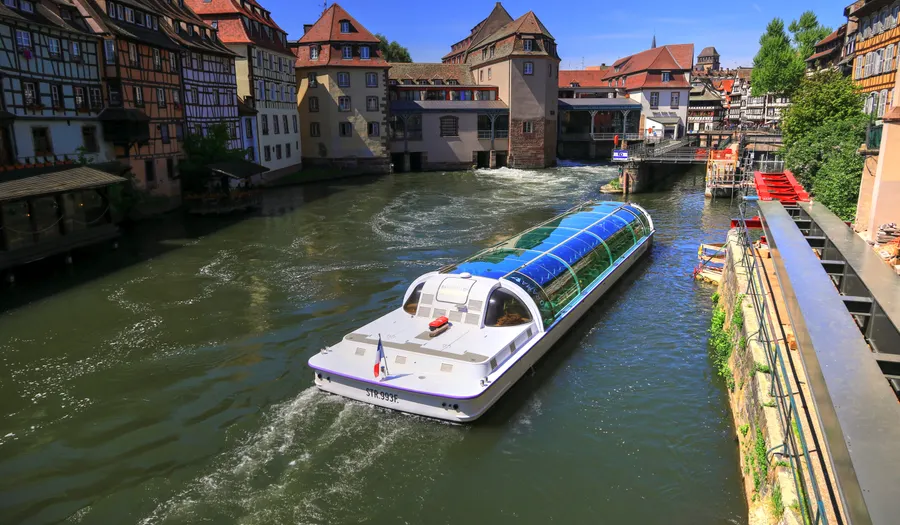
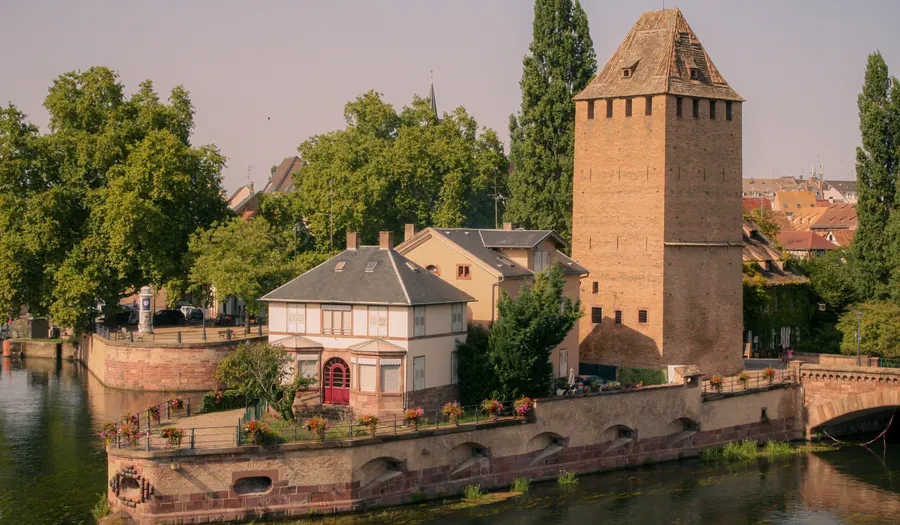
The former quarter of tanners, millers and fishermen, set where the Ill splits into four channels to drive the mills, La Petite France has kept its 16th-century half-timbered houses with open lofts for drying hides. The name comes from a hospice that treated syphilis, known as the French disease, which is considerably less romantic than the setting. To the west, the Ponts Couverts and their three 14th-century watchtowers mark the city's old defences, and the Vauban Dam, built in 1690 so that the south of the city could be flooded in case of siege, offers the best overall view from its terrace, free of charge. The area is very busy from 11:00 to 18:00 and almost empty early in the morning.
The Neustadt
North of the Grande Île stretches the German city of 1871-1918, UNESCO-listed in 2017: Place de la République and its semicircle of official buildings, the massive, dark Palais du Rhin, the university, the national library, and Avenue de la Liberté and Avenue des Vosges lined with bay-windowed apartment blocks. This is capital-city planning, with long vistas and inner gardens, the exact opposite of the medieval jumble next door. The district is still very much lived in and has almost no tourist shops, which makes it the most restful walk in the city. The Museum of Modern and Contemporary Art, on its southern edge, closes on Mondays and costs €7.50.
The European quarter
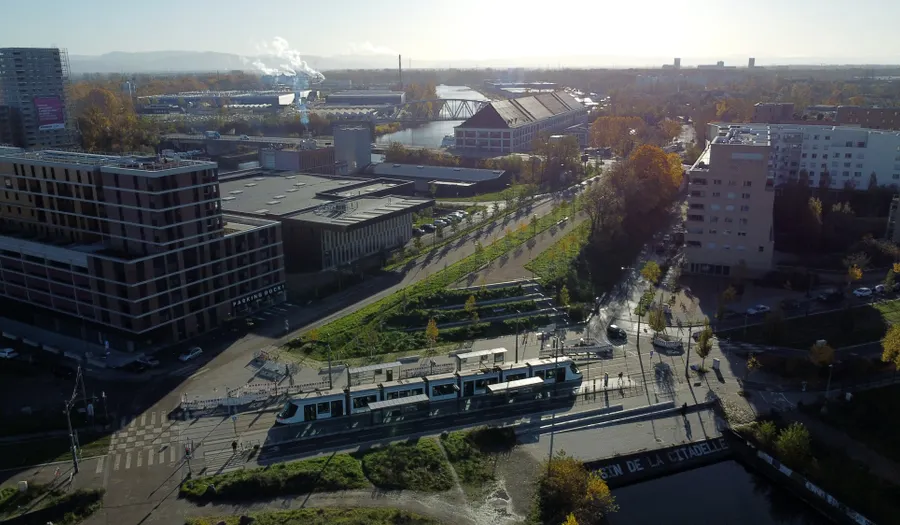
To the north-east, along the Ill and the Marne-Rhine Canal, you find the European Parliament in the Louise Weiss building, the Council of Europe, the European Court of Human Rights designed by Richard Rogers, and Arte. The Parliament visit is free, including the chamber and the Parlamentarium Simone Veil, Monday to Friday from 9:00 to 18:00 and on Saturdays with split hours, closed on Sundays, with no booking needed for individual visitors but physical ID compulsory. Twelve times a year, the plenary sessions fill the city and its hotels. Opposite, the Parc de l'Orangerie, laid out in 1804 and home to a stork enclosure that helped reintroduce the species to Alsace, is Strasbourg's great green lung.
The Palais Rohan museums

Built between 1732 and 1742 for the Rohan prince-bishops, this French-style palace on the bank of the Ill just behind the cathedral houses three museums under a single €7.50 ticket: Fine Arts, Decorative Arts and Archaeology. The cardinals' apartments, with their suite of salons and the library, are worth the entry fee on their own. Note that the upper galleries of the Fine Arts museum have been closed since 2025. All three museums close on Tuesdays, while the Museum of Modern Art and the Historical Museum close on Mondays: this is the most common scheduling trap in Strasbourg. A museum pass at €16 for one day or €20 for three days covers the whole network, and all municipal museums are free on the first Sunday of the month.
The Christmas market
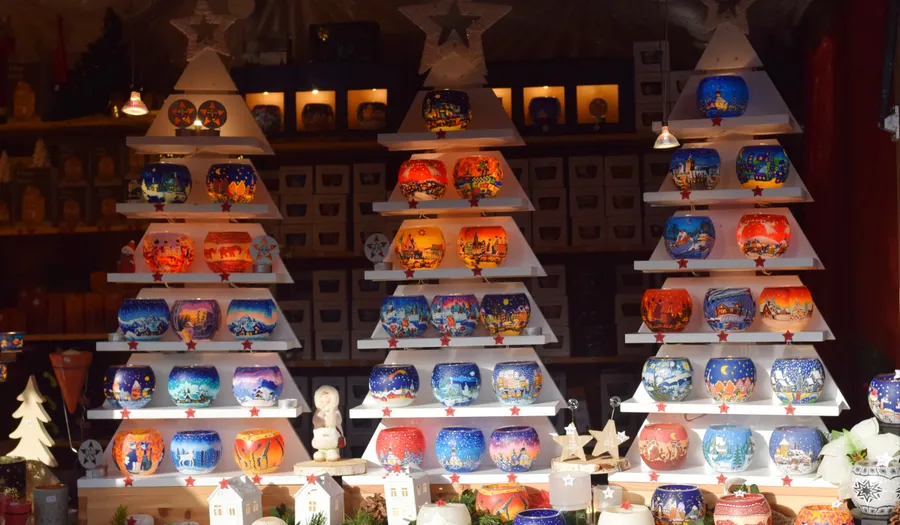
The Christkindelsmärik has existed since 1570, making it the oldest Christmas market in France, and today it occupies eight official sites: Place Broglie for the historic market, Place Kléber at the foot of the Great Christmas Tree, Place de la Cathédrale and Place du Château, the Carré d'Or on Place du Temple-Neuf, La Petite France, Square Louise-Weiss for small producers, the Rohan terrace for the Quai des Délices and Place Grimmeissen for the OFF market. The 2025 edition ran from 26 November to 24 December; the 2026 dates follow the same pattern and are published by the city in the autumn. A security perimeter filters access to the Grande Île, with bag checks, so allow extra time for every journey. A detail that ruins entire trips: the astronomical clock's procession does not take place for the whole duration of the market.
How many days, and which itinerary?
Two full days cover the Grande Île, the cathedral, La Petite France and a museum; four days let you add the Neustadt, the European quarter, the Orangerie and a trip to Kehl without ever forcing the pace.
🗺️ Day-by-day itinerary · 📓 Free printable Strasbourg guide (PDF) · 🌍 All of Alsace
Weekend on the Grande Île (2 days)
Day 1: the cathedral from 8:30, climb to the platform, the astronomical clock at 12:30, then the Palais Rohan in the afternoon and dinner in a winstub around Place du Marché-Gayot. Day 2: La Petite France and the Vauban Dam early in the morning, a 1h10 Batorama cruise, afternoon on Place Kléber and the Carré d'Or. Check the day: Tuesday closes the Palais Rohan, Monday closes the Historical Museum and the MAMCS.
Four days, all three cities
Add to the weekend a day exploring the Neustadt on foot, from Place de la République to Avenue des Vosges, with the MAMCS in late morning and the Parc de l'Orangerie in the afternoon. Devote the fourth day to the European quarter, with the free visit of the Parliament and the Parlamentarium in the morning, and cross the Rhine to Kehl by the Passerelle des Deux Rives or by tram, twenty minutes from the centre. This is the pace that finally lets you understand how the city fits together.
Three days during the Christmas market
Arrive by train and on a weekday, stay on the Grande Île having booked several months ahead, and flip the usual day around: museums and the cathedral in the morning, the markets at dusk around 16:30, dinner booked before 19:00. Cover the eight sites over two evenings rather than one, starting with Broglie and ending with La Petite France, the prettiest at night. Give up on the astronomical clock from the outset, as it does not run during the market.
Getting there and getting around
The TGV takes about 1h46 from Paris Gare de l'Est, with a dozen direct services a day, and the station is ten minutes' walk from La Petite France: a car is pointless here.
The CTS tram serves the whole city and runs as far as Kehl in Germany; a single ticket costs €1.90 for an hour including transfers, the 24h SOLO pass €4.60 and the 24h TRIO €10.20 for one to three people.
If you come by car, the only sensible move is park and ride: €4.20 a day for parking plus unlimited tram and bus journeys for everyone in the vehicle, at twelve P+R sites open around the clock.
Strasbourg is the most bike-friendly city in France, with more than 600 km of cycle routes; Vélhop rents a standard bike for €7 a day and an e-bike for €14, from its shops or self-service stations.
Where to stay in Strasbourg?
A hotel on the Grande Île, often in an old building: €130 to 260 a night outside December, everything on foot, but small rooms and noisy streets at weekends.
A hotel in the Neustadt or near the station: €90 to 170, roomier bourgeois buildings, ten to fifteen minutes' walk from the cathedral, the best value in the city.
A short-term rental flat in the Krutenau or around Place d'Austerlitz: €100 to 200, a lively student area, cheaper restaurants and real street life in the evening.
In December and during the Parliament's plenary sessions, hotels in the centre fill up months in advance and prices soar; staying in Kehl, across the Rhine, twenty minutes away by tram, is a much cheaper and perfectly workable solution.
Our places to stay, stop by stop, at three budgets →
What to eat in Strasbourg?
The Strasbourg winstub serves a repertoire more charcuterie than haute cuisine: presskopf, braised wädele, bibeleskäs and spätzle, €16 to 26 a dish, in wood-panelled rooms where sharing tables is common.
Strasbourg is a brewing capital, with Kronenbourg born in the Cronenbourg district and a network of active craft breweries; draught beer is everywhere and the brasseries serve late, which is rare in Alsace.
Kougelhopf, a moulded brioche with raisins and almonds, sells in bakeries for €8 to 14 depending on size, and comes in a savoury version with bacon and walnuts for aperitifs.
December has its own pastries: the mannele, a little brioche man for Saint Nicholas on 6 December, and bredele, small biscuits sold by weight in every bakery from November.
Entry requirements
Schengen area: an ID card or passport for EU citizens, 90 days visa-free for UK, US, Canadian and Australian passports.
Rules change: check your own government's travel advice before you go.
Frequently asked questions about Strasbourg
When is the Strasbourg Christmas market held?
Traditionally from the last Friday in November to 24 December: the 2025 edition ran from 26 November to 24 December, and the 2026 dates are published by the city in the autumn. Plan to book your accommodation six to nine months ahead if you want to stay on the Grande Île, as demand far exceeds supply.
What timing traps should you know about?
There are four. The cathedral closes to visitors between 11:15 and 12:45 and only opens at 14:00 on Sundays; the astronomical clock's procession takes place at 12:30, not noon, and is suspended for the whole Christmas market; the Palais Rohan museums close on Tuesdays while the MAMCS and the Historical Museum close on Mondays; and finally, Alsace-Moselle local law keeps shops closed on Sundays.
Is it worth climbing to the cathedral platform?
Yes if you are fit enough to climb 330 spiral steps, no otherwise, as there is no lift and it is not wheelchair accessible. The platform is at 66 metres, costs €10 full price and €6 reduced, and takes in the Grande Île, the Neustadt and the Rhine plain in a single view. The entrance is on the outside of the façade, on the right, not through the nave.
Is the Musée Alsacien worth a visit?
It is closed, and many guides don't mention it yet. The museum has been undergoing works since July 2025, with reopening announced for 2028: leave it out of your itinerary. The Historical Museum, open and costing €7.50, tells part of the same urban story.
Can you visit the European Parliament?
Yes, free of charge and without booking for individual visitors. The chamber and the Parlamentarium Simone Veil are open Monday to Friday from 9:00 to 18:00 and on Saturdays with split hours, with last entry at 17:00 and closed on Sundays. Valid physical ID is compulsory, a national identity card or passport: digital copies and driving licences are refused at the entrance.
Similar destinations
 City
City🇫🇷 Avignon
 City
City🇧🇪 Ghent
 Country
🇫🇷 France
 Region
🇫🇷 Normandy
 Region
🇫🇷 The French Riviera
 Region
🇫🇷 The Loire Valley
 City
City🇫🇷 Paris
 City
City🇫🇷 Lyon
 Country
🇪🇸 Spain
 City
City