When to go to Paris?
→ The detailed month-by-month page, with real weather records
Best time: April to June and September to October
At a glance
Why go to Paris?
Paris holds a density of masterpieces unmatched anywhere in the world. The Louvre, Orsay, the Orangerie and the Centre Pompidou alone span several millennia of art, a few metro stops from one another. Add the reopened Notre-Dame, the Sainte-Chapelle and its stained glass, and the Opéra Garnier: no other city break offers so much in so few square kilometres.
It is also a city of neighbourhoods, each with its own personality. The Marais mixes grand mansions, galleries and the falafel of Rue des Rosiers, the Butte-aux-Cailles keeps a village feel, and the Canal Saint-Martin draws a waterside aperitif crowd. You can come back ten times and find a different Paris each time, simply by changing arrondissement.
Lastly, Parisian food is worth the trip on its own. From traditional bistros like those on Rue du Nil to Michelin-starred tables, by way of award-winning bakeries and covered markets such as the Enfants Rouges, you eat remarkably well at every price. Coffee on a café terrace remains a way of life, not a cliché.
Map of Paris: what is where?
The map shows the 6 places covered in this guide, to picture the distances and plan your route.
- Eiffel Tower
- Louvre Museum
- Sacré-Cœur, Montmartre
- Notre-Dame de Paris
- Musée d'Orsay
- Palace of Versailles
How much does a trip to Paris cost?
Paris works on any budget: many museums are free on the first Sunday of the month and the city is best discovered on foot. Accommodation remains the biggest expense.
| Style | Per day | What it covers |
|---|---|---|
| Backpacker | €80-120/day | hostel or simple hotel, bakeries and street food, metro, free museums and walking |
| Comfort | €150-250/day | well-located 3-star hotel, one good restaurant a day, museums and a cruise |
| Premium | €350+/day | boutique hotel or palace, gourmet tables, shows and private tours |
Cards are accepted everywhere, even for small amounts; keep a few euros in cash for markets.
Is Paris safe?
Paris is a safe city for visitors, but pickpockets operate in the metro, around the Eiffel Tower and in Montmartre: keep your bag closed and in front of you, and beware of petition scams and shell games. Avoid leaving a phone on show on café tables. At night, the central neighbourhoods stay lively and busy; as anywhere, stick to well-lit streets and use official taxis or ride-hailing cars late at night.
What to see and do in Paris
- Eiffel Tower
- Louvre Museum
- Montmartre
- Le Marais
- Seine cruise
- Palace of Versailles
- Île de la Cité
- Musée d'Orsay
Eiffel Tower

The Iron Lady towers 330 metres over the Champ-de-Mars. Climb the stairs to the second floor to skip part of the queue; the view there is already spectacular. The top offers a panorama stretching 70 kilometres on a clear day. In the evening, the sparkle of 20,000 bulbs for five minutes every hour remains a magical moment, best admired from the Trocadéro.
Louvre Museum
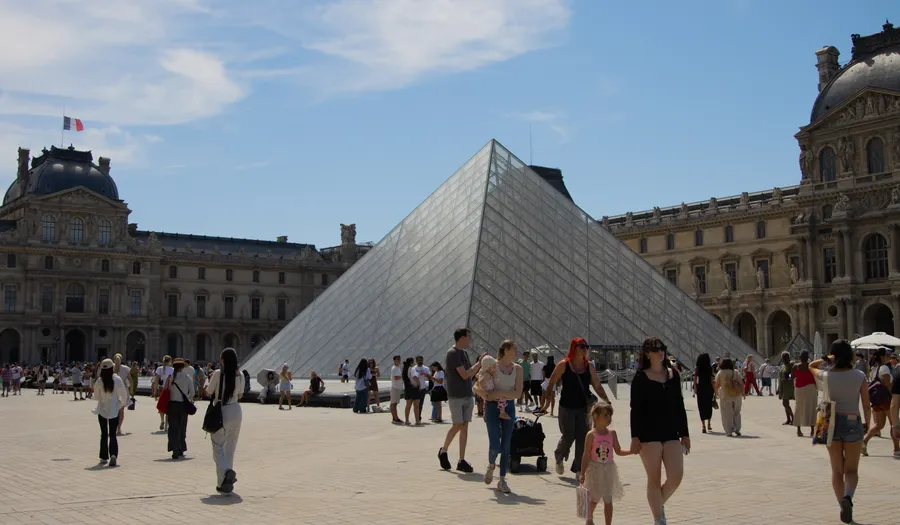
The world's largest museum occupies the former palace of the kings of France. The Mona Lisa and the Venus de Milo draw the crowds, but the Napoleon III apartments and the Egyptian antiquities department are just as worthwhile. Allow at least half a day and pick two or three wings rather than skimming everything. Entering through Pei's pyramid at sunset is a spectacle in itself.
Montmartre
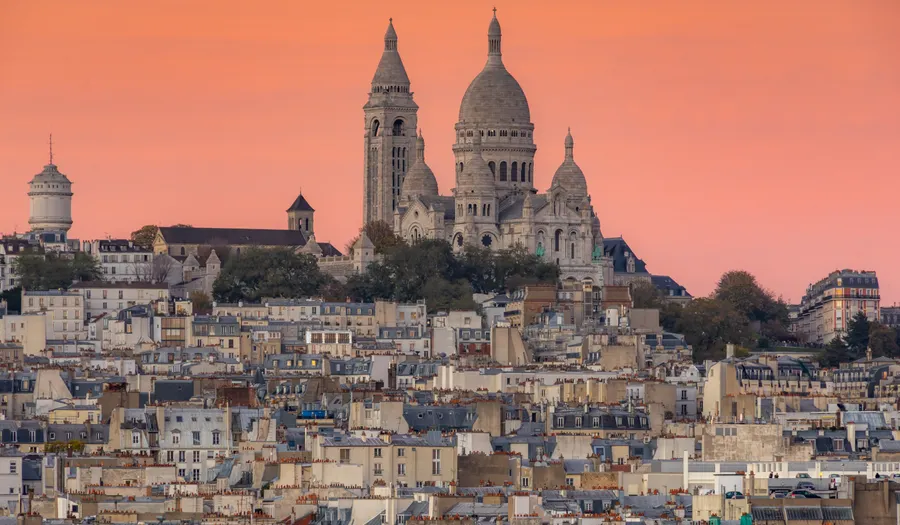
The hill has kept its staircases, its vineyard and its artists' studios. From the forecourt of the Sacré-Cœur, all of Paris is spread out at your feet. Avoid Place du Tertre at peak times and lose yourself instead on Rue de l'Abreuvoir or towards the Moulin de la Galette. Early in the morning, when the lanes are empty, you understand why Picasso and Modigliani set up their easels here.
Île de la Cité

The cradle of Paris is home to Notre-Dame, restored after the fire and open to visitors again. Close by, the Sainte-Chapelle dazzles with its 1,113 13th-century stained-glass panels, a must on a sunny day. The Conciergerie tells the story of the Revolution and of Marie Antoinette's cell. Finish at the tip of the Square du Vert-Galant, perfect for a picnic facing the Seine.
Palace of Versailles
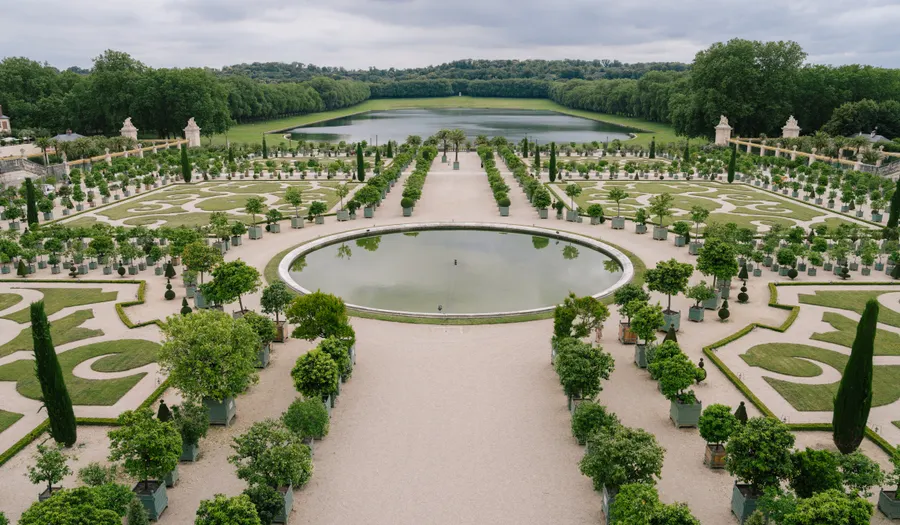
Just 40 minutes away by RER, the Sun King's palace unfurls the Hall of Mirrors, the State Apartments and 800 hectares of gardens designed by Le Nôtre. The Musical Fountains, from April to October, set the pools in motion. The Trianon estate and the Queen's Hamlet offer a rural interlude away from the crowds. Plan a full day, and good shoes.
Musée d'Orsay

Set in a former Belle Époque railway station, Orsay holds the finest Impressionist collection in the world. Monet, Renoir, Van Gogh and Degas follow one another on the fifth floor, behind the giant clock that frames a photogenic view of the Seine and Montmartre. The building itself, with its great nave, is worth the trip. On Thursday evenings, late opening allows a calmer visit.
How many days, and which itinerary?
Allow 4 to 5 days for a balanced first visit taking in the major museums, the neighbourhoods and a trip to Versailles.
🗺️ Day-by-day itinerary · 📓 Free printable Paris guide (PDF) · 🌍 All of France
Essential Paris (3 days)
Day 1: the Louvre, the Tuileries Garden and the Champs-Élysées. Day 2: Île de la Cité, the Marais and a sunset cruise on the Seine. Day 3: the Eiffel Tower in the morning, then Montmartre in the afternoon.
Paris in depth (5 days)
To the three essential days, add a full day at Versailles and a Left Bank day between Orsay, Saint-Germain-des-Prés and the Luxembourg Gardens. Keep the evenings for the Canal Saint-Martin and the bistros of the 11th.
Paris off the beaten track (7 days)
Round it off with the Butte-aux-Cailles, the Parc des Buttes-Chaumont, the Coulée Verte and the Aligre market. A trip to Giverny or Fontainebleau adds a breath of countryside. Ideal for second-time visitors.
Getting there and getting around
Metro and RER: the most efficient network, with a carnet of tickets or the weekly Navigo Découverte pass (around €32).
Vélib': more than 1,400 stations, perfect for riding along the Seine or the canal, around €3 a day on the classic plan.
Walking: distances between central neighbourhoods are short, from the Louvre to the Marais in 20 minutes.
From the airports: RER B from Roissy (around €12), Orlyval or bus from Orly; allow 45 minutes to 1h.
Where to stay in Paris?
The Marais and Saint-Germain: the most charming neighbourhoods, boutique hotels from €180 to 350 a night.
Canal Saint-Martin and the 11th: local atmosphere and good restaurants, decent doubles from €120 to 180.
Montmartre around Abbesses: romantic and well connected, from €110 to 200 a night.
Good value: hotels in the 12th and 13th close to the metro, often under €100 outside high season.
Our places to stay, stop by stop, at three budgets →
What to eat in Paris?
Traditional bistros: œuf mayo, bourguignon and tarte Tatin, lunch menus around €25 to 35.
Rue des Rosiers: the Marais's legendary takeaway falafel for under €10.
Covered markets: the Enfants Rouges (the oldest in Paris) and the Aligre market for a quick lunch.
Award-winning bakeries: a croissant and a baguette tradition, the perfect Parisian breakfast for €5.
Entry requirements
Schengen area: an ID card or passport for EU citizens, 90 days visa-free for UK, US, Canadian and Australian passports.
Rules change: check your own government's travel advice before you go.
Frequently asked questions about Paris
When is the best time to visit Paris?
April to June and September to October: mild temperatures, café terraces open and superb light on the Seine. December has its own charm too, with its shop windows and illuminations, despite the cold.
What daily budget should I plan for in Paris?
Allow €80 to 120 a day on a budget, €150 to 250 for a comfortable stay with a 3-star hotel and good restaurants, and a great deal more for the palace experience.
How do I get around Paris?
The metro covers the whole city, with a station roughly every 500 metres. The weekly Navigo Découverte pass quickly pays for itself, and Vélib' bikes are a good complement for trips along the Seine.
How many days do you need to visit Paris?
Three days let you see the essentials, but four to five days give a pleasant pace, including Versailles and time to wander the neighbourhoods.
Should I book museums in advance?
Yes, absolutely, for the Louvre, Orsay and the Eiffel Tower: online time slots save one to two hours of queuing, especially from April to October.
Similar destinations
 Region
🇫🇷 Normandy
 Region
🇫🇷 Alsace
 Region
🇫🇷 The Loire Valley
 City
City🇫🇷 Lyon
 City
City🇪🇸 Seville
 Country
🇮🇹 Italy
 City
City🇮🇹 Rome
 Region
🇮🇹 Florence and Tuscany
 Region
🇮🇹 The Amalfi Coast
 Region