When to go to Seville?
→ The detailed month-by-month page, with real weather records
Best time: March to May and October
At a glance
Why go to Seville?
Seville is the soul of Andalusia, a city where flamenco, flower-filled patios and Moorish heritage create a bewitching setting. Golden light bathes grand monuments, orange trees perfume the streets and the Andalusian way of life is savoured slowly. It is a destination for the senses, at once exuberant and intimate.
History is written on every street corner, from the Almohad era to the golden age of trade with the Americas and flamboyant Baroque. The cathedral, the Alcázar and the Giralda bear witness to centuries of encounters between cultures. This UNESCO-listed wealth of heritage makes Seville an open-air museum.
Seville comes alive at night too, when the heat drops and the terraces fill up. Tapas are eaten standing at the counter, flamenco is danced in the tablaos and festivals punctuate the calendar. Add a generous climate and a warm atmosphere, and you have one of the most seductive getaways in Spain.
Map of Seville: what is where?
The map shows the 6 places covered in this guide, to picture the distances and plan your route.
- Cathedral and Giralda
- Real Alcázar
- Plaza de España
- Santa Cruz
- Metropol Parasol
- Torre del Oro
How much does a trip to Seville cost?
Seville remains one of the most affordable big cities in Spain, with cheap tapas and reasonably priced monuments.
| Style | Per day | What it covers |
|---|---|---|
| Backpacker | €45-65/day | hostel, tapas at the counter, walking and free sights |
| Comfort | €100-160/day | boutique hotel, restaurants and monument visits |
| Premium | €280+/day | historic hotel, private experiences and renowned tables |
Cards are accepted everywhere, but keep a little cash for small traditional tapas bars.
Is Seville safe?
Seville is a very safe city overall, where you can stroll with peace of mind by day and by night. The main nuisances are pickpocketing in tourist areas and crowded transport, particularly around the cathedral and during the big festivals. Keep your belongings close in crowds and stay alert on busy terraces. With a little common sense, your stay will be perfectly relaxed.
What to see and do in Seville
- the cathedral and the Giralda
- the Real Alcázar
- the Plaza de España
- the Triana district
- a flamenco evening
Cathedral and Giralda
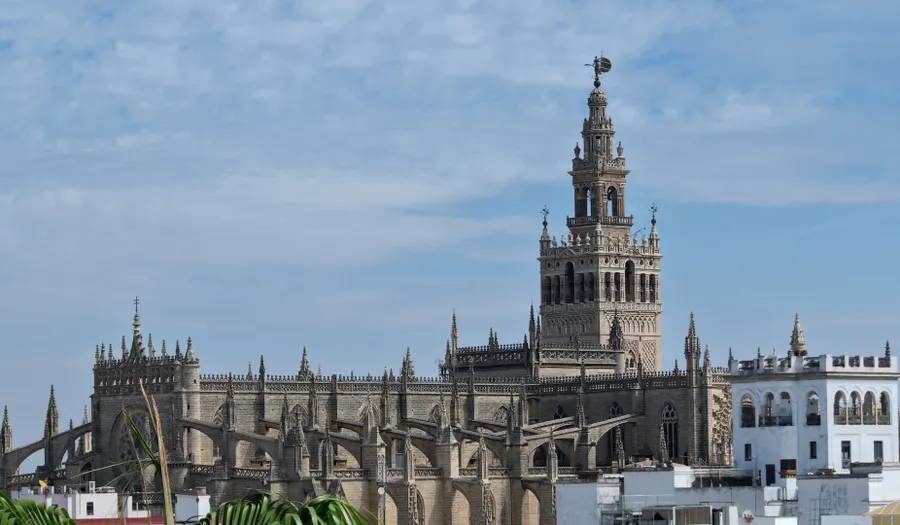
Seville Cathedral is the largest Gothic cathedral in the world, built on the site of a former mosque. Inside you can admire the tomb of Christopher Columbus and a monumental gilded altarpiece. Its tower, the Giralda, was the Almohad minaret, converted into a bell tower. The climb up its ramps rewards you with a breathtaking panorama over the city.
Real Alcázar
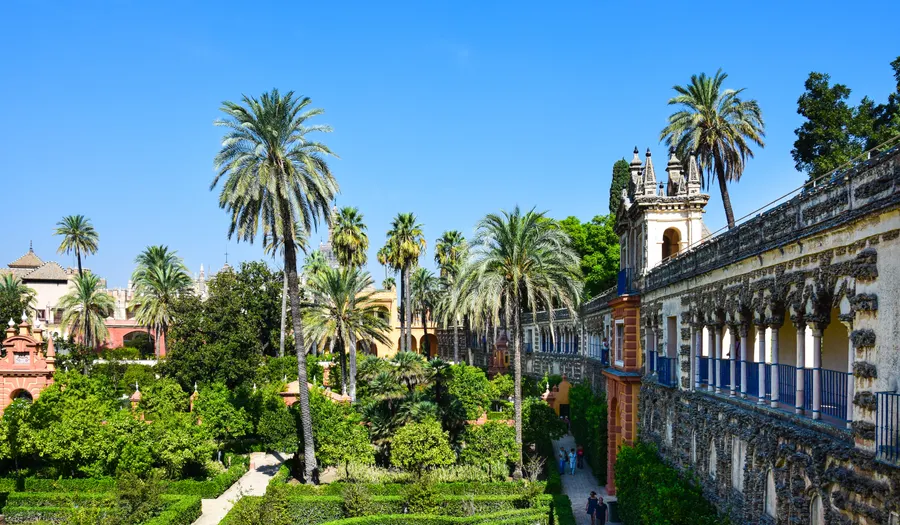
This royal palace is a masterpiece of Mudéjar art, blending Islamic and Christian influences. Its courtyards, azulejos and lush gardens enchant visitors. Still used by the royal family, it is among the oldest palaces in use in the world. Its settings have notably served as a backdrop for famous TV series.
Plaza de España

Built for the 1929 Ibero-American Exposition, this semicircular square is spectacular. Its canal, bridges and ceramic benches representing the Spanish provinces are a marvel. You can rent a rowing boat or simply stroll under the arcades. It is one of the most photographed places in Andalusia.
Santa Cruz quarter
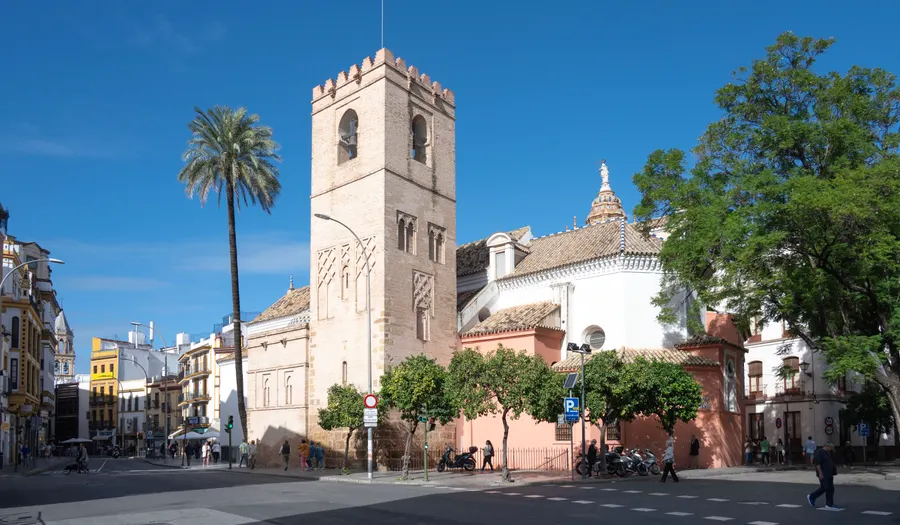
The former Jewish quarter is a labyrinth of whitewashed lanes, flower-filled patios and shady little squares. Getting lost here is a pleasure, among wrought-iron balconies and discreet fountains. Tapas bars are plentiful and full of charm. It is the romantic, picturesque heart of Seville.
Metropol Parasol

Nicknamed Las Setas, this monumental wooden structure contrasts with the old town. Its undulating curves shelter a market, terraces and an archaeological site. An elevated walkway offers a panoramic view over the city's rooftops. It is the symbol of a bold, contemporary Seville.
Torre del Oro

This 13th-century golden tower has watched over the Guadalquivir river since Almohad times. It recalls the city's glorious past as a port. The riverbanks invite a stroll, at sunset or on a river cruise. Opposite, the Triana district keeps the traditions of ceramics and flamenco alive.
How many days, and which itinerary?
Two to three days are enough to discover Seville, ideally combined with the rest of Andalusia.
🗺️ Day-by-day itinerary · 📓 Free printable Seville guide (PDF) · 🌍 All of Spain
Essential Seville (2 days)
On the first day, explore the cathedral, the Giralda and the Alcázar before wandering through Santa Cruz. On the second, discover the Plaza de España, the Metropol Parasol and the Triana district. Finish with an evening of flamenco and tapas.
Seville and its way of life (3 days)
Add a morning along the Guadalquivir, a museum visit and more time for tapas. Allow for an aimless wander through the lanes of Santa Cruz. This pace lets you savour the Andalusian atmosphere without hurrying.
Andalusian stopover (1 day)
Focus on the Alcázar, the cathedral and the Plaza de España. Book your tickets in advance and finish with tapas in Santa Cruz. It is intense but memorable for a quick stopover.
Getting there and getting around
Compact historic centre, entirely walkable
Very handy bike-share network along the flat riverbanks
Tram and buses to reach the outlying districts
From the airport, the EA bus line reaches the centre in around thirty minutes
Where to stay in Seville?
Friendly hostels and pensiones from €25 to 45 a night
Boutique hotels in Santa Cruz between €80 and 140 for a double room
Andalusian houses with patios around €110 to 180 a night
Historic luxury hotels from €250 and up
Our places to stay, stop by stop, at three budgets →
What to eat in Seville?
Classic tapas such as salmorejo, spinach with chickpeas and jamón
Fried fish and seafood, specialities from the banks of the Guadalquivir
Historic bars in the centre for a convivial experience at the counter
Convent sweets and Seville oranges for a sweet touch
Entry requirements
Schengen area: an ID card or passport for EU citizens, 90 days visa-free for UK, US, Canadian and Australian passports.
Rules change: check your own government's travel advice before you go.
Frequently asked questions about Seville
When is the best time to visit Seville?
Spring is ideal, with orange trees in blossom and pleasant temperatures. Avoid the height of summer, when the heat can exceed 40 degrees, and consider autumn too.
How many days should I spend in Seville?
Two days are enough for the must-sees, three to soak up the atmosphere. The city combines perfectly with Córdoba, Granada or Cádiz for an Andalusian tour.
What daily budget for Seville?
Allow around €45 to 65 a day backpacking, €100 to 160 for a comfortable stay and over €280 for an upmarket trip.
How do I get around Seville?
The historic centre can be explored entirely on foot. Bikes are perfect along the river, and the tram easily links the key points.
Where should I stay in Seville?
Santa Cruz is the most charming and central, El Arenal is close to the river, and Triana more authentic. The centre around the cathedral remains the most practical.
Similar destinations
 Country
🇫🇷 France
 Region
🇫🇷 Normandy
 Region
🇫🇷 Alsace
 Region
🇫🇷 The Loire Valley
 City
City🇫🇷 Paris
 City
City🇫🇷 Lyon
 Country
🇮🇹 Italy
 City
City🇮🇹 Rome
 Region
🇮🇹 Florence and Tuscany
 Region