When to go to the French Riviera?
→ The detailed month-by-month page, with real weather records
Best time: May to October
At a glance
Why go to the French Riviera?
The Côte d'Azur is still the most glamorous of French destinations, but it is far more than a row of palace hotels. Between Cassis and Menton, the coastline alternates limestone cliffs plunging into emerald water, capes covered in umbrella pines and bays worthy of the Italian Riviera. The calanques of Cassis and the Villefranche harbour rank among the most beautiful seascapes in Europe.
It is also a land of artists, to be visited like an open-air museum. Matisse and Chagall in Nice, Picasso in Antibes, Renoir in Cagnes, the Fondation Maeght in Saint-Paul-de-Vence: every town bears the mark of the painters who loved its light. The hilltop villages of the hinterland, from Èze to Gourdon, add a medieval dimension to the seaside setting.
Above all, the Riviera suits every travel style. Party-goers have Saint-Tropez and Juan-les-Pins, families the sandy beaches of Menton or Le Lavandou, hikers the coastal paths and the unspoilt islands of Porquerolles and Port-Cros. And the train hugs the sea from Cannes to Ventimiglia, so you can explore without a car.
Map of the French Riviera: what is where?
The map shows the 6 places covered in this guide, to picture the distances and plan your route.
- Cassis
- Nice
- Èze
- Antibes
- Porquerolles
- Menton
How much does a trip to the French Riviera cost?
The Riviera can be very expensive in high summer, but the train, Niçois street food and free sights help keep the bill under control.
| Style | Per day | What it covers |
|---|---|---|
| Backpacker | €80-110/day | hostel or simple hotel, socca and pan bagnat, public beaches, TER trains |
| Comfort | €150-220/day | well-located 3-4 star hotel, restaurant in the evening, a few sea activities |
| Premium | €500+/day | seafront palace hotel, private beaches, Michelin-starred restaurants |
Cards accepted everywhere; bring cash for private beaches, markets and the small ferries at Porquerolles.
Is the French Riviera safe?
The Côte d'Azur is safe, with the usual precautions for very touristy areas: pickpockets on crowded TER trains and at markets, and break-ins in car parks by the calanques and beaches. Never leave anything visible in the car. At sea, respect the swimming flags, and in summer check for hill closures due to fire risk before hiking.
What to see and do in the French Riviera
- The En-Vau calanque
- Old Nice
- The hilltop village of Èze
- Old Antibes and its Provençal market
- Saint-Tropez and the coastal path
- Porquerolles
- Villefranche-sur-Mer
- Menton and its old town
Calanques of Cassis

Between Marseille and Cassis, the Calanques National Park lines up limestone fjords with turquoise water. En-Vau, the most spectacular, has to be earned with a 1h30 walk, or admired from a kayak. Port-Miou and Port-Pin, easier to reach, are 30 minutes from Cassis. In summer, access is regulated and sometimes requires booking. The little port of Cassis, with its colourful cabanons, is worth a stop in itself.
Nice
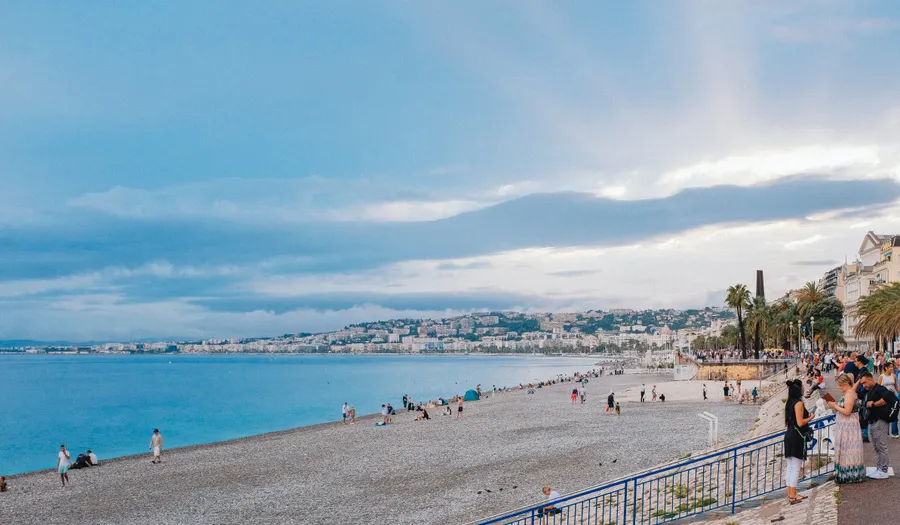
The capital of the Riviera charms with its blend of Italian dolce vita and Belle Époque grandeur. You can cycle the Promenade des Anglais, browse the Cours Saleya market, wander the ochre lanes of Old Nice and climb Castle Hill for the view over the Baie des Anges. The Matisse and Chagall museums in Cimiez are well worth the detour. Socca, a chickpea pancake, is eaten piping hot at Thérésa or René Socca.
Èze
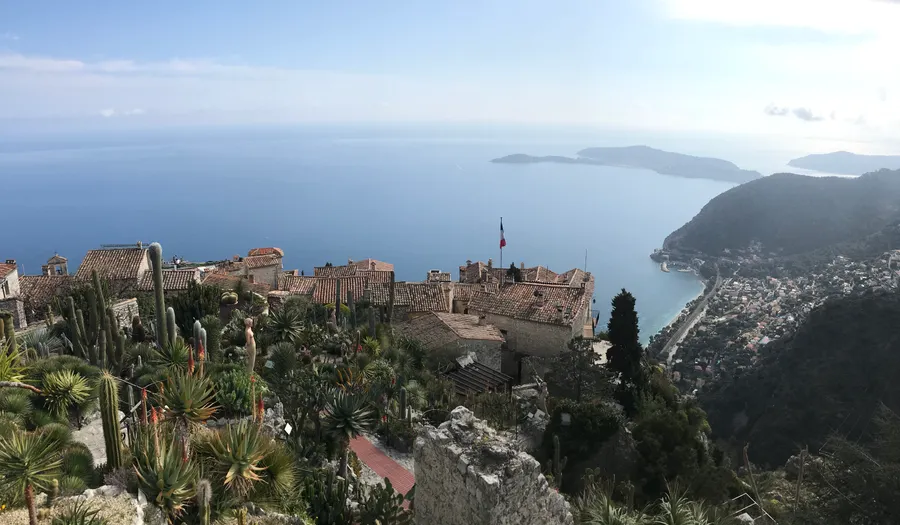
Perched 430 metres above the Mediterranean, Èze is the most spectacular village on the Riviera. Its medieval lanes climb to the exotic garden, planted with cacti around the castle ruins, with a dizzying panorama over Cap Ferrat. The Nietzsche Path drops down in 45 minutes to the beach at Èze-sur-Mer. Come early, as the village is tiny and very popular.
Antibes and its Cape

Behind its seafront ramparts, old Antibes hides a renowned Provençal market and the Picasso Museum, housed in the Château Grimaldi where the painter worked in 1946. Port Vauban lines up the biggest yachts in the world. The coastal path around Cap d'Antibes, 5 kilometres between coves and legendary villas, is one of the finest walks on the coast. Juan-les-Pins, a stone's throw away, takes over for the nightlife.
Porquerolles

The largest of the Îles d'Or, 15 minutes by boat from the Giens peninsula, is a concentrate of unspoilt Mediterranean. Closed to cars, it is explored by bike between vineyards, pine woods and dreamy beaches, led by Notre-Dame and its perfect curve. The Fondation Carmignac adds an unexpected stop for contemporary art. In July and August, take the first boat, as the island gets overrun.
Menton

The last town before Italy may well be the most endearing on the coast. Its old town of yellow and orange façades tumbles down to the sea, crowned by the Basilica of Saint-Michel and its pebble-mosaic forecourt. The climate, the mildest in France, lets lemon trees and exceptional gardens thrive, from the Serre de la Madone to the Val Rahmeh. In February, the Lemon Festival turns the town into a giant citrus sculpture.
How many days, and which itinerary?
A week lets you combine the calanques, two or three Riviera towns and an island.
🗺️ Day-by-day itinerary · 📓 Free printable French Riviera guide (PDF) · 🌍 All of France
Riviera express (4 days)
Base yourself in Nice without a car. Day 1 Old Nice and the Promenade, day 2 Èze and Monaco by bus and train, day 3 Antibes and its cape, day 4 Villefranche and Cap Ferrat. The train does all the work.
From Cassis to Menton (8 days)
Two days in Cassis for the calanques, two days around Hyères and Porquerolles, a stop in Saint-Tropez, then three days between Nice, Èze and Menton. The whole coastal story, in order.
Coast and hinterland (10 days)
The 8-day itinerary enriched with Saint-Paul-de-Vence, the Fondation Maeght and the Gorges du Loup. Alternating between sea and hilltop villages gives the Riviera its true depth.
Getting there and getting around
The TER train runs along the coast from Cannes to Ventimiglia, with trains every 30 minutes, ideal between Nice, Monaco, Antibes and Menton.
A car is useful for Cassis, the Var and Saint-Tropez, but parking is expensive and difficult in summer.
Boats to Porquerolles from La Tour Fondue (Giens), a 15-minute crossing, around €23 return.
In Nice, bike-share and the tram cover the essentials, and the airport is 25 minutes from the centre.
Where to stay in the French Riviera?
Boutique hotels in Old Nice or around the port, €100 to €180 a night in season.
Var villages (Bormes, Ramatuelle) in B&Bs, €90 to €150 a night.
Legendary palace hotels on Cap d'Antibes or in Saint-Jean-Cap-Ferrat, from €600 a night.
Holiday apartments in Menton or Antibes, a good family option from €80 a night outside July and August.
Our places to stay, stop by stop, at three budgets →
What to eat in the French Riviera?
Niçois street food: socca, pan bagnat, pissaladière, Swiss chard pie, lunch for under €10.
Grilled fish and bouillabaisse on the harbours of Cassis and Villefranche, allow €35 to €60.
Excellent Italian cooking in Menton and Nice, with Italy just 10 minutes away.
The Cours Saleya market (Nice, every morning except Monday) and Antibes market for local produce.
Entry requirements
Schengen area: an ID card or passport for EU citizens, 90 days visa-free for UK, US, Canadian and Australian passports.
Rules change: check your own government's travel advice before you go.
Cities and regions to discover
 City
City🇫🇷 Nice
 City
City🇫🇷 Mougins
Frequently asked questions about the French Riviera
When is the best time to visit the Côte d'Azur?
June and September are perfect: warm sea, guaranteed sunshine and half the crowds of August. May and October are still very pleasant for sightseeing, with noticeably gentler prices.
What daily budget should I plan for?
Allow €110 to €200 a day per person for a comfortable trip. Staying in Nice, eating Niçois food and travelling by TER, €90 a day is enough.
Can you visit without a car?
Yes, between Cannes and Menton the TER serves every coastal town every 30 minutes. A car only becomes useful for Cassis, the beaches of the Var and Saint-Tropez.
How many days do I need?
4 days are enough for the Riviera around Nice, a week to add the calanques of Cassis or Porquerolles. 10 days allow the full route from Cassis to Menton.
Are the calanques accessible to everyone?
Port-Miou and Port-Pin are easily reached from Cassis in 30 to 45 minutes. En-Vau requires a proper 1h30 walk with some climbing, or can be discovered by kayak or boat. In summer, some access points are regulated.
Similar destinations
 City
City🇬🇷 Corfu
 City
City🇭🇷 Hvar
 Region
🇫🇷 Charente-Maritime and the Île de Ré
 Country
🇪🇸 Spain
 City
City🇪🇸 Barcelona
 Region
🇮🇹 The Amalfi Coast
 Country
🇬🇷 Greece
 Region
🇮🇹 Puglia
 Region