When to go to Greece?
→ The detailed month-by-month page, with real weather records
Best time: May to June and September to October
At a glance
Why go to Greece?
People come to Greece for the Acropolis in the early morning, when the marble of the Parthenon catches the low light and the city below is still asleep. But they stay for everything else: the white lanes of the Cyclades, the tavernas where the fish came out of the net the day before, and that island slowness that resets your watch to Aegean time.
This is a country where you can touch history. A Doric temple standing in an olive grove, an ancient theatre whose acoustics still carry a whisper to the very last row, a monastery perched on its pinnacle at Meteora. Nothing here is kept under glass: you walk through it, sit on the stones and leave with salt on your skin.
And then there is the food. Mezze spread across the table, feta drizzled with green olive oil, ouzo turning cloudy in the glass, watermelon at the end of the meal. You eat outdoors, at length, feet in the sand or under a vine trellis, and the bill stays gentle. Greece is best savoured slowly, between two swims.
Map of Greece: what is where?
The map shows the 6 places covered in this guide, to picture the distances and plan your route.
- Athens
- Santorini (Fira)
- Naxos
- Meteora (Kalambaka)
- Chania (Crete)
- Nafplio
How much does a trip to Greece cost?
Greece remains affordable by eurozone standards, especially away from the most popular islands. The biggest expense is accommodation in Santorini and Mykonos in high season; everything else, meals and transport included, fits into a reasonable budget.
| Style | Per day | What it covers |
|---|---|---|
| Backpacker | €50-70/day | Hostels and studios, slow ferries, neighbourhood tavernas and market picnics. |
| Comfort | €90-130/day | Guesthouses with a view, a few fast ferries, restaurant dinners and scooter hire. |
| Indulgence | €180+/day | Characterful hotels on the caldera, private boat trips, gourmet restaurants and comfortable transfers. |
The euro is used everywhere and cards are accepted in most shops, but keep cash for small tavernas, ferries and remote villages, where cash is still king.
Is Greece safe?
Greece is a very safe destination, where you can travel with peace of mind as a family or solo. The main thing to watch out for is pickpockets on the Athens metro and in crowded tourist areas. On mountain roads and on a scooter, caution matters more than any threat. Finally, beware of the summer sun and heat, which can catch you out between noon and 16:00.
What to see and do in Greece
- Athens and the Acropolis
- Santorini and its sunsets
- the Cyclades (Naxos, Paros)
- Meteora
- Crete
The Acropolis and old Athens
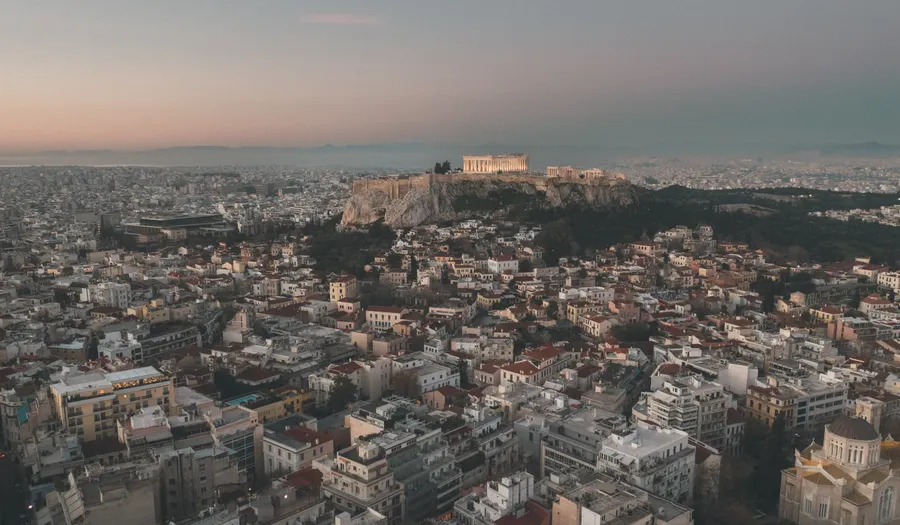
Go up early, before the heat and the tour groups, to have the Parthenon almost to yourself. On the way down, get lost in Plaka and Anafiotika, a Cycladic hamlet set at the foot of the rock. The Acropolis Museum, below, puts it all in perspective with its life-size friezes. In the evening, Lycabettus Hill serves up the whole city at sunset.
Santorini

The Santorini caldera remains one of the most striking sights in the Mediterranean: black cliffs plunging into an ink-blue sea, crowned with dazzling white villages. Oia draws the crowds at sunset, but the lanes of Pyrgos or Megalochori offer the same charm more quietly. Head down to the red and black beaches, volcanic remnants. Book early, as the island fills up fast.
Naxos and Paros

The living heart of the Cyclades, more authentic than their postcard neighbours. Naxos lines up long sandy beaches and a hinterland of mountain villages where you still come across mules. Paros charms with Naoussa, a fishing port that has become elegant without losing its soul. Between the two, deserted coves and tavernas where you dine with your feet in the water.
Meteora

In the centre of the country, Byzantine monasteries stand atop dizzying rock pinnacles, as if suspended between heaven and earth. Morning or late-afternoon light turns the site into an unreal painting. Six monasteries can still be visited, linked by paths and steps cut into the rock. Bring clothing that covers you, as these are active places of worship.
Crete

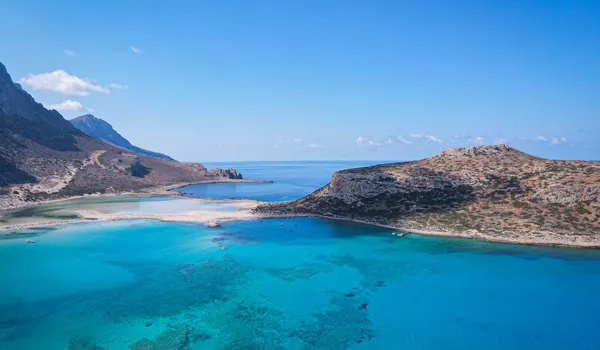
The largest Greek island is almost a country in its own right: wild gorges, pink sand beaches at Elafonissi, villages perched in the White Mountains. The Samaria Gorge hike descends a spectacular canyon all the way to the sea. At the table, Cretan cooking is reputed to be the healthiest in Greece, generous with herbs and olive oil. Chania and its Venetian old harbour deserve a whole evening.
The Peloponnese

Often skipped in favour of the islands, the Peloponnese rewards those who take their time. Nafplio may well be the prettiest town in the country, with its Venetian lanes and fortress. Close by, the ancient theatre of Epidaurus and the citadel of Mycenae tell the story of the Greece of myth. Monemvasia, a fortified town clinging to its rock, is explored on foot, outside time.
How many days, and which itinerary?
Allow at least ten days to combine Athens and two islands without rushing, two to three weeks if you want to add Crete or the Peloponnese.
🗺️ Day-by-day itinerary · 📓 Free printable Greece guide (PDF)
Athens and the Cyclades in 10 days
Two days in Athens for the Acropolis and the museum, then a ferry to Naxos for its beaches and hinterland. Move on to Paros and its port of Naoussa, before ending on a high in Santorini and its caldera. Return to Athens by plane or fast ferry.
Mainland Greece in a week
From Athens, head to Delphi and its sanctuary backed against Mount Parnassus. Push on to Meteora for a night at the foot of the monasteries, then come back down through the Peloponnese: Nafplio, Epidaurus and Mycenae before looping back to the capital.
Crete in depth, 12 days
Land in Chania, the ideal base for the west: the Samaria Gorge, Elafonissi beach and the villages of the White Mountains. Then cross east via Rethymno and Heraklion, with the palace of Knossos and the Lassithi Plateau. Finish on the quiet beaches of the south.
Getting there and getting around
Ferries link all the islands from the port of Piraeus, in Athens: slow, cheap boats or faster, pricier vessels, to be booked in advance in high season.
Hiring a car is almost essential on large islands such as Crete or Naxos, and on the mainland for Delphi, Meteora and the Peloponnese.
Scooters and quads can be hired everywhere in the Cyclades for short distances, handy but to be driven carefully on mountain roads.
KTEL buses serve the mainland cheaply and reliably, a good way to reach Delphi or Nafplio without a car.
Where to stay in Greece?
Family-run guesthouses and small pensions in Cycladic villages, often around €60-90 a night outside high season.
In Santorini, hotels with caldera views get expensive fast: book months ahead, or stay in Fira rather than Oia to lighten the bill.
Youth hostels and studios with kitchenettes in Athens and Crete, cheap and handy for cooking.
Campsites or rooms in local homes in the Peloponnese to stay at the low end of the range.
Our places to stay, stop by stop, at three budgets →
What to eat in Greece?
Shared mezze: tzatziki, taramosalata, grilled feta with honey, dolmades and fried squid, to pick at facing the sea.
Moussaka and gemista, vegetables stuffed with rice and herbs, everyday taverna dishes.
Souvlaki and gyros, skewers and grilled meat served in a pitta, the country's best street food.
For dessert, Greek yoghurt with honey and walnuts, or loukoumades, warm fritters drizzled with honey and cinnamon.
Entry requirements
Schengen area: an ID card or passport for EU citizens, 90 days visa-free for UK, US, Canadian and Australian passports.
Rules change: check your own government's travel advice before you go.
Cities and regions to discover
 City
City🇬🇷 Athens
 City
City🇬🇷 Santorini
 Region
🇬🇷 Crete
 City
City🇬🇷 Corfu
 Region
🇬🇷 The Cyclades
 City
City🇬🇷 Rhodes
Frequently asked questions about Greece
When is the best time to go to Greece?
May-June and September-October offer the best compromise: a sea that is already warm, superb light and far gentler crowds than in high summer. July and August are glorious but scorching and packed.
How long should you plan to stay?
Ten days are already enough to combine Athens and two or three islands without rushing. To add Crete or the Peloponnese, plan on two to three weeks.
How do you get around between the islands?
The ferry is king: services leave from Piraeus and link the Cyclades with one another. Choose a fast boat to save time, a slow one to save money, and book early in summer.
Is Greece expensive?
It is one of the most affordable Mediterranean destinations. Allow €70-120 a day depending on comfort, with accommodation in Santorini remaining the main expense to watch.
Similar destinations
 Region
🇫🇷 Charente-Maritime and the Île de Ré
 Country
🇭🇷 Croatia
 Country
🇲🇹 Malta
 City
City🇭🇷 Split
 City
City🇸🇪 Stockholm
 City
City🇲🇹 Gozo
 Region
🇭🇷 Istria
 City
City🇫🇷 Évian and the Chablais
 Region
🇫🇷 Saint-Malo and the Emerald Coast
 Country