When to go to Athens?
→ The detailed month-by-month page, with real weather records
Best time: April to June and September to October
At a glance
Why go to Athens?
Athens is not visited like an ordinary capital; you move through it like an open-air history book. Beneath your feet, twenty-five centuries of civilisation have left temples, theatres and agoras that you stumble upon round a street corner. The marble of the Acropolis towers over the city, a constant reminder that democracy, philosophy and theatre were born here. Few things match the emotion of looking up and seeing the Parthenon keeping watch over the modern city.
But reducing Athens to its ruins would be a mistake, because the city fizzes with a very contemporary energy. The Psyrri and Metaxourgeio districts are covered in street art, tavernas fill with laughter late into the night and rooftop terraces offer unforgettable sunsets. The food scene and speciality coffee shops now rival the best European capitals. You can feel a creative younger generation reinventing the city without ever disowning its heritage.
Athens is also the ideal gateway to the rest of Greece, between sea and mountains. The port of Piraeus reaches the islands of the Cyclades and the Saronic Gulf in a few hours, while trips to Delphi or Cape Sounion are within a day's reach. The generous climate lets you idle on a sunny terrace almost all year round. Combining the city with a seaside escape is the best way to grasp the Greek soul.
Map of Athens: what is where?
The map shows the 6 places covered in this guide, to picture the distances and plan your route.
- Acropolis and Parthenon
- Acropolis Museum
- Plaka and Anafiotika
- Ancient Agora
- Lycabettus Hill
- Syntagma Square
How much does a trip to Athens cost?
Athens remains one of the most affordable European capitals, with excellent value for money on food and sights.
| Style | Per day | What it covers |
|---|---|---|
| Backpacker | €40-60/day | Hostel, souvlaki, public transport and sights at reduced rates. |
| Comfort | €90-150/day | Charming hotel, tavernas, a few taxis and museums without counting. |
| Premium | €220+/day | Hotel with an Acropolis view, gourmet restaurants and private excursions. |
The euro is the official currency and cards are accepted everywhere, but keep some cash for small tavernas and markets.
Is Athens safe?
Athens is a safe capital where you can move around without fear by day and by night in the tourist districts. The main thing to watch for is pickpockets on the metro, around Monastiraki and in Omonia, especially at rush hour. Some areas, such as the surroundings of Omonia or Exarcheia, can feel less welcoming in the evening, without any real danger. Keep your belongings close, avoid flashing valuables and use official taxis at night. The usual common-sense rules are more than enough for a peaceful stay.
What to see and do in Athens
- the Acropolis and the Parthenon
- the Plaka district
- the Acropolis Museum
- the Ancient Agora
- Lycabettus Hill
Acropolis and Parthenon

Perched on its sacred rock, the Acropolis is the ultimate symbol of Athens and ancient Greece. The Parthenon, a temple dedicated to Athena, impresses with the perfection of its Doric columns. You enter through the Propylaea, passing the Temple of Athena Nike and the elegant Erechtheion. Come early in the morning or late in the day to avoid the crowds and the heat. The 360-degree view over the city rewards every step climbed.
Acropolis Museum
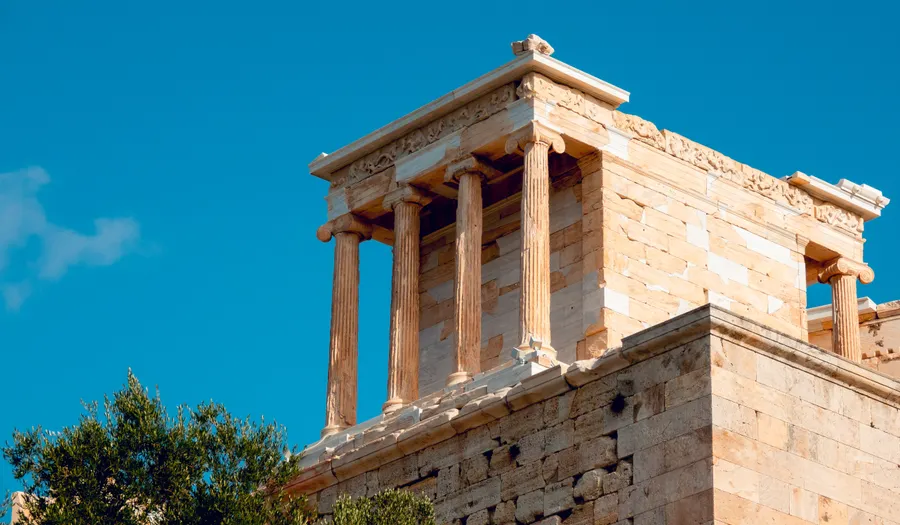
This bright, modern museum houses the original treasures found on the sacred hill. Its top-floor gallery, aligned like the Parthenon, displays the frieze at its true proportions. The glass floor reveals the archaeological excavations beneath your feet. The famous Caryatids are kept here, sheltered from pollution. It is the essential complement to a visit to the Acropolis.
Plaka and Anafiotika

Plaka is the oldest inhabited district of Athens, a maze of cobbled lanes at the foot of the Acropolis. Its neoclassical houses, bougainvillea and tavernas make it the city's romantic heart. Climbing higher, you reach Anafiotika, a tiny hamlet that looks like a Cycladic village. Its white and blue houses seem transplanted from an island. It is the perfect place to get lost without a map.
Ancient Agora

The Agora was the political and commercial centre of classical Athens, where Socrates taught. Here you can admire the Temple of Hephaestus, one of the best preserved in all of Greece. The Stoa of Attalos, entirely rebuilt, houses a fascinating small museum. The site, planted with olive trees, invites you to imagine the daily life of its citizens. It is a vivid plunge into the cradle of democracy.
Lycabettus Hill

The highest point in Athens, Lycabettus offers the finest panorama over the city and the sea. You can climb it on foot via a shady path or take the funicular from Kolonaki. At the top, the little Chapel of St George watches over the city. Sunset here is an unmissable ritual, drink in hand. On a clear day, the view stretches as far as Piraeus and the islands.
Syntagma Square and the changing of the guard
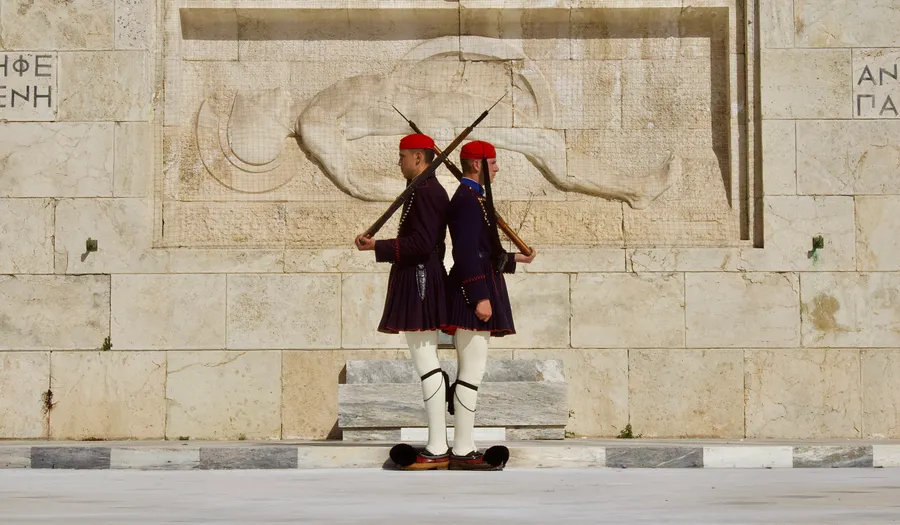
The beating heart of modern Athens, Syntagma Square faces the Greek Parliament. In front of the Tomb of the Unknown Soldier, the Evzones, guards in traditional costume, perform the changing of the guard. Their solemn gait and red pompoms fascinate young and old alike. The ceremonial change on Sunday morning is the most spectacular. It is also the ideal starting point for exploring the centre on foot.
How many days, and which itinerary?
Allow three to four days to enjoy Athens without rushing, adding a trip to Delphi or Cape Sounion.
🗺️ Day-by-day itinerary · 📓 Free printable Athens guide (PDF) · 🌍 All of Greece
Essential Athens (2 days)
The first day is devoted to the Acropolis, its museum and the Plaka district. The second explores the Ancient Agora, Monastiraki market and a sunset on Lycabettus.
Athens and the sea (4 days)
The two essential days are followed by a trip to Cape Sounion for the Temple of Poseidon, then a day of relaxation on the Athens Riviera. Finish with the creative districts of Psyrri and Koukaki.
Athens and Delphi (5 days)
After three days in the capital, spend a full day at Delphi, the sanctuary of Apollo nestled in the mountains. The fifth day can stretch to the monastery of Hosios Loukas or a Saronic island.
Getting there and getting around
The Athens metro is modern and clean, and serves the airport, Piraeus and the main sights on three lines.
The historic centre can be explored entirely on foot, with most sights linked by a pedestrian promenade.
Taxis and apps such as Uber remain affordable for longer or late-night journeys.
For the islands, the port of Piraeus offers ferries and fast catamarans to the Cyclades and the Saronic Gulf.
Where to stay in Athens?
Hostels and budget hotels in Koukaki or Exarcheia, around €30-55 a night.
Charming mid-range hotels in Plaka or Monastiraki, between €70 and €130 a night.
Boutique hotels with a rooftop terrace overlooking the Acropolis, from €150 to €250 a night.
Luxury addresses around Syntagma such as the Grande Bretagne, from €300 a night.
Our places to stay, stop by stop, at three budgets →
What to eat in Athens?
Try souvlaki and gyros pitta, iconic and cheap snacks, around Monastiraki.
Sit down in a Plaka taverna for moussaka, tzatziki and shared mezze.
Explore the Varvakios central market for its atmosphere and the day's fresh produce.
Finish with loukoumades, fritters drizzled with honey and cinnamon, a local sweet speciality.
Entry requirements
Schengen area: an ID card or passport for EU citizens, 90 days visa-free for UK, US, Canadian and Australian passports.
Rules change: check your own government's travel advice before you go.
Frequently asked questions about Athens
When is the best time to visit Athens?
Spring from April to June and autumn from September to October offer gentle warmth and ideal light. Summer is very hot and busy, while the mild winter remains pleasant for museums.
How many days do you need in Athens?
Three days are enough for the city's essentials; four to five let you add a trip to Delphi, Cape Sounion or an island in the Saronic Gulf.
What daily budget should you plan for Athens?
Allow around €50 a day as a backpacker, €120 for a comfortable stay and over €220 for a premium experience with upmarket hotels and restaurants.
How do you get around Athens?
The metro is fast and links the airport with the centre and Piraeus, while the historic heart is best explored on foot. Taxis and Uber are a useful addition for longer journeys.
Which area should you stay in in Athens?
Plaka and Monastiraki put you at the heart of the sights, Koukaki offers a village atmosphere close to the Acropolis, and Syntagma is central and well connected for a first visit.
Similar destinations
 City
City🇵🇹 Lisbon
 City
City🇨🇿 Prague
 City
City🇵🇱 Kraków
 City
City🇫🇷 Lille
 City
City🇷🇴 Bucharest
 City
City🇦🇱 Tirana
 Country
🇪🇸 Spain
 City
City🇪🇸 Barcelona
 City
City🇪🇸 Madrid
 City
City