When to go to Lille?
→ The detailed month-by-month page, with real weather records
Best time: May to July and September
At a glance
Why go to Lille?
Lille was Spanish before it was French, and it still shows on its main square. The Vieille Bourse, built in 1653 under Philip IV, lines up twenty-four identical houses around a tiny courtyard: caryatids, carved garlands of fruit, orange brick set in white stone, this is pure Flemish architecture. Louis XIV only took the city in 1667, and French town planning was grafted on top without ever erasing what lay beneath.
The city then lived off textiles, and that explains its museums. The Palais des Beaux-Arts was filled by industrialists and local worthies who bought Rubens, Goya and Delacroix the way they bought machinery, and it remains France's second-largest public collection after the Louvre. The same logic gave Roubaix its Art Deco swimming pool turned museum and Villeneuve-d'Ascq the largest collection of art brut in the country: three first-rate museums within a twelve-kilometre radius, all linked by the metro.
The rest comes down to geography and the average age. Brussels is 35 minutes away by train, London 1h30, Paris 1h: no other French rail hub looks like this, which makes Lille as much a stopover as a destination. And a city of 110,000 students does not go to bed early: Rue Masséna, Rue Solférino and Wazemmes stay up late, and the estaminets serve carbonade and welsh at hours that no longer exist elsewhere in provincial France.
Map of Lille: what is where?
The map shows the 6 places covered in this guide, to picture the distances and plan your route.
- Grand'Place and Vieille Bourse
- Palais des Beaux-Arts
- Vieux-Lille, Place aux Oignons
- Town hall belfry
- Lille Citadel
- La Piscine, Roubaix
How much does a trip to Lille cost?
Lille costs considerably less than its big-city reputation suggests: municipal museums for under €10, a pint for €5 and accommodation well below Paris prices. The cost that spirals is the weekend hotel in Vieux-Lille, where prices double from Friday to Sunday.
| Style | Per day | What it covers |
|---|---|---|
| Backpacker | €60-90/day | Hostel or budget hotel in Wazemmes, friteries and markets, municipal museums, everything on foot |
| Comfort | €120-180/day | Boutique hotel, an estaminet in the evening, Lille City Pass, a day in Roubaix or at the LaM |
| Premium | €300+/day | Boutique hotel in Vieux-Lille, Michelin-starred restaurants, private tour of the citadel, excursion to Bruges |
Cards are accepted absolutely everywhere, even for a €2 coffee, but keep a few coins for Wazemmes market and the friteries. Belfry tickets are sold only at the tourist office on Place Rihour, not on site: plan the detour before you cross the city.
Is Lille safe?
Lille is a safe city for a metropolitan area of a million people, but it has two or three trouble spots that guidebooks gloss over. The immediate surroundings of Lille-Flandres and Lille-Europe stations, along with Rue de Béthune and the Rihour area, see petty street crime at night in the form of phone snatching and persistent hassling: nothing dramatic, but you do not make phone calls while walking alone at 2am in that area. Wazemmes market on Sunday morning is the city's best hunting ground for pickpockets, so wear your bag in front and keep your back pockets empty. The Moulin and Fives districts and the southern part of Lille-Sud are mainly working-class and poorly lit rather than dangerous, but a visitor has no reason to wander there at night. The city's real risk remains alcohol: on LOSC match nights, during the Braderie or at the start of the university year, Rue Masséna and Rue Solférino become extremely crowded and scuffles are more frequent. Finally, bikes get stolen quickly here, so never lock just the frame without a U-lock.
What to see and do in Lille
- Grand'Place and Vieille Bourse
- Palais des Beaux-Arts
- Vieux-Lille and Place aux Oignons
- Town hall belfry
- Vauban's citadel and the Bois de Boulogne
- La Piscine, in Roubaix
- Wazemmes market
- LaM, in Villeneuve-d'Ascq
The Grand'Place and the Vieille Bourse
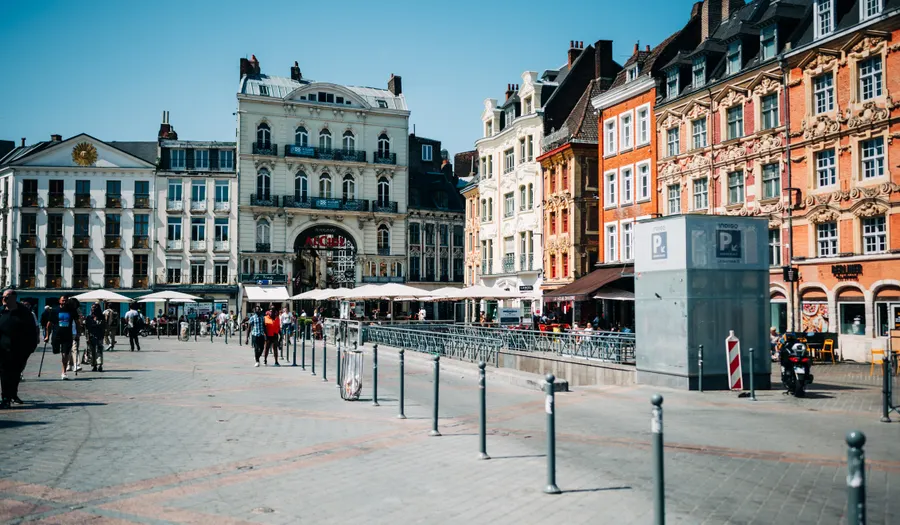
The heart of the city is officially called Place du Général-de-Gaulle, but nobody uses the name. The Goddess Column commemorates the Austrian siege of 1792, the Théâtre du Nord occupies the former Grand'Garde, and La Voix du Nord raises its Art Deco façade topped by three gilded Graces. Opposite, the Vieille Bourse opens its inner courtyard to second-hand booksellers, chess players and flower sellers, from Tuesday to Sunday afternoon only. Two minutes' walk further on, Place Rihour and Place du Théâtre extend the ensemble without any searching required. This is where you grasp in five minutes that Lille looks towards Brussels as much as towards Paris.
The Palais des Beaux-Arts

The 1892 building on Boulevard de la Liberté houses seven centuries of painting and sculpture over three floors. Rubens, Jordaens, Goya, Delacroix, Courbet and a first-rate collection of drawings already justify the visit, but the most astonishing room is in the basement: fifteen relief maps of fortified towns commissioned under Vauban, giant military models showing the cities of northern France as they were in the 18th century. The museum is closed on Tuesdays and only opens at 2pm on Mondays, which catches out many poorly planned weekends. Allow three hours so as not to rush, more if there is a temporary exhibition. Admission drops to €4 for everyone on weekdays from 4.30pm.
Vieux-Lille
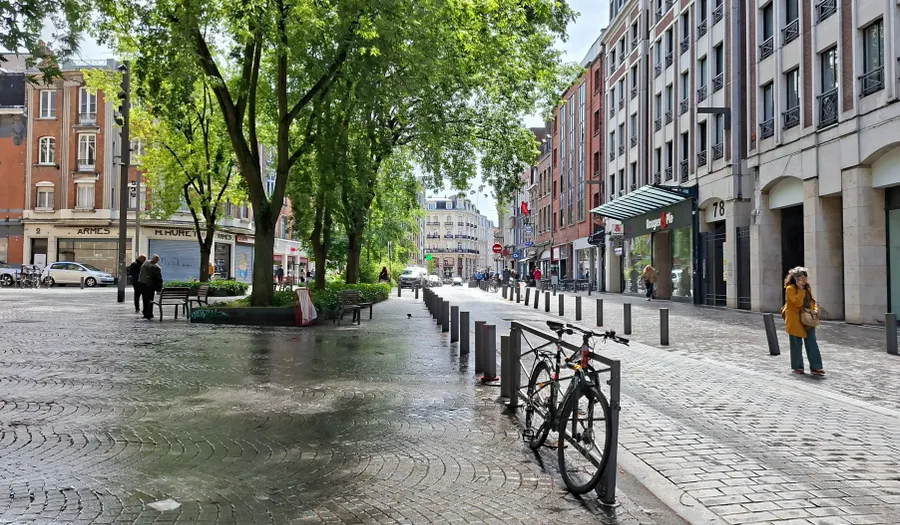
North of the Grand'Place, Rue de la Monnaie, Rue Basse, Rue Esquermoise and Rue Royale unfurl 17th- and 18th-century façades that were earmarked for demolition in the 1960s. Their rescue turned the quarter into the most expensive in the city: designer boutiques, pâtisseries, wine shops and mansions converted into offices. The tiny cobbled Place aux Oignons is its postcard, but Rue Péterinck, Rue de la Halloterie and Rue du Pont Neuf give a truer picture of the neighbourhood. Notre-Dame-de-la-Treille cathedral, left unfinished until 1999, hides a translucent marble façade that glows from within at dusk. Many shops close on Sundays and Monday mornings.
Wazemmes and Rue Solférino
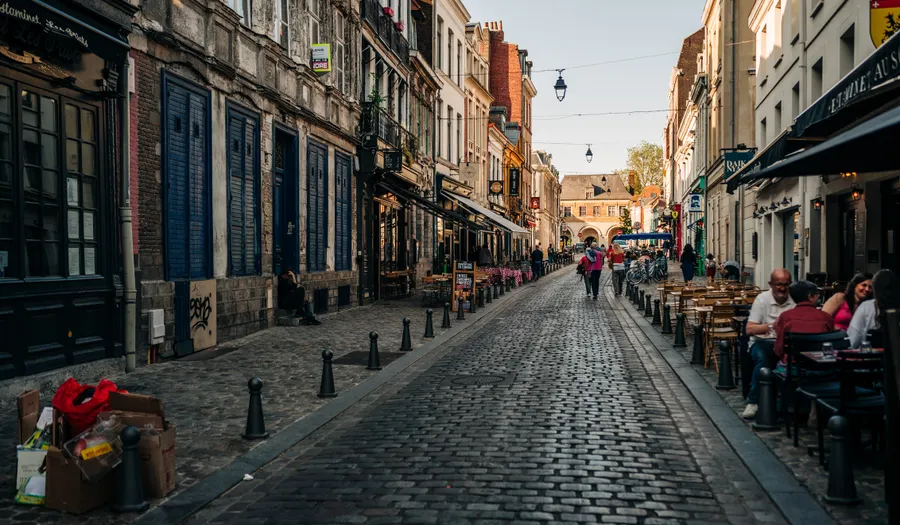
Wazemmes is the former working-class suburb that has become Lille's most mixed neighbourhood, and its market says it all. The 1873 market hall opens from Tuesday to Sunday, and the outdoor market is held on Tuesday, Thursday and Sunday mornings, with Sunday by far the busiest day: Flemish market gardeners, North African grocers, African fabrics and bric-a-brac along the same aisles. Around noon, bands set up and the cafés on the square overflow. Just to the north, Rue Solférino and Rue Masséna pack in the cheapest student bars in the city, very noisy from Thursday to Saturday. It is the cheapest area to stay in, provided you can live with the noise.
The Citadel and the Bois de Boulogne
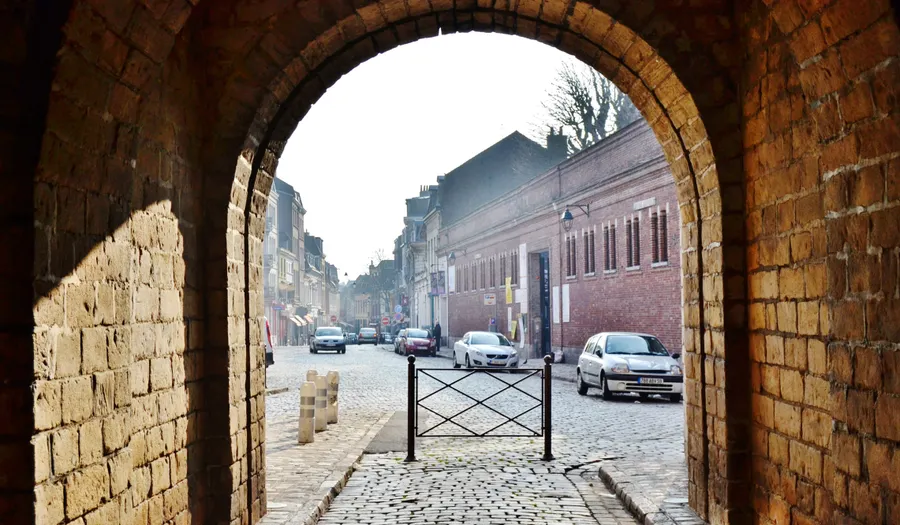
Vauban built the citadel between 1667 and 1670 as a perfect pentagon, with sixty million bricks and a system for flooding the moats. It has never stopped being a military site: a NATO headquarters occupies it, so the interior can only be seen on an organised guided tour, by registration and with limited numbers. The glacis, on the other hand, belongs to everyone: 110 hectares of the Bois de Boulogne, a 3.5 km loop very popular with runners, a permanent funfair and a cheap municipal zoo. The Porte Royale, with its pediment glorifying the king, can be photographed from the bridge without paying a thing. This is where the people of Lille go to breathe on Sundays.
Roubaix, Villeneuve-d'Ascq and the museum trail

Greater Lille has the distinction of putting two major museums less than thirty minutes by metro from the centre. La Piscine, in Roubaix, occupies an Art Deco pool from 1932 whose water has been kept: the sculptures are reflected in it, the changing cubicles serve as display cases for textile samples and a light show recreates the sunrise beneath the glass roof. The LaM, in Villeneuve-d'Ascq, brings together modern art, contemporary art and above all more than 5,000 works of art brut, the largest collection in France, in a building by Roland Simounet surrounded by a free sculpture park. Both close on Mondays. Roubaix adds La Manufacture, a weaving museum in a factory that was still operating until 1990, and an avenue of industrialists' villas that is worth the walk.
How many days, and which itinerary?
2 to 3 days
🗺️ Day-by-day itinerary · 📓 Free printable Lille guide (PDF) · 🌍 All of France
Express weekend (2 days)
Saturday: the Grand'Place, the Vieille Bourse and Vieux-Lille in the morning, the Palais des Beaux-Arts in the afternoon, an evening in an estaminet. Sunday: Wazemmes market early, the Bois de Boulogne and the citadel, a late-afternoon train. Two nights are enough, but keep an eye on the calendar: Tuesday closes the Palais des Beaux-Arts and Monday half the museums in the metropolitan area.
Lille and its metropolitan area (3 days)
The same core, plus a full day in Roubaix for La Piscine and La Manufacture, or in Villeneuve-d'Ascq for the LaM and its sculpture park. Add the climb up the town hall belfry to understand the geography of the mining basin. This is the length of stay at which the 72-hour Lille City Pass starts to pay off.
Lille, gateway to the north (5 days)
Three days in the city, then two train excursions from Lille-Flandres and Lille-Europe: Arras and its Baroque squares 45 minutes away, Bruges 1h20, Brussels 35 minutes, Ghent 1h. None of these cities requires a car and all can be done as day trips. The most efficient combination for a first trip to northern France.
Getting there and getting around
Paris-Nord to Lille-Flandres in 1h by TGV, between €25 and 90 depending on how far ahead you book; Lille-Europe, the neighbouring station, serves Brussels in 35 minutes and London in 1h30.
Two driverless metro lines, two tram lines and a bus network run by ilévia: single ticket at €1.90 since August 2026, 1-day pass at €5.50, 10 journeys for €15.80. The 2-day and 3-day passes no longer exist.
The whole historic centre is walkable: the Grand'Place, Vieux-Lille, the Palais des Beaux-Arts and the belfry all lie within a one-kilometre radius.
There is no point coming by car: the centre is a low-emission zone and parking is expensive and scarce. Leave the vehicle at a park-and-ride at the end of a metro line; the fee generally includes travel for everyone in the car.
Where to stay in Lille?
Vieux-Lille: the most beautiful setting and the most expensive, often €120 to 200 a night at weekends, with real street noise on Fridays and Saturdays around Rue de la Monnaie.
Around Lille-Flandres and Euralille: handy for the train, chain-hotel prices between €70 and 110, a functional area without charm and a little rough right around the stations after midnight.
Wazemmes, Solférino and Moulin: the lowest prices, between €50 and 80, a guaranteed student atmosphere and hard-won sleep from Thursday to Saturday if your room faces the street.
Roubaix, Tourcoing or Villeneuve-d'Ascq: 30 to 50% cheaper than Lille with the metro on the doorstep, the only realistic option on Braderie weekend, when the city is fully booked six months ahead.
Our places to stay, stop by stop, at three budgets →
What to eat in Lille?
The estaminet is the local institution: carbonade flamande slow-cooked in beer and gingerbread, potjevleesch in aspic, welsh baked with cheddar and beer. Expect €15 to 22 a dish in Vieux-Lille, less in Wazemmes.
The friterie is part of the local heritage, with fricadelle, piccalilli sauce and a cone of chips for €4 or 5. The stands on Place de la Nouvelle Aventure and Rue de Gand are the safest bets.
On the sweet side, the merveilleux, a meringue coated in whipped cream and chocolate shavings, competes for top billing with the vanilla-filled waffle from the historic pâtisserie on Rue Esquermoise, where the queue often exceeds twenty minutes on Saturdays.
Beer is the real story: bières de garde from northern France, Flemish ambers and craft breweries around Rue de Gand and Wazemmes. A pint costs €4 to 7, compared with €8 to 9 in Paris.
Entry requirements
Schengen area: an ID card or passport for EU citizens, 90 days visa-free for UK, US, Canadian and Australian passports.
Rules change: check your own government's travel advice before you go.
Frequently asked questions about Lille
How many days should you spend in Lille?
Two days are enough for the centre, the Grand'Place, Vieux-Lille, the Palais des Beaux-Arts and an evening in an estaminet. A third day lets you add Roubaix or the LaM, and a fourth a day trip to Brussels or Arras.
Is the Lille City Pass really worth it?
It costs €25 for 24 hours, €35 for 48 hours and €45 for 72 hours, with a €4 supplement to add public transport. It pays off from three paid admissions a day, so mainly with the 48-hour or 72-hour version if you take in the Palais des Beaux-Arts, the belfry, La Piscine and the LaM back to back; for a simple, unhurried weekend, it costs more than it saves.
Should you come for the Braderie?
The 2026 Braderie takes place on 5 and 6 September, from 8am on Saturday to 6pm on Sunday, and draws more than two million people. It is an experience in its own right but not a way to see the city: museums are packed or closed, hotels are fully booked months in advance and triple their rates, and getting around takes three times as long. If you want to see Lille, come another weekend.
Which days should you avoid?
Tuesday, when the Palais des Beaux-Arts is closed, and Monday, when La Piscine, the LaM and most museums in the metropolitan area are closed too, with the Palais opening only at 2pm. The courtyard of the Vieille Bourse is also closed on Mondays. A Friday-to-Sunday weekend remains the safest format.
Can you visit Lille without a car?
Yes, and it is even recommended. The centre is pedestrianised or nearly so, the driverless metro serves Roubaix, Tourcoing and Villeneuve-d'Ascq in under thirty minutes, and day trips to Arras, Ghent, Bruges or Brussels can all be made by train from the two central stations.
Similar destinations
 City
City🇵🇹 Lisbon
 City
City🇬🇷 Athens
 City
City🇨🇿 Prague
 City
City🇵🇱 Kraków
 City
City🇷🇴 Bucharest
 City
City🇦🇱 Tirana
 Country
🇪🇸 Spain
 City
City🇪🇸 Barcelona
 City
City🇪🇸 Madrid
 City
City