When to go to Prague?
→ The detailed month-by-month page, with real weather records
Best time: April to June and September to October (Christmas markets: December)
At a glance
Why go to Prague?
Prague is one of the few European capitals to have come through the 20th century intact: its UNESCO-listed historic centre lines up a thousand years of architecture without a single false note. From the Gothic of St Vitus Cathedral to the Baroque of St Nicholas, by way of the Art Nouveau of the Municipal House, every street is an open-air lesson in art history. And it can all be done on foot, from the castle to the Old Town, crossing the Vltava on centuries-old bridges.
It is also a city that lives, and not just for tourists. The neighbourhoods of Zizkov, Karlin and Vinohrady are packed with specialty coffee shops, craft breweries and galleries that remind you Prague was the city of Kafka, Havel and the Velvet Revolution. Beer is a national religion: the Czech Republic drinks more of it per head than any other country in the world, and a pint of pilsner often costs less than a bottle of water.
Finally, the value for money remains unbeatable for a destination of this calibre. You can treat yourself to a packed city break with charming hotels, classical concerts in Baroque churches and hearty dinners on a budget well below that of Vienna or Amsterdam. In December, the Christmas markets on Old Town Square are among the most magical in Europe.
Map of Prague: what is where?
The map shows the 6 places covered in this guide, to picture the distances and plan your route.
- Prague Castle
- Charles Bridge
- Old Town Square
- Mala Strana
- Vysehrad
- Zizkov TV Tower
How much does a trip to Prague cost?
Prague remains one of the most affordable capitals in Central Europe, even if prices in the historic centre have caught up with Western standards. Step 500 metres away from the major sights and everything becomes gentle on the wallet again.
| Style | Per day | What it covers |
|---|---|---|
| Backpacker | €45-65/day | Dorm or guesthouse in Zizkov, meals in a hospoda and street food, public transport, free sights |
| Comfort | €80-130/day | Well-located 3-4-star hotel, neighbourhood restaurants, castle and tower tickets, a classical concert |
| Premium | €180+/day | Boutique hotel in Mala Strana or a palace hotel (Augustine, Four Seasons), gourmet restaurants, private guide, champagne cruise |
Local currency: the Czech koruna (CZK, €1 is worth about CZK 25); pay by card everywhere and, if you change cash, avoid street exchange offices in favour of bank ATMs, always declining dynamic conversion into euros.
Is Prague safe?
Prague is a very safe city, including at night in the centre. The only real risks are pickpockets on Charles Bridge, on tourist trams (22 in particular) and around the Astronomical Clock, along with exchange offices advertising '0% commission' at disastrous rates: only change money at offices displaying the real rate, or withdraw from a bank ATM and decline the conversion offered. Also avoid the clubs with touts on Dlouha Street and their eye-watering bills.
What to see and do in Prague
- Prague Castle
- Charles Bridge
- Astronomical Clock
- Mala Strana
- Vysehrad
- Petrin Hill
- Zizkov TV Tower
- Clementinum Library
Prague Castle
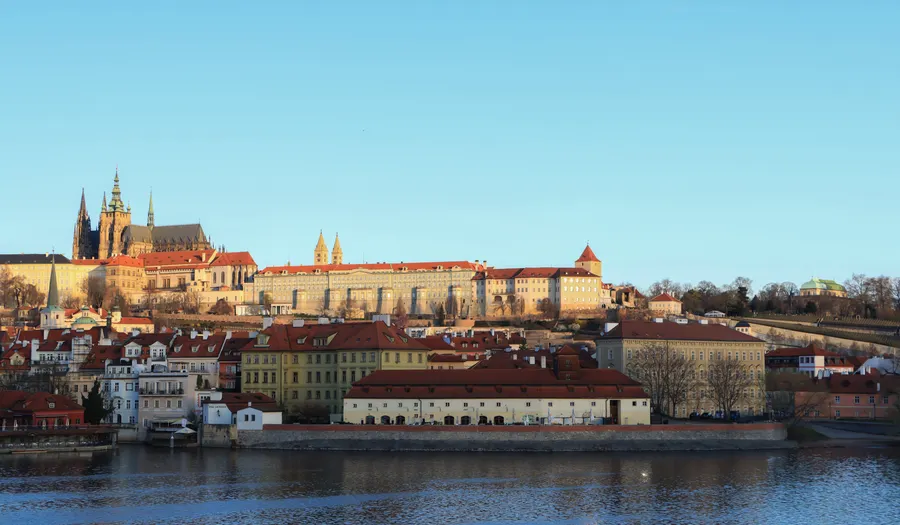
Perched on Hradcany hill, it is the largest ancient castle in the world according to Guinness, with 70,000 m² of palaces, courtyards and gardens. Inside you can visit St Vitus Cathedral with its stained glass by Mucha, the Old Royal Palace and St George's Basilica. Golden Lane, with its colourful little houses where Kafka lived at number 22, is worth the trip on its own. Allow half a day and arrive before 9am to avoid the crowds. The changing of the guard takes place every hour, with the full ceremony at noon.
Charles Bridge

Begun in 1357 under Charles IV, this 516-metre Gothic bridge links the Old Town to Mala Strana. Its 30 Baroque statues, including the famous St John of Nepomuk, which people touch to make a wish, turn it into an open-air museum. At dawn, when mist rises from the Vltava and photographers replace the crowds, the place is magical. By day, musicians, caricaturists and watercolour sellers give it a permanent festive air. The towers at either end can be climbed for a plunging view.
Old Town Square and the Astronomical Clock

The beating heart of Prague since the Middle Ages, framed by the Church of Our Lady before Týn and its black spires, the Kinsky Palace and the House at the Stone Bell. The Astronomical Clock of 1410, the oldest still in operation, sets its procession of apostles in motion every hour before hundreds of onlookers. Climb the Old Town Hall tower for the finest view over the red roofs of the Old Town. In December, the square hosts the big Christmas market and its giant tree.
Mala Strana

The 'Little Quarter', tucked between the castle and the river, is Prague's most romantic neighbourhood. Cobbled lanes, Baroque palaces, terraced gardens and pastel facades form a setting that has barely changed since the 18th century. Here you will find St Nicholas Church and its vertiginous dome, the John Lennon Wall covered in pacifist graffiti, and Kampa Island with David Cerny's giant babies. The cafes of Nerudova Street make perfect stops between climbs up to the castle.
Vysehrad

This 10th-century fortress, perched on a rock above the Vltava, is the legendary birthplace of the city and its best-kept secret. Tourists ignore it; locals picnic here. Wander between the neo-Gothic Basilica of St Peter and St Paul, the Romanesque Rotunda of St Martin and the national cemetery where Dvorak and Mucha lie. The ramparts offer a superb view of the castle and the river's meanders, especially at sunset. Entry to the park is free and the atmosphere delightfully peaceful.
Zizkov and Vinohrady
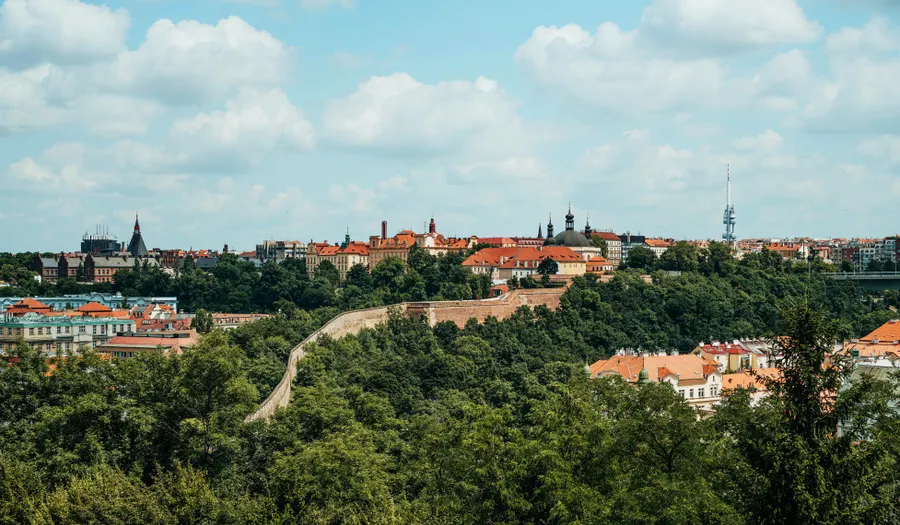
To see the Prague of Praguers, head east of the centre. Zizkov, a once-rebellious working-class district, boasts the highest density of bars in the world, a futuristic TV tower climbed by sculpted babies and the national monument on Vitkov Hill. Vinohrady, more well-to-do, wins you over with its Art Nouveau avenues, Jiriho z Podebrad square and its farmers' market, and Plecnik's Church of the Sacred Heart. This is where you eat and drink best, far from the tourist menus of the Old Town.
How many days, and which itinerary?
Allow 3 to 4 days to cover the highlights on both banks and get a taste of neighbourhood Prague, the ideal length for a long weekend.
🗺️ Day-by-day itinerary · 📓 Free printable Prague guide (PDF) · 🌍 All of Czech Republic
The essentials (2 days)
Day 1: the Old Town, the Astronomical Clock, the Jewish quarter of Josefov, then Charles Bridge at sunset. Day 2: Prague Castle in the morning, down through Golden Lane to Mala Strana, the Lennon Wall and Kampa Island.
The grand tour (4 days)
The first two days on the highlights, then Vysehrad and a Vltava cruise on day three. On day four, dive into Zizkov and Vinohrady: specialty coffee, the Jiriho z Podebrad market and a crawl of craft breweries.
Prague and its region (5-6 days)
After three days in the city, widen the circle: a trip to Kutna Hora and its Sedlec Ossuary (1 hour by train), Karlstejn Castle tucked away in the Bohemian forests, or a relaxing day at the spas of Karlovy Vary.
Getting there and getting around
From Vaclav Havel Airport: bus 59 plus the metro, or the Airport Express bus to the main station, around 30 to 45 minutes for €2 to €4. Taxi or ride-hailing (Bolt, Uber): €15 to €25.
The historic centre can be explored entirely on foot: from the castle to Old Town Square, allow 25 minutes' walk.
The metro (3 lines), trams and buses all run on the same ticket: CZK 30 (€1.20) for 30 minutes, CZK 120 (€4.80) for the day. Tram 22 passes all the major sights.
Avoid taxis hailed in the street, notorious for inflating fares: use the apps or official ranks instead.
Where to stay in Prague?
Old Town and Josefov: at the heart of everything but touristy, 4-star hotels from €110 to €180 a night.
Mala Strana: pure charm on the castle side, characterful hotels and Baroque houses from €90 to €160.
Vinohrady and Zizkov: the best value for money, guesthouses and apartments from €50 to €90, 10 minutes by tram from the centre.
Well-rated hostels (Sophie's, Czech Inn): dorm beds from €18 to €30, private rooms from €60.
Our places to stay, stop by stop, at three budgets →
What to eat in Prague?
Try the classics: goulash with bread, svickova (beef in a creamy sauce with cranberries) and vepro knedlo zelo (roast pork, dumplings, sauerkraut), €8 to €14 a dish in a hospoda.
Beer reigns supreme: Pilsner Urquell, Budvar or microbreweries such as Vinohradsky Pivovar, with a pint at €1.80 to €3 outside the tourist zones.
For a memorable meal: Lokal (impeccable Czech cooking, beer-hall atmosphere), Eska in Karlin or Kantyna, a butcher's shop turned carnivore canteen.
Be wary of trdelnik sold as a 'traditional pastry': it is a friendly but recent tourist trap, so go for the kolace from the bakeries instead.
Entry requirements
Schengen area: an ID card or passport for EU citizens, 90 days visa-free for UK, US, Canadian and Australian passports.
Rules change: check your own government's travel advice before you go.
Frequently asked questions about Prague
When is the best time to visit Prague?
April to June and September to October: pleasant temperatures, superb light and reasonable crowds. December has its charm with the Christmas markets, but you have to accept the cold and the crowds on Advent weekends.
What daily budget should I plan for in Prague?
Allow €45 to €65 a day as a backpacker, €80 to €130 for a comfortable stay with a well-located hotel and good restaurants, and much less for meals and beer as soon as you leave the tourist streets.
How do I get around?
On foot above all, as the centre is compact. For the rest, the metro and tram network is excellent and cheap: €4.80 for a 24-hour pass. Tram 22 serves the castle and most of the sights.
How many days do you need to visit Prague?
Three to four days are enough for the highlights and one or two neighbourhoods off the beaten track. Add a day for a trip to Kutna Hora or Karlstejn.
Should I change euros into koruna?
Yes, the Czech koruna is still the official currency, but bank cards are accepted almost everywhere. If you need cash, withdraw from a bank ATM and decline the conversion into euros offered on screen.
Similar destinations
 City
City🇵🇱 Kraków
 City
City🇵🇹 Lisbon
 City
City🇵🇹 Porto
 City
City🇬🇷 Athens
 City
City🇭🇺 Budapest
 City
City🇫🇷 Lille
 City
City🇫🇷 Strasbourg
 City
City🇫🇷 Avignon
 City
City🇷🇴 Bucharest
 City
City