When to go to Czech Republic?
→ The detailed month-by-month page, with real weather records
Best time: May to September and December (markets)
At a glance
Why go to Czech Republic?
The Czech Republic is tiny, yet it changes face every fifty kilometres. You go from a Baroque capital bristling with spires to Bohemian villages where time seems to have stopped in the Renaissance. Nothing is far, everything is dense, and it is this compactness that makes the country so easy to explore in a week.
There is the beer, of course, the cheapest and among the best in Europe, served in vaulted taverns where the head counts as much as the liquid. But reducing Czechia to its pints would be unfair. This is a land of goldsmiths, puppeteers, composers and brewers who have made craftsmanship a quiet religion.
Prague draws the crowds, and it is easy to see why, but the real surprise lies elsewhere. As soon as you leave the capital, prices drop, terraces empty and you find an intimate Central Europe of cobbled squares, hilltop castles and forests that smell of resin. That is where the trip gains its depth.
Map of Czech Republic: what is where?
The map shows the 6 places covered in this guide, to picture the distances and plan your route.
- Prague
- Cesky Krumlov
- Kutna Hora
- Karlovy Vary
- Hluboka Castle
- Brno
How much does a trip to Czech Republic cost?
Czechia remains one of the most affordable destinations in Central Europe, especially outside Prague.
| Style | Per day | What it covers |
|---|---|---|
| Backpacker | €40-55/day | Dorm, tavern meals and local beer, public transport |
| Comfort | €70-110/day | Double room in a guesthouse, restaurants, a few paid visits |
| Premium | €150+/day | Boutique hotel, fine dining and private excursions |
The currency is the Czech koruna; pay by card where possible and withdraw from bank cash machines rather than using exchange offices.
Is Czech Republic safe?
The Czech Republic is one of the safest countries in Europe, and travellers get around without worry, day and night. The main nuisance is pickpockets in Prague's tourist areas, especially on Charles Bridge and in crowded trams. Beware of unofficial taxis and of exchange offices in the centre that charge extortionate rates. Beyond these minor annoyances, no particular precautions are needed.
What to see and do in Czech Republic
- Prague and Charles Bridge
- Prague Castle
- the astronomical clock
- Český Krumlov
- Czech breweries
Prague
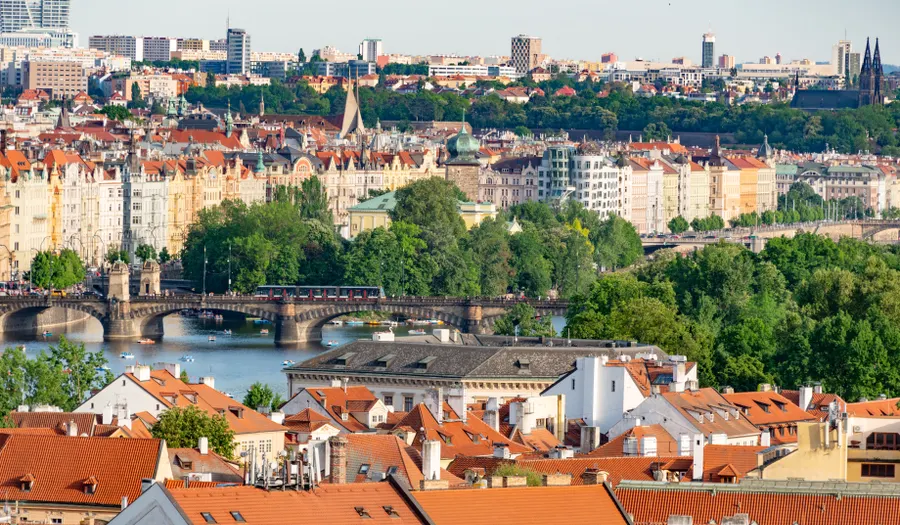
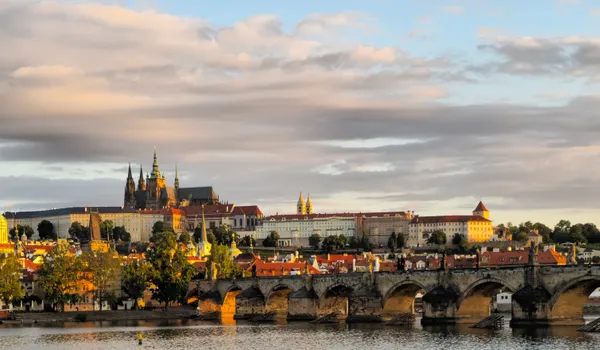
The capital is best crossed on foot, from Charles Bridge to the astronomical clock in the Old Town. Climb up to Prague Castle at daybreak to avoid the crowds and take in the whole city at a glance. The Mala Strana district below lines up Baroque palaces and secret lanes. Save your evenings for the taverns of the Zizkov district, more authentic and far cheaper than the centre.
Cesky Krumlov

This medieval town curled into a bend of the Vltava looks like a fairy-tale set. Its castle, the second largest in the country, towers over a maze of red roofs and cobbled lanes. Come early in the morning or stay the night to enjoy the town once the coaches have left. In summer, paddling down the river by canoe is a refreshing way to discover the surroundings.
Kutna Hora

An hour from Prague, this former silver town hides one of the most unsettling places in the country. The Sedlec Ossuary is decorated with human bones arranged into chandeliers and coats of arms. A short walk away, St Barbara's Cathedral rivals the great churches of the capital in Gothic beauty. The town is easily visited in half a day from Prague by train.
Karlovy Vary

This spa town tucked into a wooded valley is all neoclassical colonnades and hot springs. You stroll with a cup in hand, tasting the mineral waters at different temperatures. The local liqueur, Becherovka, is sipped in Belle Époque cafés. The funicular up to the Diana Tower offers a bird's-eye view of the town's pastel rooftops.
Hluboka Castle

This white neo-Gothic castle, inspired by Windsor, rises above the Vltava in South Bohemia. Its richly furnished interiors and English-style gardens make for a very photogenic visit. It combines easily with the nearby town of Ceske Budejovice, birthplace of the original Budweiser beer. Allow half a day for the guided tour and a walk in the park.
Brno

The country's second city and capital of Moravia has a relaxed student atmosphere far from the tourist trail. Villa Tugendhat, a masterpiece of functionalist architecture, can be visited by reservation. Spilberk Fortress overlooks the city, while the region's cellars produce quality white wines. Prices here are much gentler than in Prague.
How many days, and which itinerary?
A week lets you combine Prague, South Bohemia and a side trip to Moravia without rushing.
🗺️ Day-by-day itinerary · 📓 Free printable Czech Republic guide (PDF)
Czech essentials (5 days)
Three days in Prague to soak up the capital, then head south to Cesky Krumlov and Hluboka Castle. A day in Kutna Hora completes the picture if time allows.
Bohemia and Moravia (8 days)
To the must-sees of Prague and Cesky Krumlov, add a crossing to Brno and the wine cellars of South Moravia. Karlovy Vary offers a restful spa interlude at the end of the trip.
Getting there and getting around
Trains serve the major cities efficiently, comfortable and cheap with the RegioJet and Ceske drahy companies
Long-distance buses such as FlixBus and RegioJet serve towns not on the rail network, at low prices
In Prague, trams and the metro form a dense, reliable network, with time-based tickets
A car is only useful for exploring the South Bohemian countryside and isolated castles
Where to stay in Czech Republic?
Hostels and dorm beds in Prague from 15 to 25 euros a night
Family-run guesthouses and small hotels outside the capital for 40 to 70 euros a double room
Boutique hotels in central Prague from 80 to 130 euros a night
Former palaces turned into luxury hotels from 180 euros
Our places to stay, stop by stop, at three budgets →
What to eat in Czech Republic?
Svickova, braised beef topped with a creamy vegetable sauce, served with knedliky dumplings
Czech gulas, thicker than its Hungarian cousin, served with bread or dumplings
Trdelnik, a rolled, grilled pastry, very touristy but delicious when warm
Draught Pilsner Urquell or Budvar, served cold in every tavern
Entry requirements
Schengen area: an ID card or passport for EU citizens, 90 days visa-free for UK, US, Canadian and Australian passports.
Rules change: check your own government's travel advice before you go.
Cities and regions to discover
Frequently asked questions about Czech Republic
When is the best time to visit?
From May to September for mild weather and terraces, with the busiest period in July and August. December is worth the trip for its Christmas markets, despite the cold.
What daily budget should I plan for?
Allow around 40 to 55 euros a day travelling on a budget, and 70 to 110 euros for a comfortable stay. Prague costs more than the rest of the country.
How do I get around the country?
Trains and long-distance buses link the major cities efficiently and cheaply. A car is only useful for exploring the isolated castles and villages of Bohemia.
Do you pay in euros in Czechia?
No, the official currency is still the Czech koruna. A few tourist shops accept euros but at an unfavourable rate, so use your bank card instead.
Similar destinations
 City
City🇭🇺 Budapest
 City
City🇵🇱 Kraków
 City
City🇫🇷 Avignon
 Region
🇷🇴 Transylvania
 Country
🇫🇷 France
 Region
🇫🇷 Normandy
 Region
🇫🇷 Alsace
 Region
🇫🇷 The Loire Valley
 Country
🇮🇹 Italy
 Region