When to go to Budapest?
→ The detailed month-by-month page, with real weather records
Best time: April to June and September to October (Christmas markets: December)
At a glance
Why go to Budapest?
Few capitals offer such a spectacular setting: the Danube, 400 metres wide, separates the hills of Buda, crowned by the castle and the citadel, from the Haussmann-style avenues of Pest, the two linked by the Chain Bridge. In the evening, when the neo-Gothic Parliament lights up and is reflected in the river, you understand why the banks of the Danube are UNESCO-listed. A simple ride on tram 2, regularly cited among the most beautiful lines in the world, is worth many a cruise.
Budapest is also the world capital of thermal baths: 120 hot springs gush beneath the city, feeding legendary establishments such as Széchenyi, with its yellow neo-Baroque pools, or Gellért, with its Art Nouveau mosaics. Bathing outdoors in 38-degree water while steam rises into the cold air is an experience you will find nowhere else in Europe. Add historic cafes such as the New York or the Central, and you have a city break devoted to retro well-being.
Finally, the city invented a unique kind of night out: ruin bars, set up in crumbling buildings in the old Jewish quarter and furnished with odds and ends, with Szimpla Kert as the global pioneer. The food scene shares the same energy, from the Great Market Hall to Michelin-starred neo-Hungarian bistros, all at prices that raise a smile. It is one of the best pleasure-for-price ratios on the continent.
Map of Budapest: what is where?
The map shows the 6 places covered in this guide, to picture the distances and plan your route.
- Hungarian Parliament
- Széchenyi Baths
- Fisherman's Bastion
- Szimpla Kert
- Gellért Hill
- Margaret Island
How much does a trip to Budapest cost?
Despite marked inflation in recent years, Budapest remains significantly cheaper than the capitals of Western Europe. The baths, transport and food offer value for money that is hard to beat.
| Style | Per day | What it covers |
|---|---|---|
| Backpacker | €40-60/day | Hostel in the 7th district, langos and etkezde canteens, transport pass, baths on weekdays, ruin bars |
| Comfort | €75-120/day | 4-star hotel in Pest, good restaurants, Parliament and baths tickets, a Danube cruise |
| Premium | €170+/day | Riverfront palace hotel (Gresham, Matild), private spa, Michelin-starred gourmet dinner, top-category opera seats |
Local currency: the Hungarian forint (HUF, €1 is worth about HUF 400); pay by card almost everywhere, always decline conversion into euros at card terminals and ATMs, and steer clear of the exchange offices on Vaci Street and of Euronet ATMs.
Is Budapest safe?
Budapest is a safe capital where you can stroll without worry, including in the evening along the main avenues. Watch out for pickpockets on trams 4-6, at the Central Market Hall and in the ruin bar crowds, and beware of inflated bills in certain hostess bars on Vaci Street: always check the price list before ordering. Taxis must display the official yellow logo; if in any doubt, book through Bolt. Swimming in the Danube is forbidden and dangerous, because of the currents and barges.
What to see and do in Budapest
- Hungarian Parliament
- Széchenyi Baths
- Fisherman's Bastion
- Szimpla Kert
- Gellért Hill
- Margaret Island
- St Stephen's Basilica
- Great Market Hall
Hungarian Parliament

This 268-metre-long neo-Gothic colossus, inspired by Westminster, has been the ultimate symbol of Budapest since 1902. Its 96-metre dome shelters the Holy Crown of St Stephen, guarded by uniformed soldiers. The guided tour takes in the grand staircase gilded with fine gold leaf and the Assembly Hall. But the finest show is outside: lit up at night, seen from Fisherman's Bastion or from a boat on the Danube, it looks unreal. Right next door, the Shoes on the Danube Bank memorial soberly remembers the Jewish victims of 1944-45.
Széchenyi Baths

Europe's largest thermal complex has spread its buttercup-yellow facades through City Park since 1913. Its three outdoor pools, heated to between 27 and 38 degrees, are open all year round: bathing in the snow while watching regulars play chess on floating boards is an absolute classic. Inside, fifteen pools, saunas and steam rooms complete the circuit. Allow at least three hours; a swimming cap is not necessary, but flip-flops are.
Fisherman's Bastion and Buda Castle
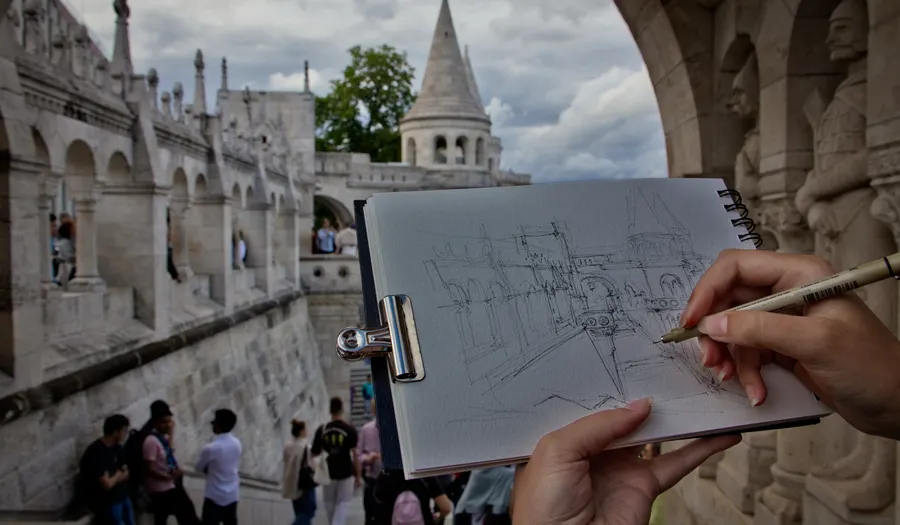
On Buda Hill, Fisherman's Bastion lines up its seven white neo-Romanesque turrets, a tribute to the seven founding Magyar tribes. Its arcades frame the postcard view of Parliament and Pest, especially at sunrise. A stone's throw away stand Matthias Church with its glazed tile roof, then Buda Castle, home to the Hungarian National Gallery. The Castle District, with its colourful medieval lanes, can be reached on foot or by the historic funicular at the Chain Bridge.
The Jewish quarter and ruin bars

The 7th district, Budapest's former ghetto, has become the liveliest neighbourhood in the city without turning its back on its memory. The Great Synagogue on Dohany Street, the largest in Europe, its memorial cemetery and the metal Tree of Life make for a moving visit. In the evening, the courtyards of dilapidated buildings come alive: Szimpla Kert, Instant-Fogas and their imitators party until dawn amid psychedelic junk-shop decor. In between, Kazinczy and Dob streets line up street art, food courts and natural wine bars.
Gellért Hill and the Danube banks
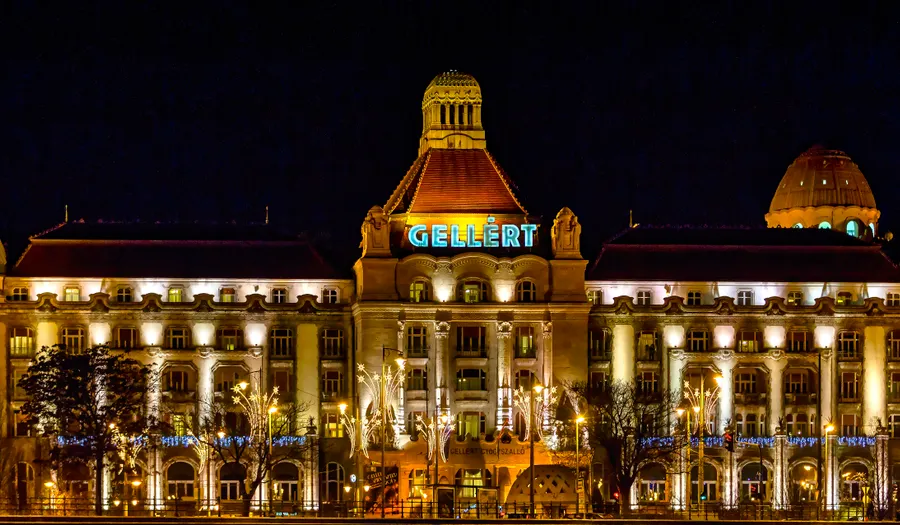
This steep 235-metre hill plunges into the Danube opposite Pest, crowned by the citadel and the Liberty Statue, visible from all over the city. The climb on foot from Elisabeth Bridge takes 30 minutes through the gardens and is rewarded with the finest panorama in Budapest, particularly at sunset. At the foot of the hill are the Gellért Baths and their colonnaded Art Nouveau pool, as well as the Cave Church carved into the rock. Head back down via the embankments to follow the river to the Central Market Hall.
Margaret Island
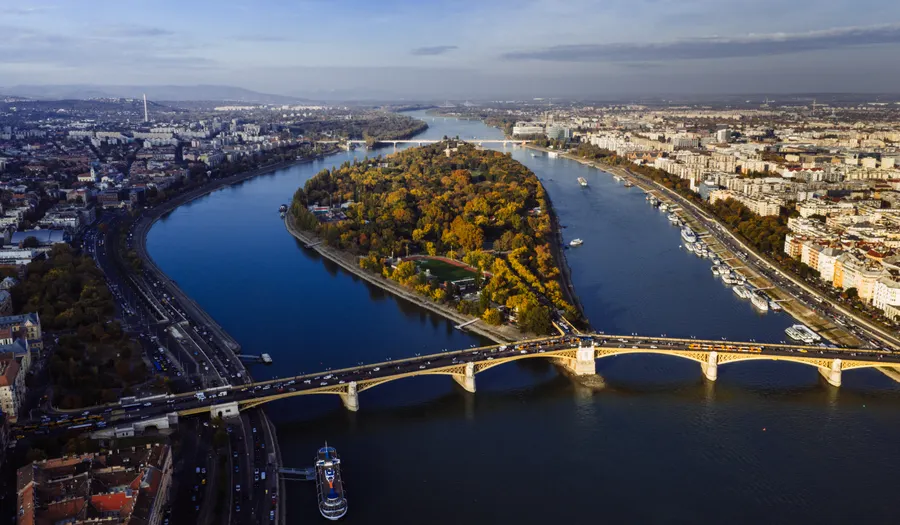
Set in the middle of the Danube between Buda and Pest, this 2.5 km island park is closed to cars and adored by locals. People run on the soft track that loops around it, hire pedal carts with the family and swim at the Palatinus complex in summer. The ruins of a Dominican convent where St Margaret lived, a Japanese garden, a musical fountain and an Art Nouveau water tower punctuate the stroll. It is the perfect green interlude between two city days, reached by tram 4 or 6.
How many days, and which itinerary?
Allow 3 to 4 days to explore both banks, devote half a day to the baths and an evening to the ruin bars without rushing.
🗺️ Day-by-day itinerary · 📓 Free printable Budapest guide (PDF) · 🌍 All of Hungary
The essentials (2 days)
Day 1: Parliament and the Shoes memorial, St Stephen's Basilica, the Great Market Hall, then an evening of ruin bars in the Jewish quarter. Day 2: Buda Hill in the morning (Fisherman's Bastion, Matthias Church), the Széchenyi Baths in the afternoon, a night cruise on the Danube.
The grand tour (4 days)
The highlights over two days, then Gellért Hill, the Gellért Baths and the palace quarter on day three. Day four: Margaret Island by bike, the New York Café, Andrassy Avenue and Heroes' Square, with an opera or concert in the evening.
Budapest and the Danube (5-6 days)
After three days in the city, set off around the Danube Bend: Baroque Szentendre and its galleries (40 min by suburban train), the citadel of Visegrad and the basilica of Esztergom, or a day among the vineyards of Etyek.
Getting there and getting around
From Ferenc Liszt Airport: the direct 100E bus to the centre (25 to 40 minutes, around €5.50) or an official Fotaxi cab or Bolt for €25 to €35.
The BKK network combines 4 metro lines (including the M1, the oldest on the continent and UNESCO-listed), trams and buses: a ticket costs HUF 450 (€1.10), a 24-hour pass around €6.50.
Tram 2 runs along the Danube on the Pest side with views of the castle and Parliament: the most beautiful line in the city for the price of a ticket.
Central Pest and the Castle District are very walkable; the bridges take 10 minutes to cross and MOL Bubi bikes round things off.
Where to stay in Budapest?
Belvaros (5th district): central Pest, within walking distance of everything, 4-star hotels from €90 to €150 a night.
Jewish quarter (7th district): perfect for going out but noisy at weekends, boutique hotels and apartments from €60 to €110.
Castle Hill and Buda: calm and views, a romantic stay from €100 to €180, but bridges to cross for the nightlife.
Tight budgets: design hostels in Pest (Maverick, Wombat's) with dorms from €15 to €28 and private rooms from €55.
Our places to stay, stop by stop, at three budgets →
What to eat in Budapest?
Hungarian classics: goulash (a soup, not a stew!), chicken paprikash, garlicky fried langos and kurtoskalacs chimney cake, €6 to €12 a dish in an étkezde (canteen).
The Great Market Hall for lunch on the first floor, then the food courts of the Jewish quarter (Karavan, next to Szimpla) for evening street food.
Tables on the rise: Stand25 and Rosenstein for tradition elevated, Mazel Tov for the atmosphere, and the historic New York or Central cafes for a Viennese hot chocolate.
When it comes to wine, Hungary surprises: volcanic whites from Badacsony, reds from Eger and sweet tokaji with dessert, at €2 to €5 a glass in the wine bars of Pest.
Entry requirements
Schengen area: an ID card or passport for EU citizens, 90 days visa-free for UK, US, Canadian and Australian passports.
Rules change: check your own government's travel advice before you go.
Frequently asked questions about Budapest
When is the best time to visit Budapest?
April to June and September to October: mild weather, open terraces and reasonable queues at the baths. Winter has its charm for bathing outdoors in the steam and enjoying the Christmas markets, while summer is hot but lively with festivals.
What daily budget should I plan for in Budapest?
Around €40 to €60 a day as a backpacker, €75 to €120 in comfort with a central hotel, baths and good restaurants. The Széchenyi Baths cost around €27, a dish in a local canteen €6 to €12.
How do I get around?
The BKK metro, tram and bus network is dense and cheap (24-hour pass around €6.50). Tram 2 along the Danube and the little M1 metro under Andrassy Avenue are attractions in themselves. The centre is easily covered on foot.
How many days do you need to visit Budapest?
Three to four days let you cover Buda and Pest, spend half a day at the baths and an evening in the Jewish quarter. Add a day for the Danube Bend (Szentendre, Visegrad, Esztergom).
Can you get into the baths without booking?
On weekdays you can usually get in without booking, but an online ticket skips the queue and guarantees entry at weekends and in high season. Bring flip-flops and a swimming cap for the lap lanes; towels and cabins can be hired on site.
Similar destinations
 City
City🇵🇹 Lisbon
 Country
🇨🇿 Czech Republic
 City
City🇨🇿 Prague
 City
City🇵🇱 Kraków
 City
City🇫🇷 Rennes
 Region
🇫🇷 Lorient and South Brittany
 Region
🇫🇷 The French Riviera
 Region
🇫🇷 The Loire Valley
 Country
🇪🇸 Spain
 City
City