When to go to Rennes?
→ The detailed month-by-month page, with real weather records
Best time: May to July and September
At a glance
Why go to Rennes?
Everything about Rennes makes sense once you know about one night in December 1720, when a fire that started in a carpenter's workshop destroyed nine hundred houses in six days. The king's engineers rebuilt the city in pale granite on a grid plan: this is classical Rennes, with its straight streets and regular façades. The district that escaped, around Rue du Chapitre, Rue Saint-Guillaume and Rue de la Psalette, kept some three hundred half-timbered houses, and you can still see the line between the two cities to within a few metres.
Rennes has never been a seaside town and doesn't pretend to be: it is an administrative and judicial capital, home of the Parliament of Brittany, where the highest ducal and then royal courts sat. This 17th-century palace, set ablaze during a night of rioting by fishermen in February 1994 and then restored exactly as it was, remains the city's most impressive monument and the hardest to get into, because it still houses a working court of appeal.
The third element is demographic. With 68,000 students, Rennes has one of the highest student densities in France, and it shows everywhere: bars serving €5 pints, the country's second-largest market on Saturday mornings, a music scene that has produced the Trans Musicales festival since 1979, and a city that visibly empties during university holidays. It is a destination for two full days rather than a week, but two days here beat three somewhere else.
Map of Rennes: what is where?
The map shows the 6 places covered in this guide, to picture the distances and plan your route.
- Place des Lices
- Parliament of Brittany
- Rue du Chapitre
- Parc du Thabor
- Les Champs Libres
- Place Sainte-Anne
How much does a trip to Rennes cost?
A weekend in Rennes costs very little, because most of what you come to see is free: the market, the Thabor, the medieval centre, the Frac and the permanent collections of the Musée de Bretagne cost nothing. The only unpredictable item is the hotel during the Trans Musicales and the start of the university year.
| Style | Per day | What it covers |
|---|---|---|
| Backpacker | €45-70/day | Hostel or budget hotel near the station, galette-saucisse at the market, free museums, everything on foot |
| Comfort | €100-150/day | Hotel in the centre, guided tour of the Parliament, crêperie and cider bar in the evening, fine arts museum |
| Premium | €250+/day | Characterful hotel near the Thabor, bistronomy restaurant, chauffeur-driven trips to Saint-Malo or Vitré |
Cards are accepted everywhere, including by most producers at the Lices market, but a few galette-saucisse stalls are still cash only: keep five euros in coins. A contactless bank card works as a ticket on the STAR network, so you don't need to buy one.
Is Rennes safe?
Rennes is a safe city, including for women travelling alone, but its student nightlife creates some very localised situations. From Thursday to Saturday, the triangle formed by Rue Saint-Michel, Place Sainte-Anne and Rue Saint-Georges packs an impressive amount of alcohol into a few hundred metres, with jostling and scuffles at closing time, around 1:00 or 2:00: the risk is not targeted assault but being in the wrong place at the wrong time. Phone snatching happens in the same area and around the station. The Saturday morning market at Les Lices draws a few pickpockets, nothing more. Le Blosne, Maurepas and Villejean are large working-class housing estates where a visitor has no reason to go at night, but they pose no danger during the day. The city's real black spot, regularly flagged by the prefecture, is people falling into the Vilaine and the canal after a night out, with several drownings in recent years on the unprotected banks between Mail François-Mitterrand and Pont de Bretagne.
What to see and do in Rennes
- Place des Lices and its Saturday market
- Parliament of Brittany
- Half-timbered houses on Rue du Chapitre
- Parc du Thabor
- Les Champs Libres and the Musée de Bretagne
- Rennes Museum of Fine Arts
- Place Sainte-Anne and the student quarter
- The Frac Bretagne
The medieval centre and its half-timbered houses

The triangle spared by the 1720 fire sits between Place des Lices, Saint-Pierre Cathedral and Place Sainte-Anne. Rue du Chapitre, Rue Saint-Guillaume, Rue Saint-Sauveur, Rue de la Psalette and Rue du Champ-Jacquet are lined with leaning 15th- and 16th-century façades, some jettied over three storeys, including the house known as Ti-Koz, the oldest in the city. The Portes Mordelaises, the old ceremonial gateway where the dukes swore their oath, have been restored and reopened to the public. The full walk takes forty minutes and costs nothing. Look for the edge of the fire along Rue Lafayette: timber on one side, granite on the other.
The Parliament of Brittany
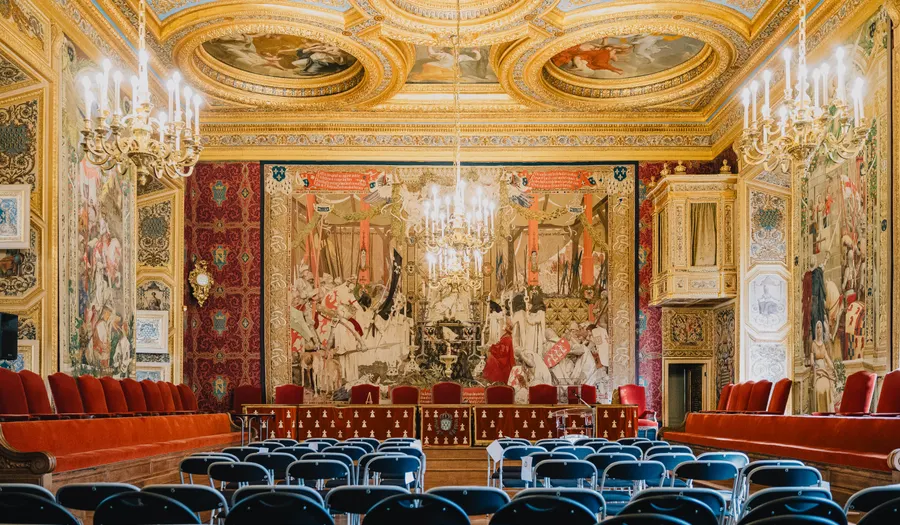
Salomon de Brosse, architect of the Luxembourg Palace, designed this building in the early 17th century to house Brittany's courts. Inside are gilded coffered ceilings, Gobelins tapestries and a cycle painted by Coypel in the Grand'Chambre, a richness you wouldn't expect in a city of this size. On the night of 4 to 5 February 1994, a fishermen's protest turned violent and a distress flare set the roof timbers alight: restoration took six years. The building is still a working court of appeal, which is why it can only be visited on a booked guided tour. It is the one monument in Rennes you genuinely need to plan ahead for.
Place des Lices and the Saturday market
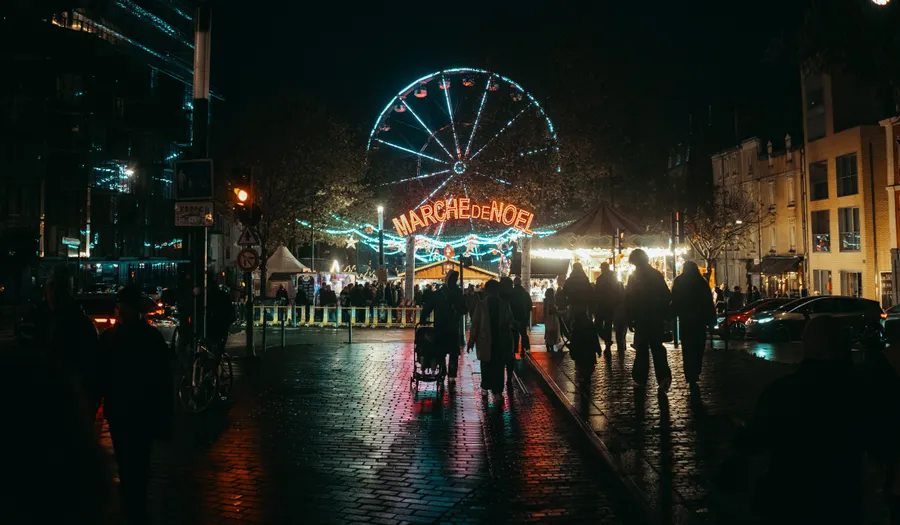
A former jousting ground, the square hosts France's second-largest market every Saturday morning, with nearly three hundred producers under two iron market halls from 1871. People come for vegetables from the Rennes basin, Cancale oysters and the galette-saucisse eaten standing up, wrapped in a wheat crêpe and, by local rule, without mustard. The 17th-century mansions around the square are a reminder that members of the Parliament lived here. At 13:30 everything vanishes and the square goes back to being a car park. The rest of the week, it holds no interest at all.
Parc du Thabor
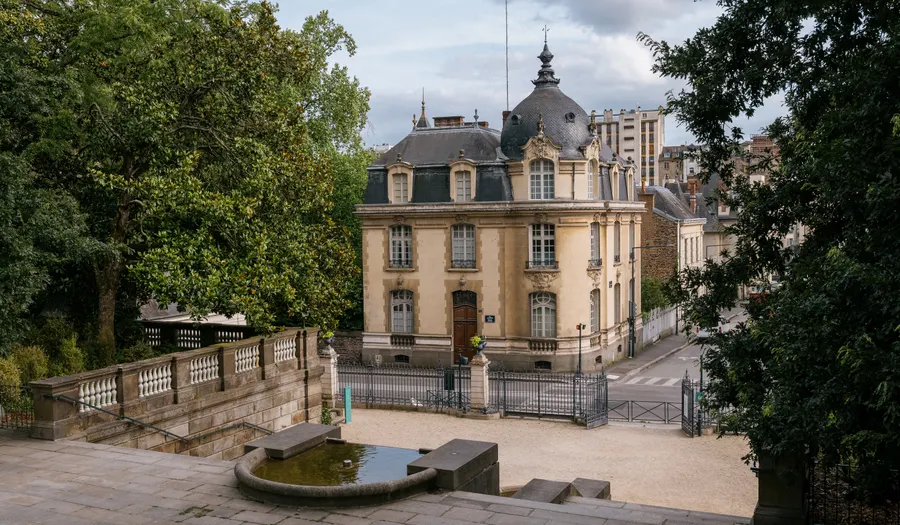
Ten hectares laid out by the Bühler brothers on the former garden of the monks of Saint-Melaine, above the centre. There is a rose garden with more than two thousand bushes, a formal French garden, a botanical section, an aviary, an artificial grotto and a bandstand that hosts free concerts in summer. It is the city's living room: as soon as the sun comes out, the whole of Rennes heads here, students on the lawns and families along the paths. The orangery is used as an exhibition space. The gates close at dusk, with a whistle blown a quarter of an hour beforehand.
Sainte-Anne, Saint-Michel and student life
Rue Saint-Michel, a hundred and fifty metres of listed half-timbered houses lined with bars, is known locally as the Rue de la Soif, the street of thirst, and sums up the city in a single image: 16th-century heritage turned into student terraces. Place Sainte-Anne, right next door, is the meeting point and a metro station. The nearby Jacobins convent, excavated for ten years before becoming a convention centre, yielded sarcophagi and 17th-century lead heart caskets now on display at the Musée de Bretagne. The mood changes completely depending on the day of the week and the university calendar. On a Sunday in the school holidays, the area is dead.
Les Champs Libres and the contemporary city

On Cours des Alliés, Christian de Portzamparc stacked a library, a planetarium, the Espace des Sciences and the Musée de Bretagne into a single building, beneath an inverted pyramid that changed the city's skyline in 2006. The Musée de Bretagne tells the region's story from prehistory onwards and devotes an entire room to the Dreyfus affair, whose second trial was held in Rennes in 1899: its permanent collections are free. To the north, Odile Decq's Frac Bretagne rises as a black monolith split by a vertical fissure, and the driverless metro, with two lines since line b opened in 2022, links it all in a few minutes. Rennes is the smallest city in Europe with two metro lines. It is also what makes a visit so easy.
How many days, and which itinerary?
2 days
🗺️ Day-by-day itinerary · 📓 Free printable Rennes guide (PDF) · 🌍 All of Brittany
The perfect weekend (2 days)
Saturday: Lices market before 11:00, the medieval centre and the Portes Mordelaises, the fine arts museum in the afternoon, an evening on Rue Saint-Michel. Sunday: the Thabor in the morning, Les Champs Libres and the Musée de Bretagne, a late-afternoon train. This is the format that makes the most of the city, since its best moment is Saturday morning.
All of Rennes (3 days)
The same core, plus the guided tour of the Parliament of Brittany booked in advance, the Frac Bretagne and a bike ride up the Ille-et-Rance canal from the quays. Add the Mail lock and the Villejean district if 1960s architecture interests you. This is the length of stay at which the city stops being a mere stopover.
Rennes as a base (5 days)
Two days in the city, then day trips by train or coach: Saint-Malo in 50 minutes, Vitré and its castle in 25 minutes, Dinan in 1 hour, Mont Saint-Michel in 1h15 by shuttle. Rennes is Brittany's best rail hub, which saves you changing hotels every night. The city then becomes the place where you sleep and dine, not the subject of the trip.
Getting there and getting around
Paris-Montparnasse to Rennes takes 1h25 by TGV, €25 to 90 depending on how early you book; the station is a fifteen-minute walk from the centre and on both metro lines.
Two driverless metro lines, line a since 2002 and line b since 2022, plus the STAR bus network: a ticket costs around €1.60 and is valid for an hour including transfers, a book of 10 around €13, a day pass around €4.50.
The historic centre is entirely walkable: from Place des Lices to the Thabor is a kilometre and a half, and the metro is mostly useful for the station and the Frac.
Bike share and the banks of the Vilaine, then the Ille-et-Rance canal, let you leave the city without a car, on a flat greenway that runs up towards Hédé-Bazouges and Dinan.
Where to stay in Rennes?
The historic centre, around Les Lices and Sainte-Anne: the most convenient, €80 to 140 a night, but rooms overlooking Rue Saint-Michel or Rue Saint-Georges are unliveable from Thursday to Saturday.
The station and Colombier area: chain hotels at €60 to 100, ten minutes' walk from the centre or one metro stop, no charm but unbeatable for an early departure.
Around the Thabor and Saint-Hélier: a quiet, well-to-do district, B&Bs and small hotels around €90, the best compromise if you actually want to sleep.
Prices rise sharply during the Trans Musicales in December, the start of the university year in September and Stade Rennais home match weekends: book at least a month ahead for those dates.
Our places to stay, stop by stop, at three budgets →
What to eat in Rennes?
The galette-saucisse is the local emblem: a grilled sausage wrapped in a wheat crêpe, eaten standing up at the Lices market or outside the stadium, around €4, and without mustard if you want to avoid an argument.
The galette complète, a buckwheat pancake filled with egg, ham and Emmental, is everywhere at €8 to 13; the best addresses are on Rue Saint-Melaine and Rue Saint-Georges rather than on the tourist squares.
Cider is ordered by the bolée, a stoneware bowl, and brut is the choice over sweet; the cider bars in the centre offer producers' cuvées from Ille-et-Vilaine at around €5 a jug.
Rennes has a real, recent bistronomy scene, with several restaurants offering set menus at €35 to 60 that work with Cancale oysters and fish landed at Saint-Malo that same morning.
Entry requirements
Schengen area: an ID card or passport for EU citizens, 90 days visa-free for UK, US, Canadian and Australian passports.
Rules change: check your own government's travel advice before you go.
Frequently asked questions about Rennes
How many days are enough for Rennes?
Two days, making sure to include a Saturday morning for the Lices market. The city is walkable and its museums are manageable in size; beyond three days, you use Rennes as a base for Saint-Malo, Vitré or Dinan rather than for itself.
What is the difference between visiting Rennes and visiting Brittany?
Rennes is an inland city, seventy kilometres from the sea, with no port or coastline: you come for the architecture, the museums, the market and the nightlife, not for coastal scenery. It does, however, serve as the rail gateway to the whole region, which makes it a logical first stop before the coast.
Can you visit the Parliament of Brittany on your own?
No. The building houses a working court of appeal and can only be visited on a guided tour booked in advance through the tourist office, around €6.50 for an hour and a half. Slots depend on court business and some rooms may be closed without notice, so book several days ahead and bring photo ID.
Which day should you come for the Lices market?
Saturday only, from 7:30 to 13:30, with the crowds peaking between 11:00 and 12:30 and a very quick pack-up afterwards. Arrive before 11:00 if you want to move around, and expect a queue of about twenty minutes at the best-known galette-saucisse stalls.
Do you have to pay for museums in Rennes?
The permanent collections of the Musée de Bretagne, at Les Champs Libres, are free every day, with only the temporary exhibitions charging around €4. The fine arts museum charges about €7 and is free on the first Sunday of the month, and the Frac Bretagne is free to enter. Part of the Musée de Bretagne's prehistory section is closed for works until summer 2026.
Similar destinations
 City
City🇵🇹 Lisbon
 Country
🇭🇺 Hungary
 City
City🇭🇺 Budapest
 Region
🇫🇷 Lorient and South Brittany
 Country
🇪🇸 Spain
 City
City🇪🇸 Barcelona
 Country
🇵🇹 Portugal
 City
City🇬🇷 Athens
 City
City🇮🇪 Dublin
 City
City