When to go to Brittany?
→ The detailed month-by-month page, with real weather records
Best time: May to September
At a glance
Why go to Brittany?
Brittany has the longest coastline in France, and arguably the most spectacular. The old customs officers' path, the famous GR34, runs for 2,000 km along cliffs, coves and headlands battered by the Atlantic, from the Bay of Mont Saint-Michel to Saint-Nazaire. Every cape reveals a different landscape: pink granite at Ploumanac'h, black cliffs at Cap de la Chèvre, white sand in the Glénan Islands. It is paradise for walkers and photographers.
It is also a land of islands. Ouessant and its legendary lighthouses, Bréhat with its Mediterranean-garden air, Groix, Sein, Batz or the Glénan with their Caribbean-blue waters: each is reached by boat for a day or a night far from the world. The Gulf of Morbihan, a small inland sea dotted with some forty islets, is best discovered by kayak or sailing boat. Few regions offer so many accessible island escapes.
Above all, Brittany has a soul. The Arthurian legends of Brocéliande, the Neolithic stone alignments of Carnac, the parish closes of Finistère and the fest-noz dances that carry on until dawn tell of a proud, living culture. Add buckwheat galettes, Cancale oysters, kouign-amann and farmhouse cider, and you have a destination to savour as much as to explore.
Map of Brittany: what is where?
The map shows the 6 places covered in this guide, to picture the distances and plan your route.
- Saint-Malo
- Ploumanac'h
- Crozon Peninsula
- Quiberon
- Vannes
- Carnac
How much does a trip to Brittany cost?
Brittany remains more affordable than the Mediterranean, except in Saint-Malo and on the islands in high summer. Campsites and crêperies let you travel very comfortably without breaking the bank.
| Style | Per day | What it covers |
|---|---|---|
| Backpacker | €55-80/day | camping or hostel, crêperies and picnics, TER trains and bike |
| Comfort | €100-150/day | B&Bs or 3-star hotel, seafood in restaurants, hire car |
| Premium | €220+/day | seafront boutique hotels, fine dining, private sailing trips |
Euro, cards accepted everywhere; bring cash for markets and some island ferrymen.
Is Brittany safe?
Brittany is a very safe destination; the sea is what calls for caution. Check tide times before any walk on the foreshore or out to an islet reachable on foot, as the tide comes in fast and catches out walkers every year. On the GR34, stay on the path, as some stretches of cliff are eroded. Swim at lifeguarded beaches; the water stays cool even in August. Sea emergency number: 196 (CROSS).
What to see and do in Brittany
- Saint-Malo, the corsair city
- Crozon Peninsula
- The Pink Granite Coast at Ploumanac'h
- Quiberon and the Côte Sauvage
- Brocéliande Forest
- Ouessant
- Gulf of Morbihan
- The Carnac stones
Saint-Malo and the Emerald Coast

The old corsair city raises its ramparts above an emerald sea scattered with forts and islets. A sunset walk around the walls, looking out to the Grand Bé and the biggest tides in Europe, is an absolute classic. Nearby, Cancale serves oysters eaten facing the bay, Dinard lines up its Belle Époque villas and Cap Fréhel pushes its pink sandstone cliffs out above the waves. Dinan, 30 minutes away, completes the picture with its medieval half-timbered lanes. Allow two to three days for this concentrated slice of northern Brittany.
Crozon Peninsula

Between the Brest roadstead and the Bay of Douarnenez, Crozon packs in the finest seascapes in Brittany. The Île Vierge beach and its turquoise water, the Pointe de Pen-Hir and its Tas de Pois sea stacks, Cap de la Chèvre: each site seems to belong to another latitude. Camaret-sur-Mer, a former crayfish port, makes the ideal base, with its listed Vauban tower. The GR34 trails here are demanding but magnificent. A must for lovers of wild nature.
Pink Granite Coast
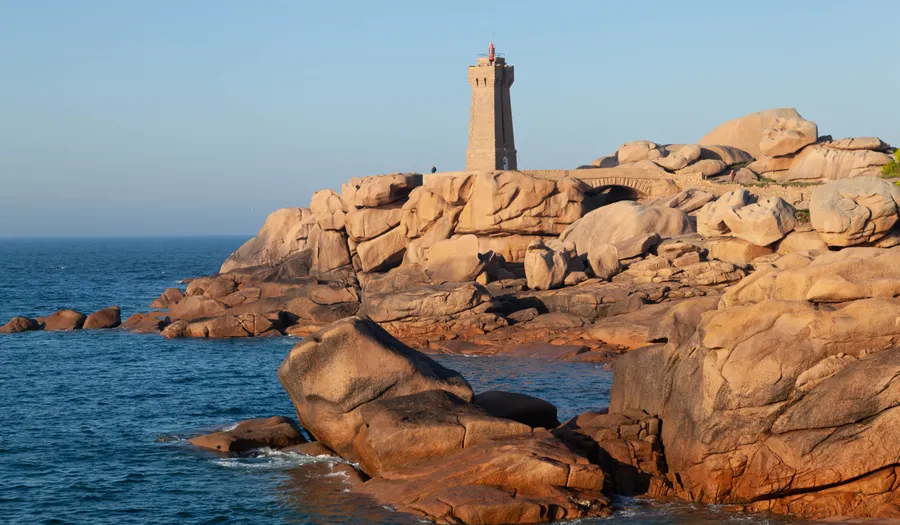
Between Perros-Guirec and Trébeurden, jumbles of pink granite sculpted by erosion create a landscape unique in Europe. The customs officers' path at Ploumanac'h, voted France's favourite village, winds between giant boulders shaped like tortoises and mushrooms. The Mean Ruz lighthouse, built from the same pink stone, glows red at sunset. Offshore, the Sept-Îles archipelago is home to the largest gannet colony in France. A coast to be explored slowly, ideally in low, raking light.
Gulf of Morbihan
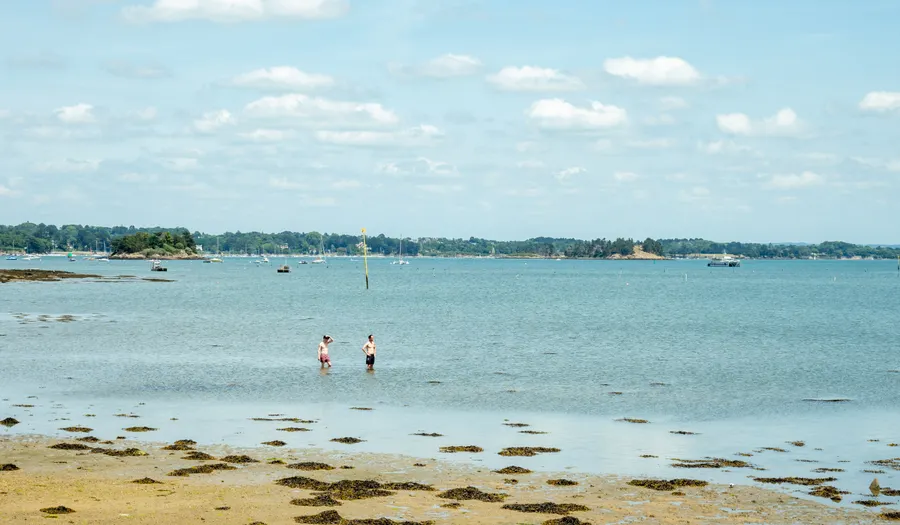
This small inland sea, scattered with some forty islands, is a world apart, with powerful currents and ever-changing light. The Île aux Moines and the Île d'Arz are explored on foot or by bike along sunken lanes and oyster slipways. Vannes, a medieval city with flower-filled ramparts, guards the entrance to the gulf. By kayak or sailing boat, you slip between the islets with the rhythm of the tides. Combine it with nearby Carnac and the Quiberon peninsula.
Ouessant and the Ponant Islands

A 1h30 boat ride from Le Conquet, Ouessant marks the end of the land: close-cropped heath, free-roaming sheep and legendary lighthouses such as the Créac'h, one of the most powerful in the world. You can cycle around it in a day, between black cliffs and hidden coves. Its tiny neighbour Molène still lives by the tides. Further south, Sein barely rises above the waves, a white village huddled around its harbour. These islands offer an end-of-the-world experience that is rare in Europe.
Brocéliande and the Argoat

Inland, the Argoat hides a Brittany of forests and legends. Brocéliande, in the commune of Paimpont, is home to the Val sans Retour, Merlin's tomb and the Barenton spring, key sites of the Arthurian tales. The paths can be walked or mountain-biked between purple heathland and thousand-year-old oaks. Not far away, Josselin and its fairy-tale castle tower over the Oust. A mysterious escape to slot in between two days on the coast.
How many days, and which itinerary?
A week allows a fine tour of northern or southern Brittany; ten days to two weeks lets you loop the whole peninsula with one or two islands.
📓 Free printable Brittany guide (PDF) · 🌍 All of France
Northern Brittany (7 days)
Saint-Malo, Cancale and Cap Fréhel (3 days), the Pink Granite Coast at Ploumanac'h (2 days), the Bay of Morlaix and the Monts d'Arrée (2 days). Ramparts, pink granite and a first taste of Finistère's landscapes.
Grand tour (12 days)
Saint-Malo (2 days), Pink Granite Coast (2 days), Ouessant (1 day), Crozon (2 days), Pointe du Raz and Quimper (2 days), Carnac, Quiberon and the Gulf of Morbihan (3 days). The best of the peninsula, travelling clockwise.
South and islands (7 days)
Vannes and the Gulf of Morbihan (3 days), Carnac and Quiberon (2 days), the Île de Groix or the Glénan archipelago (2 days). A gentle, beach-focused version, ideal for families.
Getting there and getting around
TGV Paris-Rennes in 1h25, Paris-Vannes in 2h30, Paris-Brest in 3h30, then regional TER trains along the coast
A car is all but essential for the capes and coves: hire from €35-45/day in Rennes, Brest or Nantes
Boats to the islands: Penn ar Bed (Ouessant, Molène, Sein) and Navix or Izenah for the gulf, €20-40 return
Bikes rule on the islands and along the greenways, hire €12-18/day at the jetty
Where to stay in Brittany?
Seaside campsites: pitches €15-30/night, plentiful on Crozon and Quiberon
B&Bs in stone longhouses: €70-100 for a double with breakfast
2-3 star hotels in the ports: €75-130, more inside the walls of Saint-Malo in summer
An unusual night on an island (Ouessant, Groix): €80-120, book very early for July and August
What to eat in Brittany?
A galette complète and a bowl of cider in a crêperie: the quintessential Breton meal for €12-16
Cancale oysters eaten on the quayside facing the bay: from €8-10 a dozen
Kouign-amann, far breton and salted butter caramel for sweet breaks
Fish auctions and fishmongers for a home-made seafood platter, Breton lobster in season
Entry requirements
Schengen area: an ID card or passport for EU citizens, 90 days visa-free for UK, US, Canadian and Australian passports.
Rules change: check your own government's travel advice before you go.
Cities and regions to discover

Frequently asked questions about Brittany
When is the best time to visit Brittany?
From May to September, with June and September the pick: superb light, quiet sites and mild temperatures. July and August bring the warmest sea but also the biggest crowds.
What daily budget should I plan for?
Allow €55-80 a day on a backpacker budget, €100-150 for comfort and €220 or more for premium. Crêperies and campsites easily bring the budget down.
How do I get around?
A car is still the best way to link capes, coves and villages, while the TER rail network serves the coastal towns. On the islands and along the greenways, the bike is king.
How much time do I need?
A week for a fine tour of the north or south coast, ten to twelve days to circle the peninsula including one or two islands. A long weekend is enough for Saint-Malo and the Emerald Coast.
Can you swim in Brittany?
Yes, from June to September on often magnificent beaches, with water between 16 and 19 degrees in summer. The beaches of the Morbihan and the Glénan are the mildest; elsewhere, expect a bracing dip.
Similar destinations
 Region
🇫🇷 The Vendée
 Region
🇫🇷 Corsica
 Region
🇫🇷 The French Basque Country
 Region
🇬🇧 Cornwall
 City
City🇭🇷 Hvar
 Region
🇫🇷 The Opal Coast
 Region
🇫🇷 The Camargue
 Region
🇫🇷 The Landes
 City
City🇫🇷 Bordeaux and Around
 Region