When to go to Copenhagen?
→ The detailed month-by-month page, with real weather records
Best time: May to September
At a glance
Why go to Copenhagen?
Copenhagen is the European city that makes you want to change your life. Here, 60% of residents cycle to work on bike lanes as wide as roads, children swim in the harbour right in the centre and cafes cultivate hygge, the Danish art of cosy well-being. You come for a weekend and leave thinking about moving.
It is also a cultural capital of the first rank. Rosenborg Castle houses the crown jewels amid the King's Garden, the Glyptotek lines up Rodin and Egyptian sarcophagi beneath a palm garden, and the Louisiana museum, 35 minutes by train along the coast, is regularly cited among the most beautiful modern art museums in the world. Not to mention Christiania, the self-proclaimed free commune whose self-built houses line the edge of a lake.
Finally, Copenhagen is a city to be eaten. The city that gave birth to Noma and New Nordic cuisine has some fifteen Michelin stars, but also plenty of accessible pleasures: smørrebrød in the Torvehallerne market halls, cinnamon rolls from the bakers of Jægersborggade, street food by the water at Reffen. You pay a lot, admittedly, but rarely for nothing.
Map of Copenhagen: what is where?
The map shows the 6 places covered in this guide, to picture the distances and plan your route.
- Nyhavn
- Tivoli Gardens
- The Little Mermaid
- Rosenborg Castle
- Christiania
- Louisiana Museum
How much does a trip to Copenhagen cost?
Copenhagen is expensive, and that is its main drawback: €8 for a beer, €20 for a simple dish. You can limit the damage by sleeping in Nørrebro, cycling and eating in the market halls.
| Style | Per day | What it covers |
|---|---|---|
| Backpacker | €90-130/day | design dorm, bike, smørrebrød and street food, museums free on Wednesdays or Tuesdays depending on the venue |
| Comfort | €180-260/day | 3-4-star hotel in Vesterbro, bistronomy restaurants, City Card, Tivoli and Louisiana |
| Premium | €350+/day | design hotel (Sanders, Nimb), Michelin-starred New Nordic table, private canal cruise |
The currency is the Danish krone (DKK, €1 is worth about DKK 7.45), and bank cards are accepted absolutely everywhere, often in preference to cash.
Is Copenhagen safe?
Copenhagen is one of the safest capitals in Europe: people leave prams outside and bikes barely locked. Simply watch out for pickpockets on Strøget and at the central station, and above all for the cycle lanes: never walk on them, as bikes speed along and have priority. In Christiania, respect the posted rules, especially on photography.
What to see and do in Copenhagen
- Nyhavn
- Tivoli Gardens
- The Little Mermaid
- Christiania
- Rosenborg Castle
- Louisiana Museum
- Copenhagen by bike
- Torvehallerne market halls
Nyhavn
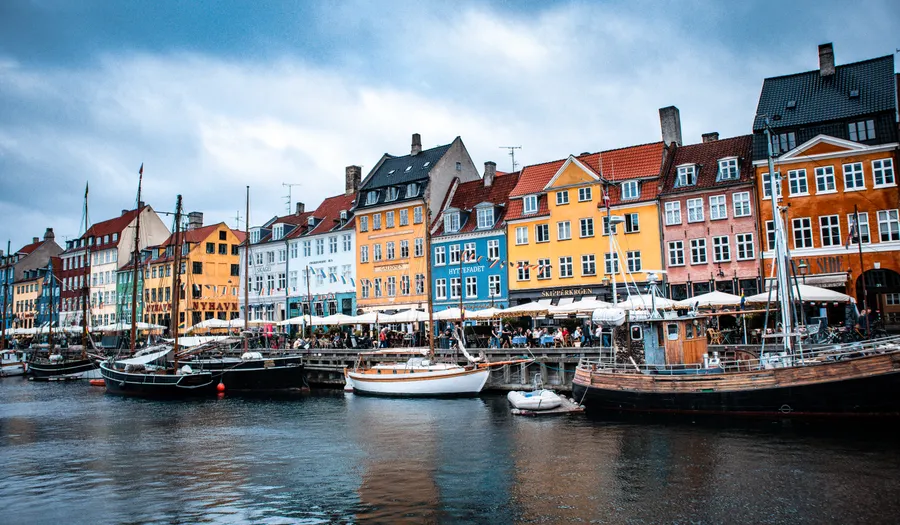
Scandinavia's most photographed canal lines up its red, yellow and blue 17th-century houses alongside old sailing ships. Hans Christian Andersen lived at number 20, where he wrote his first fairy tales. The terraces are touristy and expensive, but the atmosphere at the end of the day, when golden light strikes the facades, is worth every detour. It is also the departure point for canal cruises, the best introduction to the city.
Tivoli Gardens

Opened in 1843, Tivoli is one of the oldest amusement parks in the world, and it inspired Walt Disney himself. A wooden roller coaster from 1914, flower gardens, a Chinese pagoda and open-air concerts create a unique old-fashioned charm. In the evening, thousands of lanterns light up the paths, and Danes come to dine as much as to have fun. In summer as at Christmas, it is the beating heart of the city.
Christiania
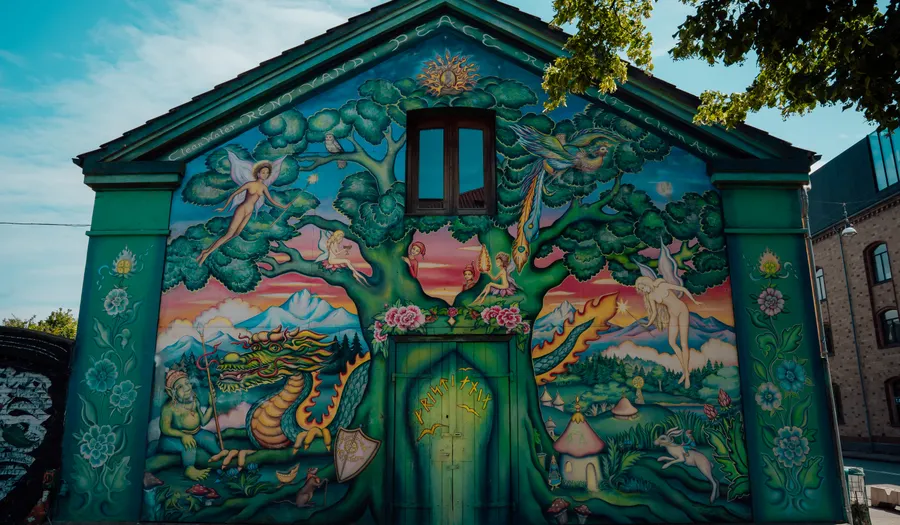
In 1971, squatters took over a former military barracks in Christianshavn and proclaimed the free town of Christiania. Fifty years later, around a thousand residents still live there in self-government, among self-built houses by the lake, artists' workshops, concert venues and community gardens. You can wander freely as long as you respect the rules posted at the entrance, notably the ban on photography in certain areas. A slice of utopia unlike anything else in Europe.
Rosenborg Castle
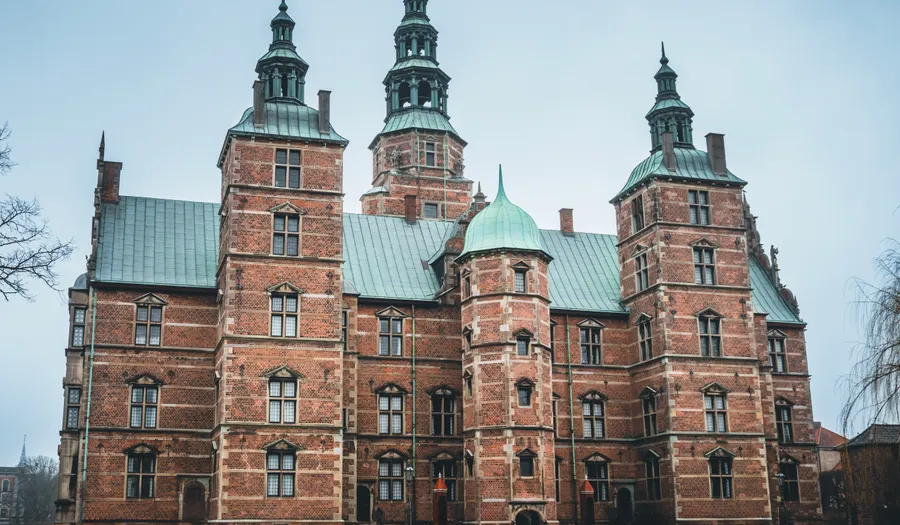
This small red-brick Renaissance castle was built by Christian IV as a summer residence in the early 17th century. Today it houses the Danish crown jewels in an armoured basement, along with 400 years of royal treasures, narwhal-tusk thrones included. Around it, Kongens Have, the King's Garden, is Copenhageners' favourite picnic spot as soon as the sun comes out. Allow two hours for the visit, then a nap on the lawn.
Louisiana Museum

In Humlebæk, 35 minutes by train north of the city, Louisiana is considered one of the most beautiful modern art museums in the world. Its glass and timber pavilions stretch through a sculpture park that slopes down to the Øresund strait, with Sweden as a backdrop. Giacometti facing the sea, Kusama, Warhol and consistently sharp temporary exhibitions. The museum cafe, with its terrace above the water, is a destination in itself.
Reffen

On the island of Refshaleøen, former shipyards host the largest street food market in Scandinavia. Some fifty stalls set up in containers serve tacos, barbecue, Ethiopian food or reinvented smørrebrød, to be enjoyed on the quays facing the harbour. Beers from the neighbouring Mikkeller brewery, deckchairs, campfires: the spirit of Copenhagen in laid-back mode. Open from April to September, reachable by harbour bus from Nyhavn.
How many days, and which itinerary?
Three days are enough for the heart of the city; four let you add Louisiana and a proper day on a bike.
🗺️ Day-by-day itinerary · 📓 Free printable Copenhagen guide (PDF)
The essentials (2 days)
Day 1: the historic centre, Strøget, Rosenborg, a canal cruise from Nyhavn, then an evening at Tivoli. Day 2: the Little Mermaid and Kastellet fortress by bike, Christianshavn and Christiania, dinner in the Torvehallerne market halls.
Copenhagen in depth (4 days)
The two days of essentials, then a trip to the Louisiana museum with a possible swim at the nearby beach. On the last day, the Nørrebro and Vesterbro districts: Assistens cemetery-park, where Andersen is buried, the cafe-boutiques of Jægersborggade, and street food at Reffen.
Design and the Øresund (5 days)
The four-day programme, topped off with the Designmuseum and a crossing of the strait: 40 minutes by train over the Øresund Bridge to spend a day in Malmö, Sweden. A border crossed between two coffees.
Getting there and getting around
The bike is Copenhagen's real metro: rental from €15 to €20 a day, cycle lanes everywhere, a flat city.
Driverless metro running 24 hours a day (lines M1 to M4), including a direct airport-to-centre line in 15 minutes for around €5.
The City Card (from €60 for 24 hours) includes unlimited transport and more than 80 museums and attractions, Tivoli included.
Harbour buses (havnebussen) for the price of a normal ticket: the city's most beautiful public transport line.
Where to stay in Copenhagen?
Vesterbro, behind the station: the trendy district of design hotels, allow €120-180 for a double.
Indre By (centre): ideal on foot but expensive, rarely under €180-250 in season.
Nørrebro: local, multicultural atmosphere, apartments and guesthouses from €90 to €140.
Design hostels (Steel House, Next House): dorm beds from €35 to €50, doubles around €110.
Our places to stay, stop by stop, at three budgets →
What to eat in Copenhagen?
Smørrebrød, open rye sandwiches piled with toppings (herring, prawns, roast pork): from €8 in a bakery to €20 in a gourmet version.
Torvehallerne: two glass market halls near Nørreport to try a bit of everything, from Grød porridge to Danish tapas.
The bakeries (Juno, Hart, Andersen) are worth the pilgrimage: kanelsnegle with cinnamon and cardamom for around €5.
Accessible New Nordic cuisine: the bistronomy restaurants of Vesterbro and Nørrebro offer set menus at around €50-70.
Entry requirements
Schengen area: an ID card or passport for EU citizens, 90 days visa-free for UK, US, Canadian and Australian passports.
Rules change: check your own government's travel advice before you go.
Frequently asked questions about Copenhagen
When is the best time to visit Copenhagen?
May to September: the days are very long, the terraces and Reffen are open, and you can swim in the harbour. December also has its charm with Tivoli lit up for Christmas, but it is dark by 15:30.
What daily budget should I plan for in Copenhagen?
Allow €90-130 a day as a backpacker (dorm, street food, bike), €180-260 in comfort with a 3-4-star hotel and restaurants, and much more in premium mode. It is one of the most expensive cities in Europe.
How do I get around?
By bike, like Copenhageners: the city is flat and the lanes are excellent (rental €15-20/day). The driverless metro, running 24 hours a day, and the harbour buses fill the gaps, and the airport is only 15 minutes from the centre.
How many days do you need to visit Copenhagen?
Three days for the essentials, four if you add the Louisiana museum by the sea, and five to push on to Malmö in Sweden over the Øresund Bridge.
Can you visit Christiania freely?
Yes, access is free of charge and open all year round. Simply respect the rules posted at the entrance: no photos in certain areas, no running. The neighbourhood's concerts and cafes are open to all.
Similar destinations
 City
City🇸🇪 Stockholm
 Region
🇮🇹 The Amalfi Coast
 Region
🇮🇹 Puglia
 City
City🇫🇷 Nice
 City
City🇳🇴 Bergen
 City
City🇬🇷 Corfu
 City
City🇫🇮 Helsinki
 City
City🇳🇴 Oslo
 Region
🇭🇷 Istria
 City
City