When to go to the Azores?
→ The detailed month-by-month page, with real weather records
Best time: May to September
At a glance
Why go to the Azores?
The Azores are the closest thing Europe has to an island at the end of the world. Nine volcanic islands set 1,500 km from mainland Portugal, where craters fill with blue and green lakes, where the earth steams at Furnas and where Portugal's highest point, Mount Pico, rises out of the ocean to 2,351 metres. Nature here is raw and all-encompassing, and the scenery changes every ten kilometres between pastures, laurel forests and black cliffs.
It is one of the best places in the world for whale and dolphin watching: more than 25 species cruise these waters, including sperm whales present all year round and blue whales in spring. Boat trips leave from Ponta Delgada, Horta or Lajes do Pico, a former whaling port turned whale-watching hub. Add natural lava pools, canyoning on Flores and the archipelago's 80 waymarked trails, and the Azores are one vast playground.
Despite the tourism boom, the archipelago has stayed authentic and affordable. Cows outnumber people, cozido is still cooked in the hot earth of Furnas, and locals wave at every car on the roads of Faial. Tourism is well managed, the trails are immaculate, and money goes a long way: you can stay in a charming quinta for the price of a run-of-the-mill hotel in Lisbon.
Map of the Azores: what is where?
The map shows the 6 places covered in this guide, to picture the distances and plan your route.
- Ponta Delgada
- Sete Cidades
- Furnas
- Mount Pico
- Horta (Faial)
- Angra do Heroísmo
How much does a trip to the Azores cost?
The Azores remain more affordable than most European islands, with flights and car hire the main expenses. Once there, restaurants and activities are gently priced.
| Style | Per day | What it covers |
|---|---|---|
| Backpacker | €55-80/day | guesthouse, local food and small restaurants, shared car, free hikes |
| Comfort | €100-160/day | charming quinta, hire car, whale-watching trip, hot springs and good restaurants |
| Premium | €220+/day | design hotel or manor house, private guide for Pico, private boat trips |
Euros and cards accepted almost everywhere, but bring cash for village cafés and the small paid trails.
Is the Azores safe?
The Azores are among the safest places in Europe: crime is almost non-existent and in the villages people still leave their keys in the door. The only real risk is natural: the weather changes within an hour, fog can wrap Pico or Lagoa do Fogo without warning, and the swell can make some natural pools dangerous. Check the webcams and the forecast before every hike, never attempt the Pico climb without registering at the Casa da Montanha, and respect the swimming flags.
What to see and do in the Azores
- Sete Cidades lake
- Furnas and its caldeiras
- Climbing Mount Pico
- Whale watching
- Lagoa do Fogo
- Capelinhos volcano
- Poça da Dona Beija hot springs
- Ponta da Ferraria
São Miguel
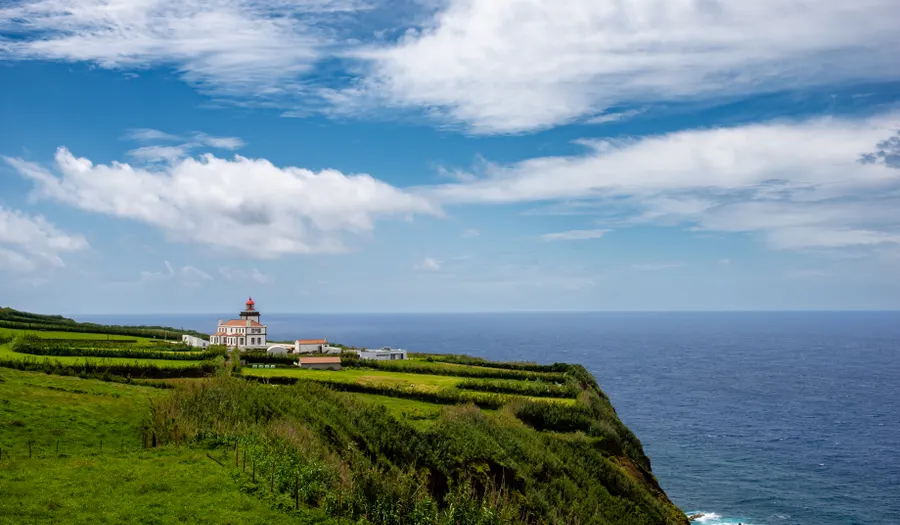
The main island gathers the archipelago's icons: the twin lakes of Sete Cidades, the wild Lagoa do Fogo and the steaming valley of Furnas. It is also the liveliest, with Ponta Delgada, its pineapple plantations and the Gorreana tea factory, the only one in Europe. The ridge roads offer viewpoints every five minutes. Allow four to five days to go round it without rushing. It is the logical gateway for any first visit.
Pico
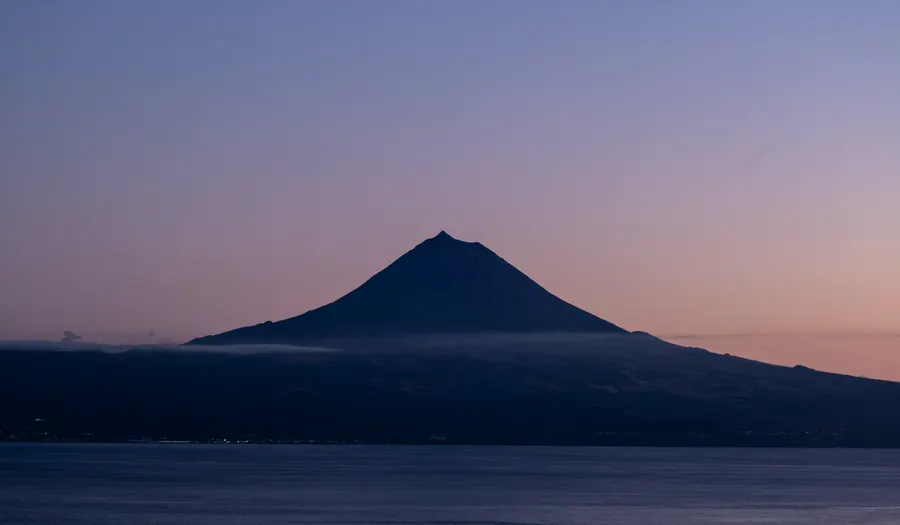
The volcano island is dominated by the perfect cone of Ponta do Pico, the roof of Portugal at 2,351 metres. Its black lava slopes shelter UNESCO-listed vineyards, planted in dry-stone enclosures called currais. Climbing the volcano by night for sunrise is the most intense experience in the archipelago. Lajes do Pico is also one of the best ports for sperm whale trips. The local volcanic white wine, Arinto dos Açores, is best enjoyed facing the sea.
Faial

The blue island owes its nickname to the thousands of hydrangeas that line its roads in summer. Horta, its legendary harbour, is the historic stopover for yachts crossing the Atlantic: every crew paints its mural on the quays and raises a gin and tonic at Peter Café Sport. At the western tip, the Capelinhos volcano, which rose from the sea in 1957, offers a lunar landscape of grey ash. The great central caldera, a huge green crater, can be followed on a spectacular trail. Faial pairs perfectly with Pico, 30 minutes away by ferry.
Furnas
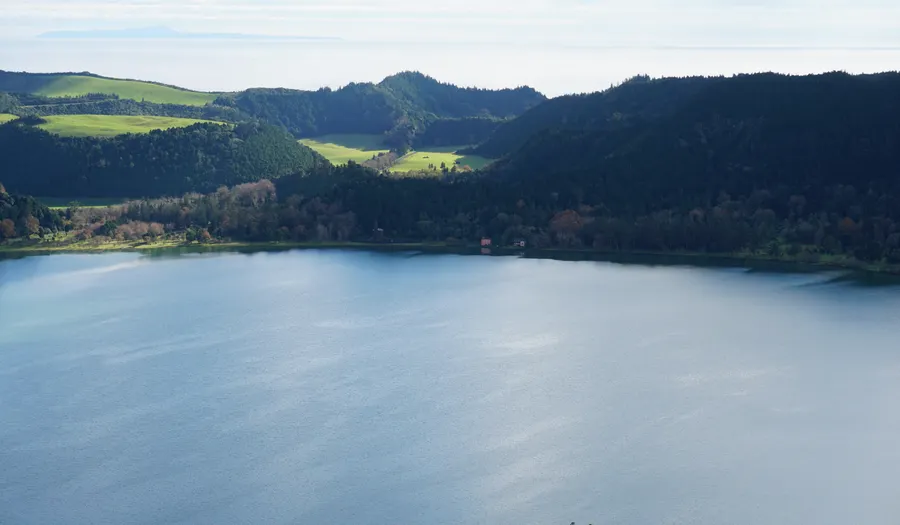
This spa village sits at the bottom of a crater where the earth literally boils: fumaroles, sulphur springs and natural cauldrons belch steam right in the village. Cozido, the local stew, cooks for six hours in holes dug beside the lagoa. Afterwards, you bathe in the iron-rich 38°C waters of Terra Nostra Park, surrounded by a sumptuous botanical garden. All in the atmosphere of a 19th-century spa town. A night here lets you enjoy the hot springs in the evening, without the day-trippers.
Terceira

UNESCO-listed Angra do Heroísmo was the first European city built in the Atlantic, a port of call for galleons laden with gold. Its colourful streets and fortresses breathe history. The island also surprises with what lies underground: Algar do Carvão lets you descend inside a volcanic chimney, a 90-metre-deep cathedral of lava. The natural pools of Biscoitos, carved into black lava, offer the finest swimming in the archipelago. Terceira is known as the most festive island, with village bull-running festivals all summer.
Flores
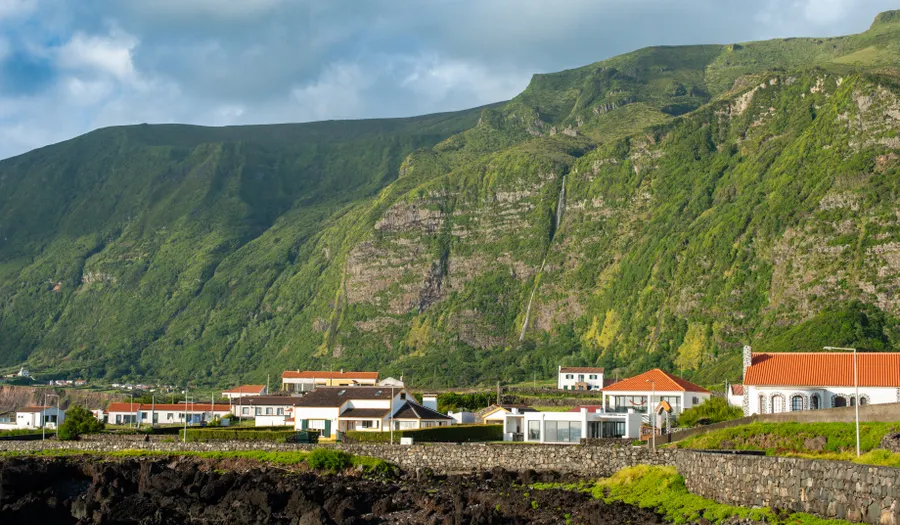
Europe's westernmost island is also its most spectacular: waterfalls tumbling from 300-metre cliffs, seven crater lakes, end-of-the-world hamlets such as Fajã Grande facing the sunset. It is a paradise for hikers and canyoning, in valleys worthy of Hawaii. Its isolation has to be earned, with inter-island flights sometimes cancelled due to weather. Those who make it describe it as the best memory of their trip. Best kept for stays of ten days or more.
How many days, and which itinerary?
A week lets you explore São Miguel properly; ten to fifteen days let you add the central triangle of Pico, Faial and Terceira, or even Flores.
🗺️ Day-by-day itinerary · 📓 Free printable Azores guide (PDF) · 🌍 All of Portugal
São Miguel in depth (7 days)
Base yourself in Ponta Delgada or a rural quinta, with Sete Cidades, Lagoa do Fogo, two days around Furnas, the north coast and Gorreana tea, plus a whale-watching trip. The ideal digest for a first visit.
Central triangle (10 days)
Three days on São Miguel, then a flight to Horta: Faial and the Capelinhos, a ferry to Pico, the volcano climb and vineyards, sperm whale trips from Lajes. The best balance of variety and logistics in the archipelago.
Grand island-hop (15 days)
São Miguel, Terceira and Angra do Heroísmo, then Faial, Pico and finally Flores for a wild grand finale. The archipelago in depth, for seasoned hikers and lovers of raw nature.
Getting there and getting around
A hire car is essential on every island: from €30/day on São Miguel, book early in summer
SATA Azores Airlines inter-island flights (€25-90 per leg); connections via Ponta Delgada or Terceira
Atlanticoline ferry between Faial and Pico (30 min, about €4), handy and frequent all year round
Little or no public transport outside Ponta Delgada: organised excursions help out if you have no car
Where to stay in the Azores?
Guesthouses and homestays: €40-60 for a double, a warm Azorean welcome guaranteed
Rural quintas and cottages with sea or volcano views: €70-110 a night, the best charm-to-price ratio
Design hotels and manor houses in Ponta Delgada or Horta: €120-200
Eco-lodges and restored lava-stone houses on Pico: €90-150, perfect for climbing the volcano
Our places to stay, stop by stop, at three budgets →
What to eat in the Azores?
Cozido das Furnas: the stew cooked in volcanic earth, to be ordered the day before (€15-20)
Fish and seafood everywhere: cracas (barnacles), lapas (limpets) grilled with garlic butter, fresh tuna (€12-20 a dish)
Cow's milk cheese from São Jorge and pineapples from the São Miguel greenhouses, a source of local pride
Volcanic wines from Pico and Gorreana tea: tastings at the estate, free or inexpensive
Entry requirements
Schengen area: an ID card or passport is enough for EU citizens, 90 days visa-free for UK, US, Canadian and Australian passports.
Rules change: check your own government's travel advice before you go.
Frequently asked questions about the Azores
When is the best time to visit the Azores?
From May to September: calmer seas for whale watching, hydrangeas in bloom from June and temperatures around 22 to 26°C. July-August have the most stable weather. Spring is ideal for blue whales; winter stays mild but very wet.
What daily budget should I plan?
Allow €55 to €80 a day on a backpacker budget and €100 to €160 for comfort with a car, a charming quinta and activities. Hikes are free and restaurants very reasonable: the bulk of the budget goes on flights and car hire.
How do you get around?
A hire car is almost essential on every island, from €30/day. Between islands, combine SATA flights (€25-90) and the Faial-Pico ferry (30 minutes, about €4). Public transport is too limited for a touring trip.
How many days should I allow?
A week to explore São Miguel in depth, ten days to add Pico and Faial, fifteen days for a real tour of the archipelago with Terceira or Flores. Avoid doing more than three islands in a week: connections take time.
Can you see whales all year round?
Yes: sperm whales and several species of dolphin live in Azorean waters permanently. The migrating giants, blue whales and fin whales, pass through mainly from March to June. Trips report sighting rates above 90%, and most operators offer a second trip free if you see nothing.
Similar destinations
 Region
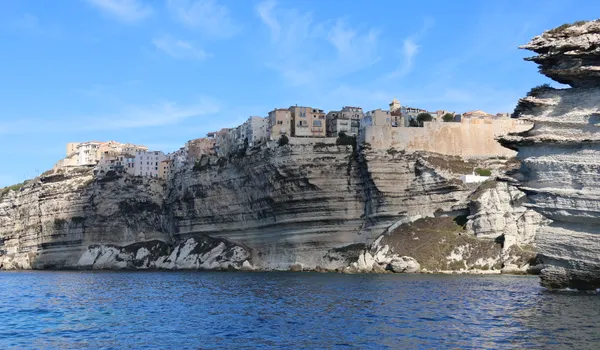
🇫🇷 Corsica
 Region
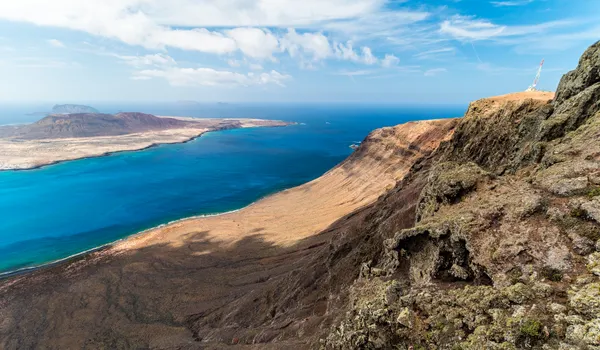
🇪🇸 The Canary Islands
 Region
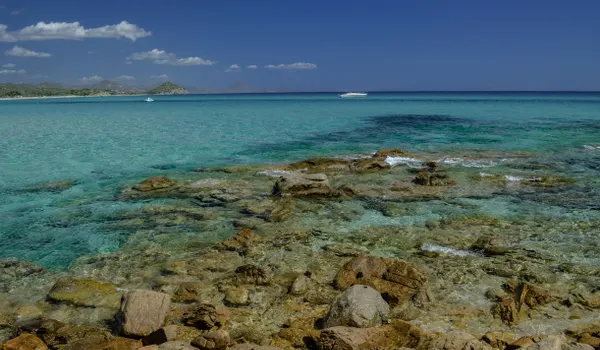
🇮🇹 Sardinia
 Region
🇵🇹 Madeira
 Region
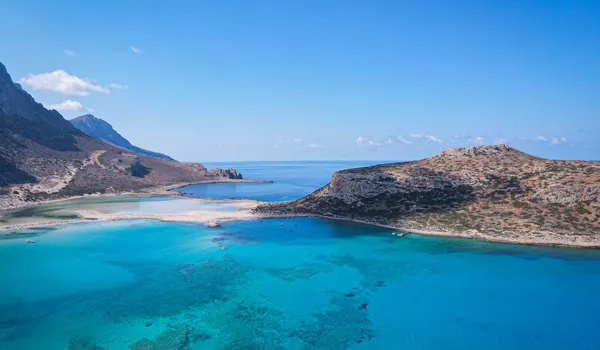
🇬🇷 Crete
 Country
🇭🇷 Croatia
 Region
🇫🇷 Brittany
 Region
🇫🇷 The French Basque Country
 City
City🇪🇸 Mallorca
 City
City