When to go to Sardinia?
→ The detailed month-by-month page, with real weather records
Best time: May to June and September
At a glance
Why go to Sardinia?
Sardinia has some of the most beautiful beaches in Europe, worthy of the Caribbean yet in the heart of the Mediterranean. Its turquoise waters, white-sand coves and crystal-clear seabeds are a dream for anyone who loves swimming. From the chic Costa Smeralda to the wild beaches of the south, everyone finds their own corner of paradise. The water quality is simply exceptional.
But reducing the island to its beaches would be a mistake, as its interior is full of treasures. Wild mountains, shepherds' villages clinging to the hills and ancient prehistoric sites make up a secret Sardinia. The nuraghi, stone towers found nowhere else in the world, bear witness to a civilisation three thousand years old. It is a land with a strong identity, proud of its traditions.
Finally, Sardinia stands out for its way of life and its characterful food. Sardinians are among the longest-lived people in the world, the secret of a simple, healthy lifestyle. Sheep's cheeses, cured meats, crisp bread and generous wines feed a convivial table. Far from the bustle, the island invites you to slow down and savour the moment.
Map of Sardinia: what is where?
The map shows the 6 places covered in this guide, to picture the distances and plan your route.
- Costa Smeralda (Porto Cervo)
- La Pelosa, Stintino
- Neptune's Grotto, Alghero
- Cala Goloritzé
- Bosa
- Su Nuraxi, Barumini
How much does a trip to Sardinia cost?
Sardinia offers a wide range of prices, very affordable out of season but noticeably more expensive in summer. The Costa Smeralda pushes rates up in July and August.
| Style | Per day | What it covers |
|---|---|---|
| Backpacker | €50-80/day | camping or hostel, self-catering, free beaches and a shared car |
| Comfort | €110-180/day | B&B or hotel, restaurants, car hire and a few excursions |
| Premium | €350+/day | boutique resort, fine dining, private boat trips and exclusive beaches |
Cards are accepted everywhere in the towns, but keep cash for small villages and beach car parks.
Is Sardinia safe?
Sardinia is one of the safest regions in Italy, with very low crime. Travellers get around in complete peace of mind, including alone or with family. The few precautions concern valuables left in cars at isolated beach car parks. At sea, follow the swimming advice, as some exposed coasts have currents. On winding mountain roads caution is called for, but nothing that spoils the pleasure of the trip.
What to see and do in Sardinia
- the Costa Smeralda
- La Pelosa beach
- the Gulf of Orosei
- Cala Goloritzé
- Catalan Alghero
Costa Smeralda
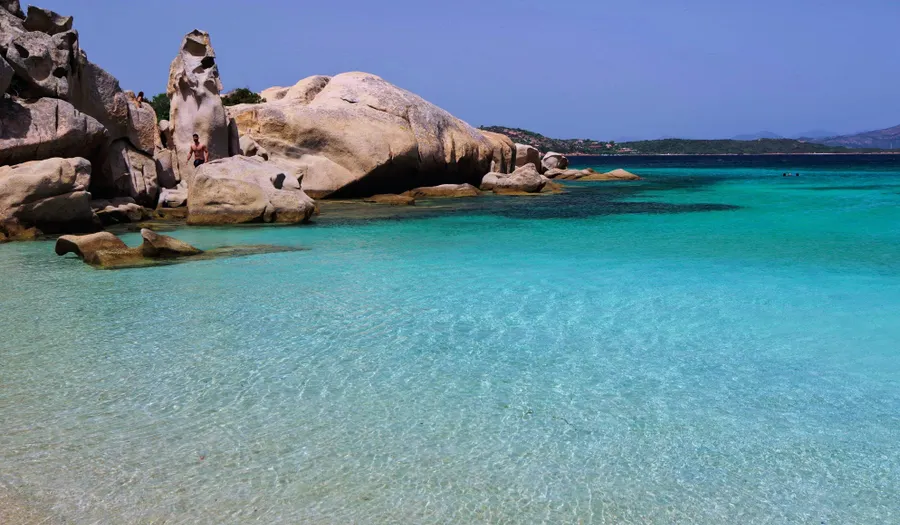
This legendary north-eastern coast embodies Mediterranean luxury with its unforgettable emerald-green waters. Porto Cervo, its capital, lines up yachts, designer boutiques and wealthy villas. But coves such as Spiaggia del Principe or Capriccioli remain open to all and strikingly beautiful. The contrast between pink granite rocks and turquoise sea is unique.
La Pelosa (Stintino)

Often named among the most beautiful beaches in Italy, La Pelosa looks like a tropical lagoon. Its dazzling white sand and shallow turquoise waters make a postcard setting. The old Aragonese tower on its islet adds to the charm. Visitor numbers are now regulated in summer to protect this fragile gem.
Neptune's Grotto (Alghero)

Carved by the sea at the foot of the cliffs of Capo Caccia, this spectacular cave is reached by descending 654 steps cut into the rock. Inside, an underground lake, stalactites and limestone columns create a fairy-tale setting. You can also get there by boat from the port of Alghero. The Catalan town itself, with its fortified lanes, is well worth a detour.
Cala Goloritzé

Tucked into the Gulf of Orosei, this cove, listed as a national monument, has to be earned with a hike of about an hour and a half. Its rocky spire rising above the water and its natural arch make it one of the island's most beautiful beaches. White sand and translucent water reward the effort of the walk. Boat access is banned, which preserves its tranquillity.
Bosa
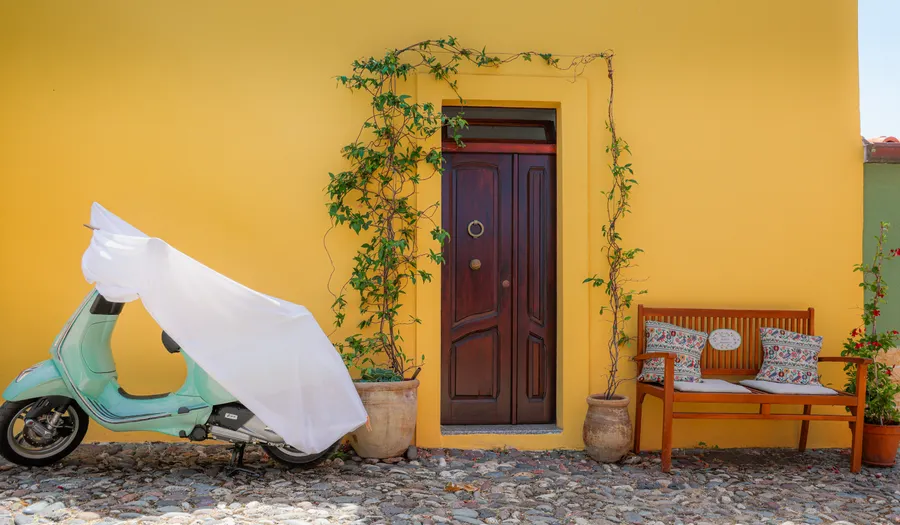
This colourful village on the banks of the River Temo is one of the most picturesque in Sardinia. Its pastel houses rise in tiers like an amphitheatre up to the medieval Malaspina Castle, which overlooks the valley. Cobbled lanes, craft workshops and the riverside invite you to wander. The light of the setting sun makes the multicoloured façades glow.
Su Nuraxi nuraghe (Barumini)

This UNESCO-listed nuragic complex is the most impressive testimony to the civilisation that inhabited the island more than three thousand years ago. Its central tower, surrounded by a maze of walls and stone huts, is visited with a guide. No other structure of this kind exists anywhere else in the world. Here you touch a mysterious chapter of Mediterranean history.
How many days, and which itinerary?
Allow 7 to 10 days to combine beaches, villages and inland sights without spending your whole time on the road.
🗺️ Day-by-day itinerary · 📓 Free printable Sardinia guide (PDF) · 🌍 All of Italy
The north and Costa Smeralda (5 days)
A beach holiday around the finest beaches of the north-east, from Alghero to the Costa Smeralda. Alternate swimming, secret coves and a visit to Neptune's Grotto.
Round the island (9 days)
The big loop links the Catalan north around Alghero, the east coast along the Gulf of Orosei, the south around Cagliari and the nuragic sites inland. A perfect balance between sea and culture.
Wild Sardinia (12 days)
The long version adds the Supramonte mountains, hikes to otherwise inaccessible coves and the traditional villages of the Barbagia for total immersion.
Getting there and getting around
A hire car is essential: the island is large and public transport very limited outside the towns.
Olbia (north), Cagliari (south) and Alghero (west) airports are served by flights from across Europe.
Ferries from France (Corsica) and mainland Italy, handy for bringing your own vehicle.
ARST regional buses linking the main towns, but with timetables poorly suited to a holiday.
Where to stay in Sardinia?
Campsites and hostels near the beaches: €20-45 a night, very popular in summer.
B&Bs and family-run hotels in villages and towns: €70-120 a night depending on the season.
Beach hotels and charming agriturismi: €130-220 a night in high season.
Luxury resorts on the Costa Smeralda: from €350 a night in summer.
Our places to stay, stop by stop, at three budgets →
What to eat in Sardinia?
Porceddu, suckling pig roasted on a spit, the emblematic feast dish of the interior.
Culurgiones, Sardinian ravioli filled with potato, pecorino and mint, sealed in an ear-of-wheat pattern.
Pane carasau, a thin, crisp flatbread, and pecorino sardo cheese made from sheep's milk.
Cannonau, a powerful red wine renowned for its virtues, and well-chilled white Vermentino.
Entry requirements
Schengen area: an ID card or passport for EU citizens, 90 days visa-free for UK, US, Canadian and Australian passports.
Rules change: check your own government's travel advice before you go.
Frequently asked questions about Sardinia
When is the best time to visit Sardinia?
June and September offer the best compromise, with a warm sea, sunshine and fewer crowds. July and August are glorious but packed and expensive, while spring will delight hikers.
How many days do you need for Sardinia?
Allow 7 to 10 days to combine beaches, villages and inland sights. Five days are enough for a beach holiday focused on the north or south of the island.
What daily budget should you plan for Sardinia?
About €50-80 a day as a backpacker, €110-180 for comfort with a car and restaurants, and more than €350 for a premium resort stay on the Costa Smeralda.
How do you get around Sardinia?
A hire car is essential, as public transport is very limited. Three airports (Olbia, Cagliari, Alghero) and several ferry routes make it easy to reach the island.
Which area should you stay in in Sardinia?
The north (Olbia, Alghero) for the beaches and the Costa Smeralda, the south (Cagliari) to combine city and wild coves. An agriturismo inland lets you discover authentic Sardinia.
Similar destinations
 Region
🇫🇷 Corsica
 Region
🇪🇸 The Canary Islands
 Region
🇵🇹 Madeira
 Region
🇬🇷 Crete
 Country
🇭🇷 Croatia
 Region
🇵🇹 The Azores
 Region
🇫🇷 Brittany
 Region
🇫🇷 The French Basque Country
 City
City🇪🇸 Mallorca
 City
City