Nara
Japan's first permanent capital in the 8th century still has a 15-metre bronze Buddha, thousands of lanterns under the cedars and a park where around a thousand deer roam free. Everything lies within a couple of kilometres, 45 minutes by train from Kyoto, which makes it the easiest day trip in the Kansai region.
 By PierrickLocal Guide ★8 · 14M+ views on Google MapsBy PierrickLocal Guide ★8 · 14M+ Maps views
 🇯🇵 🦌
Nara · Photo Cun Cun / CC BY-SA 4.0 (Wikimedia Commons)
Things to do in Nara in 4 days
Day 1
Learn moreMore
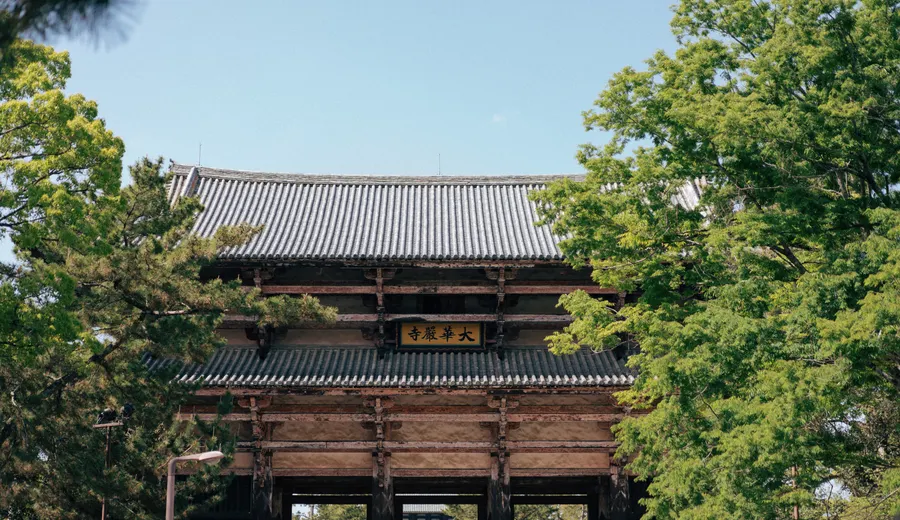
A 15-metre bronze Buddha completed in 752, in a hall rebuilt in 1709 at two-thirds of its original width, still among the largest wooden buildings.
💡 A pillar at the back of the hall has a hole the size of the Buddha's nostril, and the line of children squeezing through it blocks the aisle from 11am. Go in at opening time, 7:30am from April to October and 8am the rest of the year, well ahead of the school coaches. Price: €5.
Learn moreMore
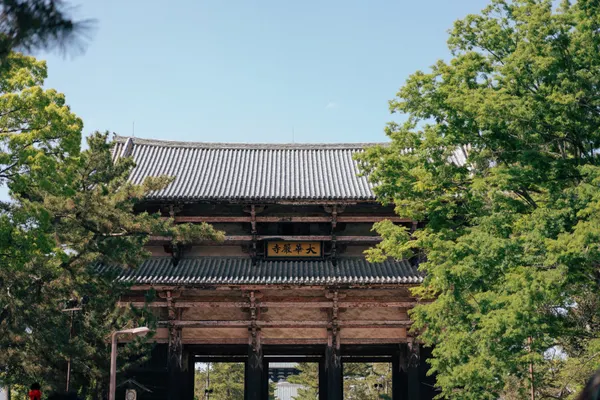
A hillside hall of Todai-ji, reached by a stone lane between earthen walls, whose overhanging balcony gives the best free view over Nara's roofs.
💡 Go up at sunset: the terrace is always open, with no ticket or opening hours, and empties as soon as the Daibutsuden closes. The gallery lanterns light up at dusk and there's usually only a handful of people left.

Day 2
Learn moreMore
Two joined gardens, 17th and 19th century, the second borrowing scenery: Todai-ji's Nandaimon gate and the Wakakusa and Kasuga hills become part of it.
💡 The garden is closed on Tuesdays and only opens at 9:30am, so those rushing from Todai-ji to Kasuga miss it. The tea room by the pond serves a mugitoro lunch facing the garden; it's the best sit-down break in the area. Price: €8.
Learn moreMore
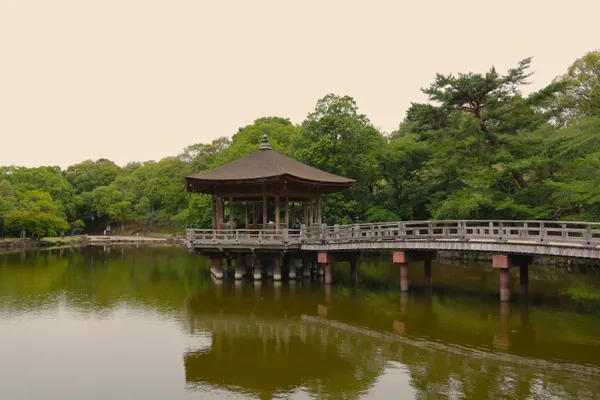
Lawns and woods linking the main shrines, roamed by about a thousand sika deer, sacred messengers of the Kasuga gods, which bow for rice crackers.
💡 They bite, headbutt and tear bags: don't hold the crackers in your hand for more than two seconds and hide the packet as soon as it's empty, or they'll chase you. Be especially wary from September to November, when rutting males charge. And come at dawn: the park is empty and the deer much calmer.
Jonashtand / CC BY-SA 4.0 (Wikimedia Commons)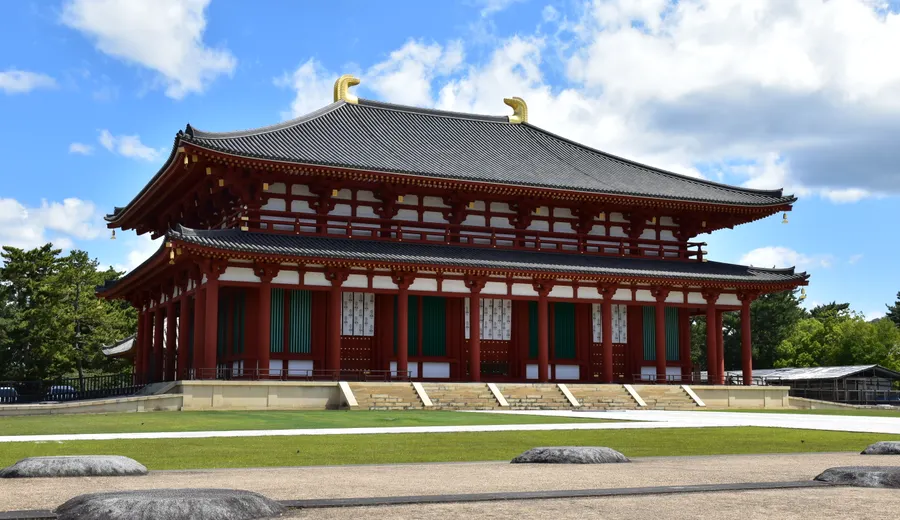
Day 3
Learn moreMore
The Fujiwara clan temple, founded here in 710, whose treasure house holds the 8th-century dry-lacquer Ashura, three-faced and six-armed, with a strikingly youthful expression.
💡 Don't plan your visit around the five-storey pagoda: it's under tarpaulins and scaffolding for a major restoration running until the early 2030s. All the interest now lies in the museum, where the Ashura can be seen from all sides, 360 degrees, with no glass case. Price: €6.
Learn moreMore
The old merchant quarter south of the park, where narrow machiya townhouses hold cafés and craft shops; the restored Koshi no Ie is free.
💡 Come after 4pm, when the coaches have left and the deer no longer wander down this far: it's the only time Nara feels like a lived-in town rather than a site. Several sake breweries in the district offer free tastings before closing.
 Maarten Heerlien from Voorschoten, The Netherlands / CC BY 2.0 (Wikimedia Commons)
Day 4
Learn moreMore
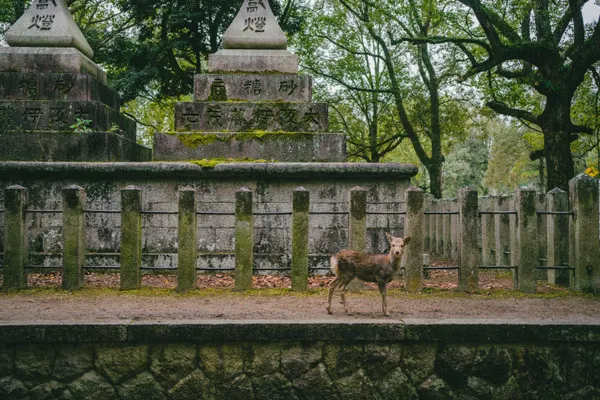
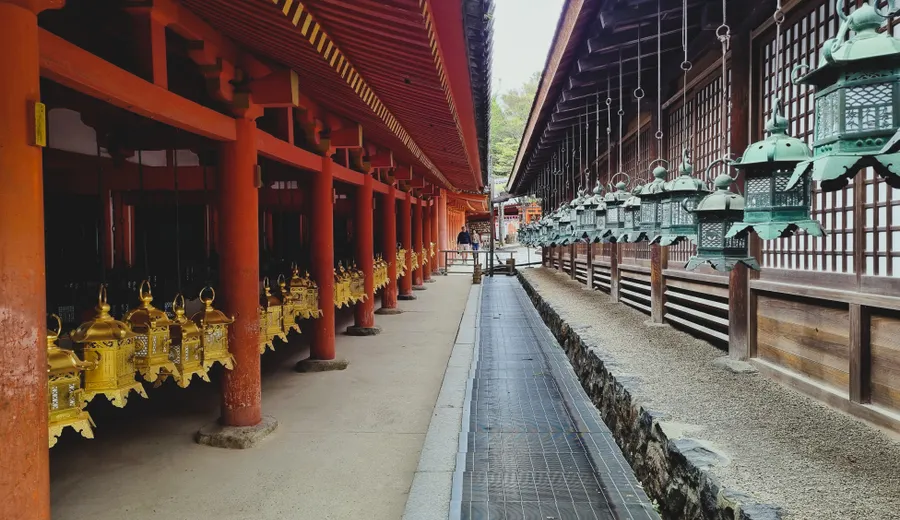
The Fujiwara shrine, founded in 768, reached by a forest path lined with moss-covered stone lanterns and hung inside with bronze ones.
💡 The three thousand lanterns are only actually lit twice a year, in early February and on 14 and 15 August. The rest of the year, the Fujinami no Ya hall recreates the effect in a darkened room lined with mirrors: it's the only way to see the spectacle, and hardly anyone goes in. Price: €3.50.
Learn moreMore
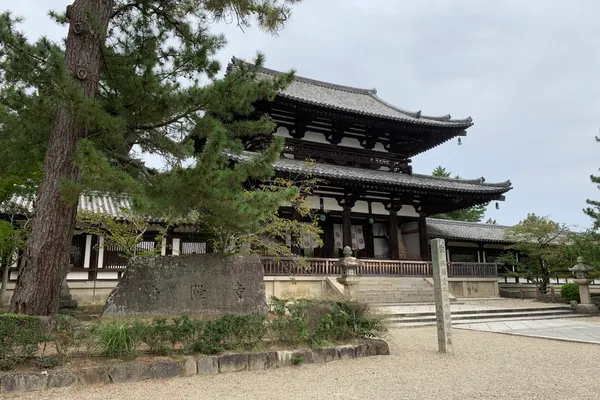
A monastery founded in 607 by Prince Shotoku, about 12 km from central Nara, holding the oldest surviving wooden buildings in the world.
💡 Take the JR Yamatoji line to Horyuji station (11 min from JR Nara), then walk 20 minutes or catch a bus: the direct bus from the park takes much longer. The site is huge and takes 2 hrs to explore; visitor numbers are a fraction of those at Todai-ji. Price: €10.
"Book" (hotels) and "via GetYourGuide" (activities) are affiliate links (Booking, GetYourGuide). Prices, times and distances are approximate.
Take this plan everywhere
Download your itinerary (Nara) as a PDF: day by day, activities, times and where to stay. Matches the length you chose.
Don't feel like organising everything? A local partner travel agent can set it all up for you (flights, hotels, activities). We pass on your preferences and they call you back. Free and with no obligation.
Good to know before you go
🍽️ Must-try food
Sushi and sashimi
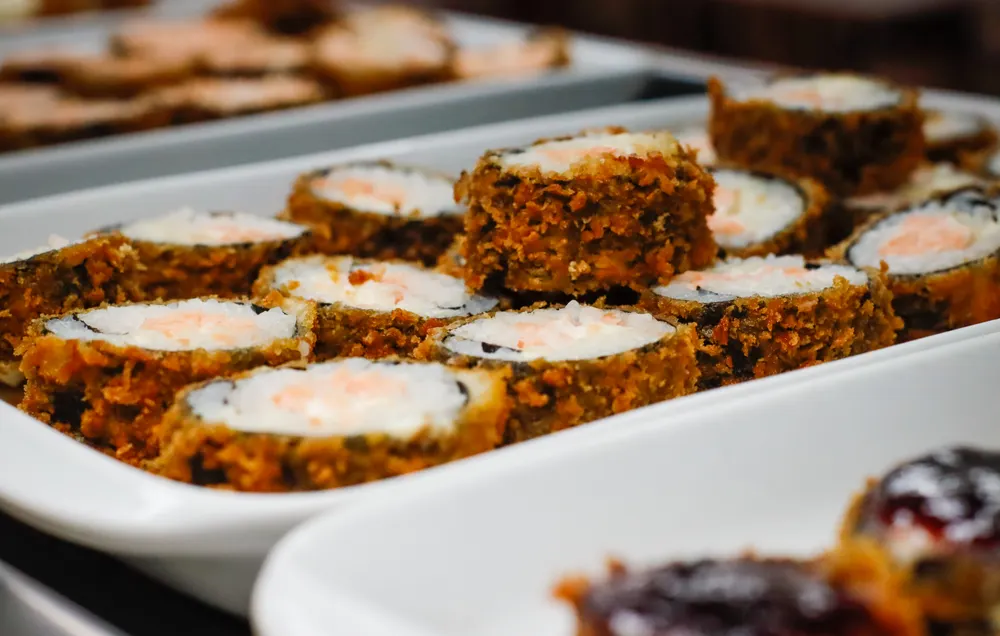
raw fish at its freshest, eaten at the counter.
Ramen

noodles in a deep broth, the comfort food of the country.
Tempura
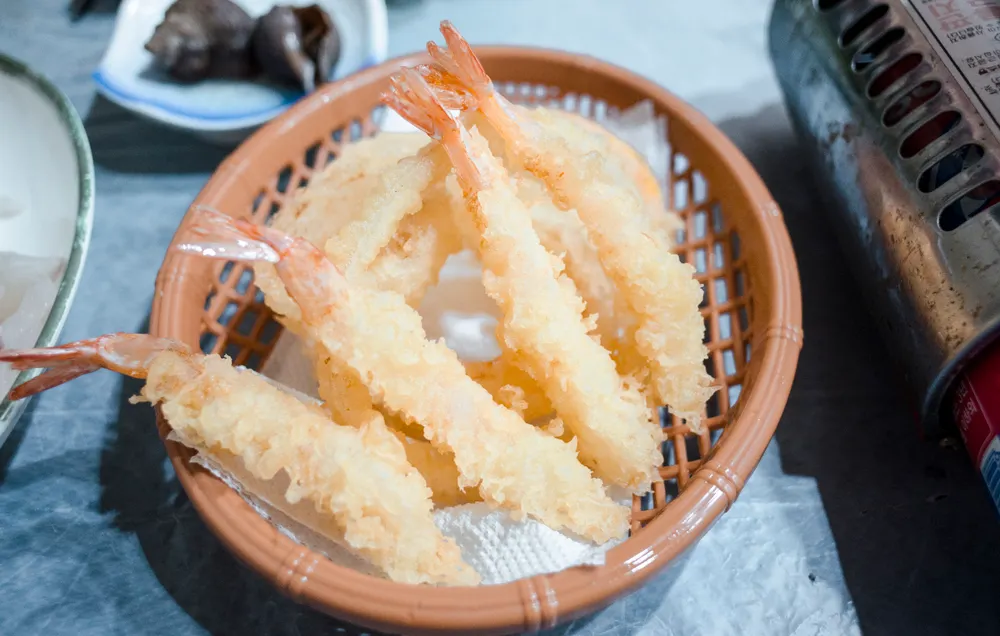
vegetables and prawns in a batter light enough to see through.
Okonomiyaki
 Photo Joli Rumi / CC BY-SA 4.0 (Wikimedia Commons)
a savoury pancake piled with filling, the pride of Osaka and Hiroshima.
Matcha and wagashi

green tea and the delicate sweets made to go with it.
Dishes to look for in the good places: Nara.
⚠️ Best avoided
- Never stand your chopsticks upright in rice, and do not blow your nose at the table.
- Tipping does not exist and can embarrass: leave nothing.
- Eating while walking down the street is frowned upon.
- Get an IC card (Suica or Pasmo) rather than buying single tickets.
Have you thought of…?
The little details that make all the difference once you're there.
Similar itineraries


📄 See the full guide: Nara, detailed month-by-month weather, budget, what to avoid and FAQ.