When to go to Easter Island?
→ The detailed month-by-month page, with real weather records
Best time: March and October to December
At a glance
Why go to Easter Island?
Rapa Nui is the most isolated inhabited territory on the planet, 3,700 km from mainland Chile and 2,000 km from the nearest neighbouring island. This remoteness produced a civilisation that carved, transported and raised nearly 900 moai with stone tools, before toppling almost all its ahu over a series of internal crises. Walking at the foot of these 4 to 10-metre monoliths, on a wind-swept island of 163 km², is unlike any other archaeological visit.
The entire territory is a national park listed as a World Heritage Site, and it is visited under strict rules. Since 2019 the park has been managed by the Rapanui community itself: a single ticket valid for 10 days, a licensed guide compulsory at the vast majority of sites, and a ban on approaching the platforms or walking on the ahu. These constraints change the trip, as they make you go through islanders who tell their own story rather than an explorer's tale.
The rest is a Polynesian island through and through. Anakena lines up its coral sand and coconut grove facing seven moai crowned with their pukao, the north coast can be walked for 15 km without meeting a soul, and visibility for diving reaches 30 metres. Hanga Roa, the only village, fits into three streets, goes to bed early and lives to the rhythm of the daily flights from Santiago.
Map of Easter Island: what is where?
The map shows the 6 places covered in this guide, to picture the distances and plan your route.
- Hanga Roa
- Ahu Tongariki
- Rano Raraku
- Anakena
- Orongo
- Ahu Akivi
How much does a trip to Easter Island cost?
Rapa Nui is by far the most expensive destination in Chile: the flight from Santiago, the park ticket and the cost of island living weigh heavily before the first night. By cooking for yourself and sharing a scooter between two, though, you can bring the bill down to a reasonable level.
| Style | Per day | What it covers |
|---|---|---|
| Backpacker | €110-150/day | Residencial, supermarket shopping, shared scooter, park sites on your own where permitted |
| Comfort | €180-260/day | Cabaña or hotel, hire car, one day with a guide, fish dinners twice a week |
| Premium | €400+/day | Ocean-front hotel, private guide, dives and a cultural evening with umu |
The Chilean peso is the everyday currency, and some hotels accept dollars at a middling rate. The island has only two cash machines, often empty in high season: arrive with cash withdrawn in Santiago and keep a margin for the park ticket.
Is Easter Island safe?
Crime is virtually non-existent on the island and you can move around without fear, day and night. The real issues lie elsewhere: first the ocean, with powerful currents and no lifeguards outside Anakena, which makes swimming risky on the north coast and on rock platforms swept by the swell. Then the sun, very strong at this latitude and deceptive in the wind, on an island where shade is rare. Finally, the park rules are strictly enforced: walking on an ahu, touching a moai or leaving the trails exposes you to a heavy fine and expulsion from the site. Be aware too that the hospital in Hanga Roa handles routine care, but a serious emergency means a 5 hours 30 minutes evacuation to Santiago, which justifies proper travel insurance.
What to see and do in Easter Island
- Ahu Tongariki
- Rano Raraku quarry
- Orongo ceremonial village
- Rano Kau crater
- Anakena beach
- Ahu Akivi
- Sunset at Tahai
- Puna Pau quarry
Ahu Tongariki
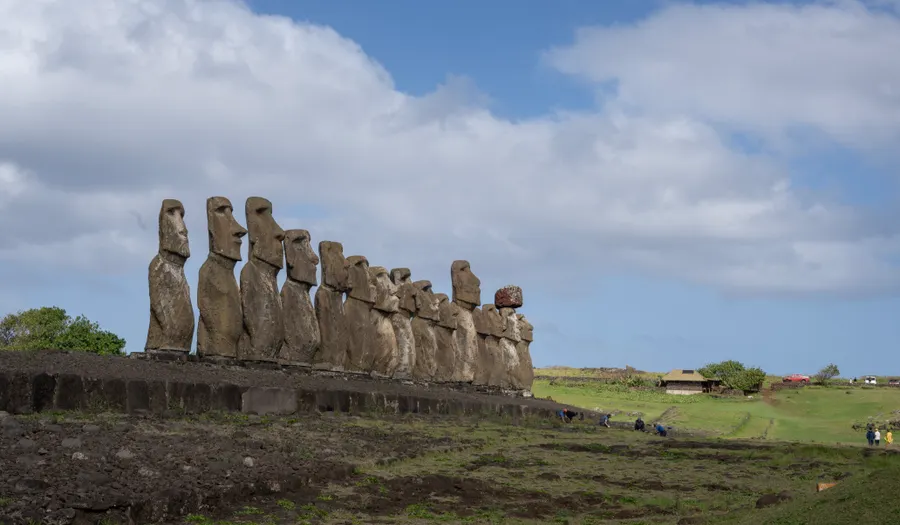
Fifteen moai lined up on a platform almost 100 metres long, their backs to the ocean, facing the Rano Raraku crater. The site was destroyed by the 1960 tsunami, then re-erected in the 1990s with the help of a Japanese crane company. It is the largest ahu on the island and the only one where you truly grasp the scale, the tallest topping 8 metres and 80 tonnes. Sunrise behind the silhouettes, between December and March, happens around 6:30am and draws big crowds. A lone moai, known as the travelling moai, stands in the car park: it is the one that was exhibited in Japan in 1982.
Rano Raraku
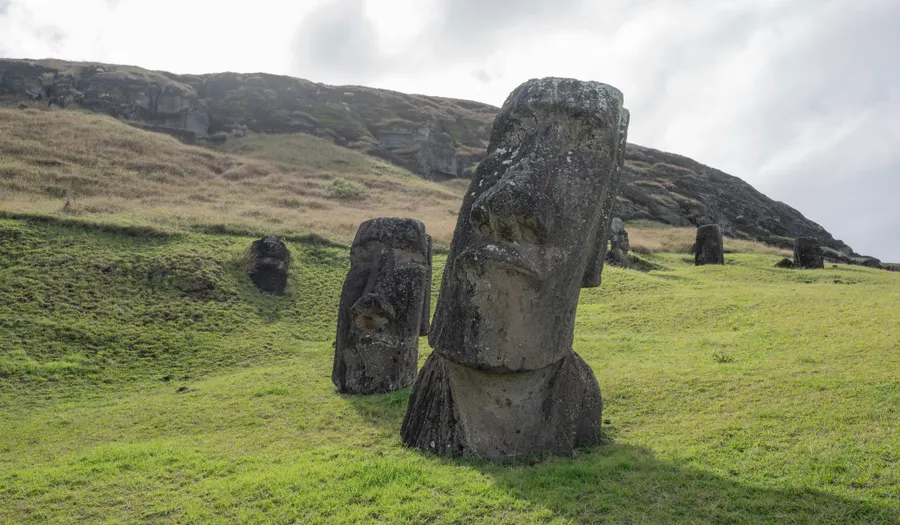
The volcano that supplied the stone for almost all the island's moai. Its yellow tuff slopes are covered with around 400 statues at every stage, some still attached to the rock, others buried up to their shoulders on the hillside. Here you can see the largest unfinished moai, 21 metres long, which never left its niche. The trail makes a loop of about 1 km, with a variant towards the lake in the inner crater. The site can be visited only once on the park ticket, so choose a day of good light rather than a rainy one.
Orongo and Rano Kau
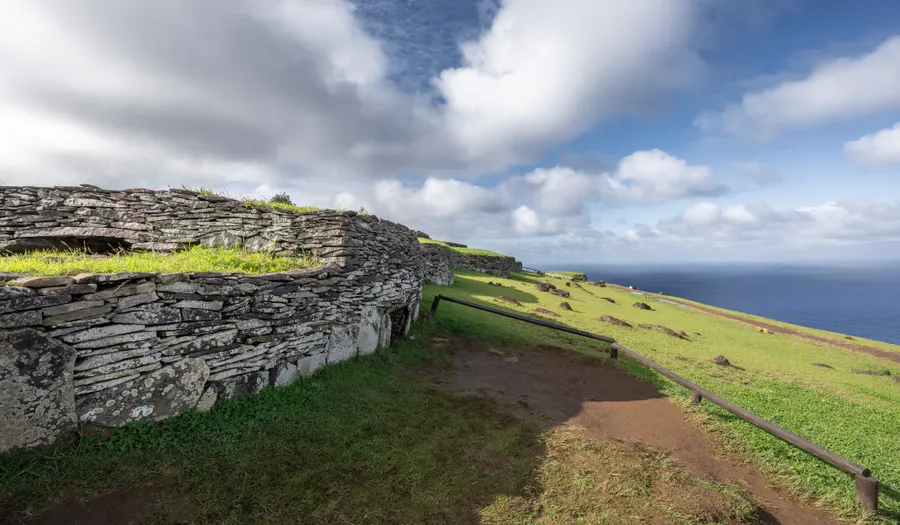
Perched on the rim of a crater 1.6 km across, Orongo is the ceremonial village of the Birdman cult. Fifty-three low houses built of stone slabs cling to the ridge, between the totora reed lake below and a 250-metre cliff dropping to the Motu Nui islets. Each spring, contenders climbed down the cliff, swam to the islet and brought back the first tern egg to hand power to their clan. The site is the windiest on the island, so bring a windbreaker even in fine weather. The crater viewpoint, located before the checkpoint, remains freely accessible.
Anakena
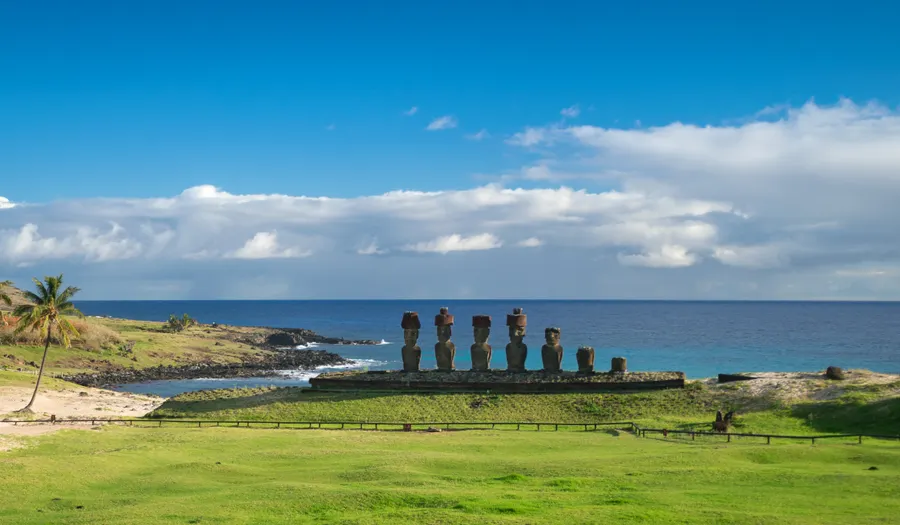
The island's only real sandy beach, a crescent of white coral fringed with coconut palms planted in the 1960s. Two ahu overlook it, including Ahu Nau Nau and its seven moai, among the best preserved, protected from the wind by the sand that long covered them. The water hovers around 24°C in the southern summer and stays swimmable all year round. A few kiosks serve empanadas and grilled fish at weekends, when families from Hanga Roa arrive. The neighbouring cove of Ovahe, wilder and without shade, is ten minutes away by road.
Ahu Akivi
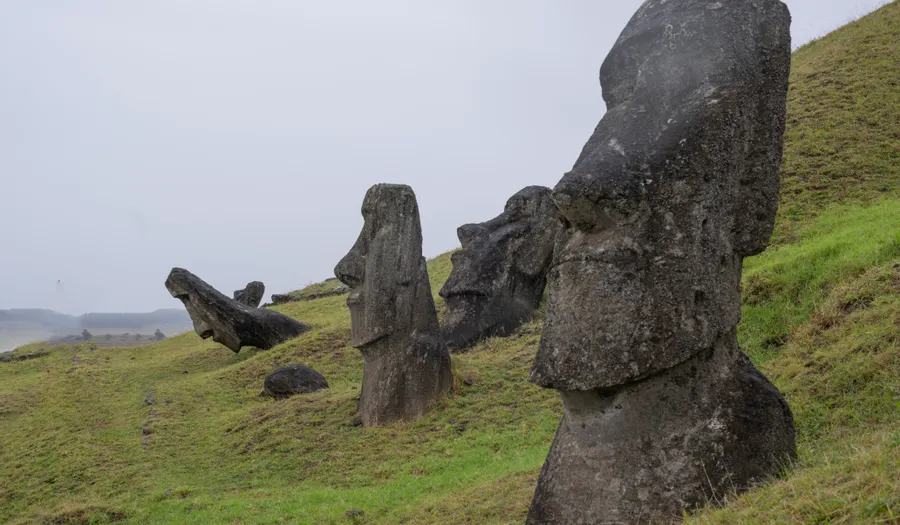
Seven moai standing inland, the only ones on the island that look towards the ocean rather than inland. They are aligned to face the sunset at the spring equinox and to turn their backs on it at the autumn one. Oral tradition sees them as the seven explorers sent ahead as scouts by King Hotu Matu'a before the migration. The site, restored in 1960, is quiet late in the day once the groups have gone back to Hanga Roa. It pairs well with the Puna Pau quarry, fifteen minutes away by road.
Hanga Roa
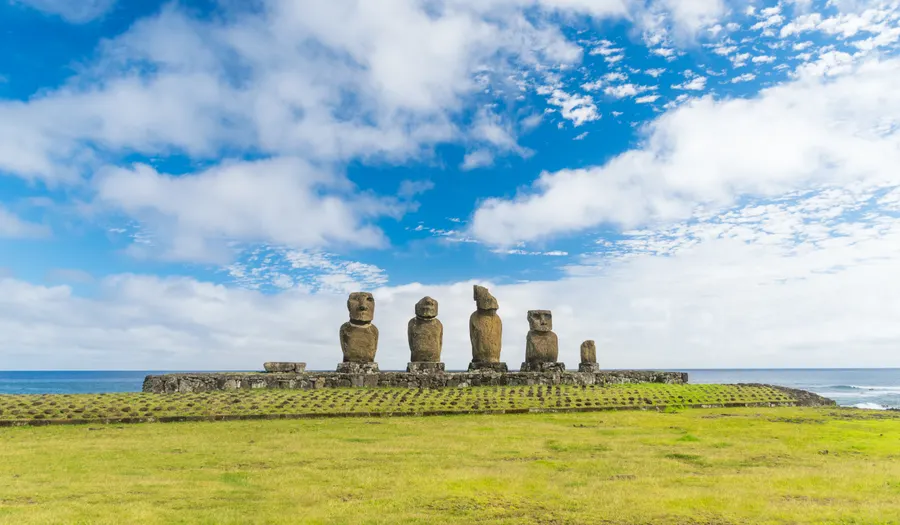
The island's only village, it holds all 7,700 inhabitants, the airport, the harbour and every place to stay. The Sebastián Englert Anthropological Museum provides the context so sorely lacking at the sites, in an hour and for a few euros. The Tahai complex, five minutes' walk from the centre, is the daily sunset meeting point, with the only moai on the island to have regained its coral eyes. The craft market and the fruit feria open early in the morning and close in the early afternoon. In the evening, only two or three places serve after 21:00.
How many days, and which itinerary?
Three full days cover the major sites; five leave time for a sunrise at Tongariki, a coastal walk and a day of bad weather without ruining everything.
🗺️ Day-by-day itinerary · 📓 Free printable Easter Island guide (PDF) · 🌍 All of Chile
The essentials (3 days)
Day 1: Anthropological Museum, Tahai and sunset. Day 2: eastern loop with a guide, Rano Raraku, Tongariki, Te Pito Kura and Anakena. Day 3: Rano Kau and Orongo in the morning, Puna Pau and Ahu Akivi late in the day. Scooter or small car hired in Hanga Roa.
Rapa Nui in depth (5 days)
The same core spread out, plus a sunrise at Tongariki, the northern coastal walk between Hanga Roa and Anakena (about 15 km, with no shade or water), the Ana Kakenga sea cave and a dive. The right format for not chasing the park ticket.
Rapa Nui as part of a combined trip (4 days on the island)
The most common format from Europe: Santiago on arrival, four nights on the island, then back via the mainland to the Atacama or Patagonia. With so few flights, the schedule is built around them first and everything else adapts.
Getting there and getting around
A single operator links Hanga Roa to Santiago, with around one flight a day and a 5 hours 30 minutes journey: book several months ahead, as it is the most expensive item of the trip.
Car hire costs €60-90/day and scooter hire €35-50/day in Hanga Roa. No fully comprehensive insurance is offered on the island and many tracks are unpaved.
There is no public transport. Hanga Roa's taxis charge an almost fixed fare of about €3 in town, and agencies run shuttles to the sites.
Since the 2018 law, stays are limited to 30 days and entry depends on a form completed before boarding, a return ticket and an accommodation booking.
Where to stay in Easter Island?
Family-run residenciales in Hanga Roa: €60-100 a night, airport transfer almost always included, with a flower garland welcome on arrival.
Cabañas and small lodges with kitchens: €90-160, a good idea given the price of restaurants and groceries.
Boutique hotels facing the ocean: €200-350, the best-represented category on the island.
Camping only on Hanga Roa's registered pitches, around €15 per person. Wild camping is banned in the park.
Our places to stay, stop by stop, at three budgets →
What to eat in Easter Island?
Tuna and mahi mahi caught the same day, grilled or as ceviche, €15-25 a plate on the harbour terraces.
Umu rapa nui, cooked underground on hot stones, served at cultural evenings and at some family meals open to visitors.
Po'e, a soft banana or pumpkin cake baked in leaves, sold at the kiosks and at the morning feria.
Almost everything arrives by boat or plane: expect to pay 30 to 50% more than in Santiago at the supermarket, and find empty shelves at the end of the week.
Entry requirements
Visa-free for 90 days for EU, UK, US, Canadian and Australian passports.
Rules change: check your own government's travel advice before you go.
Frequently asked questions about Easter Island
How much does the national park entry cost?
About €75 (80 dollars) for a foreign adult, half that for a child, with a ticket valid for 10 days at all sites. Rano Raraku and Orongo can be visited only once on this ticket, and a licensed guide is compulsory at most of the park's sites.
How many days should you spend on the island?
Three full days are enough for the major sites if the weather cooperates. Five days are more comfortable: they allow a sunrise at Tongariki, a coastal walk and a day lost to rain without having to sacrifice everything.
When is the best time to go?
March, then October to December: dry weather, warm sea and moderate visitor numbers. February draws big crowds because of the Tapati festival, and April to June brings the longest showers.
Can you visit the island without a guide?
Not at most of the park's sites, where a licensed Rapanui guide has been required since 2019. Tahai, the village of Hanga Roa, the Rano Kau viewpoint and the roads remain freely accessible.
How do you get to Easter Island?
Only by plane from Santiago, with around one flight a day and a 5 hours 30 minutes journey over the Pacific. There is no sea link for travellers, and no direct flight from Europe or French Polynesia outside seasonal rotations.
Similar destinations
 Region
🇪🇨 The Galápagos Islands
 Country
🇵🇫 French Polynesia
 City
City🇵🇫 Bora Bora
 Region
🇳🇴 The Lofoten Islands
 City
City🇵🇫 Moorea
 Region
🇦🇷 Patagonia
 Region
🇦🇺 Tasmania
 Region
🇫🇷 Guadeloupe
 Region
🇫🇷 Martinique
 Region