When to go to Australia?
→ The detailed month-by-month page, with real weather records
Best time: March to May and September to November
At a glance
Why go to Australia?
Australia is not so much visited as crossed. It is a whole continent disguised as a country, where distances defy the imagination: getting from Sydney to Perth is like crossing Europe. This vastness forces choices, but rewards every kilometre with scenery that changes radically, from red desert to tropical rainforest.
Nature reigns supreme here, often spectacular and sometimes disconcerting. Kangaroos roaming free by the roadside, koalas dozing in the eucalyptus, fluorescent corals on the Great Barrier Reef: everything seems straight out of a documentary. Australians live outdoors, between barbecues in the park, early-morning surf sessions and hikes, with an infectious ease summed up by their famous no worries.
Behind the postcards lies Aboriginal culture, the oldest continuous civilisation in the world. Uluru, the rock art of Kakadu and the stories of the Dreaming are reminders that this land has been inhabited for more than sixty thousand years. Taking time to listen to these stories turns a simple nature trip into a profound encounter.
Map of Australia: what is where?
The map shows the 6 places covered in this guide, to picture the distances and plan your route.
- Sydney
- Great Barrier Reef (Cairns)
- Uluru
- Melbourne
- Twelve Apostles (Great Ocean Road)
- Hobart (Tasmania)
How much does a trip to Australia cost?
Australia is an expensive destination, made pricier by domestic flights and the high cost of living in the big cities.
| Style | Per day | What it covers |
|---|---|---|
| Backpacker | €55-80/day | dorm or campervan, self-catering, public transport and free activities |
| Comfort | €150-230/day | mid-range hotel, restaurants, reef or desert excursions, car hire |
| Premium | €300+/day | boutique lodges, guided diving, frequent domestic flights and premium experiences |
The Australian dollar is the currency; contactless payment is king, even for a coffee, and cash is becoming rare.
Is Australia safe?
Australia is a very safe country in terms of crime, and the real risks come from nature: intense sun (sunscreen and a hat are essential), sea currents flagged on beaches that must be respected, and sometimes dangerous wildlife (jellyfish, snakes, spiders) that you need to learn to avoid without paranoia. Always swim between the flags on patrolled beaches. No vaccinations are compulsory, but good travel insurance is strongly advised, as healthcare is excellent but expensive. The emergency number is 000.
What to see and do in Australia
- Sydney and its Opera House
- the Great Barrier Reef
- Uluru
- the Great Ocean Road
- Melbourne
Sydney
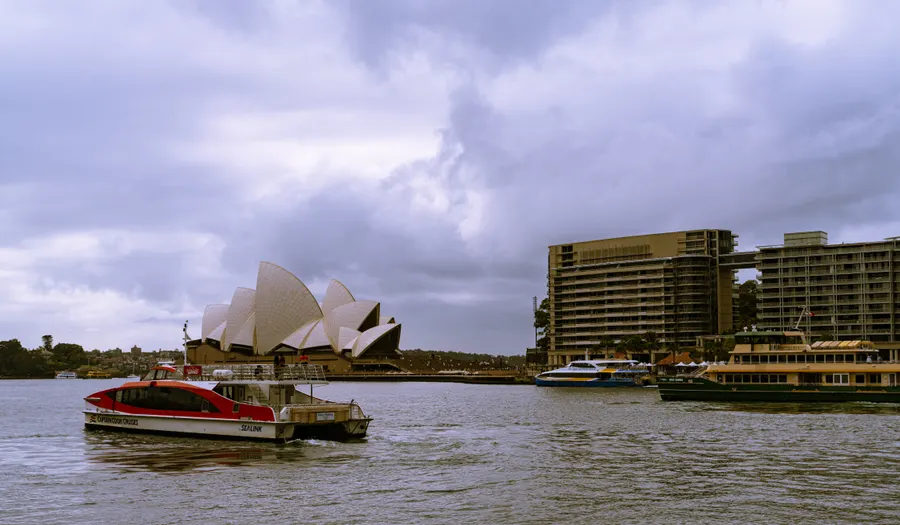
Australia's largest city wins you over instantly with its harbour and its white-sailed Opera House. You climb the Harbour Bridge, take the ferry to Manly and string together the beaches from Bondi to Coogee along the coastal path. The Rocks and Surry Hills mix colonial history with fashionable cafés. Three days are enough to catch its energy and easy-going lifestyle.
The Great Barrier Reef

This giant reef, the largest living organism on the planet, is explored by boat from Cairns or Port Douglas. A mask and snorkel are all you need to swim alongside turtles, multicoloured fish and coral gardens. Certified divers head to more spectacular sites offshore. Choose operators committed to conservation, as the reef remains fragile in the face of warming.
Uluru and the Red Centre

In the heart of the desert, this ochre monolith changes colour at sunrise and sunset, an almost hypnotic moment. Sacred to the Anangu, it is no longer climbed out of respect, but circled on foot along a ten-kilometre trail. Nearby Kata Tjuta and Kings Canyon complete the experience. Starry desert nights here are of rare clarity.
Melbourne

Sydney's cultural rival, Melbourne nurtures its street-art-covered lanes, its cafés obsessed with the perfect coffee and its thriving music scene. You wander the laneways, explore the Queen Victoria Market and catch a cricket or Aussie rules football match. The city is also the gateway to the Great Ocean Road. Its European, quirky vibe makes it a traveller favourite.
The Great Ocean Road

This coastal road south-west of Melbourne winds between cliffs, beaches and eucalyptus forests. The highlight: the Twelve Apostles, limestone stacks rising from the ocean. You come across wild koalas near Kennett River and penguin colonies. Allow two days to enjoy the viewpoints without rushing.
Tasmania

This island south of the mainland packs in wild, unspoilt nature, between mountains, ancient forests and jagged coastline. Cradle Mountain and Wineglass Bay rank among the most beautiful landscapes in the country. Hobart, the capital, charms with its Saturday market and its daring contemporary art museum, MONA. Its air is said to be among the purest in the world.
How many days, and which itinerary?
Three weeks is a minimum to combine two or three regions without spending your whole trip on planes and roads.
🗺️ Day-by-day itinerary · 📓 Free printable Australia guide (PDF)
East coast essentials (14 days)
Sydney, then north via Brisbane, the Queensland beaches and Cairns for the Great Barrier Reef. A sunny route mixing cities, beaches and reef, by plane and car.
The South and the Red Centre (14 days)
Melbourne and the Great Ocean Road, a flight to Uluru and the Red Centre, then Adelaide and its vineyards. Australia in contrasts, between sacred desert and temperate coasts.
Grand tour (21 days or more)
Sydney, the east coast up to Cairns, a hop to Uluru, then Melbourne and perhaps Tasmania. Three weeks for a broad overview, with plenty of domestic flights to plan.
Getting there and getting around
Domestic flights (Qantas, Jetstar, Virgin) are essential given the distances; book early for affordable fares between the big cities.
Hiring a car or campervan is ideal for the Great Ocean Road, Tasmania and the coasts; drive on the left and watch out for animals at dusk.
In the cities, public transport is efficient (Opal cards in Sydney, Myki in Melbourne) and Melbourne's trams are free in the city centre.
Distances in the Outback are huge: fill up often, carry water and avoid driving at night because of kangaroos.
Where to stay in Australia?
Hostels and backpackers: €25 to €40 a night in a dorm, very common on the east coast and popular with backpackers.
Motels and budget hotels: €70 to €110 a room, handy for road trips and city stops.
Mid-range hotels: €120 to €200 a night in the big cities and near tourist sites such as Uluru.
Campervans and campsites: €30 to €60 a day for the van, plus site fees; a very popular way to explore freely.
Our places to stay, stop by stop, at three budgets →
What to eat in Australia?
Brunch is a religion: eggs Benedict, avocado toast and specialty coffee reign in the cafés of Sydney and Melbourne.
Try the seafood (Tasmanian oysters, grilled barramundi, prawns on the barbie) and meat pies, the national snack.
Dare to order kangaroo or emu at some restaurants, lean meats with a gamey flavour.
For dessert, pavlova (meringue and fruit) and Tim Tams (chocolate biscuits) are part of local folklore.
Entry requirements
You need an online authorisation before you fly, applied for with a passport: eVisitor for EU and UK citizens, an ETA for US and Canadian ones, 90 days either way.
Rules change: check your own government's travel advice before you go.
Cities and regions to discover
 City
City🇦🇺 Sydney
 Region
🇦🇺 Tasmania
 City
City🇦🇺 The Great Barrier Reef
 City
City🇦🇺 Melbourne
 City
City🇦🇺 Uluru
Frequently asked questions about Australia
When is the best time to go?
The seasons are reversed: the southern summer (December to February) is ideal for the south and Tasmania, while the tropical north is best visited from May to October, the dry season. Spring and autumn offer a good overall balance.
What daily budget should you plan for?
Allow €55 to €80 a day backpacking, and €150 to €230 for a comfortable trip. Domestic flights and Great Barrier Reef excursions quickly push the bill up.
Is it dangerous because of the animals?
Dangerous encounters remain rare if you follow the guidelines: swim between the flags, take care in the wild and heed the signs. The real everyday danger is the sun, against which you need serious protection.
Similar destinations
 Country
🇧🇷 Brazil
 Country
🇳🇿 New Zealand
 City
City🇦🇪 Dubai
 City
City🇺🇸 California
 Country
🇵🇫 French Polynesia
 City
City🇵🇫 Bora Bora
 City
City🇵🇫 Moorea
 City
City🇲🇽 Tulum
 City
City🇳🇿 Auckland
 City
City