When to go to Brazil?
→ The detailed month-by-month page, with real weather records
Best time: April to May and September to November
At a glance
Why go to Brazil?
Brazil is not a country you visit, it is one you cross. The fifth-largest country in the world by area, it strings together worlds that have almost nothing in common: the electric postcard of Rio, the cobbled streets of Salvador where Afro-Brazilian culture beats strongest, the Amazon rainforest that swallows the light, the marshes of the Pantanal teeming with life, the unreal dunes of Maranhão. You cannot see all of Brazil in one trip: you pick one of its faces, and come back for the others.
Beyond the landscapes, what strikes you is a certain way of inhabiting time and space. Music spills through the streets, the beach serves as the town square, and meals are shared without fuss over a feijão or a grilled fish. The country nurtures a disarming human warmth, an ease with living outdoors, dancing and chatting to strangers, which is often travellers' fondest memory, well ahead of the monuments.
Then there is the question of distance, which shapes every trip. Getting from one highlight to the next can easily mean several hours of flying: Rio and the Amazon, Salvador and the Lençóis, Iguazu and the Pantanal belong to far-flung worlds. So it is better to give up on seeing everything, target two or three regions that fit together, and accept that Brazil is savoured slice by slice rather than in one bite.
Map of Brazil: what is where?
The map shows the 6 places covered in this guide, to picture the distances and plan your route.
- Rio de Janeiro
- Iguazu Falls
- Salvador da Bahia
- Manaus (Amazon)
- Pantanal
- Lençóis Maranhenses
How much does a trip to Brazil cost?
Brazil is affordable for European travellers, provided you keep the cost of air travel under control. Here is an estimate per person per day, excluding international flights and lodge excursions.
| Style | Per day | What it covers |
|---|---|---|
| Backpacker | BRL 150 to 250 (€25 to 40) | Dorm or simple pousada, street food and prato feito, buses and shared transport, a few free activities such as the beaches. |
| Comfort | BRL 400 to 700 (€65 to 115) | Hotel or charming pousada, varied restaurants, regular domestic flights, guided excursions and cable cars. |
| Luxury | BRL 1,200 and up (€200 and up) | Upmarket hotels, all-inclusive lodges in the Amazon or the Pantanal, private transfers and tailor-made experiences. |
The currency is the Brazilian real (BRL). Cards are accepted almost everywhere, even in small shops via mobile terminals, but a little cash is still useful in remote areas, at markets and for tips. Withdraw from ATMs run by the major banks, keeping amounts modest, and let your bank know before you leave to avoid your card being blocked.
Is Brazil safe?
Brazil calls for sensible vigilance, especially in the big cities. Avoid flashing your phone, jewellery or large sums of money, use ride-hailing apps rather than walking at night, and find out which areas to steer clear of, particularly around certain favelas. Enjoy the beaches without any valuables. Once these precautions become second nature, they do nothing to spoil the trip: the vast majority of travellers come home delighted, carried along by Brazilian hospitality. Out in nature, the main thing is to follow your guides' instructions and protect yourself from the sun and mosquitoes.
What to see and do in Brazil
Rio de Janeiro: Corcovado and Sugarloaf Mountain

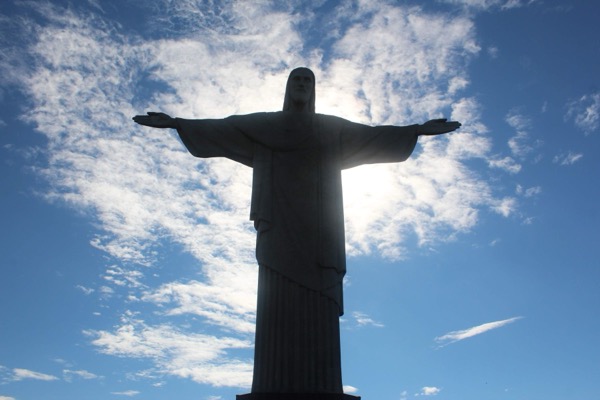
Rio is best read first from its summits. On Corcovado, Christ the Redeemer opens his arms 710 metres above the city, with a sweeping view over the bay, the favelas and the sea. Sugarloaf Mountain, reached by two successive cable cars, frames one of the world's finest urban panoramas at sunset. Below stretch Copacabana and Ipanema, where the beach serves as a communal living room from morning to night. The bohemian district of Santa Teresa and the Selarón Steps, a mosaic of tiles from all over the world, complete the picture. And when February comes, Carnival turns the entire city into an open stage.
Iguazu Falls

On the border with Argentina, Iguazu lines up nearly 275 cascades along a three-kilometre front, in the heart of a subtropical forest listed as a World Heritage Site. The Brazilian side gives you the big picture, the giant fresco of falls taken in at a single glance from the walkways. The Argentine side plunges you right up close to the Garganta del Diablo, the Devil's Throat, where the river collapses in a roar of vapour. Curious coatis, butterflies and toucans populate the surrounding trails. Here you meet constant spray and often a rainbow hanging over the abyss. Two days are not too many to enjoy both banks.
Salvador da Bahia and the Pelourinho

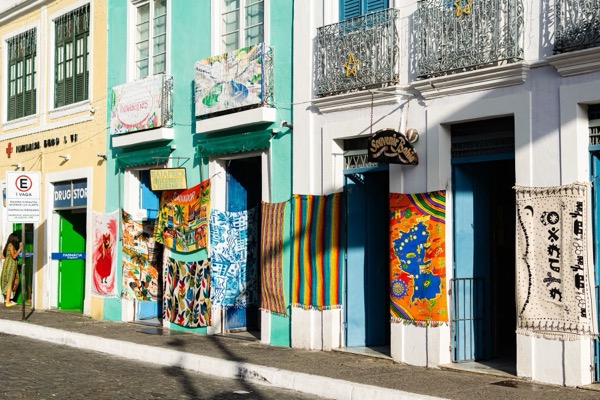
Brazil's first capital, Salvador is the cradle of Afro-Brazilian culture. Its historic centre, the Pelourinho, unfolds a maze of pastel façades, baroque churches and cobbled squares listed by UNESCO. Here capoeira is danced on street corners, part acrobatics, part martial art, to the sound of the berimbau. Candomblé rites, the flavour of acarajé fried in palm oil and the drumming of the blocos afro run through daily life. The city is split between an upper town on the clifftop and a lower port town, linked by the Lacerda Elevator. More than anywhere else, you feel the African heritage that runs through the whole of Brazilian identity.
The Amazon

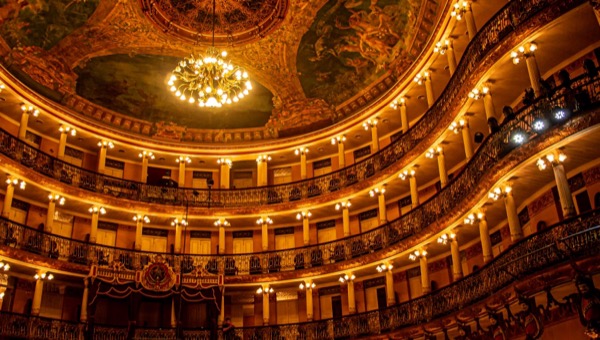
The Brazilian Amazon is most often explored from Manaus, a former rubber city planted in the middle of the jungle. Nearby, the Meeting of the Waters is a striking sight: the dark waters of the Rio Negro and the ochre flow of the Solimões run side by side for several kilometres without mixing. From lodges set on the tributaries, you head out by canoe to look for pink river dolphins, fish for piranha or watch the canopy in the early morning. The forest has to be earned: its wildlife slips away, hidden in dense vegetation. You come less to tick off animals than to feel the immensity of the planet's largest green lung.
The beaches of the Nordeste

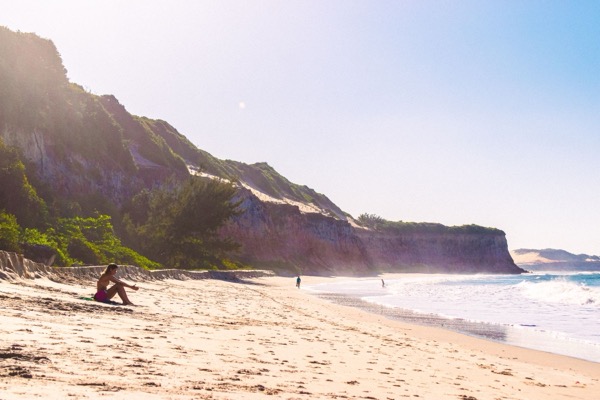
The Nordeste lines up some of the most beautiful shores on the continent, bathed in constant light and warm water all year round. At Pipa, red cliffs tower over coves where you sometimes swim with dolphins. Jericoacoara, a former fishing village lost behind its dunes, has become a haunt for kitesurfers and sunset lovers. Offshore, the Fernando de Noronha archipelago, a strictly protected marine sanctuary, reserves its crystal-clear waters for a limited number of visitors. Among coconut palms, lagoons and laid-back little towns, the pace slows right down. This is beach Brazil in its most authentic form.
The Pantanal and its wildlife

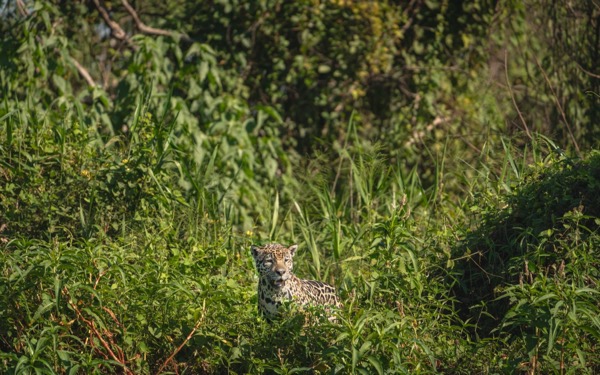
Less famous than the Amazon, the Pantanal is nonetheless the best place in South America to see wildlife. This immense wetland, the largest on the planet, offers an open landscape where animals show themselves without hiding. You get close to jaguars along the riverbanks, count caimans by the hundred, and admire hyacinth macaws, capybaras, tapirs and a non-stop ballet of birds. The dry season, from June to October, concentrates life around the waterholes and makes sightings easier. You get around by 4x4, by boat or on horseback, along the Transpantaneira. For anyone dreaming of a South American safari, this is where it all happens.
The Lençóis Maranhenses

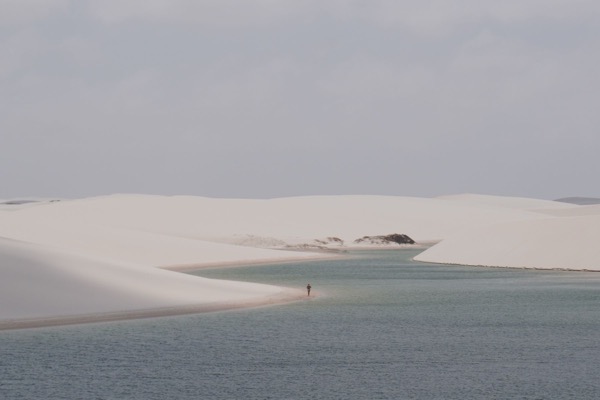
In the north-east of the country, the Lençóis Maranhenses form one of Brazil's most improbable landscapes. Over hundreds of square kilometres, dunes of immaculate white sand ripple like a desert. Yet between the crests lie thousands of freshwater lagoons, an almost unreal turquoise, fed by the rains. The phenomenon peaks from June to September, when the pools fill up and invite you to swim in the middle of the dunes. You explore the area by 4x4 from Barreirinhas, before climbing the sand on foot to a viewpoint at sunset. A landscape apart, at the edge of reality.
How many days, and which itinerary?
Brazil warrants two to three weeks for a single large region. Allow eight to ten days to combine Rio and Iguazu, two weeks to add the Nordeste or the Pantanal, and three weeks for an ambitious crossing taking in the south, the coast and the Amazon. With less than a week, it is better to focus on Rio and its surroundings.
🗺️ Day-by-day itinerary · 📓 Free printable Brazil guide (PDF)
8 to 10 days, the southern essentials
Three nights in Rio de Janeiro for Corcovado, Sugarloaf Mountain, Santa Teresa and the beaches, then a flight to Foz do Iguaçu for two days of waterfalls, on the Brazilian and Argentine sides. Finish with a beach escape near Paraty or a gentle return to Rio. A dense but smooth first taste of Brazil, with only one major domestic flight.
2 weeks, cities and nature
After Rio and Iguazu, head north to Salvador da Bahia for three days of Afro-Brazilian culture in the Pelourinho, before reaching the beaches of the Nordeste, from Pipa to Jericoacoara. Those who prefer wildlife swap the coast for four days in the Pantanal. The route combines heritage, lazy days and wide open spaces.
3 weeks, the grand crossing
This trip adds the Amazon from Manaus, with three nights in a lodge on the Rio Negro, and pushes on to the Lençóis Maranhenses for their dunes and lagoons between June and September. You then string together Rio, Iguazu, Salvador, the Amazon and Maranhão. A journey that is demanding in terms of flight logistics, but embraces almost every face of the country.
Getting there and getting around
Flying is the backbone of the trip. The distances make road travel impractical between the main stops: several hours of flying separate Rio from Manaus, Salvador or Iguazu. The domestic airlines, LATAM, Gol and Azul, cover the country at reasonable fares when booked ahead. An air pass or tickets bought early cut the bill considerably. It is wise to allow comfortable connections, as delays remain frequent.
Locally, short trips are by bus, ride-hailing app or hire car. Long-distance road links exist and are comfortable in leito class, but they eat up time. In cities, use ride-hailing apps rather than hailing a taxi, and avoid driving yourself at night on the main highways. For the Pantanal or the Lençóis, a 4x4 with a driver-guide remains the norm.
Where to stay in Brazil?
The range is wide, from a very well-developed network of youth hostels to charming pousadas, the small family-run hotels that give the coast and colonial towns their flavour. In Rio or Salvador, choose your neighbourhood carefully: proximity to the beach and safety come before price. The pousadas of Paraty, Pipa or Jericoacoara often offer excellent value, with a generous breakfast and a warm welcome.
Nature experiences call for specific arrangements. In the Amazon as in the Pantanal, you stay in a lodge or on a fazenda, full board with guided excursions included: the budget climbs but everything is covered. Around the Lençóis, Barreirinhas and Atins have simple places to stay. In high season and during Carnival, prices soar and the best places are booked far in advance.
Our places to stay, stop by stop, at three budgets →
What to eat in Brazil?
Brazilian cooking follows the geography. The national dish, feijoada, brings together black beans and slow-cooked cuts of pork, served at weekends with rice, farofa and orange. At the barbecue, churrasco offers every kind of meat on the spit, often as an all-you-can-eat rodízio. Pão de queijo, little cheese breads, and açaí served frozen in a bowl punctuate the day. Along the coast, moqueca, a fish stew with coconut milk and dendê oil, shows the influence of Bahia.
Entry requirements
Visa-free for 90 days for EU and UK passports. US, Canadian and Australian passports need an e-visa, applied for online before departure.
Rules change: check your own government's travel advice before you go.
Cities and regions to discover
 City
City🇧🇷 Rio de Janeiro
 City
City🇧🇷 Salvador da Bahia
 City
City🇧🇷 The Brazilian Amazon
 Region
🇧🇷 Northeast Brazil
 City
City🇧🇷 The Pantanal
 City
City🇧🇷 Lençóis Maranhenses
Frequently asked questions about Brazil
When is the best time to go to Brazil?
The seasons are the reverse of Europe's. The southern summer, from December to March, is hot and festive, ideal for Rio and Carnival but very busy. For the Pantanal and wildlife watching, aim for the dry season from June to October; for the Lençóis Maranhenses, the June to September window is essential.
Is Brazil dangerous for travellers?
The country calls for vigilance, especially in the big cities, but a well-prepared trip goes smoothly. Take the usual precautions: keep valuables out of sight, use ride-hailing apps rather than walking at night, and choose your neighbourhoods carefully. The vast majority of visitors run into no serious problems.
Do you need to speak Portuguese to travel in Brazil?
The official language is Portuguese, and English is not widely spoken outside very touristy places. A few words of Portuguese and a translation app on your phone make exchanges much easier. Brazilians are patient and welcoming with those who make the effort to communicate.
How much time should you allow for a first trip?
Two weeks are a good basis for combining Rio, Iguazu and a third region such as the Nordeste or the Pantanal. With less than ten days, it is better to stick to the south so you do not spend your time on planes. The distances mean you need to focus rather than try to take in everything.
Similar destinations
 City
City🇲🇽 Tulum
 City
City🇺🇸 Florida
 Country
🇨🇦 Canada
 Country
🇦🇺 Australia
 Region
🇫🇷 Brittany
 Country
🇭🇷 Croatia
 Country
🇮🇪 Ireland
 City
City🇬🇧 Northern Ireland
 City
City