When to go to Iguazú Falls?
→ The detailed month-by-month page, with real weather records
Best time: April to May and August to September
At a glance
Why go to Iguazú Falls?
The Iguazú Falls rank among the most spectacular on the planet: some 275 cascades stretching across nearly three kilometres, set in subtropical jungle listed as a UNESCO World Heritage Site. Straddling the border between Argentina and Brazil, they can be visited from both sides, each offering a different experience.
The Argentine side, Iguazú National Park near the town of Puerto Iguazú, holds most of the highlights: a network of walkways takes you as close to the water as you can get, right up to the abyss of the Garganta del Diablo. The Brazilian side, for its part, offers the big panoramic overview. Most travellers spend a full day on the first and half a day on the second.
You fly in from Buenos Aires in under two hours, and the steamy heat of the jungle is part of the scenery. Be ready to get splashed, and keep your camera under cover.
Map of Iguazú Falls: what is where?
The map shows the 4 places covered in this guide, to picture the distances and plan your route.
- Garganta del Diablo
- National park (entrance)
- Puerto Iguazú
- Brazilian side (Foz do Iguaçu)
How much does a trip to Iguazú Falls cost?
Iguazú is a moderately priced stop, dominated by park entry tickets and the flight from Buenos Aires. Here are ballpark figures per person per day on site, excluding the flight.
| Style | Per day | What it covers |
|---|---|---|
| Backpacker | €45-70/day | Hostel in Puerto Iguazú, simple meals, park entry, local transport. |
| Comfort | €90-140/day | Comfortable hotel, both sides of the falls, the Gran Aventura, restaurants. |
| Luxury | €250/day and up | Lodge deep in the jungle or hotel inside the park, private excursions. |
Is Iguazú Falls safe?
The area is safe and very touristy; the main things to watch are the heat and sun (hat, sunscreen, plenty of water) and the park's coatis, which should neither be fed nor approached. Bring mosquito repellent, useful in this subtropical environment.
What to see and do in Iguazú Falls
- the Garganta del Diablo
- the upper and lower walkways
- the Gran Aventura boat ride
- the Brazilian side (panorama)
- jungle wildlife
The Garganta del Diablo
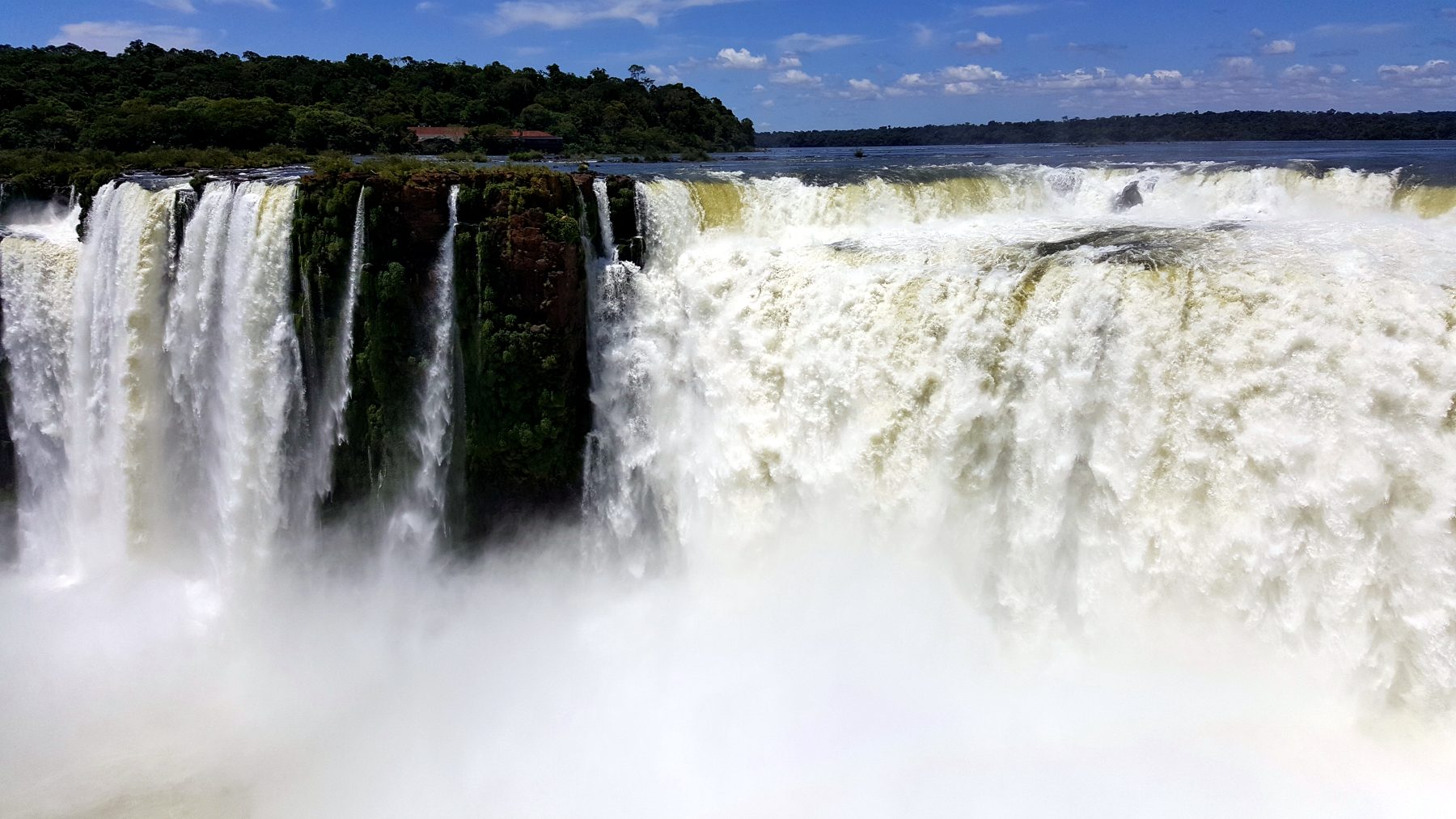
The ‘Devil's Throat’ is the highlight of the visit: an 80-metre-high horseshoe into which a colossal volume of water pours, in a permanent cloud of spray. You reach it by a small eco-train and then a long walkway laid over the Iguazú River. The roar is so loud it drowns out voices, and a rainbow is all but guaranteed in fine weather. Arrive early in the morning to enjoy the site before the crowds.
The upper and lower circuits
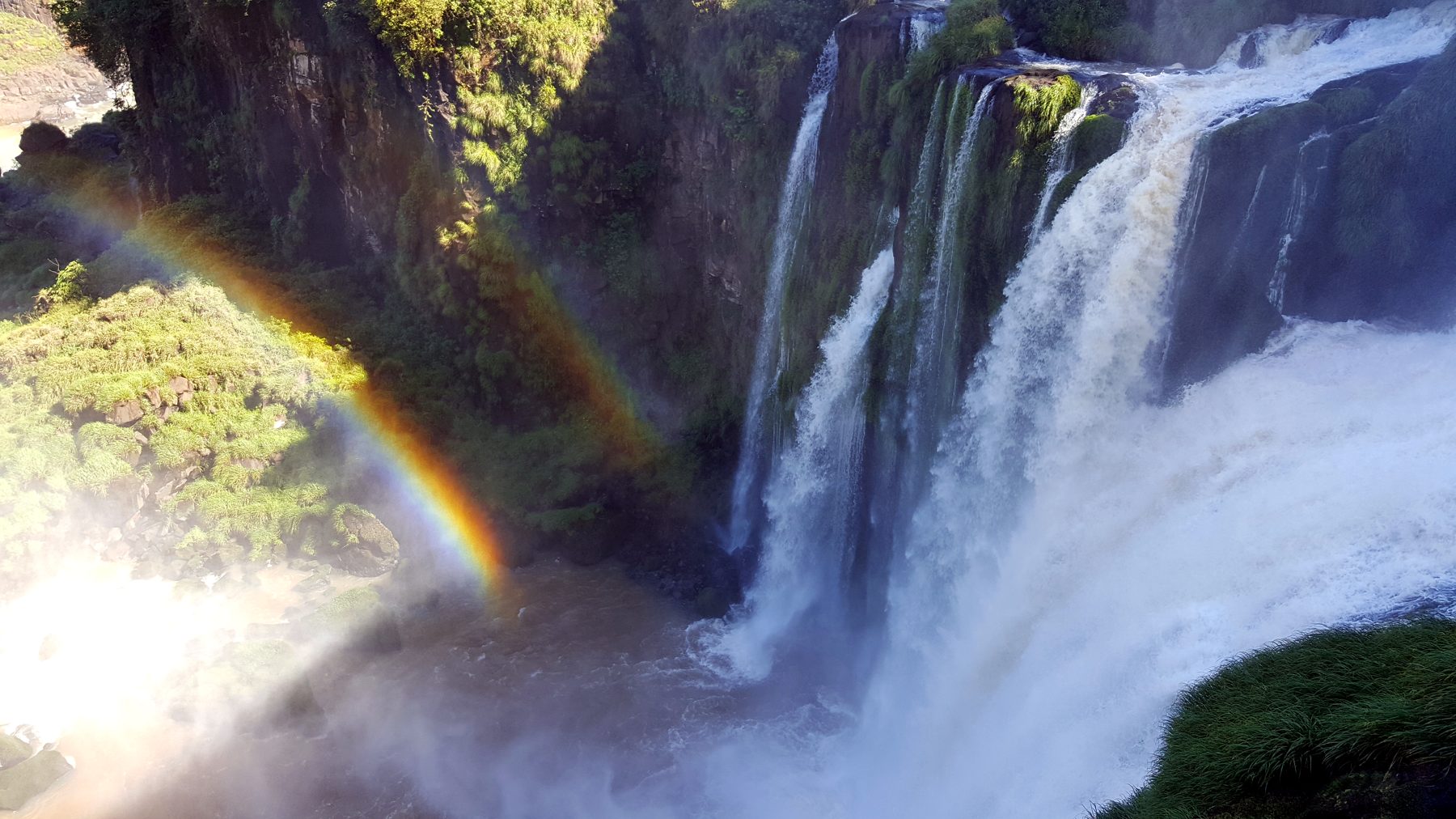
Beyond the Garganta, two walkway circuits complete the visit. The Paseo Superior runs along the top of the falls and offers plunging views; the Paseo Inferior descends to the foot of the cascades, as close as you can get to their power, with a panorama over San Martín Island. Allow two to three hours to walk them at a relaxed pace, taking time to watch the surrounding jungle.
La Gran Aventura, by boat under the falls
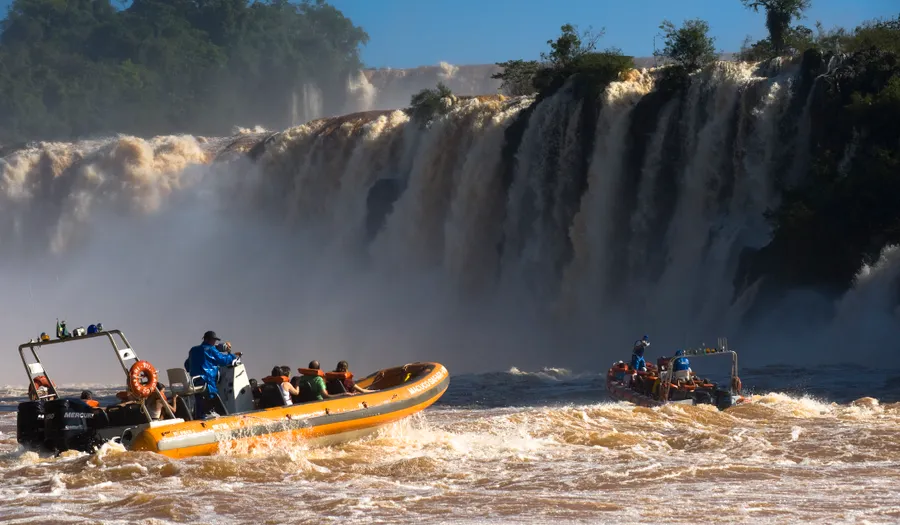
For thrill-seekers, the Gran Aventura sets off in an inflatable boat that heads up the river and literally charges under the cascades. You come out soaked to the bone, and laughing. Bring a dry bag and a change of clothes; the activity is paid and can be booked on site or in advance.
The Brazilian side and the Parque das Aves
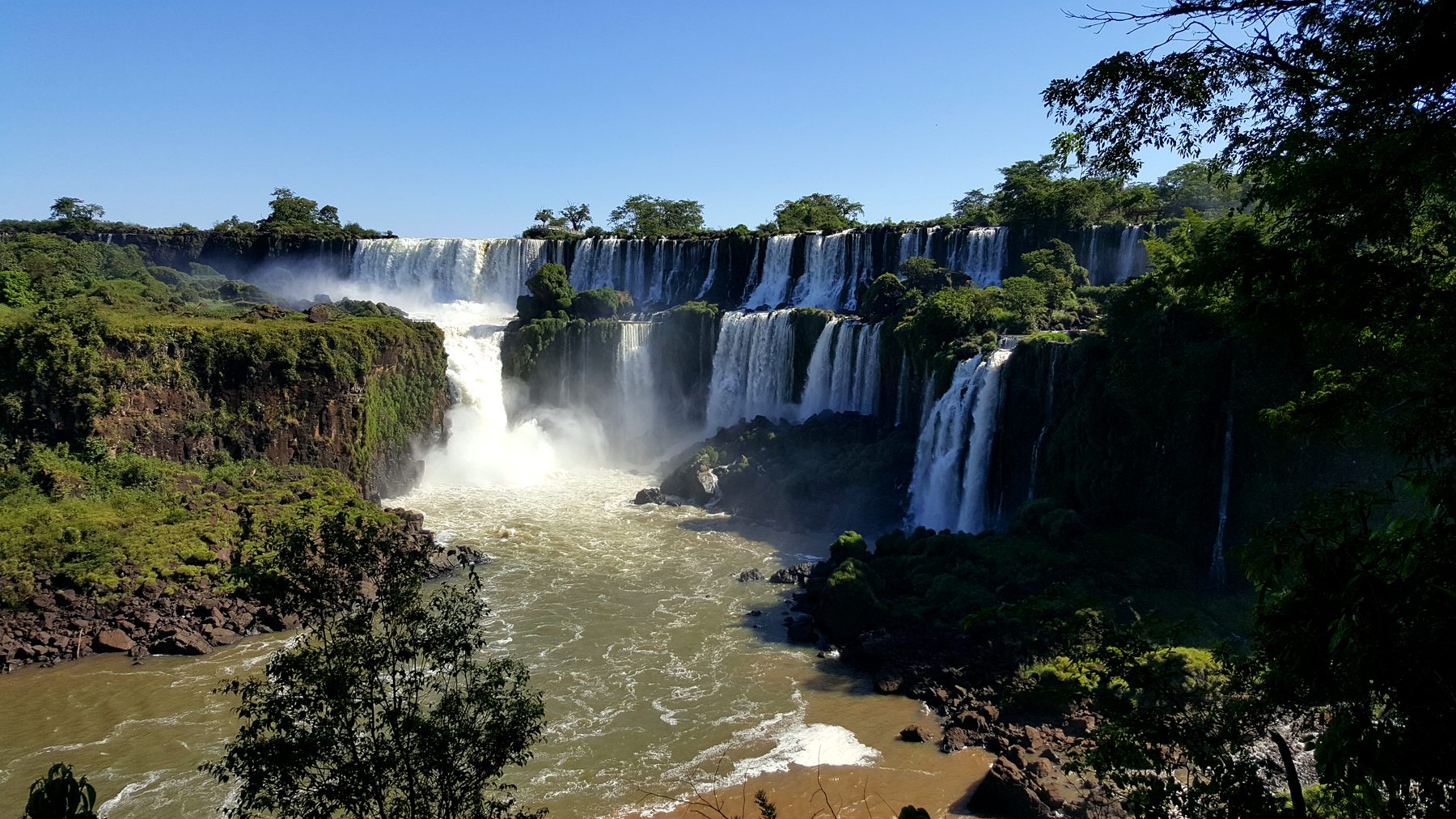
Across the border, the Brazilian national park offers in half a day the panoramic view over the whole of the falls that you cannot get on the Argentine side. Right next door, the Parque das Aves houses toucans, macaws and other Atlantic Forest birds in large aviaries. Check the border-crossing formalities for your nationality, or go on an organised excursion.
Jungle wildlife

The park is a living reserve: cheeky coatis (which happily pinch sandwiches; whatever you do, do not feed them), capuchin monkeys, giant brightly coloured butterflies, toucans and, with a bit of luck, a few caimans in the calm waters. Stay on the walkways and keep your bags closed.
The helicopter flight (Brazilian side)

To take in the sheer scale of the falls in a single glance, nothing beats a helicopter flight, offered only on the Brazilian side, at Foz do Iguaçu. In around ten minutes you see the whole horseshoe of cascades and the ribbon of jungle around it. A short, paid option, but a spectacular memory, especially in the morning light.
The full moon walk

Five nights a month, around the full moon, the park on the Argentine side opens in the evening for a guided walk to the Garganta del Diablo, bathed in silvery light and sometimes a lunar rainbow. Places are limited and must be booked well in advance: a rare experience, far from the daytime crowds.
The Jesuit ruins of San Ignacio Miní

Just over two hours' drive to the south, the remains of San Ignacio Miní are among the best preserved of the UNESCO-listed Jesuit-Guaraní missions (the ones that inspired the film The Mission). Pink sandstone walls overrun by jungle and a vast ceremonial square tell a fascinating chapter of colonial history. A fine cultural stop to break up the journey.
How many days, and which itinerary?
A full day is enough for the Argentine side, which is the heart of the visit. If you can, add half a day on the Brazilian side for the overall view: in that case, plan two nights in Puerto Iguazú. The falls fit easily into a big trip around Argentina, between Buenos Aires and the rest of the country.
🗺️ Day-by-day itinerary · 📓 Free printable Iguazú Falls guide (PDF) · 🌍 All of Argentina
Getting there and getting around
Flying is easiest: from Buenos Aires (Aeroparque airport), allow under two hours' flight to Puerto Iguazú airport, served several times a day by Aerolíneas Argentinas and the low-cost airlines. Book ahead, as it is a very popular route. There are buses too, but the journey from Buenos Aires takes about 18 hours.
From the airport or the town, regular buses and shuttles reach the national park entrance in around twenty minutes. Inside, the small eco-train links the various walkway stations. For the Brazilian side, organised excursions simplify both the border crossing and the transport.
Where to stay in Iguazú Falls?
Puerto Iguazú, the small Argentine town, holds most of the accommodation, from backpacker hostels to comfortable hotels, around ten minutes from the park. For a more immersive experience, a few lodges and upmarket hotels sit deep in the jungle, some with views of the falls, such as the historic hotel located inside the park itself. As the town is small and popular, book early in high season.
Our places to stay, stop by stop, at three budgets →
What to eat in Iguazú Falls?
At the table, try the local river fish (surubí, dorado), empanadas and the cooking of Misiones province, often washed down with a tropical fruit juice or a tereré, the iced mate that suits the jungle heat so well.
Entry requirements
Visa-free for 90 days for EU, UK, US, Canadian and Australian passports.
Rules change: check your own government's travel advice before you go.
Frequently asked questions about Iguazú Falls
How many days do you need for the Iguazú Falls?
A full day is enough for the Argentine side. Add half a day for the Brazilian side and its panoramic view: in that case, plan two nights in Puerto Iguazú.
Which side of the falls should you visit, Argentine or Brazilian?
The two complement each other. The Argentine side, the larger, puts you in the heart of the falls (walkways, Garganta del Diablo); the Brazilian side gives the overall view. If you have to choose, go for the Argentine side.
When is the best time for Iguazú?
Iguazú can be visited all year round. Avoid the height of summer (December-February), which is very hot and humid; from April to September the climate is more comfortable and the flow remains spectacular.
How do you get to Iguazú from Buenos Aires?
Flying is easiest: under two hours from Aeroparque airport to Puerto Iguazú, several times a day. There are buses, but the trip takes about 18 hours.
Similar destinations
 Country
🇨🇦 Canada
 Country
🇧🇷 Brazil
 City
City🇧🇷 The Brazilian Amazon
 City
City🇧🇷 Lençóis Maranhenses
 City
City🇨🇦 Charlevoix and Tadoussac
 City
City🇨🇦 The Laurentians and Mont-Tremblant
 Country
🇵🇪 Peru
 City
City🇵🇪 Cusco and Machu Picchu
 Country
🇨🇷 Costa Rica
 City
City