When to go to the Atacama Desert?
→ The detailed month-by-month page, with real weather records
Best time: April to May and September to November
At a glance
Why go to the Atacama Desert?
The Atacama is the driest desert on the planet, and it shows in the landscape more than in the figures. Some weather stations have never recorded rain, the air holds almost no moisture, and the salt crust cracks in the sun like glass. The result is a mineral setting of rare sharpness: salt crusts, red sand dunes, volcanoes over 5,000 m lined up on the horizon, without a single tree to blur the distances.
This desert is also a high-altitude desert, which changes everything. San Pedro already sits at 2,400 m, most excursions climb to between 3,500 and 4,300 m, and the pass into Argentina tops 4,800 m. That means mild days and nights that drop below zero, a brutal sun, and real time to set aside for acclimatisation: two nights in the village before heading to the El Tatio geysers is not a comfort precaution, it is simply how a stay here works.
Finally, the absence of humidity and light pollution gives one of the best night skies in the world, so much so that the great international observatories have settled on the neighbouring plateaux, starting with ALMA at 5,000 m on the Chajnantor. On a traveller's scale, that means astronomy evenings with telescopes half an hour from the village, and a Milky Way visible to the naked eye as soon as you move away from the street lamps of Caracoles.
Map of the Atacama Desert: what is where?
The map shows the 6 places covered in this guide, to picture the distances and plan your route.
- San Pedro de Atacama
- El Tatio Geysers
- Valley of the Moon
- Laguna Chaxa
- Laguna Miscanti
- Toconao
How much does a trip to the Atacama Desert cost?
Accommodation and food remain affordable, but the excursions drive up the bill: each outing costs between €20 and €70, entry fees not included. Counting four outings over a five-day stay gives a realistic order of magnitude.
| Style | Per day | What it covers |
|---|---|---|
| Backpacker | €55-85/day | Dorm, shared kitchen, two group excursions, hire bike for the Valley of the Moon |
| Comfort | €120-180/day | Adobe hostal, one excursion a day, Caracoles restaurants, astronomy evening |
| Premium | €350+/day | Lodge with pool, private guide in a 4x4, reserved observatory session, early-morning access to the hot springs |
San Pedro has a few cash machines, often empty in high season and capped at low amounts. Many agencies, site entrances and small canteens accept only cash: withdraw money in Calama when you arrive.
Is the Atacama Desert safe?
The main issue here is not crime, which is very low, but altitude. San Pedro is at 2,400 m, the El Tatio geysers at 4,320 m, and the passes into Bolivia or Argentina top 4,800 m: headaches, shortness of breath, loss of appetite and broken sleep are common during the first 48 hours, even for fit people. The normal way to manage this is to spend two nights in the village before any high-altitude excursion, drink plenty, eat light and avoid alcohol on the first evening. If symptoms worsen instead of easing, the only sound response is to descend, and the San Pedro medical centre refers patients to Calama, 1 hour 15 minutes away by road. The rest comes down to the desert itself: a 25°C swing between afternoon and dawn, very strong solar radiation at this altitude, and tracks with no signal that you should not take without a full tank, water and warm clothes.
What to see and do in the Atacama Desert
- El Tatio Geysers
- Valley of the Moon
- Laguna Chaxa and its flamingos
- Miscanti and Miñiques lagoons
- Laguna Cejar
- Puritama Hot Springs
- Pukará de Quitor
- A night under the stars in San Pedro
San Pedro de Atacama
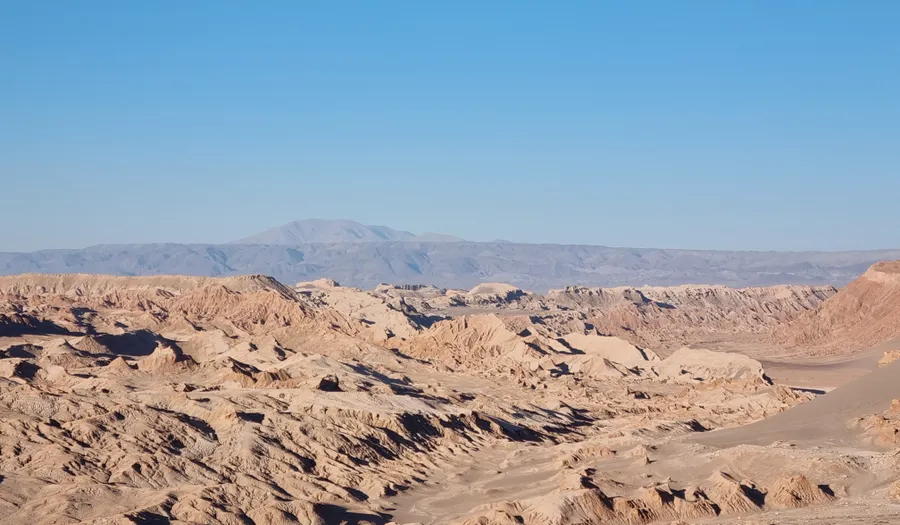
A village of 2,500 inhabitants built of adobe brick, set at 2,400 m at the edge of the salt flat, which lives entirely from tourism. Everything fits into five streets around the square and its white church with a cactus-wood roof frame, a national monument. Calle Caracoles concentrates the agencies, restaurants and bike hire shops, in an atmosphere somewhere between an Andean roadside stop and a colonial hamlet. The Gustavo Le Paige museum gives the archaeological context of the oasis, inhabited for more than 10,000 years. There is no harsh street lighting, so you can see the stars from the street.
El Tatio Geysers 4 264 m
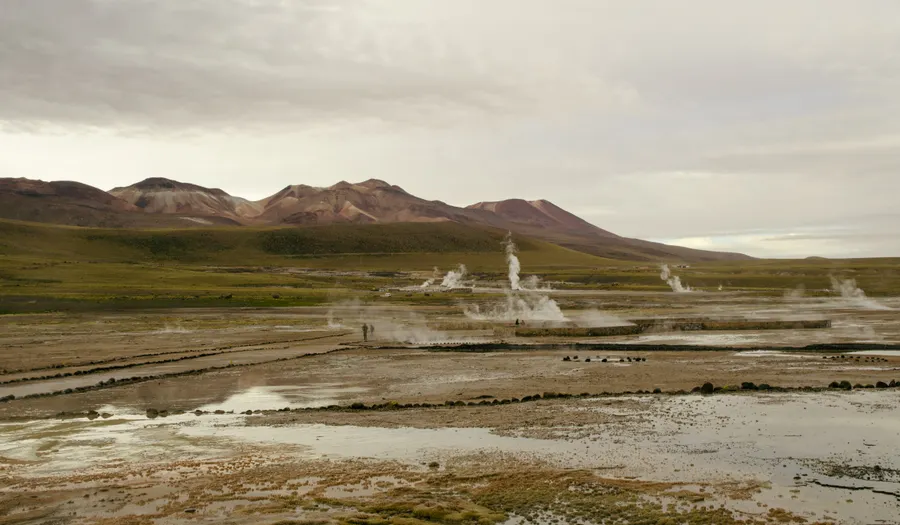
The largest geothermal field in the southern hemisphere, at 4,320 m above sea level and 95 km north of San Pedro. More than 80 active vents spit steam and boiling water, with peak activity between 6am and 8am, when the icy air makes the steam columns spectacular. The thermometer often drops to -10°C at daybreak, which explains the 4:30am departures by van. A thermal pool lets you bathe on site, provided you can face getting out of the water. The road sometimes closes in January and February because of high-altitude storms.
Valley of the Moon 2 507 m
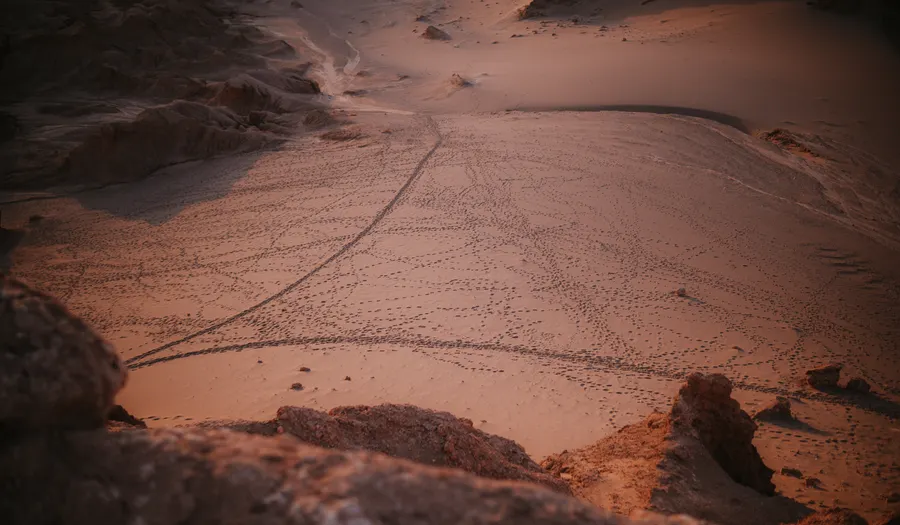
A section of the Cordillera de la Sal, 15 km from the village, sculpted into ridges, dunes and amphitheatres by salt and wind. The ground crackles constantly as the crystals expand, a sound you hear clearly when the group falls silent. The Duna Mayor and the Piedra del Coyote viewpoint are the classic sunset spots, with the Licancabur volcano as a backdrop. Agency tours all arrive around 17:00, but the site is very easy to visit by bike from San Pedro, in 1 hour on the track. The salt caves require a helmet and close in strong winds.
Salar de Atacama and Laguna Chaxa
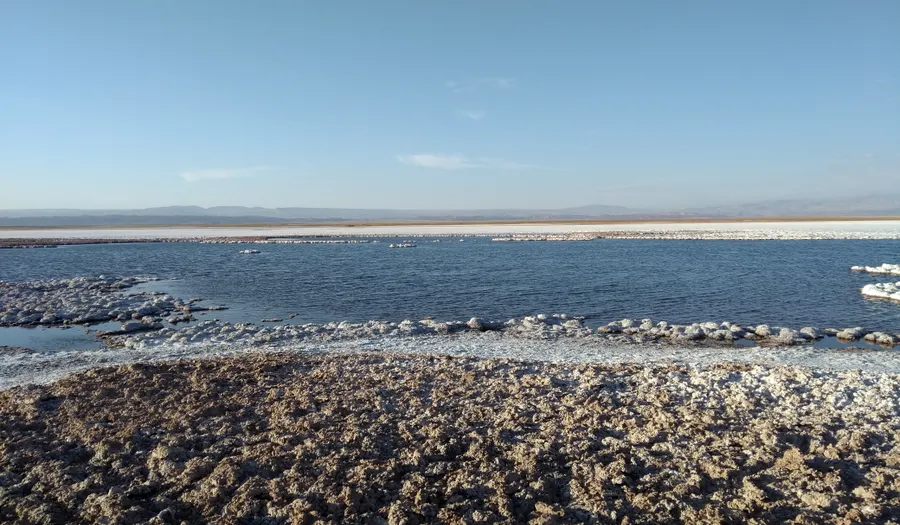
Chile's largest salt flat covers 3,000 km² of ochre and grey salt crust, spiky like dead coral. Laguna Chaxa, at the heart of Los Flamencos National Reserve, is its most accessible window: three species of flamingo feed here, the Andean, the Chilean and the rarer James's. The marked trail is barely 1 km long and is best walked in late afternoon, when the birds come closer and the light is low. The Licancabur and Lascar volcanoes close off the horizon to the east. Toconao, a village of adobe and liparite stone 40 km away, combines naturally with the visit.
Altiplano lagoons
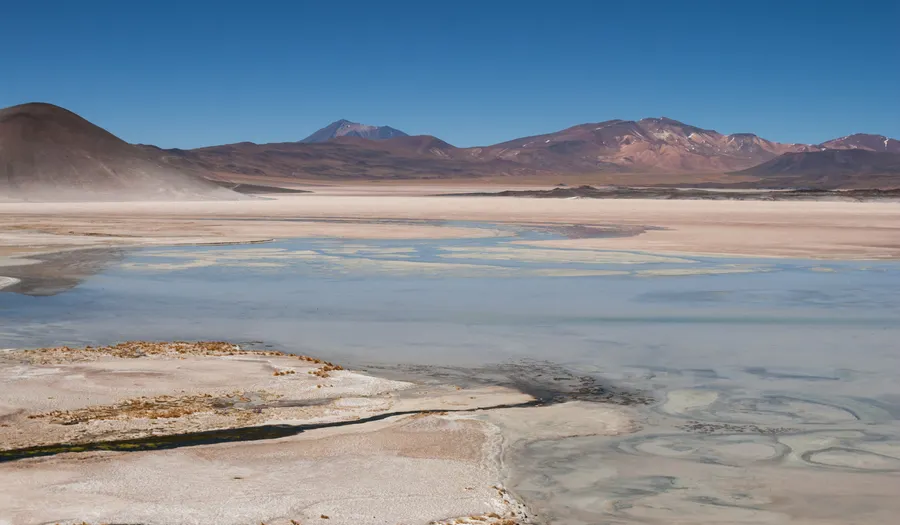
At more than 4,100 m, Miscanti and Miñiques unfold two dark-blue lakes framed by ochre peaks and tufts of paja brava grass. The road climbs from Socaire, the last village before the high plateau, on a track where vicuñas cross without warning. It is rarely warmer than 10°C and the wind is constant, so bring a proper windbreaker even in summer. Most tours continue to Piedras Rojas, further south, where oxidised rocks border a high-altitude salt flat. A full day, leaving around 7am and returning in the late afternoon.
Puritama Hot Springs 3 571 m
Eight natural pools fed by a warm river, stepped down a gorge at 3,500 m, 35 km from San Pedro. The water stays between 25 and 30°C all year, a temperature that becomes very pleasant when the outside air remains cool. Wooden walkways link the pools, which are edged with reeds that cut the wind. The site is run by the community and entry numbers are limited, which keeps the place calm. The walk down from the car park takes ten minutes; the climb back up at this altitude takes a little longer.
How many days, and which itinerary?
Four full days cover the classics while leaving time to acclimatise; six to seven let you add the altiplano lagoons and a day without a pre-dawn alarm.
🗺️ Day-by-day itinerary · 📓 Free printable Atacama Desert guide (PDF) · 🌍 All of Chile
The essentials (4 days)
Arrival in Calama and transfer, with a deliberately gentle first day taking in the Pukará de Quitor, the Aldea de Tulor and sunset at the Valley of the Moon. Then the salt flat and Laguna Chaxa, the El Tatio geysers at daybreak on the third morning, and an astronomy evening to finish. A sustainable pace at 2,400 m.
Grand tour of the desert (6-7 days)
The four-day core plus the Miscanti and Miñiques lagoons, Piedras Rojas and Socaire, a morning at the Puritama hot springs and a salty swim in Laguna Cejar. Keep a buffer day: it almost always comes in handy.
Atacama and the Bolivian high plateau (10-12 days)
Four days in San Pedro to acclimatise, then a 4x4 crossing to the Salar de Uyuni via Laguna Verde and Laguna Colorada, three days above 4,000 m with nights in basic refuges. A sequence never to attempt straight after arriving.
Getting there and getting around
Calama airport is 100 km away, or 1 hour 15 minutes by road: shared shuttle €20-25 per person, private taxi €60-80, to be booked at the same time as your flight.
San Pedro can be crossed on foot in fifteen minutes, and a bike is enough for the Valley of the Moon or Quitor. Everything else means a van excursion or a hire car at €50-70/day.
Excursions leave the village at fixed times: 4:30am for El Tatio, 7am for the altiplano lagoons, 15:00 for the Valley of the Moon. Prices can double from one agency to the next along Calle Caracoles.
By bus, Calama is linked to Santiago (22 hours) and San Pedro to Salta in Argentina via the Jama Pass, a ten-hour journey with a high point of 4,800 m.
Where to stay in the Atacama Desert?
Hostels and dorms in San Pedro: €20-35 a bed, five minutes from the square, with a shared kitchen and excursions departing from the door.
Adobe hostales set around a patio: €60-110 for a double room, the best value in the village.
Boutique lodges in the neighbouring ayllus of Solor or Yaye: €150-280, with pool, garden and utterly silent nights.
All-inclusive hotels with excursions and a private observatory: €500 and up per night, a format widely found in the region.
Our places to stay, stop by stop, at three budgets →
What to eat in the Atacama Desert?
Quinoa, maize and llama meat form the local Andean staples, served as cazuela or charquicán in the small canteens away from Caracoles.
Rica rica and chañar, two desert plants, flavour the village's ice creams, syrups and pisco sours: try them at least once.
Calle Caracoles concentrates the tourist restaurants, at around €15-25 a dish, one of the highest price levels in the country.
Tap water is heavily loaded with arsenic and minerals: buy water in 5-litre containers, which is cheaper and means fewer bottles.
Entry requirements
Visa-free for 90 days for EU, UK, US, Canadian and Australian passports.
Rules change: check your own government's travel advice before you go.
Frequently asked questions about the Atacama Desert
Do you need to acclimatise before the El Tatio geysers?
Yes. San Pedro is already at 2,400 m and the geyser field at 4,320 m, reached after a departure at around 4:30am. Spending at least two nights in the village before this excursion clearly reduces headaches and nausea, and lets you see how your body reacts to altitude.
When is the best time for the Atacama?
April-May and September-November: clear skies, mild days and bearable nights. January and February bring the Bolivian winter, high-altitude storms that sometimes close the El Tatio road, and June-July regularly drops below -5°C at night.
How many days should you spend there?
Four full days for the classics, six to seven to add the altiplano lagoons, Puritama and a rest day. With fewer than three days, acclimatisation and the big excursions do not fit together.
Should you hire a car?
It is not essential. Group excursions cover every site and often work out cheaper than a hire car plus fuel. A car only makes sense for arriving alone at sunrise, sleeping outside the village or travelling as a group of four.
How much do excursions and entry fees cost?
Allow €40-50 for El Tatio, €20-25 for the Valley of the Moon, €60-70 for the salt flat and lagoons day, €35-45 for an astronomy evening. Site entry fees, from €6 to €20, are almost always payable on top, in cash.
Similar destinations
 Region
🇨🇷 Arenal Volcano
 City
City🇨🇷 Monteverde
 Country
🇹🇿 Tanzania
 Country
🇨🇦 Canada
 City
City🇨🇦 Charlevoix and Tadoussac
 City
City🇨🇦 The Laurentians and Mont-Tremblant
 Country
🇦🇷 Argentina
 Country
🇵🇪 Peru
 Country
🇨🇷 Costa Rica
 City
City