When to go to Tayrona National Park?
→ The detailed month-by-month page, with real weather records
Best time: March to April and July to August
At a glance
Why go to Tayrona National Park?
Tayrona is one of the few places on the planet where high mountains drop straight into the Caribbean. The Sierra Nevada de Santa Marta peaks at almost 5,700 metres barely forty kilometres from the shore, and the park occupies the foot of that slope. Along fifteen kilometres of coastline, dry forest, rainforest, mangroves and coral reefs follow one another, with howler monkeys, iguanas and anteaters right beside the trail.
Nothing here can be reached by car, and that is the whole point. From the El Zaino entrance, it takes about two hours on foot, on a trail of roots, soft sand and wooden boardwalks, to reach Cabo San Juan del Guía, the beach with two bays separated by a rock topped with a hammock hut. This natural filter keeps the park calmer than its reputation suggests, at least if you set off early.
The coast also belongs to the four peoples of the Sierra, the Kogi, Wiwa, Arhuaco and Kankuamo, for whom this land is sacred. It is at their request that Tayrona closes three times a year, in February, in June and in late October, for an ecological and spiritual rest known as Kugkui Shikasa. This organised scarcity has changed the nature of the place: nobody drops in by chance any more, and travellers plan their trip around the park's calendar.
Map of Tayrona National Park: what is where?
The map shows the 6 places covered in this guide, to picture the distances and plan your route.
- El Zaino entrance
- Cañaveral
- Arrecifes
- Piscina Natural
- Cabo San Juan del Guía
- Playa Cristal
How much does a trip to Tayrona National Park cost?
Park entry and accommodation inside are the two real expenses: everything else, transport and food, stays at Colombian prices. Allow around €22 to €26 per person just to get through the gate, at the non-resident foreigner rate.
| Style | Per day | What it covers |
|---|---|---|
| Backpacker | €40-60/day | Local bus, hammock at Cabo San Juan, meals at the campsite restaurant, independent visit |
| Comfort | €90-150/day | Air-conditioned hotel in Los Naranjos, tent or cabin in the park, private transfers, guide for Pueblito |
| Premium | €300+/day | Cañaveral ecolodge, 4x4 transfers, private boat trip to Playa Cristal, everything arranged |
Withdraw cash in Santa Marta before going in: cash machines are scarce near the park and card payments often fail inside. Entry tickets are booked online and paid on site, with daily sales capped.
Is Tayrona National Park safe?
Tayrona is now one of the most closely monitored areas in Colombia, with park rangers and tourist police permanently present on the main trail: theft is rare and the atmosphere is relaxed. The real danger is the sea. The rip currents at Arrecifes and Cañaveral have killed several dozen people; swimming there is forbidden and the ban is not negotiable, however the sea looks that day. Only swim at Cabo San Juan, Piscina Natural, Playa Cristal and Bahía Concha, and only when the flag allows. The rest is logistics: set off early to avoid sunstroke, bring insect repellent for the evening sandflies, leave nothing valuable unattended at the campsite, and carry cash, as signal and card terminals are unreliable inside the park.
What to see and do in Tayrona National Park
- Cabo San Juan del Guía beach
- El Zaino trail to Arrecifes
- Piscina Natural
- Playa Cristal
- Pueblito Chairama ruins
- Cañaveral beach
- Neguanje Bay
- A night in a hammock at Cabo San Juan
Cabo San Juan del Guía

This is the image everyone has in mind: two coves of white sand separated by a rocky headland crowned with a wooden hut full of hammocks. The left-hand bay is sheltered and good for swimming, while the right-hand one takes the swell and is often only good for paddling. You get there after a two-hour walk from El Zaino, or by boat from Taganga when the sea allows. The site concentrates the campsite, the only real restaurant in the area and therefore everyone between 11 am and 3 pm. Staying the night or arriving at opening time changes the experience completely.
The El Zaino, Arrecifes, Cabo San Juan trail

The main El Zaino entrance opens at 7 am and lets no one in after noon, with everyone required to leave before 5 pm. A shuttle covers the 3 km of track to the trailhead at Cañaveral for the equivalent of one euro. The walk is then about 9 km return: rainforest, raised boardwalks over marshy ground, then long stretches of deep sand that tire you more than any climb. Allow two hours on the way out, a little more on the way back in the afternoon heat. Closed shoes, 2 litres of water per person and leaving before 8 am make all the difference.
Arrecifes and Cañaveral, the no-swimming beaches
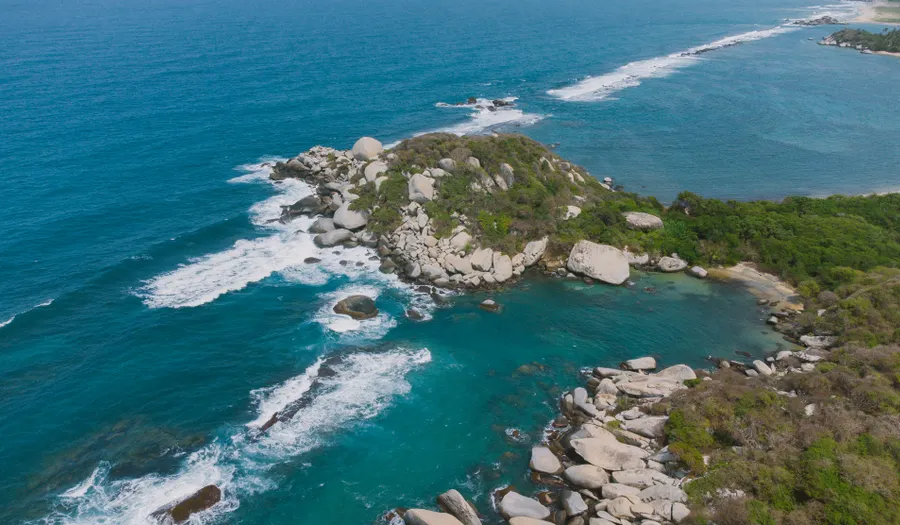
These are the first two beaches on the trail, and the most dangerous in the park. The open-sea swell rolls in unobstructed, the rip currents are violent and the seabed drops away sharply: swimming is strictly forbidden, with signs and flags to prove it. The park displays a tally of past drownings at the entrance to Arrecifes, and it is not there for decoration. You stop here for the raw beauty of the setting, the breakers exploding on the sand and the rounded granite boulders, not to cool off. Cañaveral is also home to the park's upmarket ecolodges and a mirador well worth the detour.
Piscina Natural
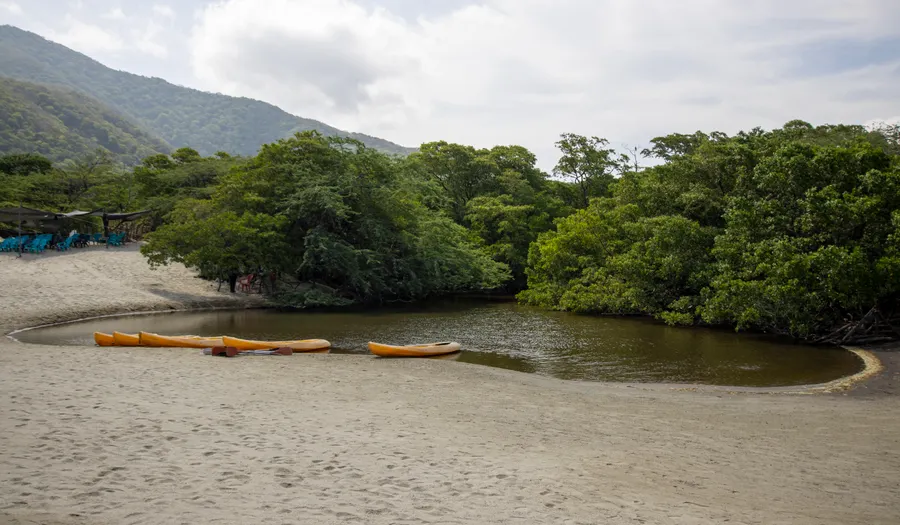
Between Arrecifes and Cabo San Juan, this cove lives up to its name: a barrier of rocks breaks the swell and turns the inlet into a translucent pool. It is the best spot in the eastern sector for a relaxed swim and some snorkelling, with parrotfish and small shoals of sergeant majors. It is far less crowded than Cabo San Juan, which is only thirty minutes further on. The water stays shallow for a good distance, making it suitable for families. A cold drinks seller usually comes by around midday.
Playa Cristal and Neguanje Bay

Tayrona's other face lies to the west, in the Neguanje sector, reached by a track from Santa Marta rather than by the trail. Playa Cristal is a small, sheltered beach with very clear water, which you reach by boat from Neguanje in about ten minutes. Visitor numbers are capped each day, which keeps the place breathable even in high season. It is the best snorkelling spot in the park, with a reef close to the shore. Allow a full day from Santa Marta, and be aware that the beach restaurants here are expensive for Colombia.
Pueblito Chairama

A steep hour's climb from Cabo San Juan, this Tayrona village of stone terraces was one of the major sites of the civilisation that gave the park its name. Circular platforms, paved stairways and water channels more than a thousand years old remain, in the middle of a cool, damp forest. Access has been restricted several times at the request of the indigenous communities who still live there, so check that it is open on the day. The climb is over slippery granite boulders and is far from a stroll. By heading down via Calabazo rather than the coast, you complete a full traverse of the park in one long day.
How many days, and which itinerary?
Two days with a night in the park are enough for the eastern sector and Cabo San Juan; three to four days let you add Neguanje, Playa Cristal and Pueblito without walking in the midday sun.
🗺️ Day-by-day itinerary · 📓 Free printable Tayrona National Park guide (PDF) · 🌍 All of Colombia
The express day (1 day)
Leave Santa Marta around 6.30 am, enter at El Zaino at opening time, take the shuttle to Cañaveral, then walk to Cabo San Juan with a swim stop at Piscina Natural. Return on the same trail in the early afternoon to be out before 5 pm. Doable, but you spend half the day walking.
A night in the park (2 days)
The same entry on day one, but you stop for the night at Cabo San Juan in a hammock or tent. The next morning the beach is empty before 9 am, and you can climb to Pueblito and then walk back down at a leisurely pace. The best ratio of effort to experience, as long as you accept basic conditions.
The whole park (4 days)
Two nights in the eastern sector for the trail, Cabo San Juan and Pueblito, then a full day on the Neguanje and Playa Cristal side starting from Santa Marta, and a final day at Bahía Concha or on the Palomino coast. The format that gives you time to understand the park's different environments.
Getting there and getting around
Local bus from the Mercado Público in Santa Marta to the El Zaino entrance: about 1 hour's drive for €2 to €3, with departures every 20 minutes from 5 am.
Inside the park, everything is done on foot or on horseback; a shuttle links the El Zaino entrance to the trailhead at Cañaveral, 3 km for about €1.
The western sector (Neguanje, Playa Cristal, Bahía Concha) has its own entrance and is reached by 4x4 or on an organised tour from Santa Marta, not from El Zaino.
Boat option from Taganga to Cabo San Juan, about 45 minutes for €25 to €35 return: fast but often cancelled due to rough seas, and hard on the stomach.
Where to stay in Tayrona National Park?
Hammock at the Cabo San Juan campsite: €11 to €16 a night, €16 for the hammock in the mirador on the rock, basic facilities and no electricity at night.
Tent for two at the same campsite or at Arrecifes: €35 to €45, online booking strongly advised in high season, as places go fast.
Cañaveral ecolodges, the famous ecohabs on stilts facing the sea: €250 to €400 a night, the only real comfort inside the park.
Hotels and hostels just outside, in Los Naranjos or Calabazo: €30 to €90, with air conditioning and a pool, handy for entering at opening time without getting up at 5 am.
What to eat in Tayrona National Park?
The Cabo San Juan restaurant is the only one in the area: fried fish, patacones and coconut rice for €10 to €15, decent but twice the price of Santa Marta.
Bring at least 2 litres of water per person, plus fruit and snack bars: there is nothing to buy along the 4 km between Cañaveral and Piscina Natural.
In Santa Marta or Taganga, cazuela de mariscos and ceviche de camarón cost around €8 to €12, with much fresher fish.
Arepa de huevo and limonada de coco are the two local go-tos, at €1 to €3 from any street stall on the Caribbean coast.
Entry requirements
No visa needed for stays of up to 90 days for EU, UK, US, Canadian and Australian passports, with proof of onward travel. Fill in the free Check-MIG form online between 72 hours and one hour before your flight.
Rules change: check your own government's travel advice before you go.
Frequently asked questions about Tayrona National Park
When is Tayrona National Park closed?
Three times a year, for ecological rest and the rituals of the Sierra peoples: from 1 to 15 February, from 1 to 15 June and from 19 October to 2 November. These dates are renewed year after year but confirmed only a few weeks beforehand, so check the Parques Nacionales website before booking your flights.
How long is the walk to Cabo San Juan?
About 2 hours from the trailhead at Cañaveral, which means 4.5 km each way. It is not mountainous, but the deep sand and heat make it harder going than advertised: set off at opening time, at 7 am.
Can you swim anywhere in the park?
No, and this is the key point. Swimming is forbidden at Arrecifes and Cañaveral because of currents that have caused many deaths. Swimming is allowed at Cabo San Juan, Piscina Natural, Playa Cristal and Bahía Concha, as long as you respect the flags.
Do you need to book your entry in advance?
Yes. Daily visitor numbers are capped and tickets are sold online, with a passport required. In December, January and during Semana Santa, the quota is reached early in the morning and queues start before 6 am.
Is it better to sleep inside the park or outside?
A night inside, in a hammock or tent, gives you deserted beaches at daybreak and is worth the discomfort. For a proper bed and air conditioning, stay in Los Naranjos or Calabazo, fifteen minutes from the El Zaino entrance.
Similar destinations
 Country
🇨🇦 Canada
 City
City🇨🇦 Charlevoix and Tadoussac
 Country
🇨🇷 Costa Rica
 Region
🇫🇷 The French Basque Country
 City
City🇮🇪 Donegal
 City
City🇮🇪 The Ring of Kerry
 City
City🇮🇪 Galway and Connemara
 Country
🇹🇿 Tanzania
 Country
🇧🇷 Brazil
 City
City