When to go to Tanzania?
→ The detailed month-by-month page, with real weather records
Best time: June to October and January to February
At a glance
Why go to Tanzania?
Tanzania is home to Africa's superlatives. The continent's highest peak, Kilimanjaro, stands alongside the greatest concentration of wildlife in the Serengeti and the intact crater of Ngorongoro, a true open-air Noah's Ark. Add the dreamy beaches of Zanzibar, and you have one of the most complete trips imaginable.
The Serengeti is not just one park among many: it is the stage for the greatest movement of land animals on earth. All year round, wildebeest and zebras loop across these endless plains, followed by predators. Witnessing a mass calving or a lioness hunt in this golden immensity is a life-defining experience.
Tanzania also knows how to slow the pace. After the dust of the tracks, Zanzibar offers the spice-scented alleys of Stone Town, its clove plantations and turquoise lagoons edged with dhows. This switch from safari to island paradise, without changing country, is what makes a successful Tanzanian trip so special.
Map of Tanzania: what is where?
The map shows the 6 places covered in this guide, to picture the distances and plan your route.
- Serengeti National Park
- Ngorongoro Crater
- Kilimanjaro
- Zanzibar (Stone Town)
- Tarangire National Park
- Lake Manyara
How much does a trip to Tanzania cost?
Tanzania is one of the most expensive safari destinations in Africa, because of high park entrance fees.
| Style | Per day | What it covers |
|---|---|---|
| Backpacker | €70-110/day | shared group safaris, budget camps and local transport |
| Comfort | €200-300/day | comfortable lodges, private 4x4 safaris and domestic flights |
| Premium | €500+/day | luxury mobile camps, light aircraft flights and top-end service in the Serengeti |
The Tanzanian shilling is used day to day; recent dollar notes are required for the parks and widely accepted.
Is Tanzania safe?
Tanzania is a safe destination for safaris and Zanzibar, with a welcoming population. Stay alert to petty theft in Arusha, Dar es Salaam and Stone Town, and dress modestly on Zanzibar, a predominantly Muslim island. Health-wise, malaria is present throughout the country except at high altitude: antimalarial prophylaxis is strongly recommended, along with repellent and covering clothes in the evening. The yellow fever vaccination is required if you arrive from an at-risk country, including Kenya if you have a stopover there. Bring hepatitis A, typhoid and routine vaccinations up to date, and take out repatriation insurance, essential for Kilimanjaro.
What to see and do in Tanzania
- Serengeti National Park
- Ngorongoro Crater
- Kilimanjaro
- the beaches of Zanzibar
- Stone Town
Serengeti National Park
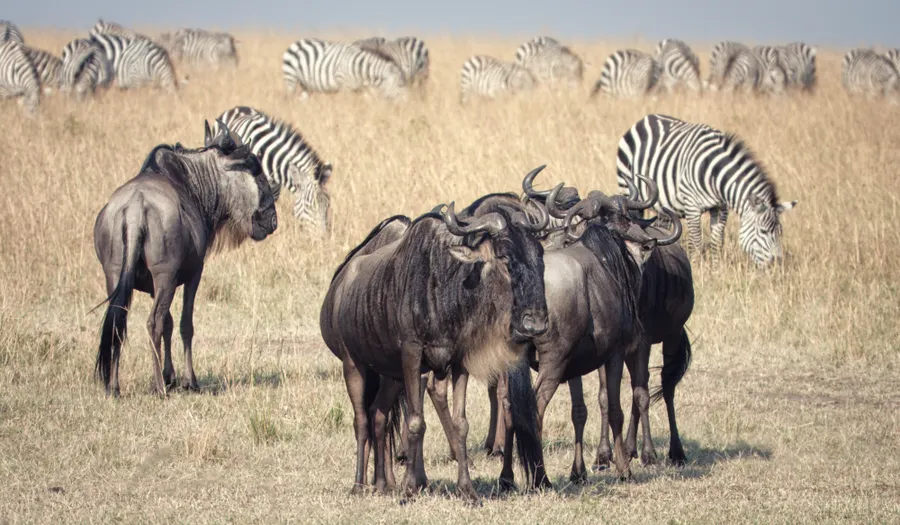
Its endless plains host the greatest animal migration on the planet, a perpetual cycle of wildebeest and zebras followed by lions, cheetahs and hyenas. Depending on the season, you look for the herds in the south for the births or in the north for the river crossings. The kopjes, rocky outcrops, serve as perches for the big cats. A hot-air balloon flight at dawn reveals the sheer scale of the place.
Ngorongoro Crater

This caldera, twenty kilometres in diameter, concentrates exceptional wildlife on its green floor. You descend in the morning to watch black-maned lions, black rhinos, elephants and the flamingos of Lake Magadi in a single day. The crater walls, often wreathed in mist, create an unreal setting. The Maasai graze their cattle here among the wild animals, a coexistence unique in the world.
Kilimanjaro 5 828 m

The roof of Africa rises to 5,895 metres, reachable on foot without technical equipment but at the cost of real effort. The climb via the Machame or Marangu route takes five to seven days, through tropical forest, moorland and alpine desert up to the summit glaciers. Reaching Uhuru Peak at sunrise is an unforgettable emotion. Good acclimatisation and a licensed guide are essential.
Zanzibar

The Spice Islands blend Swahili history with postcard beaches. You get lost in the labyrinthine alleys of UNESCO-listed Stone Town, among carved doors and fragrant markets. The beaches of the north and east, Nungwi or Paje, unroll white sand and turquoise lagoons perfect for diving and kitesurfing. A visit to a spice plantation completes the immersion.
Tarangire National Park
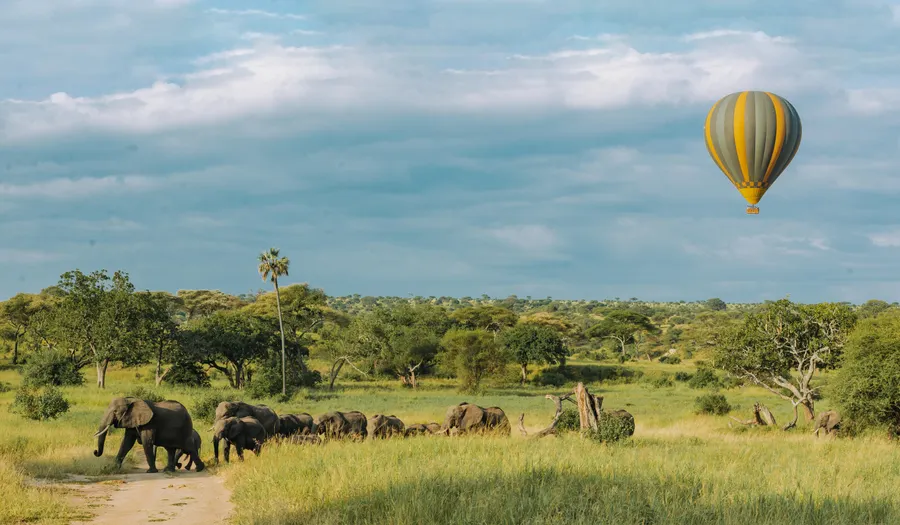
Famous for its majestic baobabs and huge herds of elephants, Tarangire offers a more intimate safari than the Serengeti. In the dry season, the river draws abundant wildlife to drink, including big cats and remarkable birdlife. The semi-arid landscapes dotted with ancient baobabs are photogenic at any hour. An often underrated stop on the northern circuit.
Lake Manyara
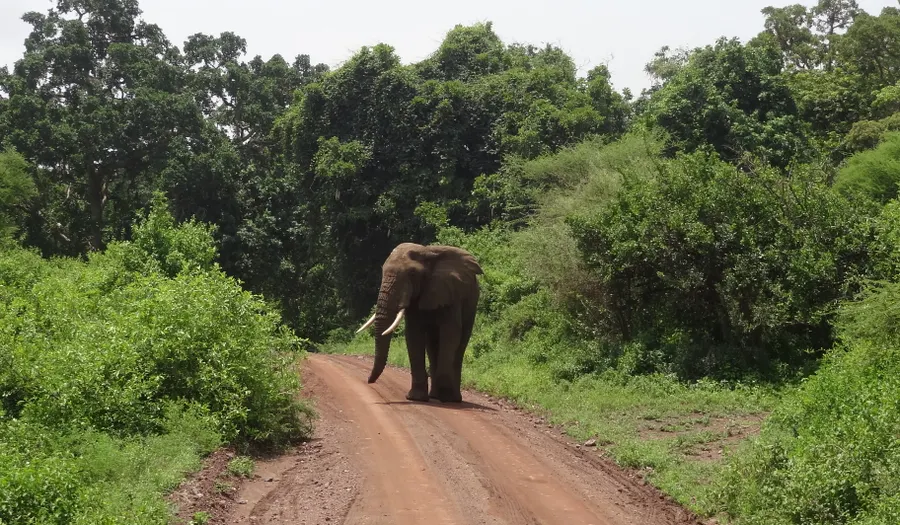
Nestled at the foot of the Rift escarpment, this compact park mixes forest, alkaline lake and savannah in a small area. You look for the famous tree-climbing lions lounging in the acacias, and watch clouds of pink flamingos and hippos. The density of elephants and baboons is high. Half a day is enough, often at the start of the northern circuit.
How many days, and which itinerary?
Around ten days for the northern circuit, two weeks if you add the Kilimanjaro climb or Zanzibar.
🗺️ Day-by-day itinerary · 📓 Free printable Tanzania guide (PDF)
Classic northern circuit (8 days)
From Arusha, take in Tarangire, Lake Manyara, the Serengeti and Ngorongoro Crater one after another. This compact circuit brings together the country's most spectacular parks and gives a complete overview of Tanzanian wildlife.
Safari and Zanzibar (13 days)
A week of safari on the northern circuit, then a flight to Zanzibar for five days of beach, diving and exploring Stone Town. The ideal combination of savannah and Indian Ocean, without changing country.
Kilimanjaro climb (7 days)
Seven days devoted to climbing the roof of Africa via the Machame route, known for its varied scenery and good acclimatisation. A physical and mental adventure rewarded by sunrise over the glaciers of Uhuru Peak.
Getting there and getting around
Safari by 4x4 with a driver-guide, practically compulsory on the northern circuit's demanding tracks.
Light domestic flights to the Serengeti and Zanzibar save long hours on the road.
From Arusha, the starting point for safaris, transfers are by private vehicle or shuttle.
On Zanzibar, taxis, dala-dalas (local minibuses) and scooter hire for exploring the island.
Where to stay in Tanzania?
Campsites and budget lodges around the parks: €25-50 a night, often in a tent or simple banda.
Mid-range tented camps and lodges: €100-220 per person, meals included.
Luxury mobile camps deep in the Serengeti: €350-800 per person, all inclusive.
Resorts and guesthouses on Zanzibar: €40-250 a room depending on the beach and standard.
Our places to stay, stop by stop, at three budgets →
What to eat in Tanzania?
Nyama choma, grilled meat served with ugali, a convivial dish eaten all over the country.
Zanzibar curries and pilau, fragrant with cloves, cardamom and coconut milk.
Zanzibar mix (urojo), a sweet-and-sour street-food soup, and grilled seafood from the Forodhani market.
Mandazi, a lightly spiced doughnut, and fresh tropical fruit enjoyed everywhere.
Entry requirements
A visa is needed by EU, UK, US, Canadian and Australian passports. Apply for the e-visa online before you go; single-entry visas are also issued on arrival at the main entry points. US citizens must take the multiple-entry visa. Zanzibar adds its own compulsory travel insurance, bought online from the Zanzibar Insurance Corporation: no other policy is accepted.
Rules change: check your own government's travel advice before you go.
Cities and regions to discover
 Region
🇹🇿 Kilimanjaro
 Region
🇹🇿 The Serengeti
Frequently asked questions about Tanzania
When is the best time to go?
The dry season from June to October is ideal for safaris and climbing Kilimanjaro. The Serengeti river crossings take place from July to September, and the wildebeest calving around January-February in the south. Avoid the long rains of April-May.
What budget should I plan for a safari?
Tanzania is expensive: park entrance fees alone reach $60-80 a day. A group safari starts at around €200 a day all inclusive, and the luxury camps of the Serengeti exceed €600 a night.
Do I need antimalarial treatment?
Yes, malaria is present throughout the country except at high altitude, including the Serengeti, Tarangire and Zanzibar. Antimalarial prophylaxis is strongly recommended, combined with repellent and covering clothes at dusk. Visit a travel vaccination clinic before you leave.
Can you climb Kilimanjaro without experience?
Yes, no mountaineering technique is required, but good physical fitness and gradual acclimatisation are essential to cope with altitude sickness. Choose a six- or seven-day route rather than the shortest one, and you must go through an agency with a licensed guide.
Similar destinations
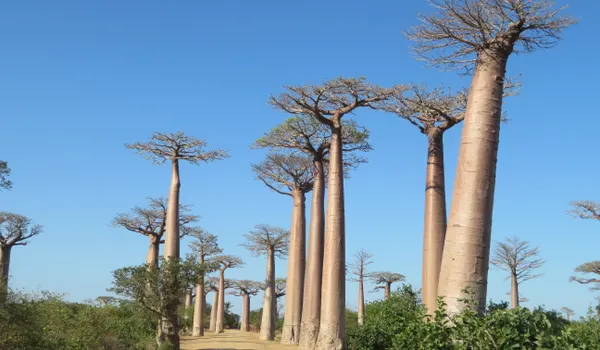 Country
🇲🇬 Madagascar
 City
City🇮🇩 Bali
 Country
🇵🇭 The Philippines
 City
City🇮🇩 Lombok
 Region
🇪🇬 The Egyptian Red Sea
 City
City🇲🇬 Nosy Be
 City
City🇵🇭 El Nido
 City
City🇲🇾 Langkawi
 Region
🇫🇷 Brittany
 Region