When to go to Bali?
→ The detailed month-by-month page, with real weather records
Best time: April to October
At a glance
Why go to Bali?
Bali packs into a single island a diversity of landscapes and experiences rare anywhere in the world. Dazzling green terraced rice fields, smoking volcanoes, temples suspended above the ocean and black or golden sand beaches follow one another within a few kilometres. The Island of the Gods lives up to its nickname, so deeply does spirituality permeate every gesture of daily life.
Balinese culture, deeply Hindu at the heart of a Muslim Indonesia, fascinates with its vitality. Flower offerings laid out every morning, ritual dances, gamelan and colourful ceremonies set the rhythm of village life. This gentle devotion, combined with the legendary kindness of the islanders, creates a soothing, enveloping atmosphere.
Bali can also be modern and vibrant, with its trendy spots, world-famous surf breaks and thriving wellness scene. Ubud draws yoga and nature lovers, while the south concentrates lively beaches and nightlife. Everyone builds their own trip here, between lazing about, adventure and inner searching.
Map of Bali: what is where?
The map shows the 6 places covered in this guide, to picture the distances and plan your route.
- Tegalalang rice terraces
- Tanah Lot temple
- Ubud
- Mount Batur
- Uluwatu temple
- Seminyak and Canggu beaches
How much does a trip to Bali cost?
Bali offers excellent value for money, with a range running from very cheap to the height of luxury. Villa accommodation remains surprisingly affordable.
| Style | Per day | What it covers |
|---|---|---|
| Backpacker | €25-45/day | Guesthouse, local warungs and a rented scooter |
| Comfort | €70-130/day | Villa with a pool, varied restaurants and an occasional driver |
| Premium | €250+/day | Luxury villa with staff, spa and private excursions |
Withdraw rupiah from official cash machines and be wary of money changers advertising rates that look too good.
Is Bali safe?
Bali is a generally safe destination, but a few precautions are in order. Scooter accidents are the leading cause of injury among travellers: always wear a helmet and avoid riding without experience. Watch out for bag snatching from passing two-wheelers and for scams at money changers or rental outlets. Respect local customs in the temples: wear a sarong and cover your shoulders. When swimming, watch the flags, as some currents are dangerous.
What to see and do in Bali
- the Tegalalang rice terraces
- Uluwatu temple
- Ubud
- the beaches of Seminyak
- Mount Batur
Tegalalang rice terraces
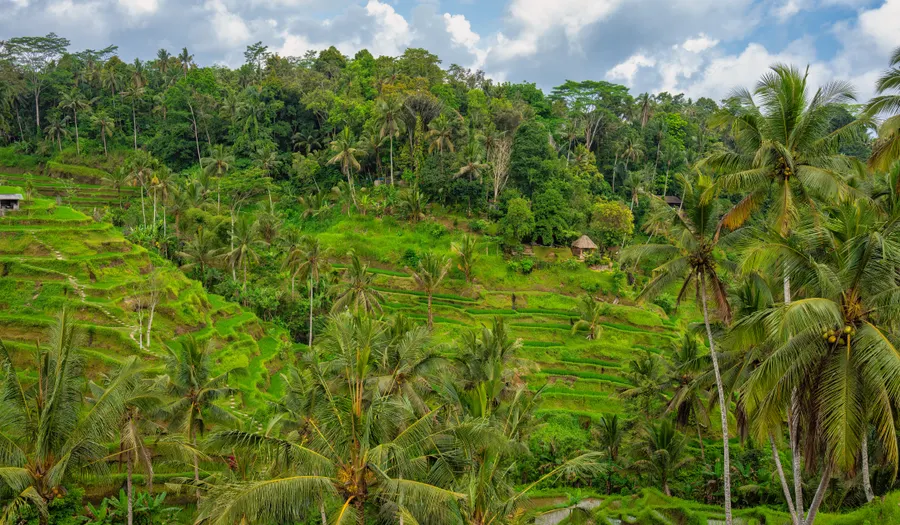
These rolling terraces near Ubud embody the iconic image of the Balinese countryside. Carved into the hillside according to the traditional subak irrigation system, they offer a spectacular gradient of greens. Paths lead down into the heart of the rice fields for the perfect photo. Giant swings and hilltop cafés now liven up the site, which is very popular at sunrise.
Tanah Lot temple

Perched on a wave-battered rock, this sea temple is one of the most photographed sights in Bali. At low tide you can approach it on foot, while high tide cuts it off spectacularly. The sunset behind its silhouette draws crowds of admirers every evening. It is a major sacred site, dedicated to the guardian spirits of the sea.
Ubud

The cultural and spiritual capital of Bali, Ubud charms with its lush setting and peaceful atmosphere. Craft workshops, art galleries, yoga studios and vegetarian cafés abound. The Monkey Forest and the Royal Palace rank among its star attractions. It is the ideal starting point for exploring the rice fields and volcanoes of the island's interior.
Mount Batur volcano

This still-active volcano offers one of the most popular hikes in Bali. The night-time ascent gets you to the summit in time for an unforgettable sunrise above the clouds. The panorama takes in the crater lake with Mount Agung as a backdrop. Hot springs and summit cafés reward the efforts of early-morning walkers.
Uluwatu temple
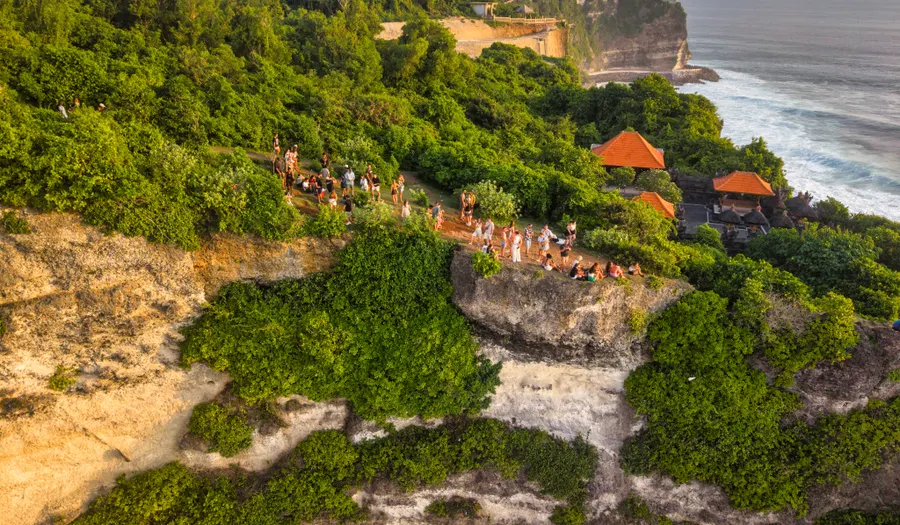
Clinging to a dizzying cliff in the south of the island, this temple towers some hundred metres above the Indian Ocean. Every evening, a spectacular kecak dance is performed here facing the sunset. Mischievous macaques roam the site, so keep an eye on your glasses and shiny objects. The surf beaches below rank among the most beautiful in Bali.
Seminyak and Canggu beaches

These south-western resorts embody trendy, party-loving Bali. Beach clubs, fashionable restaurants and surf spots attract an international crowd. Sunsets on the sand, cocktail in hand, are an institution. Canggu, more laid-back, appeals to surfers and digital nomads from all over the world.
How many days, and which itinerary?
Allow at least 7 to 10 days to sample Bali's diversity without turning the stay into a race.
🗺️ Day-by-day itinerary · 📓 Free printable Bali guide (PDF) · 🌍 All of Indonesia
Bali essentials (7 days)
Split your time between three nights in Ubud for culture and the rice fields, and four nights in the south for the beaches. Fit in a climb of Mount Batur and the sunset at Tanah Lot.
Bali and wellbeing (10 days)
Add days in Ubud for yoga, spas and waterfalls, then head to the Bukit Peninsula for Uluwatu. Finish with some beach relaxation in Seminyak or Canggu.
Bali and the islands (14 days)
Round off the island tour with a getaway to Nusa Penida or the nearby Gili Islands. Diving, snorkelling and wild beaches enrich this fuller, water-based circuit.
Getting there and getting around
Scooter hire is king in Bali, but best left to experienced riders
The Grab and Gojek apps work well, except in certain restricted areas
Hiring a car with a driver for the day remains very affordable and comfortable
Distances look short, but heavy traffic lengthens journeys considerably
Where to stay in Bali?
Guesthouses and hostels: €8 to €20 a night depending on comfort
Villas with a shared pool: €40 to €80 a night
Charming resorts in Ubud or by the sea: €100 to €200 a night
Luxury private villas with staff: €300 and up a night
Our places to stay, stop by stop, at three budgets →
What to eat in Bali?
Nasi goreng, spicy fried rice, is the unmissable everyday dish
Babi guling, roast suckling pig, is a festive Balinese speciality
Warungs, small local restaurants, serve tasty meals at low prices
The healthy cafés of Ubud and Canggu delight fans of smoothie bowls
Entry requirements
Visa on arrival for EU, UK, US, Canadian and Australian passports: 30 days, paid on landing or bought online beforehand as an e-VOA.
Rules change: check your own government's travel advice before you go.
Frequently asked questions about Bali
When is the best time to visit Bali?
The dry season, from April to October, brings the best weather, while the monsoon brings rain and humidity from November to March.
How many days should you spend in Bali?
Allow at least seven to ten days to combine culture, rice fields and beaches without rushing.
What daily budget for Bali?
Plan on €25 to €45 a day as a backpacker and €70 to €130 for a comfortable stay in a villa.
How do you get around Bali?
A scooter gives seasoned riders the most freedom; otherwise, a car with a driver or the Grab and Gojek apps are ideal.
Which area should you stay in in Bali?
Ubud suits lovers of nature and culture, while Seminyak and Canggu appeal to beach and nightlife fans.
Similar destinations
 City
City🇯🇵 Miyajima
 Country
🇹🇿 Tanzania
 Country
🇱🇰 Sri Lanka
 Country
🇵🇭 The Philippines
 City
City🇯🇵 Nara
 City
City🇬🇷 Corfu
 Region
🇬🇷 The Cyclades
 City
City🇮🇩 Lombok
 City
City🇵🇭 El Nido
 City
City