When to go to Indonesia?
→ The detailed month-by-month page, with real weather records
Best time: May to September
At a glance
Why go to Indonesia?
A country that isn't really one, but an archipelago of thousands of islands scattered along the equator. You move from one culture to another, from a volcano to a beach, from a Hindu temple to a mosque, without ever exhausting the variety. It is paradise for travellers who love island-hopping.
Bali grabs the attention, and rightly so: terraced rice fields, temples tucked into the jungle, daily ceremonies and an easy-going way of life. But stopping at Bali means ignoring everything else: the volcanoes of Java, the Komodo dragons and some of the richest underwater worlds on the planet.
And then the budget changes everything. You travel here for a fraction of what an equivalent trip would cost elsewhere, with well-kept rooms, fragrant cooking and cheap journeys. Enough to treat yourself to time, the most precious commodity on any trip.
Map of Indonesia: what is where?
The map shows the 6 places covered in this guide, to picture the distances and plan your route.
- Bali (Ubud)
- Borobudur
- Mount Bromo
- Gili Islands
- Komodo
- Yogyakarta
How much does a trip to Indonesia cost?
One of the destination's great assets: you can travel comfortably for little. Allow between €30 and €60 per person per day, more if you take lots of domestic flights and boat trips.
| Style | Per day | What it covers |
|---|---|---|
| Backpacker | €20-35/day | Homestays and guesthouses, meals in warungs, scooter and local transport. |
| Comfort | €50-80/day | Charming hotels or a shared villa, car with driver, a few guided excursions and good restaurants. |
| Premium | €150/day and up | Seafront resorts, a private cruise to Komodo, spa and refined dining. |
Always carry cash, as many small shops and warungs do not take cards. Cash machines are common in the cities but rare on remote islands; withdraw before heading to out-of-the-way places.
Is Indonesia safe?
Indonesia is a relaxed place to travel, with the usual precautions against petty theft and extra care on the road, where traffic can be surprising. Scooter accidents are by far the biggest risk of the trip: ride carefully, wear a helmet and check that your insurance covers you. Watch out too for strong currents on some beaches and for dehydration in the tropical climate.
What to see and do in Indonesia
- Bali
- the volcanoes of Java
- Borobudur temple
- the Gili Islands
- Komodo
Bali
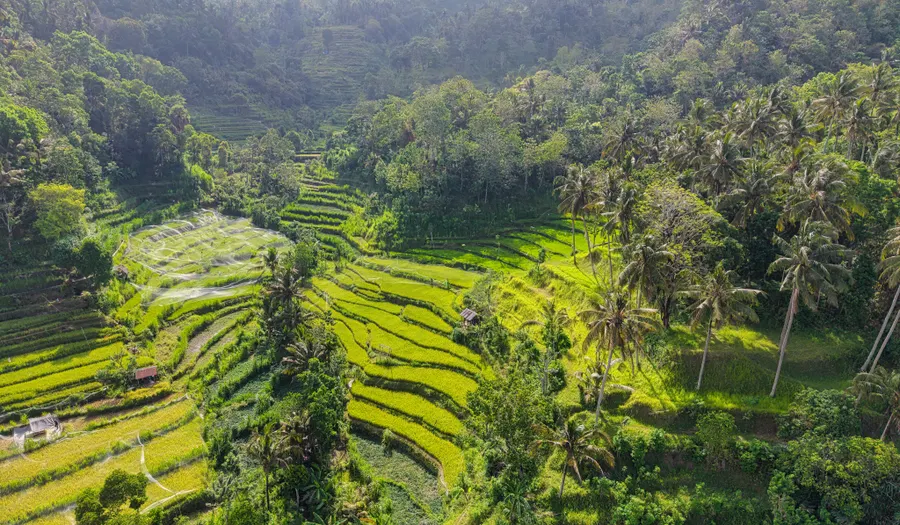
The island that made the archipelago's reputation, and deserves it despite the crowds. Ubud plunges into jungle and rice fields, the south lines up beaches and surf spots, the east keeps quieter villages. Temples set the rhythm of the day, to the sound of offerings laid on every doorstep. It is easy to stay longer than planned.
Java and its volcanoes
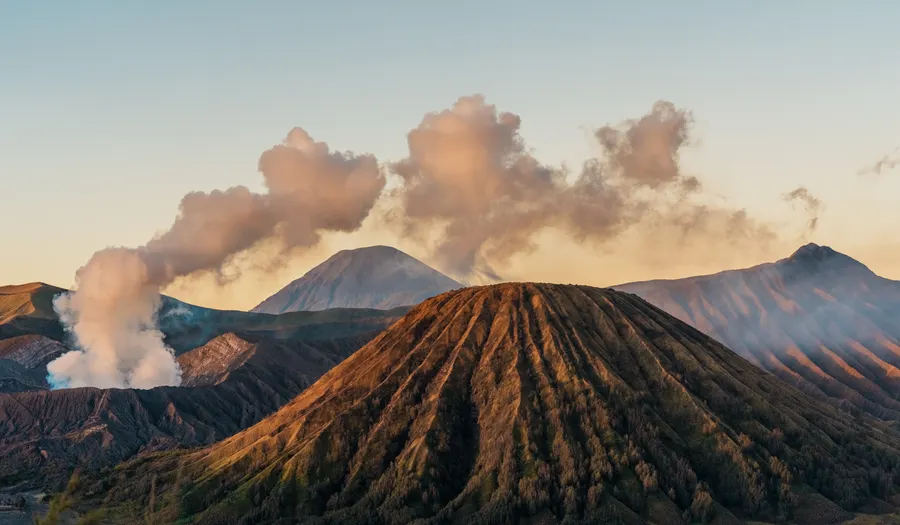
The most populous island hides spectacular landscapes. You climb Bromo by night to watch the sun pierce the sea of clouds, brave the sulphur fumes and blue fire of Ijen, and cross rice fields and frenetic cities. This is the raw, volcanic side of Indonesia, less picture-postcard but unforgettable.
Borobudur

The largest Buddhist temple in the world, set in the middle of Java among rice fields and volcanoes. You climb it before dawn to watch the mist lift between the stupas and the sun wake the stone bas-reliefs. The spiralling ascent reads like a path of initiation. A moment out of time, best experienced early in the morning to avoid the heat and the crowds.
The Gili Islands

Three small islands off Lombok, with no cars or scooters, where you get around on foot or by horse-drawn cart. The turquoise water shelters turtles and coral within snorkelling reach, and evening falls with poster-worthy sunsets. Gili Trawangan parties, its neighbours cultivate calm. Lazing about becomes an activity in its own right.
Komodo and Flores

The wild east of the archipelago, where Komodo dragons rule over arid, golden islands. You approach them on foot with a ranger, then dive into astonishingly rich waters and sail between savannah-coloured hills. Neighbouring Flores unrolls traditional villages and multicoloured volcanic lakes. A rougher, more remote Indonesia, and all the more memorable for it.
Yogyakarta
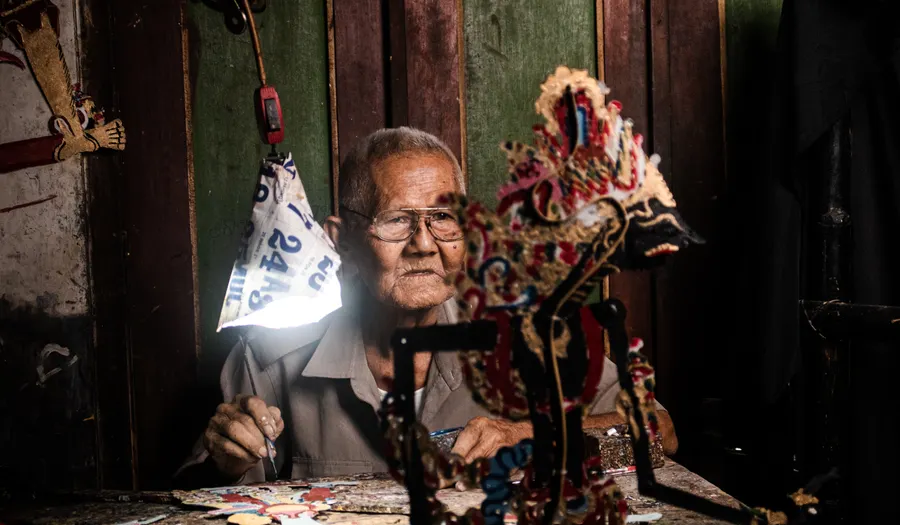
The cultural heart of Java, a city of artists, batik and shadow puppetry. It makes an ideal base for trips to Borobudur and the Hindu temple of Prambanan, both within easy driving distance. Its streets teem with warungs and markets, and its Sultan's Palace tells the country's history. This is where you feel the pulse of a lively, endearing Java.
How many days, and which itinerary?
Allow three weeks to combine Bali, Java and the eastern islands without spending all your time in transit, or two weeks if you focus on Bali and its neighbours.
🗺️ Day-by-day itinerary · 📓 Free printable Indonesia guide (PDF)
Bali and the nearby islands, 15 days
Ubud and its rice fields, the quieter east, then the Gilis or Nusa Penida for diving and beaches. You get around by scooter or by car with a driver, and take local ferries between the islands. A gentle itinerary, perfect for a first trip to the archipelago, with no exhausting journeys.
Volcanic Java, 12 days
Yogyakarta and Borobudur for culture, then east towards Bromo and Ijen for volcanic sunrises, before reaching Bali by ferry. Plenty of road time and a few short nights before the climbs, but some of the most powerful landscapes in Asia. Best kept for travellers happy to get up early.
Bali-Java-Komodo grand tour, 21 days
The archipelago in a nutshell: culture in Java, gentleness in Bali, adventure in Komodo. You string together domestic flights to cover the distances and finish with a cruise of a few days between the eastern islands. Packed but complete, for anyone with three weeks who wants the full range.
Getting there and getting around
Domestic flights link the main islands quickly and cheaply; they save precious time given the sea distances.
Ferries and fast boats run between Bali, Lombok, the Gilis and the eastern islands, but stay flexible, as timetables slip easily.
Locally, the scooter remains king for short distances, provided you have some experience and a helmet; otherwise, a car with a driver for the day is very reasonably priced.
Ride-hailing apps work well in the cities and spare you haggling over fares, where they are permitted locally.
Where to stay in Indonesia?
Family guesthouses and small homestays offer clean rooms for a few euros, often with breakfast and a warm welcome.
Bali is packed with villas with pools at unbeatable rates compared with Europe, ideal for groups.
On the remote islands, the choice becomes simpler: beachfront bungalows, basic comfort but a dream setting.
Book your first nights on arrival, then go with the flow; improvising remains easy and cheap across the archipelago.
Our places to stay, stop by stop, at three budgets →
What to eat in Indonesia?
Nasi goreng and mie goreng, fried rice and fried noodles, everyday dishes you never tire of ordering.
Satay, grilled skewers smothered in peanut sauce, served everywhere in street warungs.
Rendang and gado-gado, one slow-cooked and spicy, the other a vegetable salad with peanut sauce, two Indonesian classics.
Tropical fruit in abundance, mangosteen, rambutan, dragon fruit, to taste at the morning markets.
Entry requirements
Visa on arrival for EU, UK, US, Canadian and Australian passports: 30 days, paid on landing or bought online beforehand as an e-VOA.
Rules change: check your own government's travel advice before you go.
Cities and regions to discover
 City
City🇮🇩 Bali
 City
City🇮🇩 Java
 City
City🇮🇩 Komodo
 City
City🇮🇩 Lombok
Frequently asked questions about Indonesia
When is the best season to go?
The dry season, from May to September, brings the clearest skies and the calmest seas for diving. The rainy season does not stop you travelling but brings more downpours, often brief and tropical.
Do you need any particular vaccinations?
None is compulsory for entry, but up-to-date routine vaccinations and protection against mosquitoes are strongly advised. Ask a travel health clinic for advice before you leave, depending on your itinerary.
Can you drink the tap water?
No, it is better to stick to bottled or filtered water, including for brushing your teeth. A filter bottle cuts down on plastic waste, a real local scourge.
Is Bali enough for a first trip?
Bali already offers great variety between rice fields, temples and beaches, and is perfectly suited to a first trip. But if time allows, a hop to Java or the Gilis reveals a completely different side of the archipelago.
Similar destinations
 Country
🇱🇰 Sri Lanka
 Country
🇹🇭 Thailand
 City
City🇹🇭 Chiang Mai
 Country
🇻🇳 Vietnam
 Country
🇮🇳 Kerala
 Country
🇱🇦 Laos
 Region
🇦🇺 Tasmania
 City
City🇵🇭 Cebu
 Region