When to go to Laos?
→ The detailed month-by-month page, with real weather records
Best time: November to March
At a glance
Why go to Laos?
Laos moves out of step with the rest of Southeast Asia, and that is precisely its charm. Here people still often say bo pen yang, 'never mind', as a philosophy of life. A landlocked country with no coastline, it makes up for the lack of beaches with misty mountains, a majestic Mekong and a slowness that has become rare.
In Luang Prabang, every dawn brings a procession of saffron-robed monks receiving alms of rice in reverent silence. Theravada Buddhism permeates everything, from the golden temples to everyday gestures. It is a country where spirituality is not a backdrop but a way of breathing.
Once the most heavily bombed country in history, Laos still bears the scars of the Vietnam War, but it turns them into memory and resilience. Far from the crowds, travellers find a more intimate, greener Asia, where the river sets the pace of time. You come here to slow down, and you leave transformed.
Map of Laos: what is where?
The map shows the 6 places covered in this guide, to picture the distances and plan your route.
- Luang Prabang
- Vang Vieng
- Plain of Jars
- Si Phan Don, 4,000 Islands
- Vientiane
- Kuang Si Falls
How much does a trip to Laos cost?
Laos is one of the cheapest destinations in Southeast Asia. Accommodation, meals and transport stay gentle for every budget.
| Style | Per day | What it covers |
|---|---|---|
| Backpacker | €20-30/day | Guesthouses, street canteens, local buses and shared slow boats. |
| Comfort | €45-75/day | Air-conditioned double room, restaurants, guided excursions and the fast train. |
| Premium | €120+/day | Boutique hotels, a private Mekong cruise and comfortable transfers. |
Lao kip can be withdrawn from ATMs in the towns, but keep cash on hand, as the countryside and the islands often accept neither cards nor withdrawals.
Is Laos safe?
Laos is a calm, safe country with low crime against travellers, though it still pays to keep an eye on your belongings. Malaria is present in rural and forested areas, especially in the south: preventive treatment is worth discussing depending on your itinerary, and mosquito protection is essential against both malaria and dengue. In regions scarred by war (the Plain of Jars, the countryside), never leave marked paths because of unexploded ordnance. Finally, be wary of swimming in the Mekong, whose currents can be treacherous.
What to see and do in Laos
- the temples of Luang Prabang
- Kuang Si Falls
- a Mekong cruise
- the Plain of Jars
- Vang Vieng and its caves
Luang Prabang

A former royal capital and World Heritage Site, Luang Prabang enchants with its golden temples, colonial lanes and its peninsula wedged between the Mekong and the Nam Khan. At dawn you can witness the tak bat, the silent offering to the monks, a moment of great intensity. Mount Phousi offers a superb panorama at sunset. French-style cafés and craft workshops invite you to wander without a watch.
Vang Vieng

Set in spectacular karst scenery, Vang Vieng has swapped its party reputation for a more outdoorsy, active image. You float down the Nam Song river on a tube, explore caves and drift over the rice paddies in a hot-air balloon at sunrise. The blue lagoons nearby offer refreshing swims. In the evening, terraces facing the mountains make a soothing picture.
The Plain of Jars
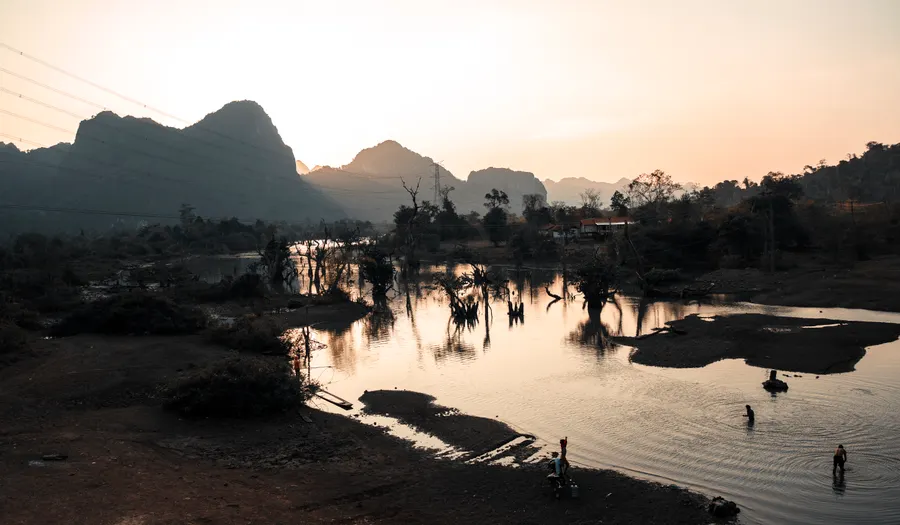
Thousands of huge stone jars more than two thousand years old lie scattered across the Xieng Khouang plateau, and their purpose remains an archaeological mystery. Site 1, the most accessible, holds hundreds of them. The region still bears the marks of the bombing of America's Secret War. You travel here off the beaten track, for the enigma and the history.
Si Phan Don, the 4,000 Islands

In the far south, the Mekong widens and breaks up into a myriad of islets, the 4,000 Islands. On Don Det and Don Khon, time stands still: hammocks, bicycles, sunsets over the river and an unhurried rhythm. You may spot the rare Irrawaddy dolphins and discover the impressive Khone Phapheng Falls. It is a paradise for total disconnection.
Vientiane

Probably the most peaceful capital in Asia, Vientiane cultivates an old-fashioned, provincial charm along the Mekong. You visit the golden That Luang, a national symbol, the Patuxai, which recalls the Arc de Triomphe, and many temples. The night market and riverside cafés set the rhythm of the evenings. A gentle stop, often the starting or finishing point of a trip.
Kuang Si Falls
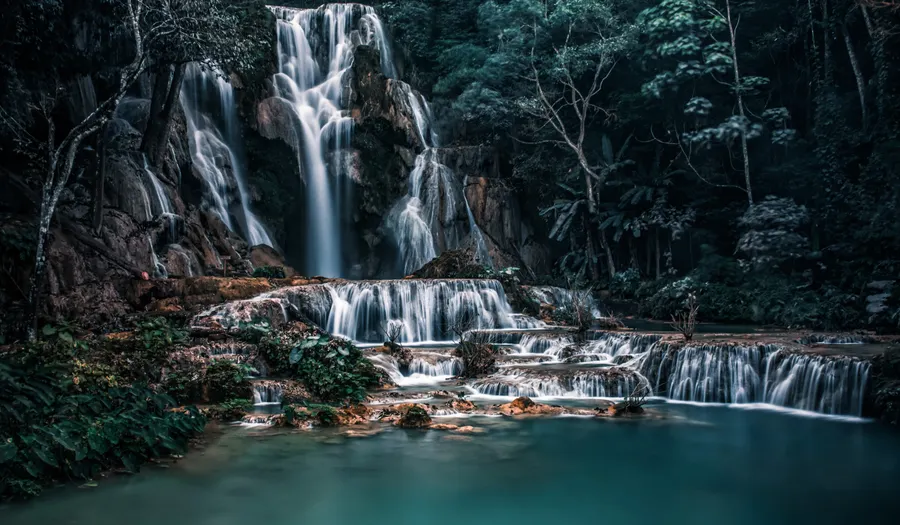
Some thirty kilometres from Luang Prabang, these tiered falls tumble down a series of pools of an unreal milky turquoise. You swim between the basins and climb to the top on a jungle path. At the entrance to the site, a sanctuary takes in Asiatic black bears rescued from poachers. Come early in the morning to enjoy the clear water before the crowds.
How many days, and which itinerary?
Ten days to two weeks are enough to link the cultural north (Luang Prabang, Vang Vieng) with the river-bound south (the 4,000 Islands) without rushing.
🗺️ Day-by-day itinerary · 📓 Free printable Laos guide (PDF)
Northern essentials (8 days)
Settle into Luang Prabang for its temples and Kuang Si, head up to Nong Khiaw and its karst landscapes, then on to Vang Vieng for gentle adventure before Vientiane. A concentrate of culture and nature.
From north to south (15 days)
Travel down the country from Luang Prabang to Vientiane, continue to the Bolaven Plateau and its coffee plantations, then end up floating in the 4,000 Islands. The complete itinerary for grasping the diversity of Laos.
Mekong cruise (5 days)
Board at Huay Xai, on the Thai border, for two days drifting slowly down the Mekong to Luang Prabang, with a night in Pakbeng. A contemplative, timeless introduction.
Getting there and getting around
Buses and minivans link the main towns, but the mountain roads are winding and journeys often take longer than expected.
The new high-speed train now links Vientiane to Luang Prabang and the Chinese border in a few hours, comfortable and fast.
Slow boats on the Mekong offer a picturesque alternative, notably between Huay Xai and Luang Prabang.
Rent a bicycle or a scooter in the towns and on the islands to explore at your own pace, as traffic remains very quiet.
Where to stay in Laos?
Guesthouses and backpacker dorms: €5 to €12 a night, simple and welcoming, very common in Luang Prabang and Vang Vieng.
Comfortable double rooms in a guesthouse or small hotel: €20 to €40, often with air conditioning and breakfast.
Boutique hotels in renovated colonial buildings: €50 to €100, particularly appealing in Luang Prabang.
Upmarket addresses and eco-lodges on the banks of the Mekong: €130 and up, for a refined immersion in nature.
Our places to stay, stop by stop, at three budgets →
What to eat in Laos?
Laap (or larb), a minced-meat salad spiked with herbs, lime, chilli and toasted rice, the emblematic dish.
Khao niao, sticky rice steamed and served in a woven basket, the base of every Lao meal.
Tam mak hoong, green papaya pounded Lao-style, spicier and more fragrant than its Thai cousin.
Luang Prabang khao soi, a noodle soup in a fragrant broth topped with pork and herbs, not to be confused with the Thai dish of the same name.
Entry requirements
A visa is required for EU, UK, US, Canadian and Australian passports, with rare exceptions (Luxembourg passports get a short visa-free stay). Apply online for an e-visa a few days before travel, or get a visa on arrival at the main airports and the Friendship Bridges. Both give 30 days, and the passport must be valid six months beyond arrival.
Rules change: check your own government's travel advice before you go.
Cities and regions to discover

Frequently asked questions about Laos
When is the best time to visit Laos?
The cool, dry season from November to February is the most pleasant, with a mild climate. Avoid the rainy season from June to September and the haze from agricultural fires from March to April in the north.
What daily budget should I plan?
Laos is very affordable: €20 to €30 a day is enough as a backpacker, and €45 to €75 buys real comfort. Guided excursions and the fast train are the main extras.
How do I get around Laos?
The new high-speed train efficiently links Vientiane, Vang Vieng and Luang Prabang. For the rest, buses, minivans and slow boats on the Mekong make up most journeys, at a leisurely pace.
Is Laos a safe country?
Yes, Laos is known for being calm and welcoming, with very low crime against tourists. The main precaution concerns unexploded ordnance: do not leave marked paths in rural areas.
Similar destinations
 City
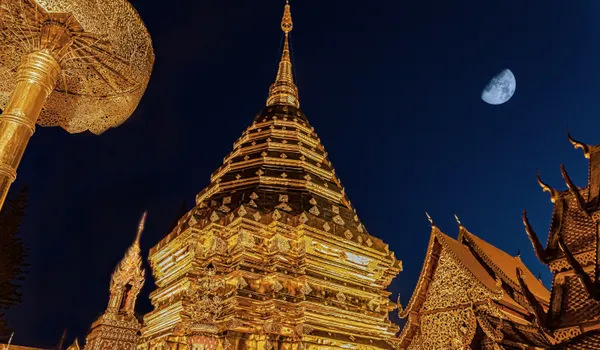
City🇹🇭 Chiang Mai
 Country
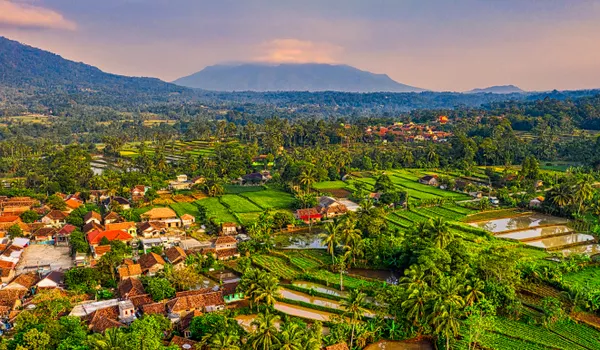
🇮🇩 Indonesia
 Country
🇱🇰 Sri Lanka
 Country
🇻🇳 Vietnam
 Country
🇳🇵 Nepal
 Country
🇮🇳 Kerala
 Country
🇬🇪 Georgia
 City
City🇬🇹 Lake Atitlán
 City
City🇮🇩 Java
 City
City