When to go to Luang Prabang?
→ The detailed month-by-month page, with real weather records
Best time: November to February
At a glance
Why go to Luang Prabang?
Luang Prabang sits on a peninsula barely two kilometres long, squeezed between the Mekong and the Nam Khan, and that lack of space explains everything else. Monasteries, half-timbered brick houses and colonial villas crowd along three streets, so the whole town can be explored on foot. The centre has been a World Heritage Site since 1995, with height and materials rules that have kept tower blocks out. The result: a royal capital that has kept the scale of a large village.
Monastic life here is no stage set. More than thirty temples are still active, home to hundreds of novices from the villages of the north, because the monastery remains the route into school. You meet them in the late afternoon sweeping the courtyards, revising their English by the river or hanging saffron robes on the lines. The morning alms round, at 5.30am, was not staged for visitors: it quite literally feeds these communities, which explains the code of conduct posted everywhere.
All around, northern Laos begins straight away. 29 km out, the travertine pools of Kuang Si step down beneath a 50-metre waterfall. 25 km upstream, the Pak Ou caves line up thousands of votive Buddhas in a cliff above the river. In between lie weaving villages, rice paddies and river traffic that is still the real artery. Three days are enough for the town; a week opens up the Nam Ou valley and Nong Khiaw.
Map of Luang Prabang: what is where?
The map shows the 6 places covered in this guide, to picture the distances and plan your route.
- Mount Phousi
- Wat Xieng Thong
- Kuang Si Falls
- Historic centre
- Pak Ou Caves
- Mekong-Nam Khan confluence
How much does a trip to Luang Prabang cost?
Luang Prabang remains one of the cheapest towns in Southeast Asia for travellers, with decent rooms under €40 and meals under €5. What pushes the bill up is excursions and private transport, not day-to-day living.
| Style | Per day | What it covers |
|---|---|---|
| Backpacker | €30-45/day | Family guesthouse, morning market and street canteens, bicycle, shared tuk-tuk to Kuang Si |
| Comfort | €70-120/day | Boutique hotel in a colonial villa, riverfront restaurants, private boat to Pak Ou, a massage |
| Premium | €350+/day | Top-end hotel, private guide for the day, private cruise and cookery class |
The kip is the only currency accepted in shops and temples; dollars and baht still circulate in a few hotels at a poor rate. ATMs in the centre work but cap withdrawals at around 2 million kip, with €3-4 in fees. Card payment is limited to hotels and riverfront restaurants.
Is Luang Prabang safe?
Luang Prabang is a quiet town where you can walk around day or night without any particular trouble. Theft is rare and limited to bags left unattended at the night market or on boats. The real hazards lie elsewhere. Traffic first, with unlit scooters and broken road surfaces on the outskirts, bearing in mind that motorbike accidents are the leading cause of medical evacuation in the country. Swimming next: the Kuang Si pools are safe, the Mekong is not, and its currents and whirlpools carry off careless swimmers every year. Malaria is marginal in town but present in the rural areas of the north, and dengue circulates in the rainy season, so use repellent in the evening. Finally, the provincial hospital handles routine care, but a serious emergency means evacuation to Bangkok or Vientiane: insurance covering repatriation is not optional.
What to see and do in Luang Prabang
- Mount Phousi
- Wat Xieng Thong
- Kuang Si Falls
- Morning alms round
- Royal Palace
- Sisavangvong night market
- Pak Ou Caves
- Wat Visounnarath
Mount Phousi

The 100-metre hill that splits the peninsula in two, with 328 steps up from the main street and a golden stupa on top, That Chomsi, rebuilt in 1804. The climb takes a quarter of an hour and gives the best reading of the town: the Mekong at sunset, the Nam Khan to the east, the rooftops of the listed centre in between. The quieter eastern slope drops down to the river past Buddhas carved into the rock and a venerated footprint.
Wat Xieng Thong
Founded in 1560 by King Setthathirath at the tip of the peninsula, this monastery is the benchmark of Lao architecture. The three-tiered roof of its sim sweeps almost to the ground, a gesture no other temple in the country takes so far. The rear wall bears a 1960 glass mosaic of a tree of life on a red background. The neighbouring chapel houses the gilded funeral carriage of King Sisavang Vong, twelve metres of carved wood brought out only once, in 1960.
Kuang Si Falls

29 km to the south, a limestone-laden stream tumbles down a series of turquoise pools before a final drop of almost 50 metres. The travertine settles in tiers and builds one basin after another, several of which allow swimming. A steep path climbs to the top in twenty minutes, all the way to the spring. The Free the Bears centre, at the park entrance, cares for Asiatic black bears seized from traffickers. The site opens at 8am and empties in the late afternoon, when the tour groups leave.
Morning alms round

Around 5.30am, the monasteries of the centre release their files of monks, who walk the streets bowl in hand to receive sticky rice from kneeling residents. Tak bat is practised all over Laos, but the density of temples makes it especially visible here. The rules are posted: sit lower than the monks, no flash photography, do not step into the line, cover up. A side street offers a truer scene than the main avenue.
Pak Ou Caves

Where the Mekong meets the Nam Ou, 25 km upstream, two caves open in a limestone cliff. Tham Ting, at water level, holds several thousand lacquered wooden Buddhas left by pilgrims over the centuries. Tham Theung, 200 steps higher, is visited torch in hand and stays almost empty. The slow boat upriver takes about two hours and is worth as much as the caves: sandbanks, buffalo, weaving villages along the banks.
Confluence of the Mekong and the Nam Khan

The northern tip of the peninsula, where the green waters of the Nam Khan flow into the ochre Mekong, forms the town's backdrop. In the dry season, from December to May, a bamboo bridge is rebuilt every year across the Nam Khan by a local family and swept away by the next flood. Evening boats drift an hour downstream at sunset. On the opposite bank, Chomphet lines up three abandoned temples, reached by pirogue.
How many days, and which itinerary?
Three full days cover the town, the waterfalls and a morning at the alms round without rushing. A week lets you add Pak Ou, the Nam Ou valley towards Nong Khiaw and a day cycling through the weaving villages on the right bank.
🗺️ Day-by-day itinerary · 📓 Free printable Luang Prabang guide (PDF) · 🌍 All of Laos
The essentials (3 days)
Day 1: arrival, the Royal Palace and the Haw Pha Bang pavilion, Wat Mai, then Mount Phousi by the eastern stairway late in the day and the night market. Day 2: alms round at 5.30am in a side street, breakfast at the morning market, leave at 8.30am for Kuang Si, back around 3pm, Wat Xieng Thong before closing. Day 3: boat to the Pak Ou caves in the morning, Wat Visounnarath and That Makmo in the afternoon, sunset over the Mekong.
Luang Prabang and around (1 week)
The three-day core, then a bike ride through the weaving villages of Ban Xang Khong and Ban Xieng Lek, a pirogue crossing to the abandoned temples of Chomphet on the far bank, a morning at the UXO Lao centre and the museum of northern peoples, and two nights in Nong Khiaw, four hours' drive north, for the viewpoints above the Nam Ou and the Pha Tok caves. Return by the same road or by boat to Muang Ngoi.
Northern Laos loop (2 weeks)
Three days in Luang Prabang to start, then Nong Khiaw and Muang Ngoi by river, a trip up to Phonsavan and the Plain of Jars, back via Vang Vieng for the caves and kayaking on the Nam Song, finishing in Vientiane. Journeys are by minibus on slow mountain roads, or on the Boten-Vientiane high-speed train, which links Luang Prabang to Vang Vieng in one hour and to the capital in two.
Getting there and getting around
The Chinese-built high-speed train links Luang Prabang to Vientiane in two hours and to the Boten border in an hour and a half, for €15-25 depending on class. Seats go quickly, so buy them two or three days ahead at an agency or through an app. The station is 12 km from the centre; allow €5 for the shuttle.
The airport is 4 km from the centre, about ten minutes by tuk-tuk for €5-7. Direct flights serve Bangkok, Hanoi, Chiang Mai, Vientiane and Siem Reap. From Europe you need at least one stop, often two, for a total of around seventeen hours.
In town itself, everything is done on foot: the peninsula is two kilometres long. Bicycles rent for €3-5 a day, scooters for €12-18, with an international driving permit officially required. Tuk-tuks charge fixed fares posted at the main junctions.
The Mekong is still a genuine transport route. Slow boats head upstream to Pak Ou and Pak Beng, and downstream to Sayabouly. The northern road to Nong Khiaw takes four hours by minibus on a winding surface; book the day before at an agency in the centre.
Where to stay in Luang Prabang?
Family guesthouses in the listed centre: €25-45 a night for an air-conditioned double, often in a two-storey wooden house. Value for money is among the best in Southeast Asia, and the walk to the temples never takes more than ten minutes.
Bungalows on the banks of the Nam Khan, in Ban Phanom or on the opposite bank: €40-70, gardens, fans and total calm five minutes by bike from the centre. A good option in the dry season, damper from June to September.
Boutique hotels in restored colonial villas: €90-160, with pool, breakfast and bikes included. Sakkaline Road and the Mekong riverfront hold around fifteen of them, all bound by the heritage listing's height rules.
Top end: the big international names occupy former public buildings or wooded valleys on the outskirts, at €400-1,000 a night. Book several months ahead for December and January, when demand peaks.
Our places to stay, stop by stop, at three budgets →
What to eat in Luang Prabang?
Luang Prabang's khao soi has nothing in common with the Thai dish of the same name: flat rice noodles, a clear broth and a paste of pork, tomato and fermented soy spooned on top. Expect €2-3 at the Ban Phan Luang morning market or in the canteens of Kingkitsarath Road.
Jaew bong, a relish of grilled chilli, garlic and dried buffalo skin, goes with sticky rice and kaipen, the Mekong river weed dried in sheets and fried. Both are sold at Phosy market, 2 km from the centre, for less than a euro a bag.
The vegetarian buffets of the night market serve an all-you-can-pile plate for €1.50-2. Quality is uneven and the dishes lukewarm at the end of service: go before 7.30pm. The grilled Mekong fish skewers at the end of the alley are a safer bet.
For restaurants, updated Lao cooking fills the Mekong riverfront and Sakkaline Road, at €8-20 a dish. Fish laap, lime chicken and buffalo stewed with bamboo appear everywhere. Lao-Lao, the rice spirit, is served at the end of the meal.
Entry requirements
A visa is required for EU, UK, US, Canadian and Australian passports, with rare exceptions (Luxembourg passports get a short visa-free stay). Apply online for an e-visa a few days before travel, or get a visa on arrival at the main airports and the Friendship Bridges. Both give 30 days, and the passport must be valid six months beyond arrival.
Rules change: check your own government's travel advice before you go.
Frequently asked questions about Luang Prabang
How many days should I plan for Luang Prabang?
Three full days are enough for the town, the Kuang Si Falls and a morning at the alms round. A week becomes worthwhile if you add the Pak Ou caves, the weaving villages on the right bank and two nights in Nong Khiaw, four hours north on the Nam Ou.
When is the best time to go?
From November to February: dry weather, cool mornings around 16°C and days at 28°C. March and April climb to 35°C, with smoke from agricultural burning cutting visibility. From May to September, the rain falls mostly in the late afternoon and the waterfalls are at their fullest.
How can I watch the monks' alms round without intruding?
Pick a side street such as those around Wat Xieng Mouane, stay on the opposite pavement, sit or crouch, switch off the flash and keep your distance. Do not buy the rice sold nearby, which is often unfit to eat. If you want to give, buy at the morning market and kneel.
How do I get to the Kuang Si Falls?
The site is 29 km to the south, 45 minutes by road. A shared tuk-tuk from the centre costs €8-10 return per person, with two to three hours' wait on site. On a scooter rented for €12-18 a day, the road is paved and easy. Entry costs about €3.
Similar destinations
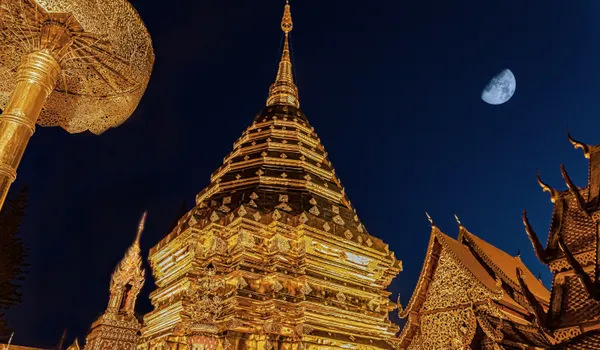 City
City🇹🇭 Chiang Mai
 Country
🇻🇳 Vietnam
 Country
🇮🇳 Kerala
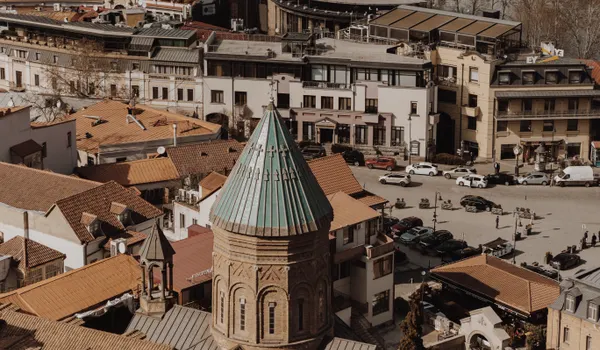 Country
🇬🇪 Georgia
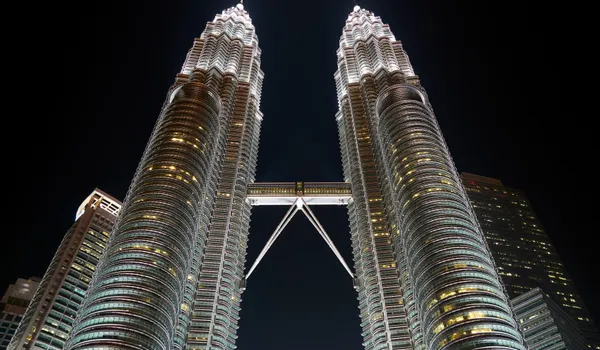 Country
🇲🇾 Malaysia
 City
City🇹🇷 Antalya
 City
City🇮🇩 Java
 Region
🇨🇳 Yunnan
 Country
🇵🇹 Portugal
 Country