When to go to Malaysia?
→ The detailed month-by-month page, with real weather records
Best time: April to September (varies by coast)
At a glance
Why go to Malaysia?
Malaysia is a crossroads where Asia meets and mingles without ever blurring into one. Mosques, Hindu temples, Chinese shrines and colonial churches stand side by side in the same neighbourhood, and that diversity shows up first and foremost on the plate. Few countries offer such a cultural mosaic within so small an area.
On one side lies the peninsula, with its frenetic cities, cool hill stations and paradise islands; on the other, Borneo, home to one of the oldest rainforests in the world. A single domestic flight takes you from the illuminated Petronas Towers to a canopy inhabited by orangutans. Malaysia is two trips in one.
Modern, well organised and surprisingly affordable, Malaysia is often overlooked in favour of its neighbours, wrongly so. Getting around is easy, you eat divinely for a few euros, and English is widely spoken. It is an ideal gateway to Southeast Asia, as reassuring as it is exotic.
Map of Malaysia: what is where?
The map shows the 6 places covered in this guide, to picture the distances and plan your route.
- Petronas Towers, Kuala Lumpur
- Sepilok, Sabah, Borneo
- George Town, Penang
- Cameron Highlands
- Langkawi
- Malacca
How much does a trip to Malaysia cost?
Malaysia offers excellent value for money, more affordable than Thailand on many fronts. Eating out costs particularly little.
| Style | Per day | What it covers |
|---|---|---|
| Backpacker | €25-40/day | Dorms, food courts and hawker centres, buses and city transport. |
| Comfort | €55-90/day | Air-conditioned mid-range hotel, restaurants, domestic flights and excursions. |
| Premium | €160+/day | Luxury resorts, wildlife safaris in Borneo, diving and private transfers. |
Malaysian ringgit are easy to withdraw from cash machines throughout the country, and cards are widely accepted in town.
Is Malaysia safe?
Malaysia is a safe, well-organised country where travellers get around without fear, with petty crime confined to crowded tourist areas. Dengue is endemic and peaks in the rainy season: mosquito protection is your best ally, day and night. Malaria now affects only certain rural and forest areas of Borneo, so medical advice is useful before a stay deep in the jungle. Finally, eastern Sabah, near the Sulu Archipelago, is the subject of heightened warnings in your government's travel advice.
What to see and do in Malaysia
- the Petronas Towers in Kuala Lumpur
- Penang and its street food
- the beaches of Langkawi
- the orangutans of Borneo
- the tea plantations of the Cameron Highlands
Kuala Lumpur, the Petronas Towers

Symbols of modern Malaysia, the Petronas Towers raise their 452 metres of steel and glass in the heart of the capital. Go up to the skybridge and observation deck for a dizzying view, spectacular at nightfall when the towers light up. Below, KLCC Park and its fountains offer a green pause. All around, Kuala Lumpur mixes Chinatown markets, food courts and skyscrapers with electric energy.
Borneo, Sabah and the orangutans

The state of Sabah, on the island of Borneo, shelters one of the last primary forests on the planet and its emblematic residents, the orangutans. The Sepilok rehabilitation centre lets you watch them up close, while the Kinabatangan River promises pygmy elephants, proboscis monkeys and hornbills on boat trips along the water. Divers, meanwhile, dream of Sipadan Island. This is wild Malaysia, lush and unforgettable.
George Town, Penang

The country's food capital, George Town charms with its World Heritage-listed historic centre, teeming with colonial houses, temples and street art. You can sample the best of Malay, Chinese and Indian cooking on every street corner, amid constant bustle. The murals and century-old shophouses tell the story of a unique blend of cultures. A city where you walk with your head in the air and your stomach rumbling.
The Cameron Highlands

Perched at more than 1,500 metres, the Cameron Highlands offer cool respite from the tropical climate, carpeted with tea plantations of a brilliant green. You walk between the rows of tea bushes, visit strawberry farms and flower greenhouses, and hike through the misty mossy forest. The British colonial heritage lingers in the cottages and afternoon tea. A bucolic, refreshing interlude.
Langkawi

An archipelago of 99 islands off the north-west coast, Langkawi combines white-sand beaches, mangroves and jungle. The cable car climbs to the Sky Bridge, a suspended walkway with a breathtaking view over the Andaman Sea. With its duty-free status, it is a place for tax-free shopping. Between lazing about, water sports and sunsets, the island is an invitation to unwind.
Malacca
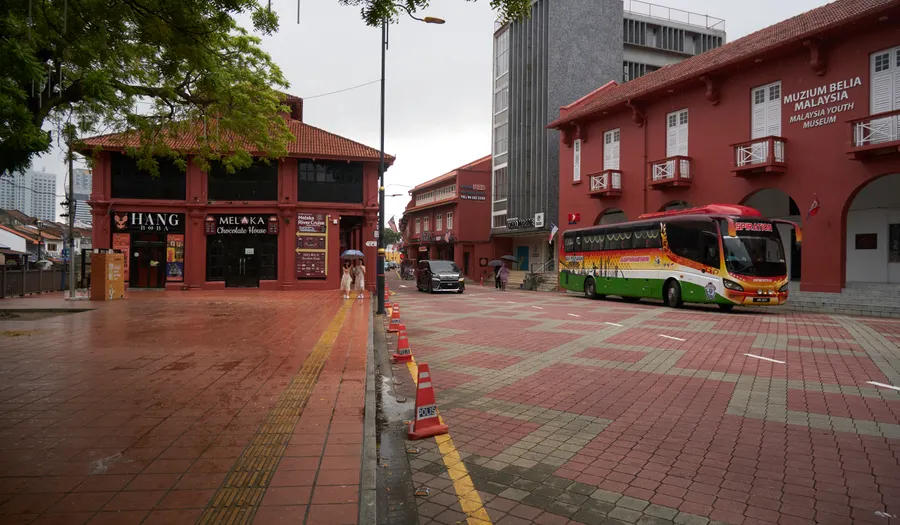
A former strategic trading post on the strait that bears its name, Malacca layers Portuguese, Dutch and British heritage in a colourful setting. Dutch Square with its red buildings and the Jonker Street quarter with its Peranakan houses tell of centuries of trade and cultural blending. The weekend night market fills the lanes with flavours and finds. A museum city on a human scale, two hours from the capital.
How many days, and which itinerary?
Two weeks let you pair the peninsula (Kuala Lumpur, Penang, the Cameron Highlands, the islands) with an escape to Borneo for wildlife and jungle.
🗺️ Day-by-day itinerary · 📓 Free printable Malaysia guide (PDF)
The best of the peninsula (10 days)
From Kuala Lumpur, head up to the Cameron Highlands and their tea plantations, carry on to food-loving Penang, then finish with your feet in the water on Langkawi. A varied route between city, mountains and beach.
The peninsula and Borneo (15 days)
Combine the highlights of the peninsula with a flight to Sabah to meet the orangutans of Sepilok and cruise the Kinabatangan. The perfect contrast between urban modernity and primeval nature.
Culture and the strait (7 days)
Explore Kuala Lumpur, head off to Malacca for its colonial heritage, then travel up to Penang to round off the trip with its legendary street food. A digest of Malaysia's cultural blend for a short stay.
Getting there and getting around
Planes quickly link the peninsula with Borneo, with low-cost airlines such as AirAsia for a few tens of euros.
The long-distance bus network is comfortable, punctual and very cheap, ideal between the cities of the peninsula.
The modern, air-conditioned ETS train serves the Kuala Lumpur, Ipoh and Penang route at a good speed.
Grab, the local equivalent of Uber, works perfectly in town and is a better bet than taxis.
Where to stay in Malaysia?
Backpacker dorms and guesthouses: €8-18 a night, plentiful in Kuala Lumpur, Penang and on the islands.
Double rooms in mid-range or boutique hotels: €30-60, with comfort and air conditioning guaranteed.
Charming hotels and design addresses: €70-130, often with a rooftop pool in Kuala Lumpur.
Luxury resorts on Langkawi or jungle lodges in Borneo: €200 and up, for a memorable experience.
Our places to stay, stop by stop, at three budgets →
What to eat in Malaysia?
Nasi lemak, the national dish: rice cooked in coconut milk, served with fiery sambal, peanuts, anchovies and egg.
Char kway teow, flat noodles stir-fried in a wok with prawns, bean sprouts and Chinese sausage, a Penang speciality.
Roti canai, a crisp, flaky flatbread of Indian origin, dipped in a lentil curry at breakfast.
Laksa, a spicy noodle soup found in regional versions, from coconut curry laksa to Penang's sour asam laksa.
Entry requirements
No visa needed for up to 90 days for UK, US, Canadian, Australian and most EU passports, which must be valid six months. Fill in the Malaysia Digital Arrival Card online in the three days before you land, and expect a second passport check when you fly on to Sabah.
Rules change: check your own government's travel advice before you go.
Cities and regions to discover
 City
City🇲🇾 Kuala Lumpur
 City
City🇲🇾 Borneo
 City
City🇲🇾 Langkawi
 City
City🇲🇾 Penang
Frequently asked questions about Malaysia
When is the best time to go?
The west coast of the peninsula (Kuala Lumpur, Penang, Langkawi) is pleasant from December to April. Borneo and the east coast are best visited from March to October, as the monsoon hits them from November to February.
What daily budget should I plan for?
Allow €25-40 a day as a backpacker and €55-90 for a comfortable trip. Food is remarkably cheap; it is mainly the flights to Borneo and the wildlife activities that weigh on the budget.
How do I get around Malaysia?
Planes efficiently link the peninsula with Borneo, while long-distance buses and the ETS train cover the peninsula cheaply. In town, the Grab app is practical and inexpensive.
Is English spoken in Malaysia?
Yes, English is very widely spoken, a legacy of the British period, which makes communicating much easier. Malay is the official language, but you can get by in English everywhere without difficulty.
Similar destinations
 City
City🇹🇷 Antalya
 Country
🇹🇭 Thailand
 Country
🇻🇳 Vietnam
 Country
🇮🇳 Kerala
 Country
🇹🇷 Turkey
 City
City🇮🇩 Java
 City
City🇰🇷 Busan
 City
City🇵🇭 Cebu
 City
City🇱🇦 Luang Prabang
 Country