When to go to Lake Atitlán?
→ The detailed month-by-month page, with real weather records
Best time: November to March
At a glance
Why go to Lake Atitlán?
Atitlán is first and foremost a spectacular geological accident. The lake fills a caldera created by a cataclysmic eruption 84,000 years ago, at 1,560 m above sea level, covering 130 km² and reaching 340 m deep. Three volcanoes close it off to the south: San Pedro, Tolimán and Atitlán, lined up like a stage set. Aldous Huxley called it the most beautiful lake in the world, and the comparison with Lake Como remains the most quoted local cliché. Once there, what strikes you most is the scale: the villages look tiny at the foot of the cones.
It is also a rare human mosaic. Twelve villages ring the lake, home to Tz'utujil, Kaqchikel and K'iche' people, each with its own weaving, dialect and atmosphere. Santiago Atitlán remains the most traditional, with its brotherhoods and its cult of Maximón. San Pedro draws backpackers and Spanish schools, San Marcos yoga and meditation retreats, San Juan weavers' and painters' cooperatives, and Santa Cruz divers and lovers of peace and quiet. You hop from one to the next by lancha for the equivalent of two or three euros.
Finally, it is an activity base that easily fills a week. You climb San Pedro volcano or the Indian Nose at sunrise, paddle a kayak before the Xocomil wind gets up, walk from village to village on the lakeside trails, and head down to the Chichicastenango market on Thursday or Sunday. All in a country where the coffee is excellent and a decent night's stay can be had for around 25 euros.
Map of Lake Atitlán: what is where?
The map shows the 6 places covered in this guide, to picture the distances and plan your route.
- Panajachel
- San Pedro La Laguna
- San Marcos La Laguna
- Santiago Atitlán
- San Juan La Laguna
- Santa Cruz La Laguna
How much does a trip to Lake Atitlán cost?
Atitlán is a cheap destination where you can live very comfortably on €40 a day. The items that push the bill up are the boat-access lodges, volcano guides and private shuttles.
| Style | Per day | What it covers |
|---|---|---|
| Backpacker | €25-40/day | Dorm or basic room, comedores and markets, shared lanchas, one guided hike |
| Comfort | €55-90/day | Guesthouse or small lodge, restaurants every evening, guides, tourist shuttles, Spanish lessons |
| Premium | €150+/day | Waterfront boutique hotel, private lanchas, private guides, spa and retreats |
Quetzales are easy to get in Panajachel, and €1 is worth about 8.5 GTQ. Cards are accepted in hotels and tourist restaurants, but lanchas, tuk-tuks, markets and comedores are cash only: withdraw money in Panajachel before setting off for the villages.
Is Lake Atitlán safe?
Lake Atitlán is one of the busiest and most closely watched areas in Guatemala, and the vast majority of stays pass without incident. Two points still call for some method. First, the hikes: the trails up San Pedro volcano and the Indian Nose have seen muggings in the past, which led the communities to require local guides and, at certain times, an escort from the tourist police. Go in a group, with a registered guide, never alone and never before the trail officially opens. Second, journeys: do not travel between towns at night, whatever the means of transport, and choose tourist shuttles over chicken buses for long distances. In Guatemala City, pass through without lingering and do not walk around Zona 1 after dark. On the lake, lanchas are often overloaded and rarely carry life jackets: avoid crossings after 3 pm, when the Xocomil whips up a short, unpleasant swell. Finally, carry cash, as reliable cash machines can be counted on the fingers of one hand and are almost all in Panajachel. Useful numbers: 110 for the police, 1500 for the Asistur tourist assistance service.
What to see and do in Lake Atitlán
- Panajachel and Calle Santander
- San Pedro La Laguna
- San Marcos La Laguna
- Santiago Atitlán and Maximón
- Sunrise on the Indian Nose
- Climbing San Pedro volcano
- San Juan La Laguna weaving
- Chichicastenango market
Panajachel
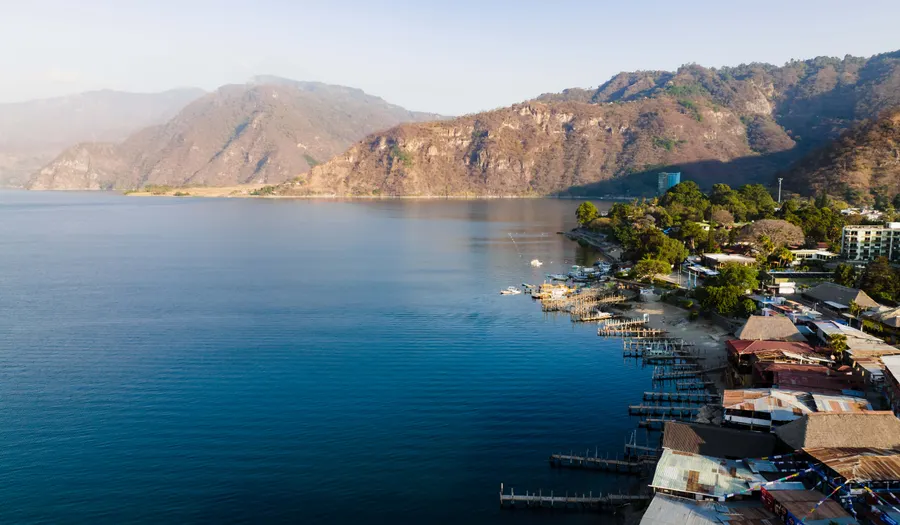
Pana is the gateway to the lake, where shuttles from Antigua arrive and lanchas leave for every village. Calle Santander is packed with agencies, money changers, textile stalls and a good share of the lake's restaurants: it is noisy, commercial and not very representative of the rest. The public muelle is at the end of the street, with the private lancha dock a little to the east. This is also where you will find the only reliable cash machines on the lake and a small clinic. Many people only spend a night here, but the Reserva Natural Atitlán on the edge of town, with its suspension bridge and butterflies, is worth two hours.
San Pedro La Laguna
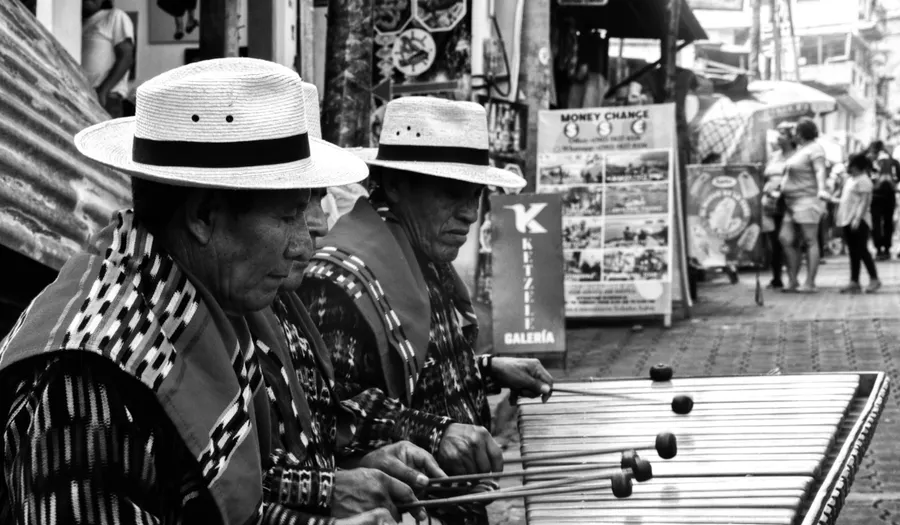
Backed by the volcano of the same name, San Pedro is the liveliest village on the lake. Two neighbourhoods coexist: the lower one, around the jetties, with its hostels, bars and Spanish schools at 100-150 euros a week including lessons and a homestay; and the upper one, purely Tz'utujil, with its market and church. The shore is lined with café terraces facing the lake, and prices remain the lowest in the area. It is also the classic starting point for climbing San Pedro volcano and the Indian Nose. There are two separate jetties: one for Panajachel and one for Santiago, ten minutes' walk apart.
San Marcos La Laguna
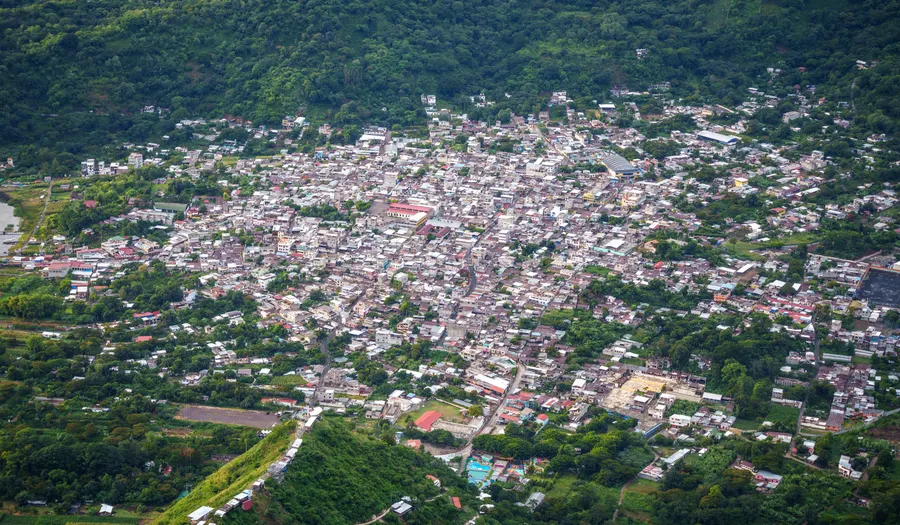
San Marcos has become Guatemala's wellness capital: yoga, meditation, massage, multi-day retreats and vegetarian food. The village is tiny and car-free, criss-crossed by dirt paths lined with stone walls and bougainvillea. The Cerro Tzankujil reserve, to the west, protects a wooded headland with swimming platforms and an 8 m diving board over crystal-clear water. It is also the best spot on the lake for a swim, as the water here is clearer than on the north shore. The atmosphere is very communal and not to everyone's taste, but the setting is superb.
Santiago Atitlán
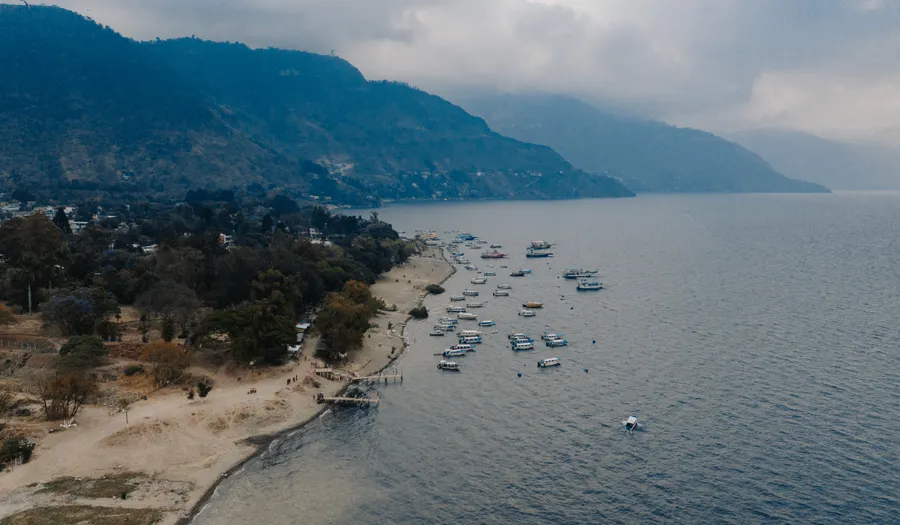
The largest village on the lake, and the most attached to its traditions. Women still wear the huipil embroidered with birds and, among the oldest, the tocoyal, a long red ribbon wound around the head. Above all, Santiago is home to Maximón, a syncretic deity who smokes cigars and is plied with alcohol, hosted each year by a different brotherhood: a child will guide you to the current house for a few quetzales. The Santiago Apóstol church keeps alive the memory of Father Stanley Rother, an American priest murdered there in 1981 during the civil war. The Friday market is one of the most authentic around the lake.
San Juan La Laguna

Twenty minutes' walk from San Pedro, San Juan is the best-kept village on the lake. Its sloping streets are painted with murals and covered with colourful umbrellas, and its economy rests on women's weaving cooperatives that work on backstrap looms and use natural dyes: annatto, indigo, onion skins, cochineal. The demonstrations last around twenty minutes and end in the shop, but the craftwork is the best in the area and prices remain fair. The village also has several galleries of Tz'utujil naive painting and a coffee cooperative that is easy to visit.
The volcanoes and the Indian Nose
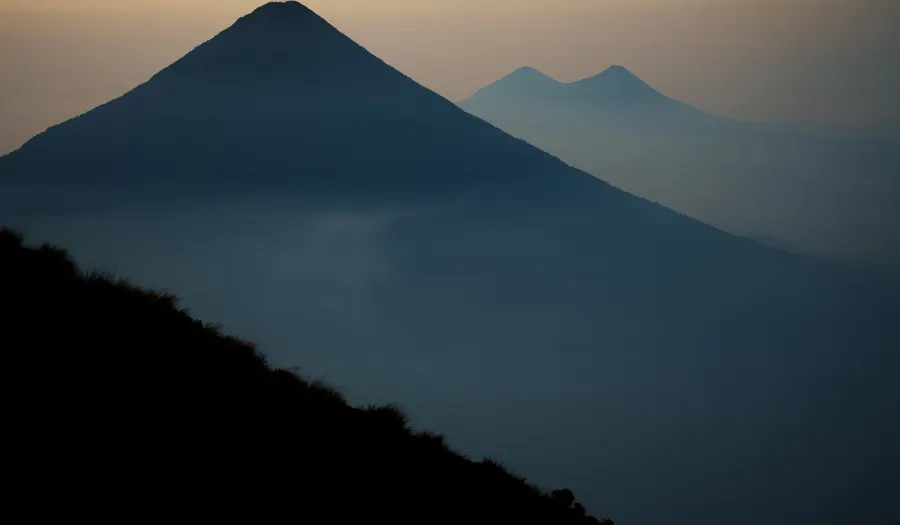
Three volcanoes tower over the lake: San Pedro (3,020 m), Tolimán (3,158 m) and Atitlán (3,535 m). Only San Pedro is commonly climbed, in 3 to 4 hours of ascent from San Pedro La Laguna, with 1,400 m of elevation gain and a compulsory guide. Tolimán and Atitlán require a two-day expedition and the agreement of the Santiago communities. For the most famous view without the effort, head instead for the Indian Nose, the profile of a reclining Maya face above San Juan: 45 minutes to 1h30 of walking depending on the starting point, setting off around 4 am to arrive for sunrise over the three cones. Bring a fleece, as it is 5 to 8°C before dawn.
How many days, and which itinerary?
Three nights are enough for two or three villages and a hike; five to six days let you go round the lake without rushing and add Chichicastenango.
🗺️ Day-by-day itinerary · 📓 Free printable Lake Atitlán guide (PDF) · 🌍 All of Guatemala
Discovery (3 days)
Arrive in Panajachel by shuttle from Antigua, then take a lancha to San Pedro for two nights. A day of villages, with San Juan on foot and San Marcos by lancha, sunrise on the Indian Nose on the second morning, and the return via Santiago Atitlán and its Maximón. The most common format, and already very complete.
Round the lake (6 days)
Two nights in San Pedro for the volcano climb and the western villages, two nights in San Marcos or Santa Cruz for swimming, kayaking and the lakeside trail between Santa Cruz and Jaibalito. A day in Santiago Atitlán, then a night in Panajachel to leave early for Chichicastenango on Thursday or Sunday.
Immersion and Spanish (2 weeks)
A fixed base in San Pedro or San Juan with a Spanish school, four hours of one-to-one lessons a day and a homestay with a local family. Afternoons and weekends given over to the villages, volcanoes and markets. The cheapest way to do the lake, and by far the most immersive.
Getting there and getting around
From Antigua or Guatemala City, the shared tourist shuttle is the simplest option: 3h to 3h30 to Panajachel for €12 to €20, with morning departures and booking the day before.
On the lake, everything is done by shared lancha: 25 to 40 GTQ (€3 to €5) depending on distance, leaving as soon as the boat is full, last crossing around 5.30 pm and nothing after nightfall.
Chicken buses link Panajachel, Sololá and Chichicastenango for less than €2, but they are packed, drive fast and should only be taken by day.
Between San Pedro, San Juan and San Marcos there is a road, and tuk-tuks run for 10 to 25 GTQ, handy when the Xocomil makes the crossing unpleasant.
Where to stay in Lake Atitlán?
Hostels and dorms in San Pedro: €6 to €12 a bed, €15 to €25 for a double room, with a terrace over the lake at the best ones.
Boutique hotels and waterfront lodges in Santa Cruz, San Marcos or Jaibalito: €50 to €120, reachable only by boat.
Guesthouses in San Juan and Santiago: €25 to €45, run by local families, often the best value on the lake.
Standard hotels in Panajachel: €30 to €90, useful for a late arrival or an early departure, but of little interest otherwise.
Our places to stay, stop by stop, at three budgets →
What to eat in Lake Atitlán?
Pepián, a chicken or pork stew with toasted pumpkin and sesame seeds, the national dish, served in comedores for €3 to €5.
Fish from the lake, mojarra or small freshwater shrimp, fried whole and served with tortillas in Santiago and San Pedro.
High-altitude coffee from the cooperatives of San Juan and San Pedro, roasted on site, with a finca tour for around €8 to €12.
Tostadas and chuchitos from the morning markets, for less than a euro each, and fresh fruit licuados almost everywhere.
Entry requirements
Visa-free for 90 days for EU, UK, US, Canadian and Australian passports, valid six months from arrival. The 90 days are shared with El Salvador, Honduras and Nicaragua under the CA-4 agreement, and a free online traveller declaration must be filled in before flying in or out.
Rules change: check your own government's travel advice before you go.
Frequently asked questions about Lake Atitlán
What is the best time to visit Lake Atitlán?
From November to March, in the heart of the dry season: clear skies over the volcanoes, crisp air and daytime temperatures of 25°C. From May to October it rains almost every afternoon and the summits often stay in the clouds.
How many days should you allow?
Three nights for two or three villages and a hike, five to six days to go round the lake at a relaxed pace. Those taking Spanish lessons generally stay two weeks.
Which village is best to stay in?
San Pedro for the buzz and small budgets, San Marcos for peace and swimming, San Juan for crafts and authenticity, Santa Cruz for waterfront lodges. Panajachel only makes sense for an arrival or a departure.
Is Lake Atitlán dangerous?
No, it is a well-organised tourist area where you can get around with peace of mind by day. The real precautions concern hikes, which should be done with a local guide and never solo, and night journeys between towns, which should always be avoided.
What is the Xocomil?
It is the wind that rises almost every day in the early afternoon and churns up the lake. In practice, you need to fit lancha crossings and kayak outings in before noon, or face a very bumpy ride.
Similar destinations
 City
City🇹🇭 Chiang Mai
 Country
🇨🇴 Colombia
 Region
🇲🇽 Chiapas
 City
City🇮🇪 Galway and Connemara
 Country
🇵🇱 Poland
 Country
🇸🇳 Senegal
 Country
🇻🇳 Vietnam
 Country
🇮🇩 Indonesia
 Country