When to go to Guatemala?
→ The detailed month-by-month page, with real weather records
Best time: November to April
At a glance
Why go to Guatemala?
Guatemala is the beating heart of the Maya world, a country where pre-Columbian civilisation lives on in its languages, weaving and markets. Descendants of the Maya make up a major share of the population and keep age-old traditions alive. You sense a rare authenticity here, far from standardised tourism. It is a cultural immersion of an intensity uncommon in Central America.
The country's geography is spectacular, dominated by a chain of volcanoes, some of which still spew lava and ash. Between the cool highlands, the Petén jungle and the high-altitude lakes, the landscapes never stop changing. The light of the highlands and the colours of the traditional dress enchant photographers. Few destinations offer such visual intensity.
Despite a sometimes intimidating reputation, Guatemala generously rewards curious travellers. Antigua and its colonial façades, Tikal rising from the canopy, Lake Atitlán ringed by volcanoes: every stop leaves a lasting mark. Prices remain gentle and the welcome from Indigenous communities is full of dignity. It is a country well worth discovering without preconceptions.
Map of Guatemala: what is where?
The map shows the 6 places covered in this guide, to picture the distances and plan your route.
- Antigua
- Lake Atitlán
- Tikal
- Chichicastenango
- Semuc Champey
- Acatenango Volcano
How much does a trip to Guatemala cost?
Guatemala is one of the cheapest destinations in Central America, making it a paradise for tight budgets. Even when you trade up, prices remain reasonable.
| Style | Per day | What it covers |
|---|---|---|
| Backpacker | €25-40/day | Hostels, chicken buses and market food |
| Comfort | €60-100/day | Boutique hotels, private shuttles and local guides |
| Premium | €170+/day | Upmarket eco-lodges, domestic flights and private tours |
The currency is the quetzal; carry cash, as cards are rarely accepted outside the big towns.
Is Guatemala safe?
Guatemala calls for slightly more vigilance than its neighbours, but the classic tourist areas are busy and safe. It is advisable to choose organised shuttles over local buses at night and to avoid certain districts of the capital. Petty crime mainly targets the distracted, so keep your valuables out of sight. Volcano climbs are ideally done with a licensed guide. By following these common-sense precautions, the vast majority of travellers enjoy a relaxed and enriching stay.
What to see and do in Guatemala
- Antigua and its volcanoes
- Lake Atitlán and its villages
- the Maya city of Tikal
- the Chichicastenango market
- the climb up Acatenango
Antigua
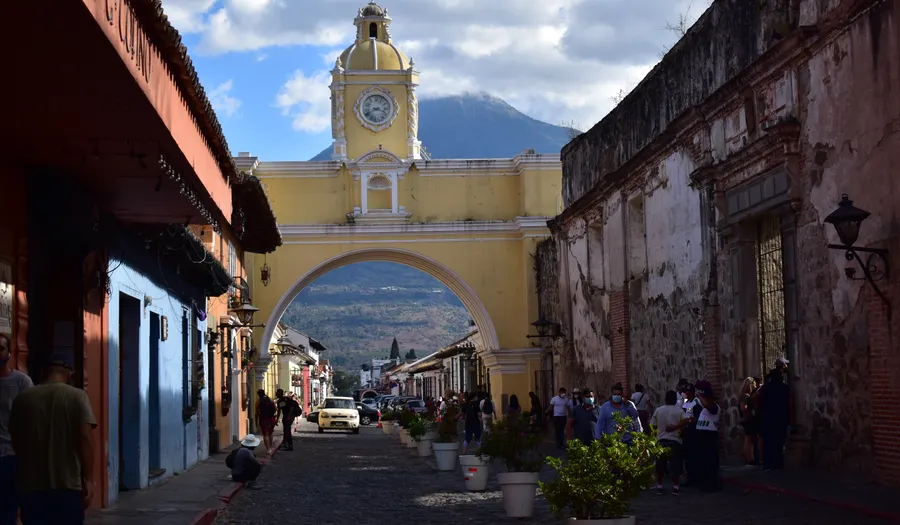
A former colonial capital listed by UNESCO, Antigua is a jewel of cobbled lanes, Baroque churches and flower-filled patios. Ringed by three volcanoes, it offers a postcard backdrop on every street corner. The ruins of convents destroyed by earthquakes bear witness to its turbulent past. The town is renowned for its Spanish schools and its cafés that roast their own beans. Its Holy Week, with carpets of coloured sawdust, is one of the most famous in the world.
Lake Atitlán

Described by some as the most beautiful lake in the world, Atitlán stretches out at the foot of three majestic volcanoes. Its shores are home to a dozen Maya villages with very distinct personalities, linked by boat. Panajachel, San Pedro and Santiago each reveal a different face of local tradition. The craft markets are packed with vibrant textiles. It is a place that is spiritual, colourful and conducive to relaxation all at once.
Tikal
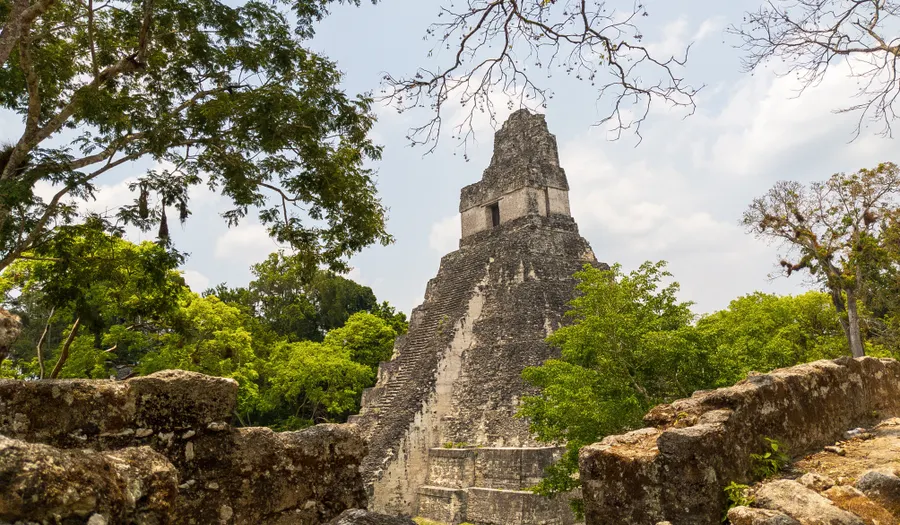
Buried in the Petén jungle, Tikal is one of the largest Maya cities ever uncovered. Its pyramid temples emerge from the canopy, some rising more than 60 metres high. At sunrise, the calls of howler monkeys and toucans accompany the mist that wraps the ruins. Climbing to the top of Temple IV to look out over the forest is an unforgettable moment. The site combines grandiose archaeology with exuberant nature.
Chichicastenango

The Chichicastenango market is one of the largest and most colourful in Central America, held on Thursdays and Sundays. Maya vendors offer textiles, masks, pottery and flowers in a dizzying profusion. The Santo Tomás church blends Catholic rites and Maya ceremonies amid swirls of incense. It is a fascinating dive into the life and beliefs of the highlands. The atmosphere is intense and deeply authentic.
Semuc Champey
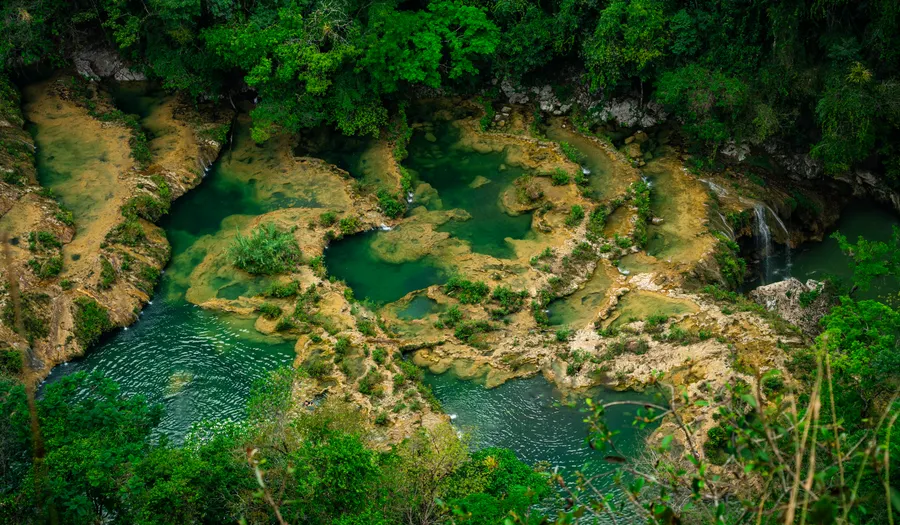
Hidden deep in the jungle, Semuc Champey is a series of turquoise natural pools stepped across a limestone bridge. The water cascades gently from one pool to the next, inviting you to swim in a paradise setting. You reach the site via a rough road, which has kept it a preserved gem. The nearby Kan'ba caves are explored by candlelight, a memorable adventure. It is one of the most breathtaking natural sites in the country.
Acatenango Volcano 3 928 m

Climbing Acatenango is Guatemala's flagship adventure, a demanding two-day hike topping out at nearly 4,000 metres. From the high-altitude camp, you witness the staggering spectacle of eruptions from the neighbouring volcano, Fuego, in full activity. At night, rivers of glowing lava light up the darkness. Sunrise at the summit, above a sea of clouds, rewards the effort. It is one of the most intense volcanic experiences in the world.
How many days, and which itinerary?
Allow 10 to 15 days to link the Maya highlands, the Tikal jungle and the country's natural wonders.
🗺️ Day-by-day itinerary · 📓 Free printable Guatemala guide (PDF)
Maya essentials (8 days)
Antigua and its colonial atmosphere, Lake Atitlán and its villages, then the Chichicastenango market. A first taste focused on the highlands and living Maya culture.
Volcanoes and a lost city (12 days)
From Antigua, add the climb up Acatenango, then fly to Tikal to explore the Petén jungle. A route that marries volcanic adventure with grandiose archaeology.
Grand tour of Guatemala (15 days)
A complete circuit linking Antigua, Atitlán, Chichicastenango, the pools of Semuc Champey and finally Tikal. You take in the country's full diversity, from Indigenous markets to tropical forest.
Getting there and getting around
Shared tourist shuttles link the main sites in a practical, comfortable and safe way.
The famous chicken buses, repainted former school buses, criss-cross the country for next to nothing, a colourful experience.
A domestic flight between Guatemala City and Flores saves a long day on the road to reach Tikal.
On Lake Atitlán, lanchas (shared boats) are the main way of reaching the villages.
Where to stay in Guatemala?
Friendly youth hostels in Antigua and San Pedro, from €10-20 a night for tight budgets.
Boutique hotels in colonial mansions in Antigua: allow €40-80 for a lovely room.
Eco-lodges on the shores of Lake Atitlán or deep in the jungle, €60-120 depending on the standard.
Upmarket hotels near Tikal, around €120-200 for comfort in the heart of nature.
Our places to stay, stop by stop, at three budgets →
What to eat in Guatemala?
Corn tortillas, black beans and rice form the basis of every Guatemalan meal.
Pepián, a spicy stew of meat and toasted seeds, is the national dish par excellence.
Guatemalan coffee, grown at altitude, ranks among the best and most renowned in the world.
The markets overflow with tropical fruit and street specialities such as tamales and rellenitos.
Entry requirements
Visa-free for 90 days for EU, UK, US, Canadian and Australian passports, valid six months from arrival. The 90 days are shared with El Salvador, Honduras and Nicaragua under the CA-4 agreement, and a free online traveller declaration must be filled in before flying in or out.
Rules change: check your own government's travel advice before you go.
Cities and regions to discover
 City
City🇬🇹 Lake Atitlán
 City
City🇬🇹 Semuc Champey
Frequently asked questions about Guatemala
When is the best time to go?
The dry season, from November to April, is ideal, with clear skies and passable trails. The highlands stay cool all year round, so bring warm clothes for the evenings. The rainy season runs from May to October.
What daily budget should I plan for?
Allow around €30 a day as a backpacker, €80 for a comfortable stay and more than €170 at the upper end. The country remains very affordable, especially for food and accommodation.
How do I get around Guatemala?
Shared tourist shuttles are the most practical and safest way to travel between the main sites. Local chicken buses are picturesque and very cheap but less comfortable. To reach Tikal, flying from the capital saves a great deal of time.
Is altitude a problem?
Antigua and the highlands sit between 1,500 and 2,500 metres, with no real risk of altitude sickness. The climb up Acatenango to nearly 4,000 metres, however, can cause slight breathlessness. Acclimatise for a few days and climb gradually.
Similar destinations
 Country
🇨🇴 Colombia
 Region
🇲🇽 Chiapas
 Country
🇵🇱 Poland
 City
City🇹🇭 Chiang Mai
 Country
🇻🇳 Vietnam
 Country
🇮🇩 Indonesia
 Country
🇱🇰 Sri Lanka
 Country
🇳🇵 Nepal
 Country