When to go to Senegal?
→ The detailed month-by-month page, with real weather records
Best time: November to May
At a glance
Why go to Senegal?
Senegal is often described as the gateway to West Africa, and teranga, the local art of hospitality, is its finest calling card. French is spoken everywhere, and visitors leave won over by the warmth of a welcome that is never put on. Between frenetic Dakar and the villages of the Sine-Saloum, the country makes an ideal first encounter with the continent. Music, football and street life all buzz with an infectious energy.
The country packs in a remarkable variety of landscapes for its size: Atlantic beaches, delta mangroves, the savannah of Niokolo-Koba and curiosities such as the Pink Lake. History is everywhere, notably on Gorée and in Saint-Louis, two listed sites that tell the story of the slave trade and the colonial era. This weight of memory gives a journey here rare depth.
Senegal is wonderful for nature watching, especially birdlife. The Saloum Delta and the Djoudj park rank among the largest bird reserves in the world. Add flavourful cooking and a thriving cultural scene, and you have a complete destination, both exotic and accessible.
Map of Senegal: what is where?
The map shows the 6 places covered in this guide, to picture the distances and plan your route.
- Dakar
- Gorée Island
- Pink Lake
- Saint-Louis
- Sine-Saloum Delta
- Niokolo-Koba National Park
How much does a trip to Senegal cost?
Senegal remains affordable, even if Dakar pushes prices up. Nature and village camps offer the best value for money.
| Style | Per day | What it covers |
|---|---|---|
| Backpacker | €35-50/day | Village camp, shared transport and local food. |
| Comfort | €70-110/day | Guesthouse, car with driver, guided excursions. |
| Premium | €160+/day | Boutique lodge, private guide and the occasional domestic flight. |
The CFA franc is the currency; withdraw cash in town, as ATMs become scarce outside the big cities.
Is Senegal safe?
Senegal is one of the most stable countries in West Africa and can be travelled with peace of mind, apart from the far south of Casamance, which can be sensitive. Malaria is present throughout the country: preventive treatment is strongly recommended, backed up by repellent and covering clothing at dusk. Keep routine vaccinations up to date; yellow fever is advised, and even required depending on the region. In towns, watch out for bag snatching and avoid flashing valuables.
What to see and do in Senegal
- Gorée Island
- the Pink Lake
- the Bandia reserve
- Saint-Louis
- the Sine-Saloum Delta
Dakar
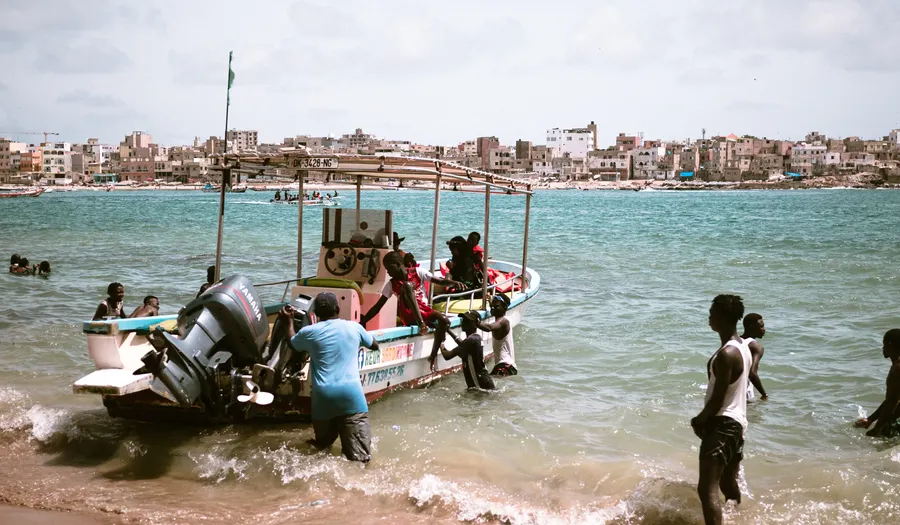
Senegal's capital isn't so much visited as lived, between teeming markets and an Atlantic-battered seafront. Climb the African Renaissance Monument for a panoramic view, then dive into the bustle of Sandaga market. The Almadies district and the Pointe des Mamelles serve up memorable sunsets. The city moves to the beat of mbalax, the music popularised by Youssou N'Dour.
Gorée Island
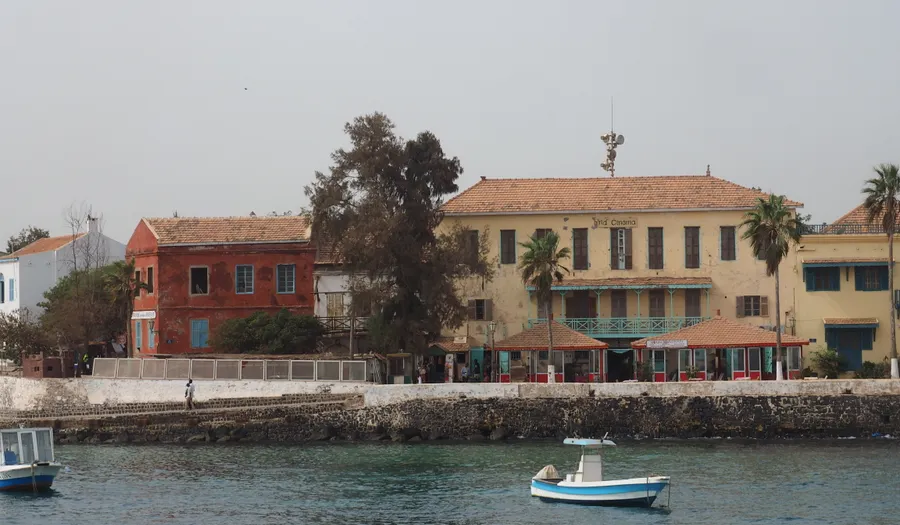
Twenty minutes from Dakar by ferry, this small UNESCO-listed island is a place of remembrance for the slave trade. The House of Slaves and its Door of No Return move every visitor. Yet the cobbled lanes, lined with ochre houses and bougainvillea, invite you to wander. This contrast between beauty and gravity is what gives the place its power.
Pink Lake

Lake Retba owes its pink hue to a micro-alga and to its very high salinity, close to that of the Dead Sea. Depending on the light and the wind, its waters shift from mauve to vivid pink. On the shores, salt collectors work all day long, their bodies coated in shea butter. Long the finishing line of the Paris-Dakar rally, the area is explored by 4x4 out to the neighbouring dunes by the ocean.
Saint-Louis

The former capital of French West Africa, Saint-Louis spreads its colonial architecture across an island in the Senegal River. UNESCO-listed, the town is best explored by horse-drawn carriage, between faded facades and the Faidherbe Bridge. The fishing quarter of Guet Ndar, astonishingly dense, contrasts with the calm of the island. Every spring, a renowned jazz festival fills its streets.
Sine-Saloum Delta

Where river meets ocean lies a labyrinth of mangroves, channels and islands. You glide by pirogue among the mangrove trees, listening to the bird colonies. Serer villages live from fishing and shellfish gathering, whose discarded shells pile up into islets. A designated biosphere reserve, the delta is paradise for birdwatching and lazing about.
Niokolo-Koba National Park

In the south-east of the country, this vast UNESCO-listed park protects one of the last great wilderness areas of West Africa. Along the Gambia River stretch savannah landscapes where lions, hippos and antelopes still survive. Wildlife spotting takes patience and a good guide, as the animals are elusive. This is Senegal at its rawest, far from the coast and the classic circuits.
How many days, and which itinerary?
Allow ten to twelve days to combine Dakar, the north coast up to Saint-Louis and some time immersed in the Sine-Saloum.
🗺️ Day-by-day itinerary · 📓 Free printable Senegal guide (PDF)
Dakar and the coast (6 days)
Two days in the capital and on Gorée, a day at the Pink Lake, then up to Saint-Louis. Finish at the nearby Djoudj bird park. An accessible taste of the north.
The north and the delta (10 days)
After Dakar, Gorée and the Pink Lake, head to Saint-Louis and the Djoudj. Then return south for three nights in the Sine-Saloum, by pirogue and in village camps. The perfect balance of culture and nature.
Grand Senegal (14 days)
The full circuit adds the journey down to Niokolo-Koba and lush Casamance. You alternate between savannah, mangroves and Atlantic beaches. A demanding trip in terms of distance, but an immensely rich one.
Getting there and getting around
Bush taxis and minibuses, known as cars rapides, link the towns cheaply but without comfort.
Hiring a car with a driver is strongly recommended for long distances and the south.
In Dakar, the yellow and black taxis are everywhere; agree the fare before getting in, as there are no meters.
Pirogues handle the crossings to Gorée and trips through the Saloum Delta.
Where to stay in Senegal?
Hostels and village camps: €15 to €30 a night, often community-run.
Guesthouses and small hotels in Saint-Louis and Dakar: €35 to €70.
Boutique lodges in the Sine-Saloum, right on the mangroves: €60 to €110.
Upmarket hotels on the Petite Côte at Saly: €100 and up, all-inclusive.
Our places to stay, stop by stop, at three budgets →
What to eat in Senegal?
Thiéboudienne, rice with fish and vegetables, the national dish, shared from one large communal platter.
Chicken yassa, marinated in lemon with slow-cooked onions, one of the country's great classics.
Mafé, a meat stew in peanut sauce, rich and fragrant.
Bissap, an iced infusion of hibiscus flowers, and café Touba, spiced with Selim pepper.
Entry requirements
Visa-free for up to 90 days for EU, UK, US and Canadian passports, with proof of a return ticket and of accommodation to show at the border. Australian passports: visas have been issued free on arrival at Dakar airport but not at land borders, so check with a Senegalese embassy before you travel.
Rules change: check your own government's travel advice before you go.
Cities and regions to discover


Frequently asked questions about Senegal
When is the best time to go?
The dry season, from November to May, is the most pleasant and the best for birdwatching. Avoid the rainy season, from July to September, which is hotter and more humid.
What daily budget should I plan for?
Allow around €45 a day as a backpacker and €90 to €110 for a comfortable trip with a driver. Dakar and the delta lodges push the bill up.
Do I need to protect myself against malaria?
Yes, malaria is present throughout Senegal. Preventive treatment, repellent and long clothing in the evening are strongly recommended; see a doctor before you leave.
How do I get around the country?
For long distances and the south, a car with a driver is the safest and most comfortable option. In town, the yellow taxis are handy as long as you agree the fare in advance.
Similar destinations
 Country
🇵🇹 Portugal
 City
City🇮🇪 Galway and Connemara
 Country
🇲🇦 Morocco
 City
City🇲🇦 Essaouira
 Country
🇹🇳 Tunisia
 City
City🇹🇭 Chiang Mai
 Country
🇻🇳 Vietnam
 Country
🇰🇭 Cambodia
 Country
🇮🇩 Indonesia
 Country