When to go to Essaouira?
→ The detailed month-by-month page, with real weather records
Best time: May to October
At a glance
Why go to Essaouira?
Essaouira wins you over with its bohemian atmosphere and sea air, a world away from the bustle of Morocco's big cities. Its white and blue ramparts, battered by Atlantic winds, shelter a peaceful medina listed as a World Heritage Site. Long a haunt of artists and musicians, the town keeps a free and easy-going spirit. People come here to slow down and breathe in the salt air.
A former Portuguese stronghold turned thriving trading port, Essaouira blends Berber, Arab, Jewish and European influences. This cosmopolitan history can be read in its architecture, its cabinetmakers' workshops and its renowned Gnawa music scene. The town has kept its authenticity while welcoming travellers and creatives. Every lane tells a chapter of this cultural mix.
With its vast beach swept by the trade winds, Essaouira is also Morocco's windsurfing and kitesurfing capital. The lively fishing port, craft stalls and ocean-facing terraces make for a setting that is both vibrant and soothing. The climate is mild all year round, making it an ideal stopover. It is an enchanting interlude between desert and Atlantic.
Map of Essaouira: what is where?
The map shows the 6 places covered in this guide, to picture the distances and plan your route.
- Ramparts and Skala de la Ville
- Essaouira Medina
- Fishing port
- Essaouira Beach
- Place Moulay Hassan
- Mogador Island
How much does a trip to Essaouira cost?
Essaouira remains an affordable destination where you can make the most of things on a moderate budget.
| Style | Per day | What it covers |
|---|---|---|
| Backpacker | €25-40/day | simple riad, street food and fish from the port |
| Comfort | €70-120/day | charming riad, restaurants and water sports |
| Premium | €220+/day | ocean-facing hotel, spa and private excursions |
Bring dirhams in cash, as many shops in the medina do not take cards.
Is Essaouira safe?
Essaouira is known as one of the calmest and most laid-back towns in Morocco. The pedestrian medina can be explored without worry, by day and in the evening, and hassle from vendors is much milder than elsewhere. The usual precautions apply against petty theft in busy areas. Women travelling alone generally feel at ease here.
What to see and do in Essaouira
- the fortified medina
- the fishing port
- the kitesurfing spots
- the Skala ramparts
- the Gnawa festival
Ramparts and Skala de la Ville

Essaouira's ramparts offer a spectacular walk facing the Atlantic Ocean. The Skala de la Ville lines up its bronze cannons pointing out to sea and its spray-lashed loopholes. The site has served as a set for many films and TV series. Sunset here is particularly magical.
Essaouira Medina

A World Heritage Site, the medina charms with its white and blue lanes, easy to explore. You wander without getting lost between craft shops, thuya-wood marquetry workshops and art galleries. The atmosphere is far more relaxed than in the big medinas. It is a pleasure to drift from square to square.
Fishing port

Essaouira's port is a lively, colourful spectacle, set to the rhythm of the blue boats coming home. You watch fishermen unload sardines and octopus amid wheeling seagulls. Fresh fish grilled at the stalls is a treat for visitors. The authenticity of the place draws photographers.
Essaouira Beach
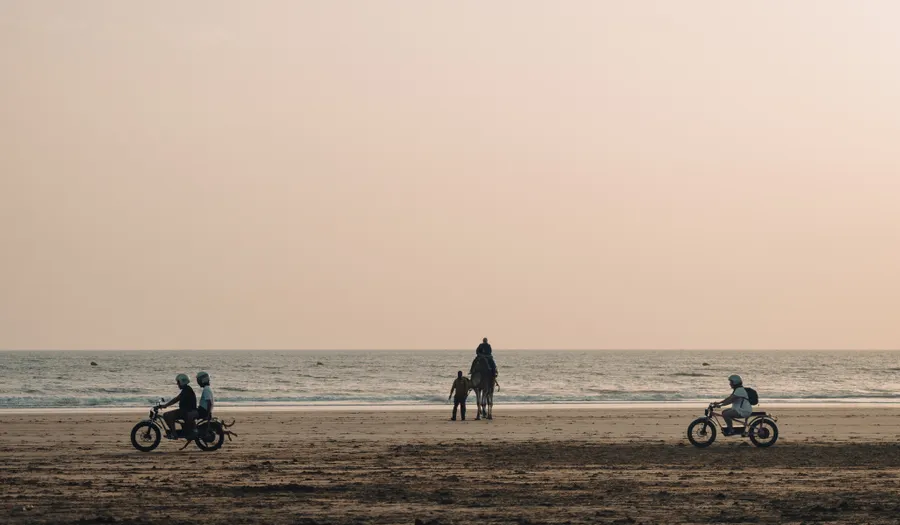
The great sandy beach stretches for several kilometres south of the medina. Swept by the trade winds, it delights windsurfers and kitesurfers. You can also ride along it by camel or on horseback. At the end of the day, the golden light is sumptuous.
Place Moulay Hassan

The beating heart of Essaouira, this square links the medina to the port and is where all the action is. Its cafés and shady terraces invite you to watch local life go by. Every year it hosts the famous Gnawa music festival. It is the ideal meeting point at any time of day.
Mogador Island

Facing the port, the Purpuraires archipelago, which includes Mogador Island, watches over the bay. This bird sanctuary is home notably to Eleonora's falcon and to ancient remains. You can see it from the ramparts or on a boat trip. It gives Essaouira its distinctive horizon.
How many days, and which itinerary?
Two to three days are enough to fully soak up Essaouira's atmosphere.
🗺️ Day-by-day itinerary · 📓 Free printable Essaouira guide (PDF) · 🌍 All of Morocco
Relaxing break (2 days)
Explore the medina and the ramparts on day one, then devote day two to the beach and the fishing port. End with a fresh fish dinner facing the sunset.
Essaouira and its flavours (3 days)
Add a visit to a marquetry workshop, a windsurfing session and an excursion to an argan oil cooperative nearby. The pace stays gentle and contemplative.
Essaouira along the coast (4 days)
Round it off with a day trip to the wild beaches of Sidi Kaouki and the Berber villages of the hinterland. Nature and calm are unspoilt there.
Getting there and getting around
The medina is explored entirely on foot; cars are banned.
Comfortable buses link Marrakech and Essaouira in about three hours.
A taxi or private transfer from Marrakech offers more flexibility for the two to three hours' drive.
Locally, the little blue taxis run to the southern beach and the surrounding area.
Where to stay in Essaouira?
Hostels and simple riads in the medina: €20-45 a night.
Charming riads with a terrace: €60-110 for a double room.
Upmarket hotels and guesthouses facing the ocean: €130-250.
Beachfront rentals for surfers: €50-100 a night.
Our places to stay, stop by stop, at three budgets →
What to eat in Essaouira?
Grilled fish from the port, picked from the stall, is the unmissable speciality.
Fish tagines with olives and preserved lemon are a treat at local tables.
Argan oil, produced in the region, flavours salads and amlou at breakfast.
Fresh juices and almond pastries are enjoyed on the square's terraces.
Entry requirements
90 days visa-free with a passport for EU, UK, US, Canadian and Australian citizens.
Rules change: check your own government's travel advice before you go.
Frequently asked questions about Essaouira
When is the best time to visit Essaouira?
Spring and autumn offer an ideal climate and moderate winds. Summer stays pleasant thanks to the ocean breeze, while the wind blows hard from May to August for board-sports fans.
How many days should you spend in Essaouira?
Two to three days are enough for the main sights of the town and the beach. Add a day to explore the wild coast or the argan cooperatives nearby.
What daily budget for Essaouira?
Allow around €35 a day travelling simply, €100 for a comfortable stay and over €220 at the top end. The town remains very affordable.
How do you get around Essaouira?
The medina is explored entirely on foot. To reach the southern beach or the surrounding area, the little blue taxis are handy and cheap, and a bus links easily to Marrakech.
Which area should you stay in in Essaouira?
The medina is ideal for the atmosphere and for having everything close by. The seafront and the southern beach are better suited to those who want calm and water sports.
Similar destinations
 Country
🇹🇳 Tunisia
 Country
🇸🇳 Senegal
 Country
🇪🇬 Egypt
 Country
🇹🇭 Thailand
 Region
🇧🇷 Northeast Brazil
 Country
🇹🇷 Turkey
 City
City🇸🇳 Dakar
 Region
🇫🇷 Lorient and South Brittany
 Country
🇵🇹 Portugal
 City
City