When to go to Cambodia?
→ The detailed month-by-month page, with real weather records
Best time: November to February
At a glance
Why go to Cambodia?
Cambodia's story is told first in stone: the temples of Angkor, vast and silent at dawn, remain one of the most powerful travel experiences in South-East Asia. But reducing the country to its ruins would be to miss the point. Here, Buddhist devotion sets the rhythm of daily life, monks in saffron robes pass scooters laden with fruit, and every village seems to watch over its own sanctuary.
Long scarred by its recent history, Cambodia has turned memory into a strength. Visiting Phnom Penh means agreeing to look the past in the face, at Tuol Sleng as at the Killing Fields, and then taking the measure of the resilience of a disarmingly gentle people. Cambodians greet travellers with an open smile, without any overbearing commercial agenda.
The country remains more affordable and less visited than its Thai or Vietnamese neighbours, which is a large part of its charm. Electric-green rice fields, still-wild islands in the Gulf of Thailand, Kampot pepper famed the world over: Cambodia is to be savoured slowly. You travel here unhurried, to the rhythm of tuk-tuks and sunsets over the Mekong.
Map of Cambodia: what is where?
The map shows the 6 places covered in this guide, to picture the distances and plan your route.
- Angkor temples
- Phnom Penh
- Battambang
- Koh Rong
- Kampot
- Tonle Sap Lake
How much does a trip to Cambodia cost?
Cambodia remains one of the cheapest destinations in South-East Asia, where a small budget goes a long way.
| Style | Per day | What it covers |
|---|---|---|
| Backpacker | €20-30/day | dorm, street food, buses and shared tuk-tuks |
| Comfort | €45-80/day | charming hotel with a pool, restaurants, a few private taxis |
| Premium | €120+/day | upmarket resort, private guides, domestic flights |
The US dollar circulates everywhere, with the Cambodian riel used mainly for change and small purchases.
Is Cambodia safe?
Cambodia is a safe destination for travellers, with petty crime (bag snatching in Phnom Penh) the main risk. Take antimalarials depending on the rural areas you visit and make sure your vaccinations are up to date (hepatitis, typhoid, Japanese encephalitis for long stays). Drink only bottled water and beware of unexploded ordnance in some remote areas: stay on marked paths. Good travel insurance with repatriation cover is strongly recommended.
What to see and do in Cambodia
- the temples of Angkor
- Phnom Penh
- the beaches of Sihanoukville
- Tonle Sap Lake
- Battambang
The temples of Angkor
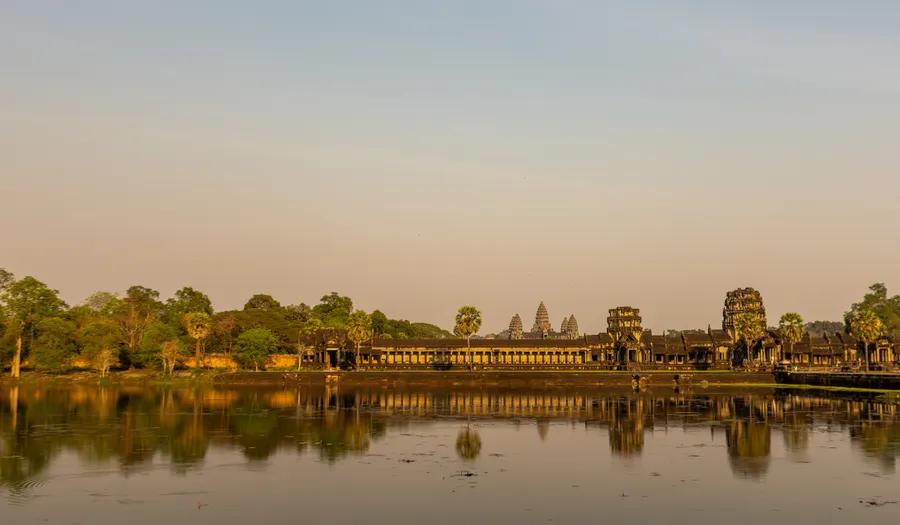
The largest religious complex in the world spreads over hundreds of hectares near Siem Reap. Angkor Wat at sunrise, the giant faces of the Bayon and the silk-cotton tree roots strangling Ta Prohm make up the unmissable trio. A three-day pass lets you explore the more distant temples, away from the crowds. Hiring a bike or a tuk-tuk for the day remains the best formula.
Phnom Penh

The capital blends a gilded Royal Palace, lively markets and a riverfront for strolling at sunset. The memorial sites of Tuol Sleng and Choeung Ek tell the tragedy of the Khmer Rouge with harrowing restraint. The National Museum holds the finest collection of Khmer art in the country. The city hums with raw energy, between trendy cafés and traditional stalls.
Battambang

The country's second city, Battambang charms with its well-preserved colonial architecture and laid-back atmosphere. The famous bamboo train, a platform speeding along old tracks, makes for an offbeat ride through the rice fields. The surroundings hide hilltop temples, bat caves and craft workshops. It is the ideal stop to slow down, far from the overcrowded circuits.
The Koh Rong islands

Off Sihanoukville, the archipelago reveals white-sand beaches and turquoise water worthy of the Caribbean. Koh Rong Sanloem, calmer than its neighbour, appeals to lovers of peace and quiet and diving. Bioluminescent plankton sometimes lights up night-time swims. You stay in a beachfront bungalow, cut off from the world.
Kampot and Kep

This southern region breathes an easy-going way of life, between a peaceful river and pepper-covered hills. Kampot charms with its faded colonial houses and sunset boat trips on the river. Kep, the former chic seaside resort, is famous for its crab market, where crab is served with green pepper. The pepper plantations are easy to visit by bike or scooter.
Tonle Sap Lake
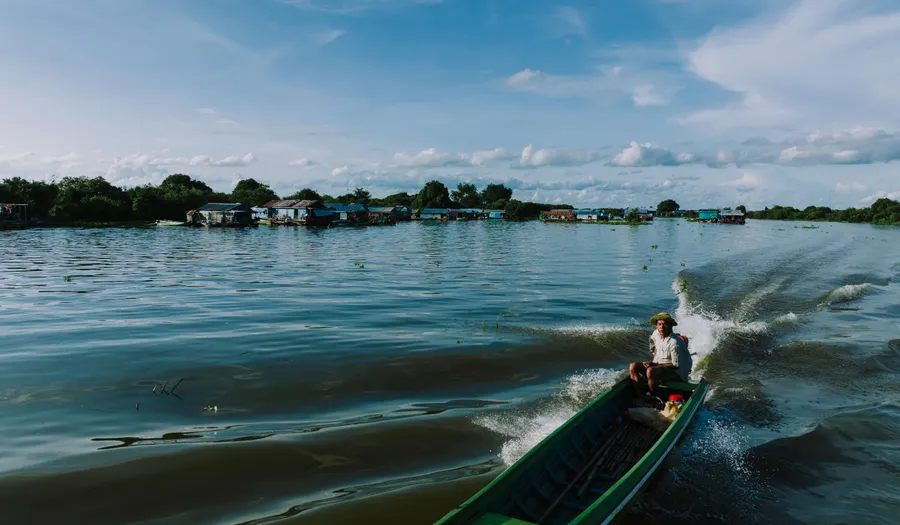
This immense lake, the largest in South-East Asia, swells and shrinks with the monsoons. Entire floating villages live here to the rhythm of the water, with schools, markets and temples on stilts. Kompong Phluk and its flooded forest offer a more authentic immersion than the overly touristy villages. A sunset outing by pirogue remains a moment out of time.
How many days, and which itinerary?
Allow 10 to 14 days to combine Angkor, the capital and some downtime on the coast or in Kampot without rushing.
🗺️ Day-by-day itinerary · 📓 Free printable Cambodia guide (PDF)
Khmer essentials (8 days)
From Siem Reap and its Angkor temples to Phnom Penh via Tonle Sap Lake. A packed first encounter blending heritage, memory and river life, ideal for a short first visit.
Temples and the gentle south (12 days)
Angkor, then down to Battambang and Phnom Penh, before ending in Kampot and Kep for the pepper and the crab. You alternate culture, countryside and food at a relaxed pace.
Grand tour with beaches (15 days)
The full circuit adds a few days of lazing on the Koh Rong islands after Angkor, the capital and the south. The perfect formula for those who want to see everything without rushing.
Getting there and getting around
The tuk-tuk is king for urban journeys and visiting Angkor: agree a day rate before you climb in.
Long-distance buses (Giant Ibis, Mekong Express) link the big cities comfortably and cheaply.
Renting a scooter (€5-8/day) is ideal in Kampot, but avoid Phnom Penh's chaotic traffic if you lack experience.
To save time, domestic flights link Siem Reap, Phnom Penh and Sihanoukville in under an hour.
Where to stay in Cambodia?
Hostels and guesthouses with dorms or single rooms: €5-12 a night, very common in Siem Reap.
Comfortable charming and boutique hotels: €25-50 a night, often with a pool.
Upmarket resorts and high-end bungalows on the islands: €80-150 and more.
Beachfront bungalows on Koh Rong Sanloem: €20-60 depending on comfort and season.
Our places to stay, stop by stop, at three budgets →
What to eat in Cambodia?
Amok, a mild fish curry made with turmeric paste and cooked in a banana leaf, is the national dish.
Lok lak, stir-fried beef served with rice, a fried egg and a lime and Kampot pepper sauce, delights on every street corner.
Kep's green-pepper crab, cooked to order at the crab market, is worth the trip on its own.
Kuy teav, a morning noodle soup in a fragrant broth, is served at stalls from dawn.
Entry requirements
A visa is required: EU, UK, US, Canadian and Australian passport holders can apply for the e-visa online or get one on arrival.
Rules change: check your own government's travel advice before you go.
Cities and regions to discover
Frequently asked questions about Cambodia
When is the best time to go?
The dry season, from November to March, offers the most pleasant climate with bearable temperatures. Avoid April-May, which is very hot, and the monsoon from June to October, which makes some tracks difficult.
What daily budget should you plan for?
Allow around €25 a day travelling as a backpacker, €60 for good comfort. The country remains very affordable for food and local transport.
Is Cambodia safe to travel in?
Yes, it is a generally peaceful destination where visitors are warmly received. Watch out for bag snatching in the big cities and never leave marked paths in isolated rural areas.
How do you get between cities?
Long-distance buses are comfortable and cheap for linking the main stops. To save time, domestic flights serve Siem Reap, Phnom Penh and the coast.
Similar destinations
 Country
🇻🇳 Vietnam
 City
City🇮🇩 Java
 Country
🇸🇳 Senegal
 City
City🇹🇭 Chiang Mai
 Country
🇮🇩 Indonesia
 Country
🇱🇰 Sri Lanka
 Country
🇳🇵 Nepal
 Country
🇨🇴 Colombia
 Country
🇬🇪 Georgia
 Region