When to go to Angkor and Siem Reap?
→ The detailed month-by-month page, with real weather records
Best time: November to February
At a glance
Why go to Angkor and Siem Reap?
Angkor is one of the largest archaeological sites in the world, a remnant of the Khmer Empire that dominated South-East Asia from the 9th to the 15th century. Monumental temples, sacred reservoirs and cities swallowed by the jungle spread over hundreds of square kilometres. Every carved stone bears witness to the architectural genius and spiritual fervour of a vanished civilisation.
The famous Angkor Wat, the largest religious building ever constructed, is only the gateway to a prodigious complex. You discover the enigmatic faces of the Bayon, the roots entwining Ta Prohm and dozens of more intimate sanctuaries. Sunrise over the towers of Angkor Wat remains a moment of pure emotion that nothing really prepares you for.
Siem Reap, the springboard town for the temples, offers a lively, warm counterpoint. Its markets, restaurants and night-time buzz let you catch your breath between two days of exploring. Meeting contemporary Khmer culture, as welcoming as it is resilient, completes the historical experience.
Map of Angkor and Siem Reap: what is where?
The map shows the 6 places covered in this guide, to picture the distances and plan your route.
- Angkor Wat
- Bayon
- Ta Prohm
- Angkor Thom and South Gate
- Banteay Srei
- Phnom Bakheng
How much does a trip to Angkor and Siem Reap cost?
Apart from the archaeological park entry ticket, Cambodia remains a very affordable destination. The Angkor pass is the main item of expenditure.
| Style | Per day | What it covers |
|---|---|---|
| Backpacker | €25-40/day | Dorm, street food and getting around by shared tuk-tuk |
| Comfort | €60-110/day | Hotel with a pool, restaurants and a private tuk-tuk for the day |
| Premium | €200+/day | Luxury resort, private guide and car with driver |
The US dollar is widely accepted, but keep some riel for small purchases and change at the market.
Is Angkor and Siem Reap safe?
Siem Reap and the Angkor site rank among the safest destinations in South-East Asia for travellers. The main risks are bag snatching and minor scams around the temples. Stay covered and hydrated, as the heat and sun are intense, especially between midday and mid-afternoon. Respect the dress code required in the sanctuaries, shoulders and knees covered, particularly to reach the upper levels of Angkor Wat.
What to see and do in Angkor and Siem Reap
- Angkor Wat
- Ta Prohm and its roots
- the Bayon and its faces
- sunrise over the temples
- the Siem Reap night market
Angkor Wat
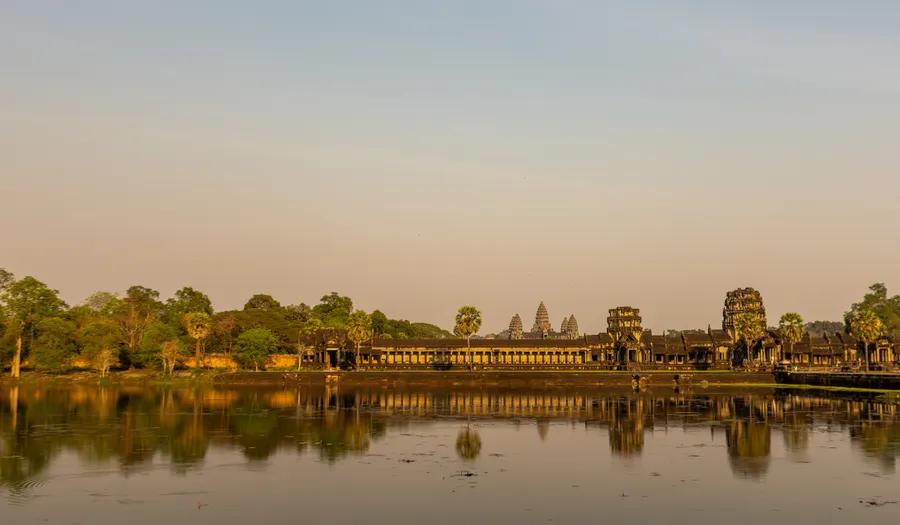
The absolute masterpiece of Khmer art, this 12th-century temple dedicated to Vishnu is the largest religious monument in the world. Its five lotus-bud towers symbolise Mount Meru, home of the gods. The galleries are adorned with extraordinarily fine bas-reliefs recounting epics and battles. Sunrise, setting its silhouette ablaze as it is reflected in the pools, is an absolute must.
Bayon
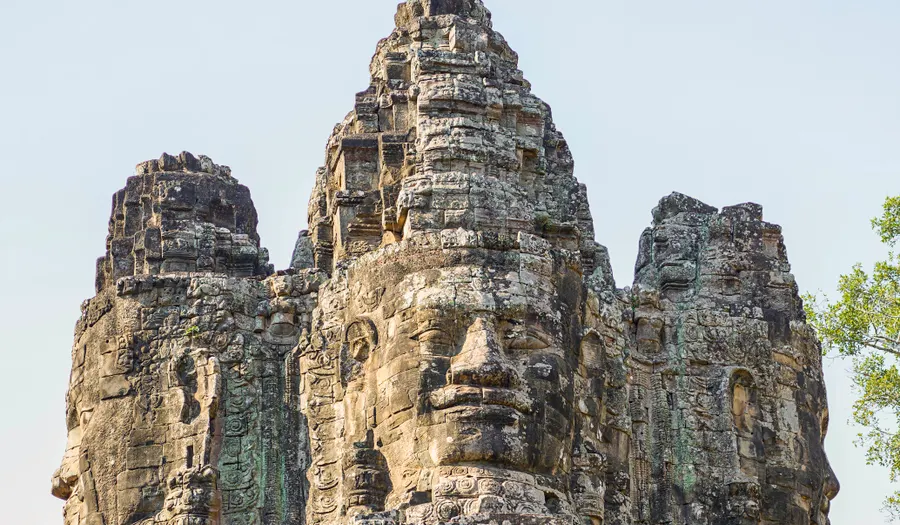
At the heart of the ancient city of Angkor Thom, the Bayon fascinates with its towers adorned with giant smiling faces. There are more than two hundred stone faces, thought to represent King Jayavarman VII merged with the Buddha. The temple reveals a labyrinth of galleries and bas-reliefs vividly depicting daily life. It is a mystical plunge into the golden age of the Khmer Empire.
Ta Prohm

This temple is famous for its giant silk-cotton trees, whose roots wrap around and split the stones. Deliberately left in its jungle setting, it offers a romantic vision of nature reclaiming its rights. Popularised by the cinema, it charms with its mysterious, photogenic atmosphere. Here, more than anywhere else, you feel the relentless passage of time.
Angkor Thom and the South Gate

The last great capital of the empire, this fortified city covered nine square kilometres. Its South Gate, flanked by statues of gods and demons pulling a naga serpent, makes for a majestic entrance. Inside stand the Bayon, the Baphuon and the Terrace of the Elephants. The whole complex conveys the scale of Khmer power at its zenith.
Banteay Srei

Nicknamed the citadel of women, this small pink sandstone temple dazzles with the finesse of its carvings. Its chiselled lintels and pediments are among the most delicate in all Khmer art. Located some thirty kilometres from the main site, it amply justifies the detour. Its modest size and rosy hue make it a jewel apart.
Phnom Bakheng
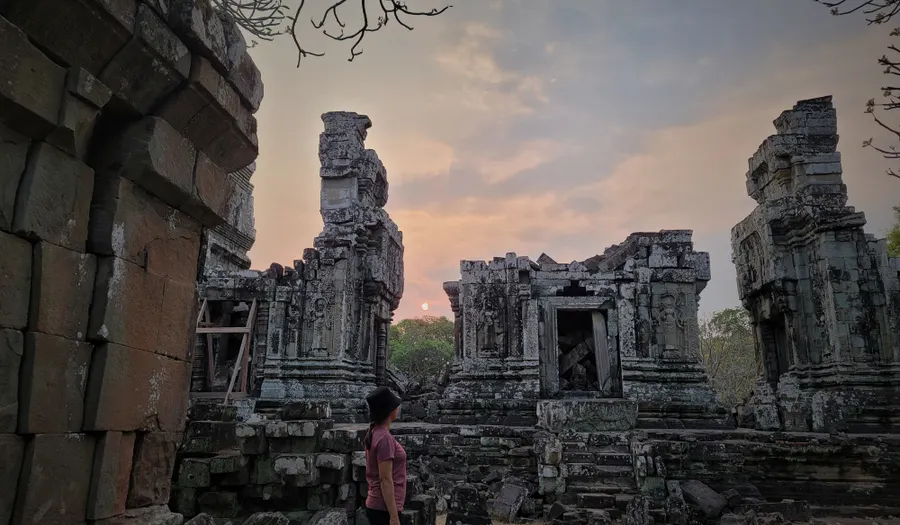
Perched on a hill, this temple-mountain offers the best viewpoint for admiring sunset over Angkor Wat. The climb is short, but access is regulated to protect the site. From the summit, your gaze takes in the plain, the distant towers and the endless canopy. It is the favourite meeting point for end-of-day lovers.
How many days, and which itinerary?
A 3-day pass is the optimal format for exploring the temples without rushing, but 2 days are enough for the must-sees.
🗺️ Day-by-day itinerary · 📓 Free printable Angkor and Siem Reap guide (PDF) · 🌍 All of Cambodia
Angkor essentials (2 days)
On the first day, discover Angkor Wat at sunrise, then Angkor Thom and the Bayon. The next day, explore Ta Prohm and branch out to the secondary temples of the Small Circuit.
Angkor in depth (3 days)
Add a day to reach distant Banteay Srei and its pink carvings. Finish with a sunset from Phnom Bakheng and an exploration of the less visited temples.
Angkor and Tonle Sap Lake (4 days)
Round off the three days of temples with an excursion to the floating villages of Tonle Sap Lake. This lakeside immersion offers a striking contrast with the stony grandeur of the temples.
Getting there and getting around
The tuk-tuk is the most popular and picturesque way to get around between the temples
Hiring a car with a driver gives you comfort and air conditioning for long days
Cycling appeals to the more active on the central circuit, which is fairly flat
Ride-hailing apps such as Grab work well within Siem Reap itself
Where to stay in Angkor and Siem Reap?
Hostels in Siem Reap: €6 to €12 a night in a dorm
Mid-range hotels with a pool: €25 to €50 a room
Charming Khmer-style resorts: €80 to €150 a night
Colonial luxury hotels: €200 and up a night
Our places to stay, stop by stop, at three budgets →
What to eat in Angkor and Siem Reap?
Amok, a fish curry steamed in a banana leaf, is the national dish
Lok lak, marinated stir-fried beef served with rice, is a great classic
The markets sell skewers, noodles and tropical fruit at low prices
Pub Street is packed with lively restaurants and bars in the evening
Entry requirements
A visa is required: EU, UK, US, Canadian and Australian passport holders can apply for the e-visa online or get one on arrival.
Rules change: check your own government's travel advice before you go.
Frequently asked questions about Angkor and Siem Reap
When is the best time to visit Angkor?
The dry season, from November to March, offers a more bearable climate, before the intense heat and the summer monsoon.
How many days should you allow for Angkor?
Two days cover the must-sees, but a three-day pass lets you explore the more distant temples without rushing.
What daily budget for Siem Reap?
Allow €25 to €40 a day as a backpacker and €60 to €110 for a comfortable stay, excluding the park ticket.
How do you get around the temples of Angkor?
The tuk-tuk is the most popular option, while a car with a driver offers more comfort for long days.
Which area should you stay in in Siem Reap?
The centre around Pub Street and the Old Market is ideal for nightlife, but the riverbanks offer more calm.
Similar destinations
 Region
🇮🇳 Rajasthan
 City
City🇹🇭 Chiang Mai
 Country
🇻🇳 Vietnam
 Country
🇮🇳 India
 Country
🇳🇵 Nepal
 City
City🇮🇳 Karnataka (Mysore and Hampi)
 Country
🇬🇪 Georgia
 City
City🇮🇩 Java
 Region
🇷🇴 Transylvania
 Region