When to go to Miyajima?
→ The detailed month-by-month page, with real weather records
Best time: April to May and October to November
At a glance
Why go to Miyajima?
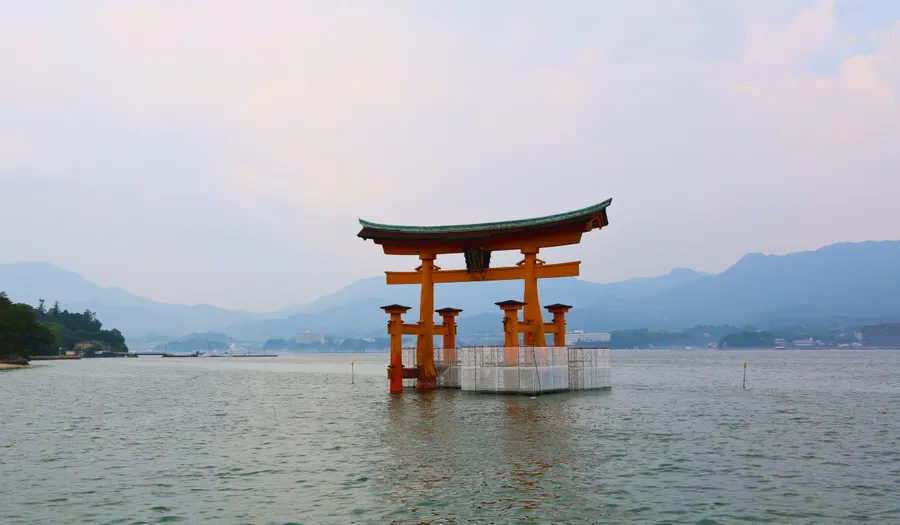
Itsukushima Shrine ranks among the three most celebrated views in Japan, and for once the reputation holds up. The vermilion galleries set on stilts, the noh stage and the great torii planted 200 metres from the shore were designed so that the sea would be part of the architecture: the building is only complete with the tide in. The ensemble has been UNESCO-listed since 1996, and the whole island has been considered sacred for more than a thousand years.
Behind the shrine begins a mountainous, wooded island that most visitors never see. Mount Misen rises to 535 metres above a protected primary forest, with a panorama over the islets of the Seto Inland Sea that more than justifies the climb. Three trails lead up in about two hours, and a ropeway does most of the work for those who want to keep their legs fresh.
Then there is the argument that changes everything: staying the night. From 17:00, the ferries carry the groups back towards Hiroshima and the island empties. The stalls on Omotesando pull down their shutters, the deer settle on the lawns, the torii stays lit until 23:00 and you find yourself more or less alone in front of it. Miyajima by day is a tourist site; Miyajima in the evening is another place.
Map of Miyajima: what is where?
The map shows the 6 places covered in this guide, to picture the distances and plan your route.
- Itsukushima Shrine
- Great torii
- Mount Misen
- Daisho-in Temple
- Momijidani Valley
- Miyajima ferry pier
How much does a trip to Miyajima cost?
The island itself costs little: entry fees are negligible and many sites are free. It is accommodation on the island, in a ryokan on half board, that makes all the difference to the budget.
| Style | Per day | What it covers |
|---|---|---|
| Backpacker | €60-90/day | Night in Hiroshima or a hostel, shrine and Daisho-in, Misen on foot, street oysters |
| Comfort | €120-180/day | Small hotel on the island, return ropeway ticket, anago-meshi in a restaurant, boat trip under the torii |
| Premium | €250+/day | Seaside ryokan with kaiseki dinner and private baths, guided tour of the shrine, transfers |
The larger establishments accept cards, but the Omotesando stalls, the island tax and the ropeway ticket machines often run on cash: keep some yen on you.
Is Miyajima safe?
Miyajima is a place of total tranquillity, with no notable crime or scams. The only real risks are animal and natural: the deer snatch paper bags, ferry tickets and maps left within reach of their muzzles, so put everything away and do not feed them, which has been banned since 2008. On Mount Misen, the trails are well marked but slippery after rain and unlit, so you need to be back down before nightfall. Finally, the ropeway closes as soon as the wind picks up, and summer can exceed 33°C with crushing humidity: climb early and bring water.
What to see and do in Miyajima
- Itsukushima's floating torii
- Itsukushima Shrine
- Mount Misen
- Miyajima Ropeway
- Daisho-in Temple
- Momijidani Valley
- Omotesando street and its grilled oysters
- Senjokaku and the five-storey pagoda
Itsukushima Shrine
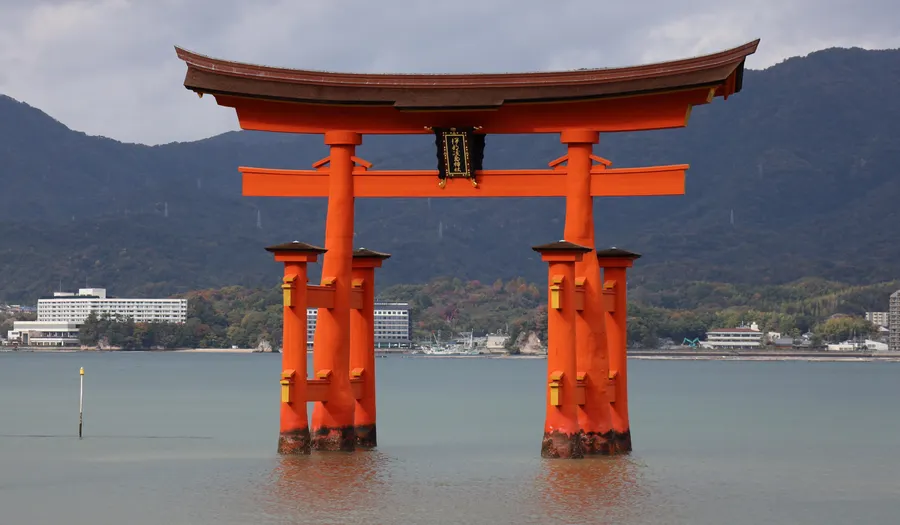
Founded in the 6th century and remodelled in the 12th by the Taira clan, the shrine unfurls 300 metres of lacquered wooden galleries just above the water. At high tide the floors seem to float and the reflection doubles the columns; at low tide you discover the stilts and the sandbank on which everything rests. The noh stage, added in the 16th century, is the only one in Japan built over the sea. Entry costs around €2 and the visit takes 30 to 45 minutes. Open from 6:30am, which is the best slot of the day.
The great torii
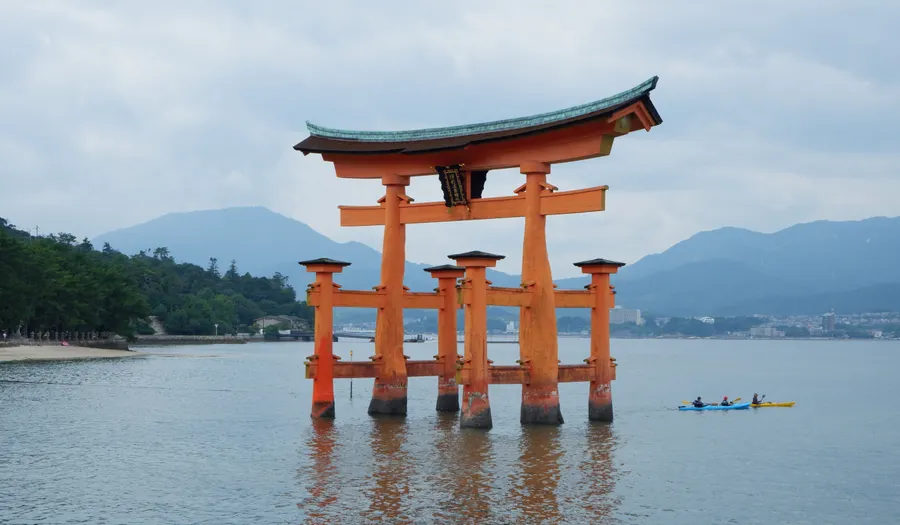
Standing 16.6 metres tall, the gate simply rests on the seabed under its own weight, its hollow pillars ballasted with stones. It was fully restored between 2019 and 2022, scaffolding and all, and has regained its vermilion. The floating effect only works above a 250 cm tide; below 100 cm, you can walk to its base across the wet sand. Both versions are worth seeing and say different things about the place. At night it is illuminated until 23:00.
Mount Misen
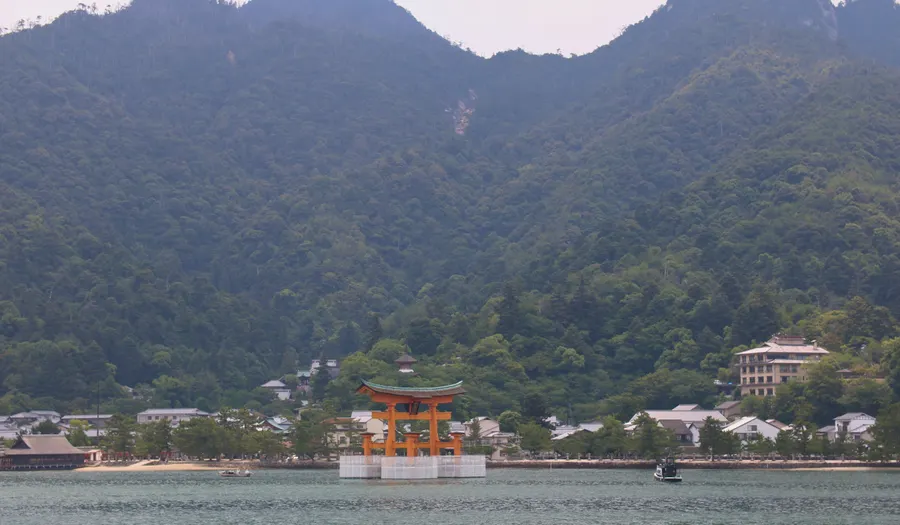
The island's high point, at 535 metres, is reached by three trails from the town: Momijidani (the steepest), Daisho-in (the shadiest, with stone steps) and Omoto (the longest). Allow 1 hour 30 to 2 hours to climb, or 15 minutes by ropeway to Shishiiwa station followed by a 30-minute walk. At the top, the Reikado hall shelters a flame kept burning for 1200 years, and the observatory looks out over dozens of islands in the Inland Sea. Bring water, as there are no shops along the way.
Daisho-in
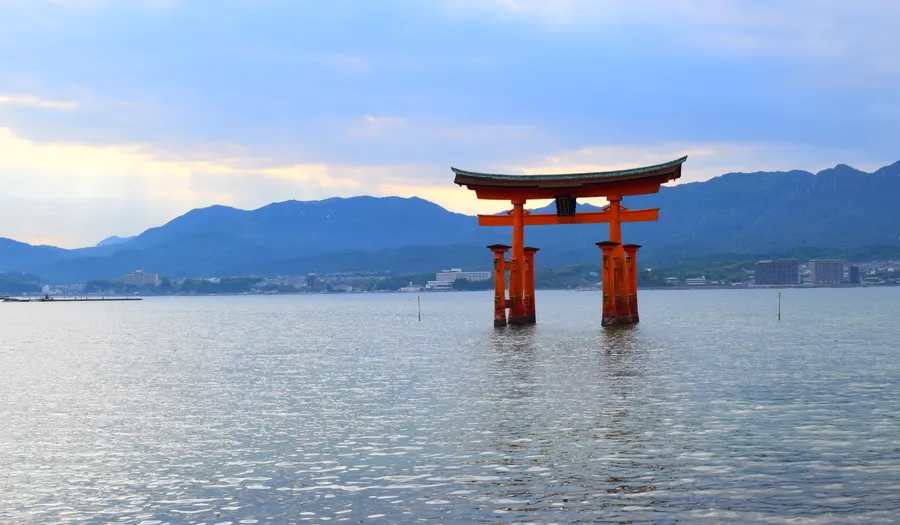
The island's most important Buddhist temple, fifteen minutes' walk from the shrine, is also its most relaxed. The entrance stairway is lined with metal prayer wheels that you spin as you climb, and the grounds are full of rakan statues wearing knitted hats. The Henjokutsu cave gathers the sacred objects of the 88 temples of the Shikoku pilgrimage in a half-light of lanterns. Entry is free and visitor numbers stay low. Allow 45 minutes.
Momijidani Valley
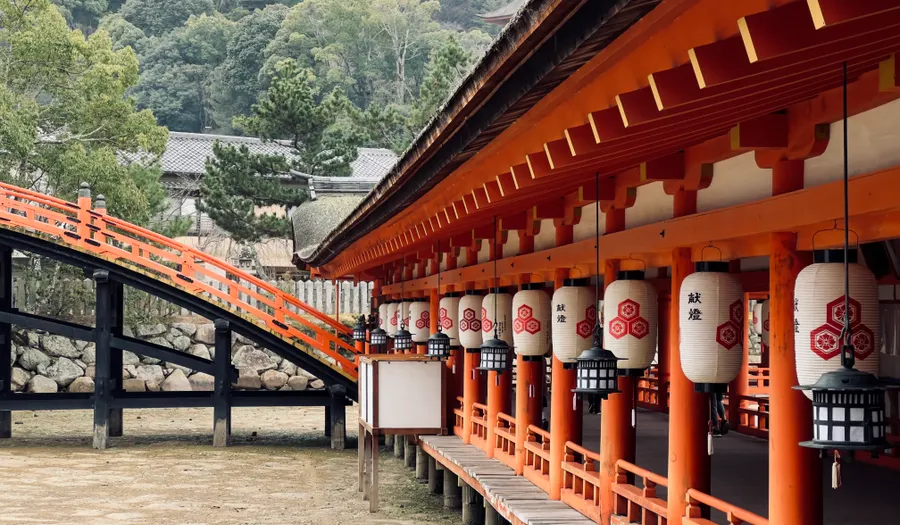
This little valley planted with 200 maples, ten minutes from the shrine, gives its name to momiji manju, the filled leaf-shaped cakes sold all over the island. In November the red lingers around ten days later than in Kyoto, as the mild maritime climate delays the colours. The rest of the year, it is a shady shortcut to the lower ropeway station and the start of the Misen trail. Deer wander freely. Free access at all hours.
The town and Omotesando
The covered street linking the ferry pier to the shrine is packed with stalls of grilled oysters, momiji manju makers and the largest rice paddle in Japan, 7.7 metres long. Miyajima is indeed the birthplace of the shamoji, the wooden rice paddle. Once past the curtain of shops, the parallel streets are calm and lined with wooden houses. Everything closes between 17:00 and 18:00, along with the flow of day-trippers. In the evening, only the ryokan serve dinner.
How many days, and which itinerary?
One day is enough for the shrine, Daisho-in and the shopping street. Two days with a night on the island completely change the experience and leave time to climb Misen without watching the clock for the last ferry.
🗺️ Day-by-day itinerary · 📓 Free printable Miyajima guide (PDF) · 🌍 All of Japan
Day trip from Hiroshima (1 day)
JR train to Miyajimaguchi then the ferry, arriving before 9am. The shrine at high tide, Daisho-in, lunch of anago-meshi on Omotesando, the ropeway and Mount Misen in the afternoon, back around 18:00. The most common format, dense but manageable.
A night on the island (2 days)
Arrive in the early afternoon, climb Misen while the island is still lively, then a night in a ryokan with an oyster dinner. In the evening, the illuminated torii almost to yourself; the next morning, the shrine at its 6:30am opening before the first ferry of tour groups. This is the format we recommend.
Miyajima and Hiroshima (3 days)
Two nights in Hiroshima for the Peace Memorial and museum, bracketing a night on Miyajima. This lets you add the island's hiking trails, Omoto temple and a boat trip passing under the torii at high tide. The right pace for not rushing anything.
Getting there and getting around
From Hiroshima, take the JR Sanyo line to Miyajimaguchi (27 min, about €2.50) then the 10-min JR ferry, covered by the Japan Rail Pass.
Since October 2023, an island visitor tax of ¥100 (about €0.60) is added to each crossing, payable at the counter or via a book of tickets.
The Hiroden tram from central Hiroshima is cheaper but takes 70 min against 27 by train: best kept for days with no time pressure.
On the island, everything is done on foot; a car is pointless and the town's streets are largely closed to traffic.
Where to stay in Miyajima?
Traditional ryokan with baths and an oyster kaiseki dinner, facing the sea: €200 to €400 for two, half board included.
Small hotel or family-run minshuku in the town's lanes: €90 to €150 for a double room, the sensible option for sleeping on the island.
Miyajima Guest House hostel: €30 to €45 per person, the only truly budget address, and it fills up fast.
Business hotel in Hiroshima or near Miyajimaguchi station: €60 to €100, if you prefer to keep the island as a day trip.
Our places to stay, stop by stop, at three budgets →
What to eat in Miyajima?
Grilled oysters sold individually on Omotesando, €2 to €3 each, at their best from October to March.
Anago-meshi, grilled conger eel on rice, the island's signature dish, served for around €15 to €20 in historic restaurants.
Momiji manju, maple-leaf-shaped cakes filled with red bean paste, custard or cheese, about €1 each.
Sake from the local brewery and Miyajima craft beer, best sampled in the late afternoon before everything closes.
Entry requirements
Visa-free for 90 days for EU, UK, US, Canadian and Australian passports.
Rules change: check your own government's travel advice before you go.
Frequently asked questions about Miyajima
Does the torii really float?
No. It rests on the seabed under its own weight and only appears to float above a 250 cm tide. Below 100 cm, you can walk to its base. Check the tide table before choosing your ferry time.
Should you stay the night on the island?
If your budget allows, yes. After 17:00 the island empties, the torii stays lit until 23:00 and the shrine opens at 6:30am before the first ferry of tour groups. It is two different experiences of the same place.
How do you get there from Hiroshima?
JR Sanyo line to Miyajimaguchi in 27 min, then the 10-min JR ferry, all covered by the Japan Rail Pass. Add ¥100 of island tax per crossing.
Can you climb Mount Misen without the ropeway?
Yes, three trails climb it in 1 hour 30 to 2 hours. The Daisho-in trail is the shadiest and most even. Even by ropeway, there is still a 30-minute walk to the true summit.
Can you approach the deer?
They are docile and used to people, but they rummage through bags and eat paper. Feeding them has been banned since 2008: keep food and tickets out of reach, and there is nothing more to worry about.
Similar destinations
 City
City🇮🇩 Bali
 Country
🇵🇭 The Philippines
 City
City🇬🇷 Corfu
 Region
🇬🇷 The Cyclades
 City
City🇵🇭 El Nido
 City
City🇲🇾 Langkawi
 Country
🇬🇷 Greece
 Region
🇬🇷 Crete
 Country
🇭🇷 Croatia
 Country