When to go to the Philippines?
→ The detailed month-by-month page, with real weather records
Best time: December to May
At a glance
Why go to the Philippines?
Picture more than 7,000 islands scattered like confetti across a turquoise sea, each with its hidden beach, secret lagoon and fishing village. The Philippines are not so much visited as collected, island after island, aboard an outrigger bangka. This is the archipelago where you come to drop your bag for a week and leave six months later, still unable to pick a favourite.
Here English is everywhere, smiles even more so, and the welcome disarms even the most jaded travellers. Filipinos have a word, bayanihan, for spontaneous mutual help, and you feel it the moment you set foot in a village. Few destinations in South-East Asia offer such immediate human warmth.
Beneath the surface, another world opens up: the Coral Triangle concentrates the greatest marine biodiversity on the planet right here. Whale sharks, turtles, sardine shoals swirling in silver tornadoes, Second World War wrecks at Coron. Whether you scuba dive or simply snorkel, the Philippine seas deliver on every promise.
Map of the Philippines: what is where?
The map shows the 6 places covered in this guide, to picture the distances and plan your route.
- El Nido, Palawan
- Chocolate Hills, Bohol
- Kawasan Falls, Cebu
- Banaue rice terraces
- Siargao
- Manila, Intramuros
How much does a trip to the Philippines cost?
An affordable destination, the Philippines weigh on the budget mainly through the cost of domestic flights and boat tours. Day-to-day life remains easy on the wallet.
| Style | Per day | What it covers |
|---|---|---|
| Backpacker | €30-45/day | Dorms, local canteens (carinderia), shared transport and a few group tours. |
| Comfort | €60-100/day | Air-conditioned double room, restaurants, regular domestic flights and the occasional private excursion. |
| Premium | €150+/day | Charming resorts, guided diving, direct flights and private boat transfers. |
Withdraw pesos from ATMs in town (fees of around 250 PHP per withdrawal), as the small islands lack ATMs and run on cash.
Is the Philippines safe?
The Philippines are generally safe for travellers, but it is best to avoid western Mindanao, which your government's travel advice warns against. Dengue is present all year round, especially in the rainy season: repellent and covering clothes at dusk are a must. Malaria persists only in a few remote rural areas of Palawan and Mindanao, and preventive treatment should be discussed case by case. Finally, watch out for currents and jellyfish when swimming, and keep an eye on the typhoon season from June to November.
What to see and do in the Philippines
- El Nido and Palawan
- the lagoons of Coron
- Boracay beach
- the Banaue rice terraces
- diving and snorkelling
El Nido, Palawan
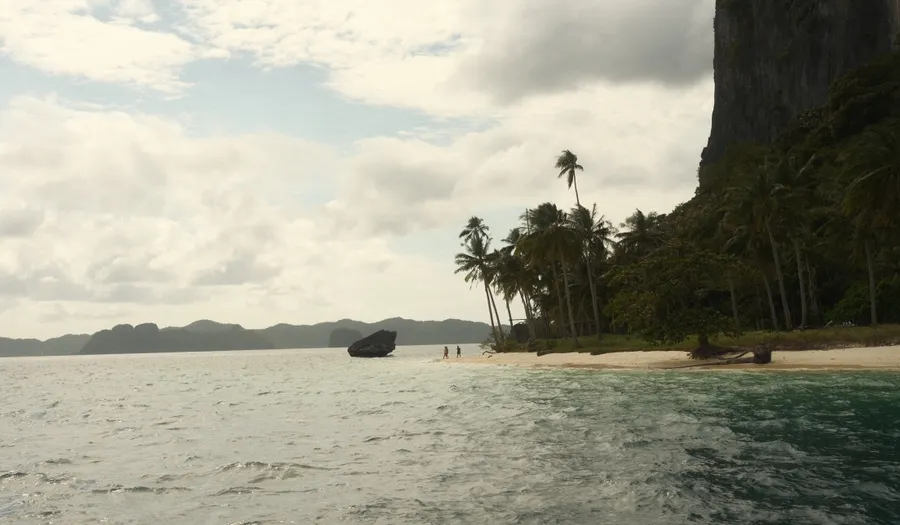
El Nido is the gateway to the legendary Bacuit archipelago, a constellation of karst cliffs shooting up from unreal water. You string together bangka tours (A, B, C, D) to sail between hidden lagoons, deserted beaches and sea caves. The Big Lagoon, explored by kayak at sunrise, is a moment suspended in time. The town itself is noisy and built-up, but you soon forget it once you are out at sea.
The Chocolate Hills, Bohol
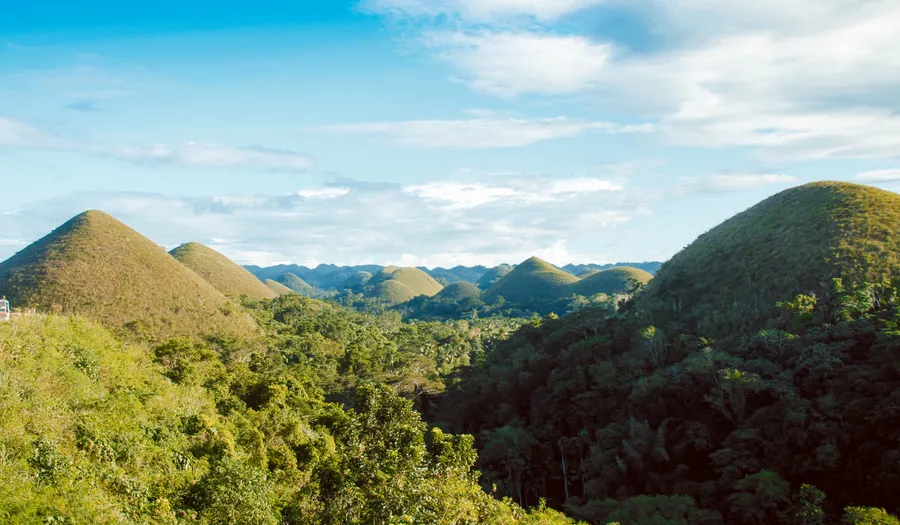
More than 1,200 almost identical conical hills roll away as far as the eye can see in the centre of Bohol. In the dry season their grass turns brown and takes on the cocoa colour that gives them their name. The Carmen viewpoint offers the most spectacular panorama, ideally early in the morning. Along the way you will meet tarsiers, tiny primates with huge eyes that fit in the palm of your hand.
Kawasan Falls, Cebu

This milky-blue waterfall, tucked into the jungle of southern Cebu, is a playground for canyoneering. You jump from pool to pool, slide down natural chutes and swim in almost fluorescent turquoise water. Allow three to four hours of guided adventure with helmet and life jacket. Come early to avoid the crowds of tours setting out from Moalboal.
The Banaue rice terraces

Carved into the mountainside more than two thousand years ago by the Ifugao people, these terraces form a dizzying green amphitheatre. The neighbouring village of Batad, at a dead end reachable only on foot, has the most photogenic tiers. You hike from hamlet to hamlet among water buffalo and rice planting. The altitude cools the air, a welcome contrast after the humidity of the beaches.
Siargao
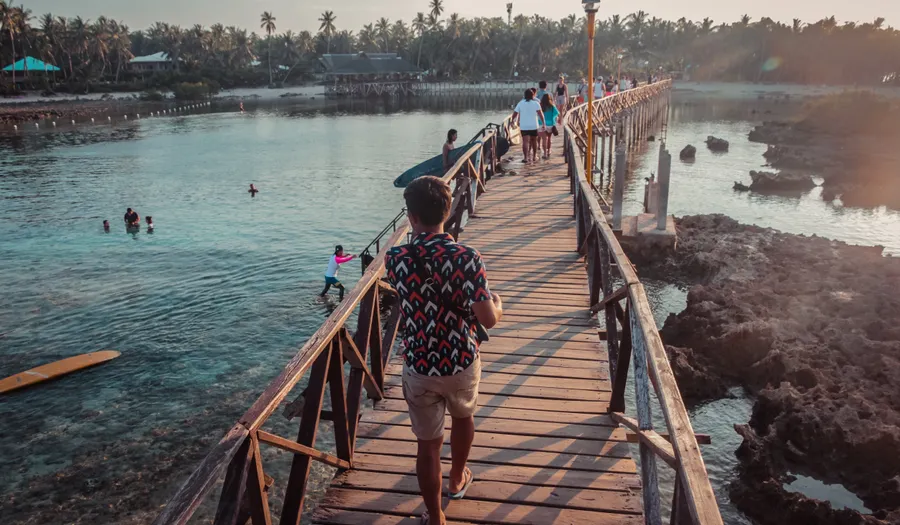
Long a surfers' secret, Siargao has become the cool island of the Philippines without losing its soul. The Cloud 9 wave draws riders from all over the world, but people also come for its emerald lagoons, natural rock pools and palm groves explored by motorbike. General Luna gathers bars, cafés and guesthouses in a laid-back atmosphere. Offshore, Naked Island is nothing but a sandbank sitting on the ocean.
Manila, Intramuros

A sprawling, chaotic capital, Manila is best tamed through its historic heart, Intramuros. Behind its Spanish ramparts you can visit Fort Santiago, San Agustin Church and the cobbled lanes by bicycle taxi. The neighbouring district of Binondo, the oldest Chinatown in the world, delights food lovers. Most travellers only pass through, but a day is enough to grasp the colonial, mixed soul of the country.
How many days, and which itinerary?
Two to three weeks let you combine Palawan, the Visayas (Bohol, Cebu or Siargao) and a trip to the rice terraces without constantly rushing.
🗺️ Day-by-day itinerary · 📓 Free printable Philippines guide (PDF)
Palawan in depth (10 days)
Fly into Puerto Princesa, head north to El Nido via the underground river, then set off on a multi-day boat expedition to Coron. A concentrate of lagoons, wrecks and wild beaches.
The grand Visayas tour (14 days)
Link Cebu and Bohol with its nature, then head to Siargao for surfing and lagoons. Cheap domestic flights and ferries connect the islands easily, for a varied route mixing diving, hiking and lazy days.
Rice terraces and beaches (18 days)
Start in the mountainous north with Banaue and Sagada, come back down to Manila, then fly to Palawan to finish with your feet in the water. A striking contrast between cordillera and archipelago.
Getting there and getting around
Flying is king: Cebu Pacific and Philippine Airlines link the islands for a few tens of euros, so book early for the best fares.
Ferries (fast craft and RoRo) connect neighbouring islands, handy but sometimes cancelled when the weather turns.
The jeepney, the iconic colourful bus, and the tricycle handle short trips for a few coins, a local experience in their own right.
Rent a scooter or motorbike on the smaller islands (Siargao, Bohol) to explore at your own pace; an international driving permit is recommended.
Where to stay in the Philippines?
Dorms and backpacker guesthouses: €6 to €15 a night, with a friendly vibe in El Nido, Siargao or Moalboal.
Double rooms in a simple resort or charming guesthouse: €25 to €50, often with breakfast and a fan or air conditioning.
Charming hotels and beachfront boutique resorts: €60 to €120, ideal for a comfortable break between adventures.
Upmarket private-island resorts (Amanpulo, El Nido Resorts): €250 and well beyond, for an exceptional interlude.
Our places to stay, stop by stop, at three budgets →
What to eat in the Philippines?
Adobo, the national dish: pork or chicken simmered in vinegar, soy sauce, garlic and bay leaf, served with rice.
Sinigang, a sour tamarind soup with prawns or pork and vegetables, comforting and tangy.
Lechon, spit-roasted suckling pig with wonderfully crisp skin, the star of festivals and of Cebu's markets.
Halo-halo, a kaleidoscopic iced dessert mixing shaved ice, sweet beans, flan, fruit and condensed milk.
Entry requirements
Visa-free for 30 days with a passport valid six months beyond arrival, for EU, UK, US, Canadian and Australian citizens, with proof of onward travel. Everyone must also register online on eTravel within the 72 hours before arrival.
Rules change: check your own government's travel advice before you go.
Cities and regions to discover
 City
City🇵🇭 Palawan
 City
City🇵🇭 Cebu
 City
City🇵🇭 El Nido
Frequently asked questions about the Philippines
When is the best time to go?
The dry season, from December to May, is ideal with clear skies and a calm sea. Avoid the typhoon season, from June to November, which hits the east coast and the north of the archipelago hardest.
What daily budget should I plan for?
Allow around €30 to €45 a day as a backpacker and €60 to €100 for a comfortable trip. Domestic flights and boat tours are the main expenses to plan for.
How do I get between the islands?
Flying is the fastest and often the cheapest option thanks to the low-cost airlines. Ferries link neighbouring islands, while jeepneys and tricycles handle local trips.
Is English spoken in the Philippines?
Yes, English is an official language and very widely spoken, including in rural areas. Communicating is therefore much easier than in most neighbouring countries.
Similar destinations
 City
City🇲🇾 Langkawi
 Country
🇹🇿 Tanzania
 Region
🇹🇭 Phuket and the southern islands
 City
City🇻🇳 Halong Bay
 City
City🇮🇩 Bali
 City
City🇯🇵 Miyajima
 City
City🇮🇩 Komodo
 City
City🇮🇩 Lombok
 Region
🇫🇷 Corsica
 Region