When to go to Iceland?
→ The detailed month-by-month page, with real weather records
Best time: June to September (northern lights: September to April)
At a glance
Why go to Iceland?
Iceland is tiny, yet its scenery changes every fifteen minutes. In a single day's drive you go from a field of frozen lava to a roaring waterfall, from a black-sand beach to a blue-tinged glacier, without ever passing more cars than sheep. This is a country you drive as much as you visit, with Route 1 as the common thread. Here, the steering wheel becomes the best of guides.
Nature here doesn't pretend. Geysers spout every five minutes, the earth steams beside the trails, and hot water bursts from the ground to fill open-air pools. You quickly understand why Icelanders still believe in elves hidden in the rocks: in this lunar landscape, everything seems alive. Geothermal energy is not an abstract idea, it is a whiff of sulphur and a scalding bath in the rain.
Iceland runs at two speeds depending on the season. In summer, the midnight sun wipes out the night and you can drive at 23:00 as if it were broad daylight, with the waterfalls swollen by meltwater. In winter, the country curls up under the snow and the sky blazes with green northern lights. Two radically different trips on the same island, to choose depending on whether you are chasing light or darkness.
Map of Iceland: what is where?
The map shows the 6 places covered in this guide, to picture the distances and plan your route.
- Golden Circle (Thingvellir)
- Seljalandsfoss
- Skogafoss
- Jokulsarlon
- Blue Lagoon
- Reykjavik
How much does a trip to Iceland cost?
Iceland is one of the most expensive destinations in Europe, between the cost of living and car hire. Cooking for yourself and staying in guesthouses quickly makes a difference.
| Style | Per day | What it covers |
|---|---|---|
| Backpacker | €110-150/day | Dorm or campsite, shared campervan, groceries from Bonus supermarkets, free hot springs. |
| Comfort | €200-300/day | Double room in a guesthouse, hire car, one or two restaurant meals and an excursion. |
| Premium | €350+/day | Boutique hotel, 4x4, glacier or whale-watching trips, gourmet dinners and the Blue Lagoon. |
The euro is not used: everything is paid in Icelandic krónur, and bank cards are accepted absolutely everywhere, even for a coffee.
Is Iceland safe?
Iceland is one of the safest countries in the world: crime is almost non-existent and you can travel with complete peace of mind, even alone. The real danger comes from nature: winds strong enough to rip off a car door, icy roads, and sneaker waves on the black beaches, where you must never turn your back on the ocean. No vaccinations are required and health standards are excellent, but treatment is expensive: the European Health Insurance Card is still valid even outside the EU thanks to the EEA agreement. Pack good warm and waterproof layers whatever the season.
What to see and do in Iceland
- the Golden Circle
- the Blue Lagoon
- the Gullfoss and Seljalandsfoss waterfalls
- the northern lights
- the glaciers and black beaches
Golden Circle

The unmissable trio less than two hours from Reykjavik. Here you see Thingvellir, the rift between two continents where the world's oldest parliament once sat, the Strokkur geyser, which erupts every five to ten minutes, and the mighty two-tiered Gullfoss waterfall. It can all be done in a day on paved roads. It is the best introduction before heading south.
Seljalandsfoss waterfall
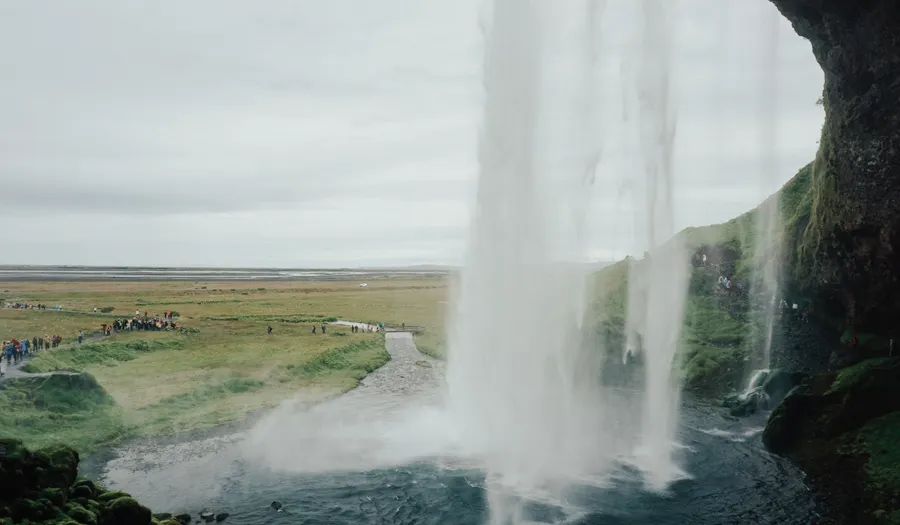
A sixty-metre falls you can literally walk behind, along a path that loops around the curtain of water. Bring a waterproof: you come out soaked but delighted. A few hundred metres away hides Gljufrabui, a waterfall tucked inside a narrow gorge. Late in the day, the light shines through the water and often creates a rainbow. It is one of the most photographed stops on the south coast.
Skogafoss waterfall

A wall of water twenty-five metres wide and sixty metres high, so powerful you feel the spray fifty metres away. A staircase of 527 steps climbs up the side and leads to the start of the Fimmvorduhals trek. Local legend has it that a Viking chest lies hidden beneath the falls. You hear the roar long before you see the water. It is the kind of place that puts human proportions firmly back in perspective.
Jokulsarlon glacier lagoon

Blue icebergs broken off Europe's largest glacier float in a lake right by the ocean, before drifting out to sea. Just opposite, on Diamond Beach, these blocks of ice wash up on the black sand like jewels. In summer you can weave between the icebergs by Zodiac. Seals often lounge here. It is the most spectacular spot in the whole southeast.
Blue Lagoon

A milky-blue geothermal pool in the middle of a lava field, twenty minutes from Keflavik Airport. The water, at 38 degrees, is rich in silica, and you can smear your face with free white mud. Be sure to book in advance, as time slots go fast. Ideal at the start or end of your trip, as a transition to or from the plane. It is expensive, but the experience remains unique in the world.
Reykjavik
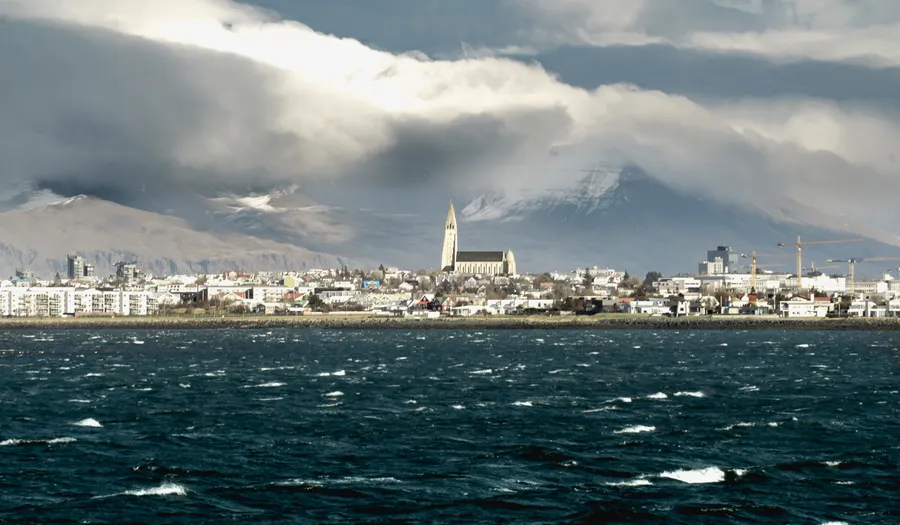
The world's northernmost capital feels more like a big, colourful village than a metropolis. You climb the tower of Hallgrimskirkja church for the view over the multicoloured tin roofs, stroll along the Laugavegur shopping street and bathe with the locals in the heated neighbourhood pools. Nightlife is surprisingly lively at weekends. It is the natural base camp for the trip.
How many days, and which itinerary?
Allow eight to ten days to drive the full Route 1 loop around the island without rushing, or four to five days for the south coast and the Golden Circle alone.
🗺️ Day-by-day itinerary · 📓 Free printable Iceland guide (PDF)
The south and the Golden Circle (5 days)
Ideal for a short first trip. You take in the Golden Circle, the Seljalandsfoss and Skogafoss waterfalls and the black beach at Vik, then push on to Jokulsarlon before heading back. Everything is on paved roads, no 4x4 needed.
The full island loop (9 days)
The great Route 1 loop, driven clockwise. Add the Eastfjords, Lake Myvatn in the north, the town of Akureyri and the Snaefellsnes peninsula. The pace stays brisk, but every day brings a new landscape.
Winter and northern lights (6 days)
Base yourself in Reykjavik and loop south each day, hunting for the aurora in the evening whenever the sky clears. Ice caves near Jokulsarlon are optional. Northern roads can close, so stay cautious and flexible.
Getting there and getting around
A hire car is all but essential: Route 1 runs all the way round the island and nothing is really served any other way.
A 4x4 is only useful for the F-roads of the Highlands, which are closed, and off-limits to standard vehicles, outside summer.
Long-distance buses do exist but are infrequent, expensive and slow; they help out without replacing a car.
Fill up whenever you can and check the weather on road.is and vedur.is before every journey, especially in winter.
Where to stay in Iceland?
Hostels and guesthouses with dorms: 35 to 60 euros a night, often with a shared kitchen.
Double room in a guesthouse or small hotel: 120 to 200 euros, the most common option outside the capital.
Boutique hotel or farm hotel with a view: 200 to 350 euros, book well ahead in summer.
Camping and campervans: 15 to 25 euros per person per pitch, the cheapest way to see the island.
Our places to stay, stop by stop, at three budgets →
What to eat in Iceland?
Plokkfiskur, a comforting bake of flaked fish, potatoes and béchamel, served with dark rye bread.
Kjotsupa lamb soup, simmered with root vegetables, a national dish that warms you up after a day on the road.
The Icelandic pylsur hot dog, with crispy onions and remoulade, a cult snack sold at every petrol station.
Skyr, a thick, protein-rich yoghurt, served as a dessert or for breakfast all over the country.
Entry requirements
Schengen area: an ID card or passport for EU citizens, 90 days visa-free for UK, US, Canadian and Australian passports.
Rules change: check your own government's travel advice before you go.
Cities and regions to discover

Frequently asked questions about Iceland
When is the best time to see the northern lights?
From late September to early April, when the nights are long and dark enough. You need a clear sky and enough solar activity, ideally far from city lights. In summer, the midnight sun makes them invisible but offers other wonders.
What daily budget should I plan for in Iceland?
Allow at least 110 euros a day as a backpacker camping and cooking your own meals, around 250 euros for a comfortable trip in guesthouses with a car, and more than 350 euros for top-end travel with excursions.
How do I get around the island?
A hire car is by far the best option, with Route 1 running all the way round the country. A standard vehicle is enough outside the Highlands; a 4x4 is only required for the F-roads, which open only in summer.
Which season should I choose, summer or winter?
Summer offers constant daylight, open roads and swollen waterfalls, ideal for the full loop. Winter brings the northern lights and ice caves, but roads are sometimes closed. The choice depends on what you are after: light or darkness.
Similar destinations
 Region
🇪🇸 The Canary Islands
 Country
🇳🇴 Norway
 Region
🇳🇴 The North Cape
 Region
🇳🇴 The Norwegian Fjords
 Region
🇳🇴 The Lofoten Islands
 Region
🇦🇷 Patagonia
 City
City🇳🇴 Tromsø
 Region
🇫🇷 Corsica
 Region
🇫🇷 The French Basque Country
 Region