When to go to Mauritius?
→ The detailed month-by-month page, with real weather records
Best time: May to November
At a glance
Why go to Mauritius?
Mauritius packs turquoise lagoons, jagged mountains and a richly mixed culture into a pocket-sized island. Indian, Creole, African, Chinese and European influences meet here in a harmony that shows as much in the temples as on the plate. You come for the beach and leave touched by the warmth of the people and the variety of the landscapes.
Long pigeonholed as a honeymoon destination, Mauritius turns out to be far more adventurous than it looks. The mountainous interior offers hikes, waterfalls and forests, while the wild south unrolls cliffs pounded by the ocean. Between swims, you can dive the reefs, visit sugar cane plantations and explore fishing villages.
Mauritius also knows how to be accessible, with accommodation ranging from beach luxury to small Creole guesthouses. The country's stability, the quality of its infrastructure and its French-speaking welcome make it an ideal gateway to the Indian Ocean. It is an island where you can just as easily do nothing at all as pile up discoveries.
Map of Mauritius: what is where?
The map shows the 6 places covered in this guide, to picture the distances and plan your route.
- Port Louis
- Le Morne Brabant
- Chamarel
- Île aux Cerfs
- Grand Baie
- Black River Gorges National Park
How much does a trip to Mauritius cost?
Mauritius offers a wide range of prices, from budget stays in guesthouses to beach luxury. Everyday living costs remain moderate.
| Style | Per day | What it covers |
|---|---|---|
| Backpacker | €40-70/day | Guesthouses, street food and markets, bus travel, free beaches. |
| Comfort | €100-180/day | Mid-range hotel, hire car, restaurants and a few excursions. |
| Premium | €300+/day | All-inclusive luxury resort, spa, private activities and fine dining; a notch below a Botswana safari, but far from cheap. |
The currency is the Mauritian rupee; cards are widely accepted, but carry cash for markets and small shops.
Is Mauritius safe?
Mauritius is a safe, politically stable destination where crime is low and rarely violent. Watch out for pickpockets at tourist sites and don't leave valuables unattended on the beach. There is no malaria on the island, but a few cases of dengue can occur, so mosquito protection is useful. Swimming in the lagoons is a pleasure, but beware of currents beyond the coral reef and stick to supervised areas.
What to see and do in Mauritius
- dreamy lagoons and beaches
- the 7 Coloured Earths of Chamarel
- Île aux Cerfs
- the Pamplemousses garden
- diving and snorkelling
Port Louis

The Mauritian capital blends commercial bustle and colonial heritage against a mountain backdrop. Its central market overflows with tropical fruit, spices and crafts, while the Caudan Waterfront gathers shops and restaurants. Here you can visit Aapravasi Ghat, a UNESCO-listed immigration depot that preserves the memory of indentured labour. The nearby temples, mosques and churches tell the story of the island's mixed heritage.
Le Morne Brabant

This peninsula, dominated by a spectacular mountain, is a powerful symbol of the memory of slavery and a UNESCO World Heritage Site. Runaway slaves once took refuge here, and the mountain still carries that poignant history. Its beaches, among the finest on the island, make it a renowned kitesurfing spot. The guided climb to the summit rewards you with a dizzying panorama over the lagoon.
Chamarel Seven Coloured Earths

At Chamarel, dunes of volcanic soil display shades of red, ochre, violet and blue in a fascinating geological phenomenon. The site sits next to a fine waterfall plunging into a green amphitheatre. The area is also known for its craft rum and coffee, to be tasted on the spot. An essential stop for anyone exploring the island's mountainous south-west.
Île aux Cerfs
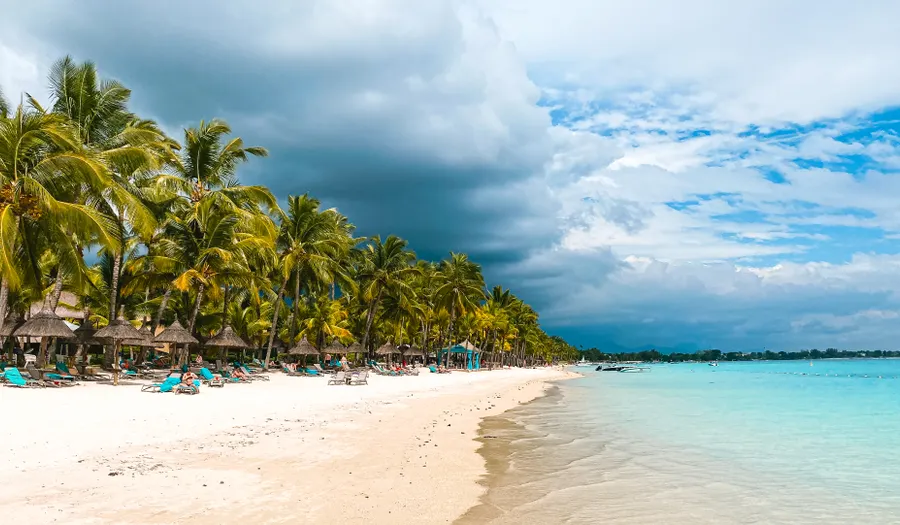
This islet off the east coast is the Mauritian postcard come to life, with its turquoise lagoon and white sand beaches. You reach it by boat for the day, for swimming, water sports and lunch with your feet in the water. A renowned golf course winds between coconut palms and inlets. Despite the crowds, the place keeps an undeniable seaside charm.
Grand Baie
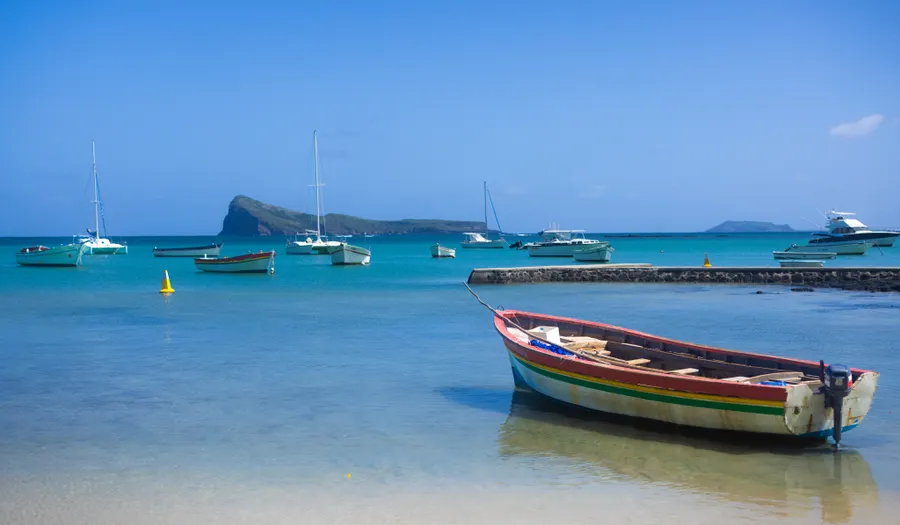
A lively resort in the north, Grand Baie is the heart of the island's nightlife and water sports. Its sheltered bay lends itself to sailing, diving and trips out to the northern islets. Shops, restaurants and bars draw an international crowd. It is a handy, lively base for exploring the whole north coast.
Black River Gorges National Park

This vast park protects the last large tracts of native forest in Mauritius, a refuge for endemic species such as the kestrel. Its hiking trails lead to spectacular viewpoints over wooded gorges and waterfalls. You can spot rare plants and well-preserved birdlife, far from the bustle of the coast. The gorge viewpoint offers one of the finest panoramas on the island.
How many days, and which itinerary?
A week lets you sample the beaches and a few excursions; ten to fourteen days allow a proper tour of the island.
🗺️ Day-by-day itinerary · 📓 Free printable Mauritius guide (PDF)
Beach and culture escape (7 days)
A base in the north or west to alternate beaches, diving and visits to Port Louis and Chamarel. Round it off with a day on Île aux Cerfs and a hike in the Black River Gorges. The ideal format for a first week in Mauritius.
The full island tour (12 days)
A route that circles Mauritius, from the lively north to the wild south by way of the quieter east. It mixes beaches, mountain hikes, plantations and fishing villages. Enough time to slow down and truly feel the island's diversity.
Mauritius nature and lagoon (10 days)
This route favours the mountainous interior and the underwater world: Black River Gorges, Chamarel, reef diving and boat trips. Keep some lazy days on the finest beaches of the south-west. Perfect for lovers of nature and water.
Getting there and getting around
Hiring a car is the most practical way to discover the island, with driving on the left and a good road network.
Public buses criss-cross the island cheaply, but they are slow and ill-suited to remote tourist areas.
Taxis and private transfers are reliable; agree the fare in advance for day trips.
Boat excursions take you to islets such as Île aux Cerfs or the northern islands.
Where to stay in Mauritius?
Guesthouses and small Creole hotels: from around €30 to €60 a night, often in family homes.
Mid-range beachfront hotels: around €80 to €150 a night with lagoon access.
Comfortable all-inclusive resorts: generally €200 to €350 a night.
Luxury resorts and private villas: easily €400 to €900 and more a night, with top-end service.
Our places to stay, stop by stop, at three budgets →
What to eat in Mauritius?
Mauritian curry, in chicken, fish or vegetable versions, is eaten with rice and fragrant chutneys.
Creole street food reigns in the markets: dholl puri, gâteaux piment and rotis are eaten on the go.
Seafood, from grilled fish to ourites (octopus), abounds at beachfront restaurants.
Rhum arrangé and Bois Chéri tea round off meals, legacies of the island's sugar and tea heritage.
Entry requirements
No visa needed for EU, UK, US, Canadian and Australian passports. EU citizens can usually stay up to 90 days, UK, US, Canadian and Australian citizens up to 60 days, with the date set by the officer on arrival. Carry a return ticket and fill in the All in One Travel Form online before you fly.
Rules change: check your own government's travel advice before you go.
Frequently asked questions about Mauritius
When is the best time to visit?
The southern winter, from May to November, brings a dry, pleasant climate, ideal for hiking and the beach. The summer, from December to April, is hot and humid, with a risk of cyclones between January and March.
What daily budget should I plan for?
Allow around €40 to €70 a day as a backpacker, €100 to €180 for a comfortable trip, and from €300 a day for a stay in a luxury resort.
Are there any health risks?
There is no malaria on the island and no vaccinations are compulsory. Mosquito protection is still advisable because of rare cases of dengue, and tap water is generally drinkable in tourist areas.
How do I get around the island?
Hiring a car is the most flexible option, with driving on the left on a decent road network. Cheap buses and taxis round out the choice for those who would rather not drive.
Similar destinations
 Country
🇸🇨 The Seychelles
 Country
🇹🇿 Tanzania
 Country
🇲🇻 The Maldives
 Country
🇵🇫 French Polynesia
 City
City🇵🇫 Bora Bora
 Region
🇪🇨 The Galápagos Islands
 City
City🇵🇫 Moorea
 City
City🇲🇬 Nosy Be
 City
City🇸🇪 Stockholm
 City
City