
Best time to travel in the Maldives?
→ The detailed month-by-month page, with 2015-2024 averages
Best time: January to April
- ✓Calm sea and ideal visibility for snorkelling
- ✓Near-constant sunshine over the atolls
- ✓More comfortable seaplane and dhoni transfers
- ✗Resort rates at their peak at Christmas and New Year
- ✗Overwater villas to book very early
- ✓Manta ray season, notably at Hanifaru Bay
- ✓Much gentler resort rates
- ✗Frequent squalls and choppier sea
- ✗Reduced visibility for diving
Temperatures and rainfall modelled for Malé and the capital · averages over recent years, Open-Meteo data (ERA5 reanalysis).
Tropical, with a sunny dry season and calm seas in winter. The best time to visit the Maldives is January, February, March and April, with temperatures reaching 29-31°C. By contrast, May, June, July, August, September, October, November and December are generally less favourable (less pleasant weather or big crowds, depending on the destination), although a trip is still possible with some planning. In high season, book early: prices and visitor numbers climb fast.
Go against the flow. To avoid the crowds without sacrificing too much on the weather, aim for June, September, October, November and December: the crowds thin out, prices drop too, and the climate stays pleasant.
Do these months appeal to you? See what's best elsewhere too: where to go in January · where to go in February · where to go in March · where to go in April.
At a glance
Why go to the Maldives?
The Maldives are like no other destination: a string of 1,200 islands scattered across 26 coral atolls, with an average elevation of barely more than a metre. The water takes on shades you would swear were retouched, from the milky turquoise of the lagoons to the deep blue of the channels. Here geography sets the pace: you travel by boat or seaplane, never by car. This is a country you experience with your feet in the water.
Long the preserve of eye-wateringly expensive honeymoons, the archipelago quietly opened its local islands to tourism in 2009. The result: two Maldives now coexist. One of private overwater resorts, all-inclusive and cut off from the world, and one of the guesthouses of Maafushi or Dhigurah, where you share the daily life of fishermen for a fraction of the price. The same lagoon, two radically different budgets.
The real action happens beneath the surface. The Maldives rank among the best diving and snorkelling spots on the planet, with giant manta rays, placid whale sharks and coral gardens that are still alive. Hanifaru Bay, in Baa Atoll, hosts at the right moment one of the largest manta gatherings in the world. You come for the beach and leave marked by what lies below.
Tourist map of the Maldives: what's where?
The map below pinpoints the 6 places covered in this guide: a handy way to picture the distances between each stop and plan your route in the Maldives.
- Malé
- Baa Atoll, Hanifaru Bay
- Maafushi
- Overwater resort villas
- Diving and coral reefs
- Sandbanks and lagoons
How much does a trip to the Maldives cost in 2026? Budget calculator
Estimate your budget for the Maldives based on your travel style: accommodation, meals, activities and local transport included (flights excluded). Adjust the length and the number of travellers, and the totals update.
Totals for all travellers over the chosen length; the daily amount is per person. Flights extra, indicative amounts to adjust depending on the season.
Resorts run on all-inclusive and card payments, but keep some dollars or rufiyaa in cash for the local islands.
Safety in the Maldives: should you be worried?
The Maldives are among the safest destinations in Asia, with very low crime on the tourist islands. The main risk comes from the sea: currents in the channels, sunburn and sharp coral, hence the importance of good insurance that covers diving. On local islands, respect Muslim dress codes away from the bikini beaches and be aware that alcohol is banned there, reserved for resorts. No vaccinations are compulsory, but pack a first-aid kit and reef-safe sunscreen.
Things to see and do in the Maldives
Our first-hand favourites, and the great classics:
- the overwater villas
- diving and snorkelling
- the white sand beaches
- the turquoise lagoons
- spa days and lazing about
What to book before you go to the Maldives →
🧭 Discover the Maldives itinerary, day by dayMap, timings, budget and where to stay: free to access, to fit your dates. Create my tailor-made itinerary →Malé and the capital
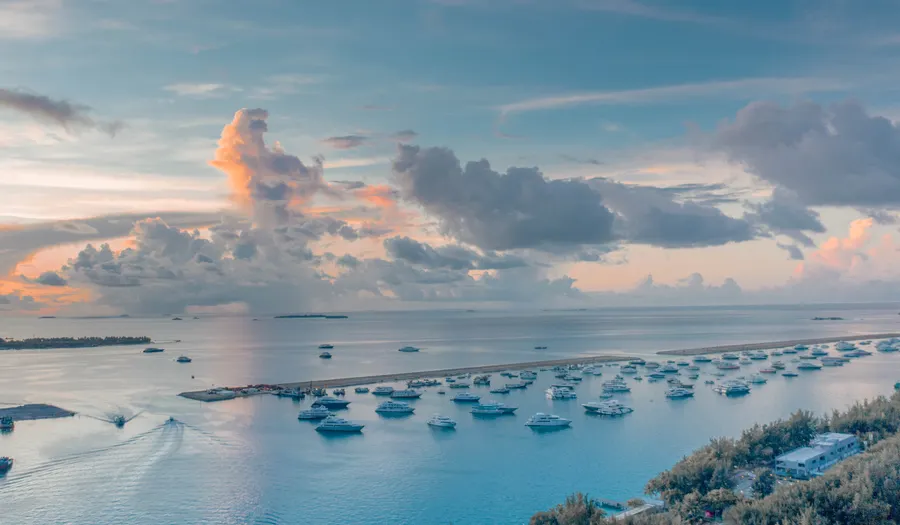
Gateway to the archipelago, Malé is one of the most densely populated capitals in the world, crammed onto a tiny island. You can visit the Friday Mosque and its coral minaret, the lively fish market and the alleys buzzing with scooters. Most travellers spend only a few hours here before heading off to their atoll. Yet it is the only place where you really get a feel for everyday urban Maldivian life.
Baa Atoll and Hanifaru Bay
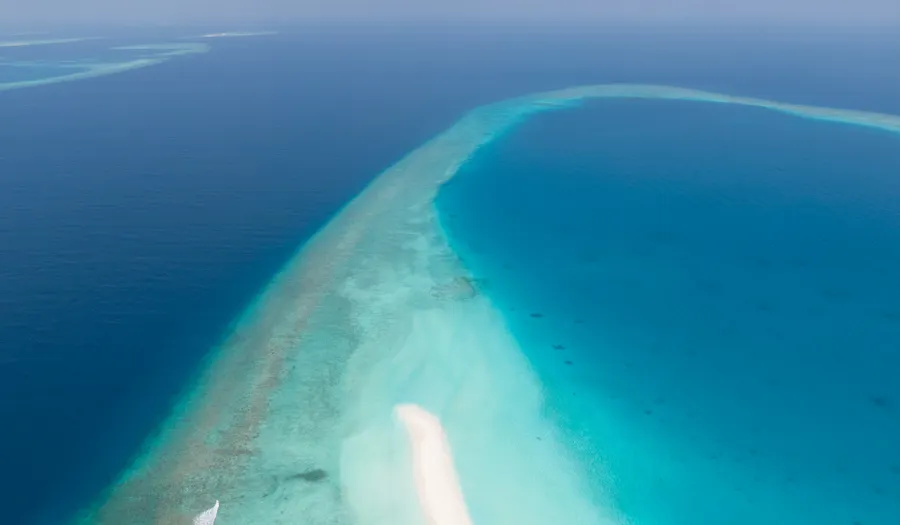
Designated a UNESCO biosphere reserve, Baa Atoll protects exceptional coral ecosystems. Hanifaru Bay is world-famous for its gatherings of manta rays and sometimes whale sharks, drawn by the plankton between May and November. Access is by guided snorkelling only, as scuba diving is banned to protect the site. Watching dozens of mantas wheeling above you is an unforgettable memory.
Maafushi, the local island

A pioneer of budget tourism, Maafushi is home to most of the archipelago's affordable guesthouses. You sleep for a tenth of the price of a resort while getting the same excursions: snorkelling, sunset dolphin trips, picnics on a sandbank. A bikini beach reserved for tourists sidesteps the local dress code. It is the ideal backpacker's gateway to the Maldives.
Overwater villa in a resort

The ultimate postcard image: a wooden bungalow set over the lagoon, with a ladder straight down into the turquoise water. Each resort occupies its own private island, with spa, restaurants and dive centre. All-inclusive reigns supreme, with drinks and activities often included depending on the package. This is disconnected luxury at its finest, best saved for a special occasion.
Diving and coral reefs
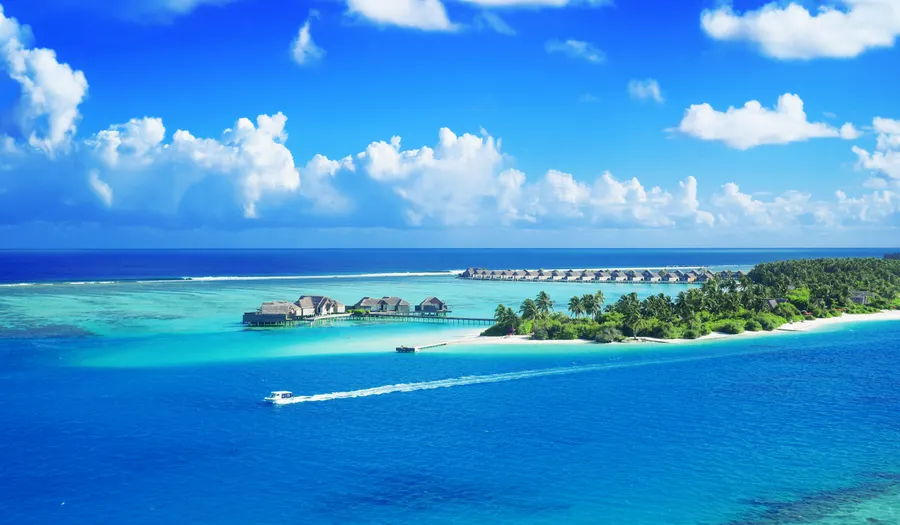
The Maldives offer rare visibility and biodiversity, with current-swept channels where rays, turtles and schools of trevally parade past. Sites such as thilas and wrecks suit beginners and experienced divers alike. The water temperature, around 28 degrees all year round, lets you dive in a light wetsuit. Many travellers earn their first certification here.
Sandbanks and deserted lagoons

These tongues of white sand rising from the lagoon give the perfect illusion of an island all to yourself. Guesthouses and resorts run half-day excursions here, sometimes with a secluded picnic. Depending on the tide, the sandbank appears and then vanishes under the water, a shifting, fleeting setting. It is the dream spot for a moment outside time, with no signal and no neighbours.
How many days, and which itinerary in the Maldives?
Allow a week to combine a local island and a resort, ten days if you want to explore several atolls or dive seriously.
🗺️ Day-by-day Maldives itinerary · 📓 Printable Maldives travel guide (PDF)
Local island and lagoon week (7 days)
Three nights in Maafushi for snorkelling and dolphin trips, then a transfer to a resort in South Malé Atoll to finish on stilts. A formula that blends a controlled budget with a few nights of luxury.
Baa Atoll diving immersion (10 days)
A fixed base in a guesthouse on Dharavandhoo or Dhigurah, with daily trips to Hanifaru and the surrounding reefs. Ideal between May and November to maximise your chances of meeting mantas and whale sharks.
How to get to the Maldives and get around?
Seaplane or domestic flight to reach the far-flung atolls, the only way to get to isolated resorts, and often expensive.
Cheap public ferry from Malé to Maafushi and a few local islands, but with limited timetables and no service on Fridays.
Private speedboat booked through guesthouses and resorts, faster but far more expensive than the ferry.
On the islands, everything is done on foot or by bike: you can cross them in a few minutes.
Where to stay in the Maldives?
Guesthouse on a local island (Maafushi, Dhigurah): €40 to €90 a night, breakfast often included.
Charming hotel or comfortable guesthouse with sea view: €90 to €180 a night.
Mid-range overwater resort: €350 to €700 a night on half board.
Private all-inclusive luxury resort: €1,000 a night and far more.
Our picks stop by stop, in three price ranges →
What to eat in the Maldives?
Mas huni, flaked tuna with coconut and chilli, served at breakfast with flatbread.
Garudhiya, a fragrant tuna broth served with rice, lime and chilli.
Hedhikaa, small fried snacks such as bajiya and gulha, nibbled at any hour.
Grilled catch of the day, tuna or grouper, the mainstay of every meal in the archipelago.
Which kind of traveller is it for?
The Maldives lend themselves to a relaxing, romantic and nature-focused trip. Go as a couple and you will find your own pace there. As for accommodation, it is mostly resorts.
Entry requirements & practical info
A free 30-day tourist visa on arrival for EU, UK, US, Canadian and Australian passports, with a confirmed hotel booking, a return ticket and enough funds. Fill in the online IMUGA traveller declaration within the 96 hours before arrival.
Rules change: before you leave, check your country's official travel advice.
Once there, to stay online without paying roaming charges, an The Maldives eSIM activates in a few minutes and works as soon as you land (plans from €12.99). Remember suitable travel insurance too.
Frequently asked questions about the Maldives
When is the best time to go?
The dry season, from December to April, brings the most sunshine and a calm sea, ideal for diving. To see manta rays at Hanifaru, aim instead for the monsoon from May to November, wetter but richer in marine life.
What daily budget should I plan for?
Allow around €70 a day staying on a local island, €200 to €400 for comfort and well over €800 in a luxury resort. Excursions and seaplane transfers quickly add up.
How do you get around between the islands?
By cheap public ferry, private speedboat or seaplane for the more distant atolls. Resorts always arrange the transfer from Malé airport, which needs to be factored into your budget.
Can you visit the Maldives on a small budget?
Yes, since the local islands opened up in 2009, staying in guesthouses and travelling by ferry makes the archipelago accessible from €60 a day. You get the same lagoons and excursions as resort guests for a fraction of the price.
Similar destinations
 Countries
🇲🇺 Mauritius
 Countries
🇸🇨 The Seychelles
 Region
🇹🇭 Phuket and the southern islands
 City
🇻🇳 Halong Bay
 City
🇮🇩 Bali
 Countries
🇵🇭 The Philippines
 Countries
🇵🇫 French Polynesia
 City
🇯🇵 Miyajima
 City
🇵🇫 Bora Bora
 Region