When to go to Albania?
→ The detailed month-by-month page, with real weather records
Best time: May to September
At a glance
Why go to Albania?
Albania is the last frontier of European travel, a country long closed to the world that is now opening up with infectious energy. Its Riviera beaches rival those of neighbouring Greece for a fraction of the price, and its northern mountains offer some of the wildest hiking on the continent. You still come across bunkers left over from the dictatorship, witnesses to a singular history. This is a destination for the curious, for those who like to arrive before the crowds.
The Ionian coast, between Vlorë and Sarandë, unrolls turquoise waters and sun-drenched pebble coves. Ksamil and its miniature archipelago evoke a Mediterranean Caribbean. Inland, the museum towns of Berat and Gjirokastër line up their UNESCO-listed Ottoman houses. The contrast between the seaside coast and the mountainous hinterland is the country's great richness.
What strikes you most in Albania is the hospitality, rooted in an ancestral code of honour. You will be invited to share a coffee or a raki with disarming generosity. Prices remain among the lowest in Europe, and the food is tasty and plentiful. Albania rewards today's adventurer before it becomes everyone's destination tomorrow.
Map of Albania: what is where?
The map shows the 6 places covered in this guide, to picture the distances and plan your route.
- Tirana
- Ksamil
- Berat
- Gjirokastër
- Butrint
- Theth
How much does a trip to Albania cost?
Albania is one of the cheapest destinations in Europe, with unbeatable value for money. The coast in high summer is the exception, with prices that climb.
| Style | Per day | What it covers |
|---|---|---|
| Backpacker | €25-40/day | Dorm or guesthouse, byrek and furgons, a few sights. |
| Comfort | €50-80/day | Hotel or apartment, restaurants, hire car. |
| Premium | €110+/day | Upmarket hotel on the coast, private excursions, fine dining. |
The currency is the lek; carry cash, as cards are not accepted everywhere, especially outside the towns.
Is Albania safe?
Albania is a safe country for travellers, far removed from its outdated reputation: petty crime is rare and the welcome is warm. The main precautions concern driving, with roads that are sometimes in poor condition and unpredictable traffic. In the mountains, plan your hikes seriously, as rescue services are far away. Women travelling alone generally report a very positive and respectful experience.
What to see and do in Albania
- the Albanian Riviera (Ksamil, Dhërmi)
- the museum town of Gjirokastër
- the ancient site of Butrint
- the Albanian Alps (Theth)
- Berat, city of a thousand windows
Tirana
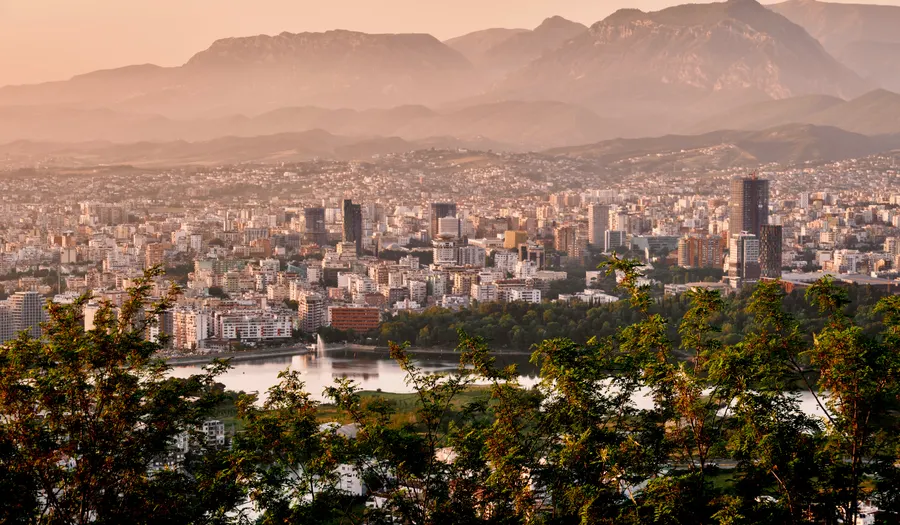
The Albanian capital surprises with its brightly painted façades, the legacy of an artist mayor. Skanderbeg Square, the vast central esplanade, sums up the country's history around its equestrian statue. The Dajti cable car climbs into the mountains for a panorama over the whole city. Former bunkers turned into museums, Bunk'Art, tell the story of the communist era with real power. The lively Blloku district, once reserved for the party elite, is now packed with cafés and nightlife.
Riviera and Ksamil
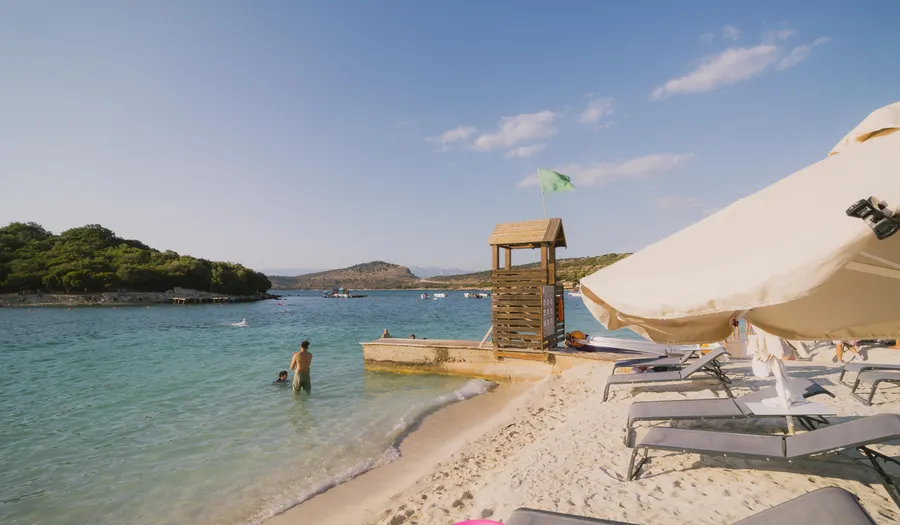
The Albanian Riviera unfurls its beaches between the mountains and a deep-blue Ionian Sea. Ksamil, in the far south, lines up sandy coves and little islets you can swim to. The water has a Caribbean clarity, ideal for swimming and snorkelling. Wilder beaches such as Gjipe or Dhërmi appeal to those seeking peace and quiet. In summer, the coast comes alive with beach bars and tavernas serving grilled fish and local wine.
Berat

Nicknamed the city of a thousand windows, Berat stacks its white Ottoman houses up the hillside. The historic Mangalem quarter and its inhabited citadel are UNESCO-listed. Climb up to the castle to discover Byzantine churches and views over the Osum River. The cobbled lanes invite you to wander between old mansions and small icon museums. It is one of Albania's most beautiful towns, timeless and full of charm.
Gjirokastër

This stone town, also UNESCO-listed, owes its name to the grey slate roofs covering its tower houses. The imposing fortress dominates the Drino Valley and houses a weapons museum. The restored Ottoman bazaar invites you to browse for crafts and traditional rugs. Birthplace of the writer Ismail Kadare, it retains a solemn, authentic atmosphere. Its fortified 18th-century mansions bear witness to a prosperous and singular past.
Butrint

This major archaeological site, a UNESCO World Heritage Site, stretches along the edge of a lagoon in an unspoilt natural setting. You travel through several civilisations here, from the Greeks to the Venetians by way of Rome and Byzantium. The ancient theatre, the mosaics and the early Christian baptistery are impressive. The lush vegetation and surrounding waters add a romantic touch to the ruins. Half a day is enough, ideally combined with the nearby beach at Ksamil.
The Alps and Theth
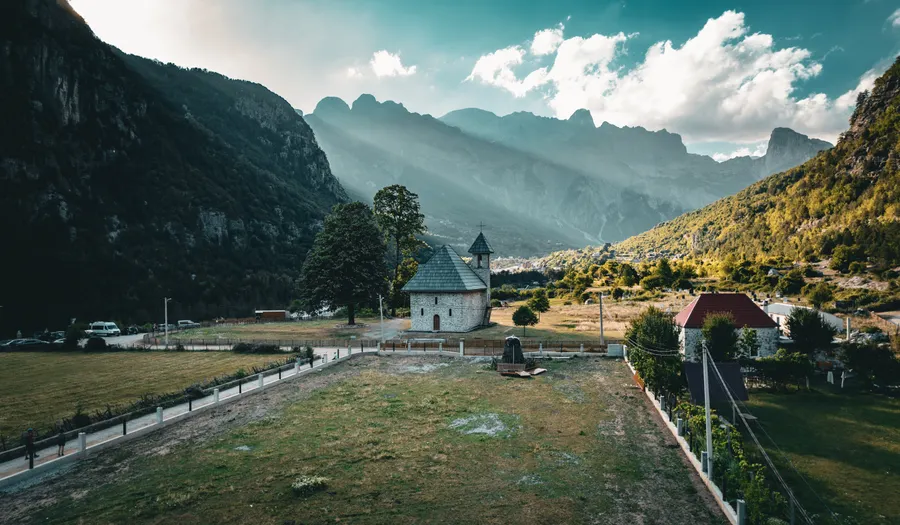
The Albanian Alps, or Accursed Mountains, offer some of the wildest hiking in Europe. The isolated village of Theth, nestled in a verdant valley, is the legendary starting point. The day hike to Valbona crosses passes and grandiose panoramas. Waterfalls, the vendetta tower and a stone church make up a timeless setting. You sleep in local guesthouses, with unforgettable mountain hospitality.
How many days, and which itinerary?
Ten to twelve days let you combine the Ionian coast, the Ottoman towns and an escape into the northern Alps.
🗺️ Day-by-day itinerary · 📓 Free printable Albania guide (PDF)
Riviera and the South (7 days)
From Tirana, head down to the coast: Vlorë, Dhërmi, then Sarandë and Ksamil for the beach. Visit Butrint and return to the capital via Gjirokastër and Berat.
The wild North (7 days)
Set off for the Albanian Alps from Shkodër, with the ferry across Lake Koman and then the Valbona-Theth hike. Return via Tirana; ideal from June to September for the mountains.
Grand tour (12 days)
Combine the Ionian coast, the museum towns of Berat and Gjirokastër and the trek through the northern Alps. Enough to take in Albania's full diversity, from the sea to the summits.
Getting there and getting around
Furgons, shared minibuses with no fixed timetable, remain the most common and cheapest way of getting between towns.
Renting a car gives you the most freedom, but the state of the mountain roads calls for caution.
Buses link the main towns; book ahead in summer for the very busy coast.
The ferry across Lake Koman, in the north, is a spectacular crossing to reach the Valbona region.
Where to stay in Albania?
Youth hostels and guesthouses in Tirana and Sarandë: €12-25 a night, often sociable.
Homestays in the Alps at Theth and Valbona: €30-45 with half board.
Apartments and small hotels on the Riviera: €40-70 in summer, less out of season.
Charming guesthouses in Berat and Gjirokastër: €35-60 in restored Ottoman mansions.
Our places to stay, stop by stop, at three budgets →
What to eat in Albania?
Byrek, a savoury pastry filled with cheese, spinach or meat, is eaten at any hour for a few coins.
Tavë kosi, lamb baked with yoghurt and eggs, is the national dish par excellence.
Fresh fish and seafood dominate on the coast, washed down with local white wine.
Raki, a homemade brandy often offered by your host, punctuates any self-respecting Albanian meal.
Entry requirements
No visa needed. EU citizens can enter with an ID card or a passport; UK, Canadian and Australian passports get 90 days in any 180, and US passports up to a year.
Rules change: check your own government's travel advice before you go.
Cities and regions to discover
 Region
🇦🇱 The Albanian Riviera
 City
City🇦🇱 Tirana
Frequently asked questions about Albania
When is the best time to go?
From June to September for the beach and mountain hiking; May and October are perfect for the towns and for avoiding the summer crowds.
What daily budget should I plan for?
Allow €25-40 a day travelling modestly and €50-80 for a comfortable stay, more on the coast in summer.
How do I get around Albania?
Furgons and buses are cheap but unpredictable; a hire car gives you far more freedom to explore the country.
Is Albania safe?
Yes, it is a very safe and welcoming country; the precautions mainly concern driving and preparing mountain hikes properly.
Similar destinations
 Region
🇬🇷 Crete
 Country
🇭🇷 Croatia
 City
City🇮🇪 Donegal
 City
City🇮🇪 The Ring of Kerry
 City
City🇮🇪 Galway and Connemara
 Country
🇮🇩 Indonesia
 Country
🇱🇰 Sri Lanka
 Region
🇫🇷 The French Ardennes
 Region